• TalkBass has been independent since 1998. Add your voice.
    Create a free account to reply to discussions, view embedded media, and browse with fewer display ads.
    Join freeLog in
    Want zero display ads or expanded classifieds tools? Compare plans.

How would you mic a fEarful?

Hopkins

Commercial User
Nov 17, 2010
13,967
7,059
44
Houston Tx
Disclosures
Owner/Builder @Hopkins Guitars
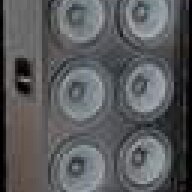
I'm asking mostly out of curiosity, but I have had the idea of building a 1212/6 fEarful rolling around in my head.

When micing these cabs, would it require two mics, on for the 12 and one for the 6?
 
I've been doing a lot of reading on this, too. As someone who uses a lot of effects, fuzz being one of them, I would prefer to be mic'd than DIed.

Basically, from all of the reading I've done, including the link Joe posted, the World is your oyster. I would start in the middle of everything (depending on what you have). If you want more highs, go closer to the 6" (and possible tweeter), if you want more lows, go closer to the 12" or 15". There's no set way to do it. It's all a matter of taste and what frequencies you want at what levels.
 
I wouldn't mic under any circumstances if I could avoid it. I'd prefer the FOH get my signal before it hits my amp's EQ. I use my amp head and it's EQ to make my cabs sound right for stage monitoring. Why should the engineer have to take what I'm doing to sound good to myself on stage and then wrangle it into what sounds good out front? Better he gets the signal directly from my pedal board, or from the pre-EQ DI on my head.

My amp and my cabs are for me and my fellow musicians to hear me well on stage.

Except when there is no PA, or just a vocal range one. In that case I'd try to EQ my rig for the audience. But in that case there's no micing anyway.
 
I've been doing a lot of reading on this, too. As someone who uses a lot of effects, fuzz being one of them, I would prefer to be mic'd than DIed.

Basically, from all of the reading I've done, including the link Joe posted, the World is your oyster. I would start in the middle of everything (depending on what you have). If you want more highs, go closer to the 6" (and possible tweeter), if you want more lows, go closer to the 12" or 15". There's no set way to do it. It's all a matter of taste and what frequencies you want at what levels.

Have you tried to DI yourself off the input to the cabinet?

Several DI boxes do this.
 
Eh. I've had it done with a single mic, or I've had a sound engineer take one on the mid, plus DI from my amp. Since the amp is really representative of what you feed it, unless you're dying for speaker color, it's worth just DIing. These speakers aren't like short-travel guitar speakers that have a lot of inherent breakup color.
 
I've tried micing multiway cabinets and it is generally not a good idea for SR.
If recording you can just move the mic far enough away that it "sees" all the drivers. If you are playing live, the mic has to be up close, so you end up needing one mic per driver type to get full range. Then the horn based driver (tweeter in this case) will sound boxy and phasey usually. I would go DI live.
 
Have you tried to DI yourself off the input to the cabinet?

Several DI boxes do this.

I used to. Then I got into effects. They just sound TOTALLY different DIed. When mic'd, you tend to get more along the sound you've spent hours at home and at practice tweaking to get right. Especially fuzz. It just needs those speakers to get teh sound, just right. If I were going clean most of the time, DI is totally the way to go.

From the amp....I paid good money for my Mesa Strategy 400 and Ashly pream. Skipping that would be just odd.
 
Any competent live sound engineer who's handled a wide variety of acoustic winds, or plucked/plectrum or bowed strings will be able to do it pronto. Those instruments have multiple sources for different parts of their sound, or for their different ranges. Yet anyone decent at their job can handle them live with just one mic, even on loud stages.

Now that that's said, post-effects DI works well in this instance too.
 
I wouldn't mic under any circumstances if I could avoid it. I'd prefer the FOH get my signal before it hits my amp's EQ. I use my amp head and it's EQ to make my cabs sound right for stage monitoring. Why should the engineer have to take what I'm doing to sound good to myself on stage and then wrangle it into what sounds good out front? Better he gets the signal directly from my pedal board, or from the pre-EQ DI on my head
Who says he'll have to do any wrangling? What comes out of my rig sounds awesome and all the soundman has to do is put a decent mic in front of it and duplicate it, and usually I bring my own mic so that part's already covered.
 
Who says he'll have to do any wrangling? What comes out of my rig sounds awesome

I'm working on the assumption--and you know what happens when we make assumptions--that the stage has different EQ requirements than does the audience's listening area. If it does, then what I do with my amp/cabs to sound great might not be what is necessary out front. If it is NOT different, then I suppose you'd be right.
 
i always prefer a mic'd cab whenever possible. i'd much rather have what's coming out of my cab than a signal from a direct box. i go thru quite a bit of effort to make my complete rig sound the way that it does and prefer to preserve that tone as much as possible. a single mic can capture a two way cab with no problems easily as long as the guy placing the mic and twirling the knobs on the board knows what he's doing.
 
I'm working on the assumption--and you know what happens when we make assumptions--that the stage has different EQ requirements than does the audience's listening area. If it does, then what I do with my amp/cabs to sound great might not be what is necessary out front. If it is NOT different, then I suppose you'd be right.
The engineer does have his own EQ he can work with. Plus the sound I like is pretty workable regardless of the room.
 
I'm working on the assumption--and you know what happens when we make assumptions--that the stage has different EQ requirements than does the audience's listening area. If it does, then what I do with my amp/cabs to sound great might not be what is necessary out front. If it is NOT different, then I suppose you'd be right.

stage and FOH requirements are often different, but that's what the eq knobs on the main house console are for. i'd much rather have them at least start with what's coming out my cab.
 
Why should the engineer have to take what I'm doing to sound good to myself on stage and then wrangle it into what sounds good out front?
Because that's what he's paid to do? Why am I the only person asked to give up his rig tone to make someone else's job easier? What is he giving up to make my job easier? Literally, bass is the only electric instrument that the player as a standard practice is told "your rig is a non-factor in what comes out front."

Literally, the only one.

EDIT: Of course, I know the standard retorts, among them synthesizers. Except a synth has all it's DSP and signal processing done when it leaves the instrument. If I was using multiple FX and pedals and EQ, and then sent THAT signal to the house (before amp) then the analogy holds.
 
Got any examples in mind? I've been looking and haven't found any. Been saving for an Electro Voice RE-20.
Good mic the RE-20 for bass, one thing I have found is that they are sometimes wired at the factory out of phase with other mics. so you may have to flip phase on the console for best results, also they don't all appear to be out of phase it seems.
Invalid Link Removed
:bassist:
 
Because that's what he's paid to do? Why am I the only person asked to give up his rig tone to make someone else's job easier? What is he giving up to make my job easier? Literally, bass is the only electric instrument that the player as a standard practice is told "your rig is a non-factor in what comes out front."

Literally, the only one.

EDIT: Of course, I know the standard retorts, among them synthesizers. Except a synth has all it's DSP and signal processing done when it leaves the instrument. If I was using multiple FX and pedals and EQ, and then sent THAT signal to the house (before amp) then the analogy holds.

Exactly.