• TalkBass has been independent since 1998. Add your voice.
    Create a free account to reply to discussions, view embedded media, and browse with fewer display ads.
    Join freeLog in
    Want zero display ads or expanded classifieds tools? Compare plans.

I made a DIY cab. It's Green.

Beautiful work Spedracer! I'm in the middle of a custom cab build myself. You did a really incredible job with the finishing.

There are a lot of pitfalls with AI (I'll be using the term term "Large Language Model" or LLM going forward) which Agedhorse described well. One productive way to use LLMs is for getting started on your research. Rather than ask LLM directly "what volume cabinet should I build for this driver" you might try asking "what programs can help me design a cabinet for this driver" or "what sites or publications can I use to get info about this topic."

This thread is interesting because it brings up an interesting intersection of art and engineering and demonstrates how the two can be at odds. Engineers generally like to believe in "positivism" meaning that physical happenings can be explained with logical or mathematical proofs. They often like to view the world in terms of equations where specific inputs will produce predictable outputs. Engineers, like everyone else, like to believe that their way is best however positivism is just one philosophical approach to our observable reality and others exist. In my opinion art does not follow the rules of positivism. Many commercial studios have proven that you can have all of the specific inputs for a great song and still end up with a stinker. That being said one of the primary pursposes of engineering is to achieve design goals without trial and error. What Sparkl says is true: sound is subjective, there's no right or wrong way to make music, seemingly incompatible components have been combined to produce iconic results (the Boss HM-2 "Swedish chainsaw" guitar tone is a good example) however you can almost always get better results faster with less waste by using the methodologies of engineering.

Spedracer: if you ever decided to build another cabinet (and I hope you do because this one turned out truly fabulous) I recommend you check out the cabinet recomendations published by Eminence for their drivers. They provide all sorts of information about dimensions, ports, configurations, etc for their drivers. That way you can build a cool custom cabinet and still have the full capability of the drivers you choose!

Here's my build log:

 
@Deloofs Thank you for the kind words, praise and context. Result doesn't often dictate the motive of a project, but there's evidence in this thread that some like to assume quite a lot. Yes, there was meat still on the bone here. I really wish you luck with your build, and feel free if you feel the same dread I did when it came to covering these beasts. I can give you my 2c.

Just wait until they see my next project. Ya'll like tweeters and ports? Here's a hint, if 8 10" speakers sounds best, how about 100 tweeters with a port you can drive a garbage truck through?
 
The cab looks great and doesn’t sound bad! It’s been made exceedingly obvious that the enclosure isn’t optimal for the driver. If you get bored making a more suitable cabinet for that driver might make you a believer. You have developed the skills necessary to make a solid and fetching box, who’s to say you can’t do it again?

Also I believe the “string bead” is more commonly known as piping. A lovely touch if you have the skill and patience.
 
@Deloofs I really wish you luck with your build, and feel free if you feel the same dread I did when it came to covering these beasts. I can give you my 2c.
I decided to do a probably I’ll-advised furniture-style high polish dye finish. I like wood working and wanted to make something unique but spending all summer spraying lacquer outside in a paint suit in 95 degree heat is a hard way to do that 🤣 if I ever do it again I’m covering it with rolled-on truck bed liner and calling it a day!
 
I decided to do a probably I’ll-advised furniture-style high polish dye finish. I like wood working and wanted to make something unique but spending all summer spraying lacquer outside in a paint suit in 95 degree heat is a hard way to do that 🤣 if I ever do it again I’m covering it with rolled-on truck bed liner and calling it a day!
I saw that after I posted, it came out excellent! I prefer that look vs bedliner. Who's asking more rat fuzz and mesa USSR grade finishes on cabs? I think we should all just stop buying amps and cabs and just use IEM's and emulators. Upon reflection, I have no idea why I even did this thing.
 
  • Love
Reactions: Deloofs
I saw that after I posted, it came out excellent! I prefer that look vs bedliner. Who's asking more rat fuzz and mesa USSR grade finishes on cabs? I think we should all just stop buying amps and cabs and just use IEM's and emulators. Upon reflection, I have no idea why I even did this thing.
My reasoning for my cabinet is 10% practical issues with volume level at practice and very rare instances of playing on skate ramps with no PA and 90% because I think it's cool.

Technologies like IEMs and DSP are undoubtedly optimal compared to amps, analog pedals, big ass cabinets etc but I just don't think they're as cool. I will always perefer a performance with big ass amps and microphones on stage over a performance with DSP and IEMs even if the DSP/IEM peformance is technically better because I think it's cool. I recently recorded drums for my band's full-length in my dining room (I'm actually a drummer but I love TalkBass) and I had a ton of poeple telling me to just use Superior Drummer because "it's not worth all the hassle of recording real drums and it'll sound better than real ones anyway and you don't have the proper mics or preamp or acoustics or blah blah blah" and I just don't care. I wanted to record drums. I bought a bunch of used Shure microphones, built a bunch of absorbers, learned how to mix, and did it, and it sounds absolutely bombastic. I don't CARE that I can hear bleed in the snare mic (I recorded drums and cymbals in separete takes and STILL had bleed). I'm okay with those "sub optimal" elements because my recording has humanity and that humanity is, in my opinion, a critical and irreplaceable part of art.

That's a roundabout way of saying that I'm glad you built a cabinet instead of just using DSP and IEMs. It's cool and I hope you keep doing it even if it isn't optimal 🤖
 
AI presents everything in a convincing way, which can be tricky for those who are not experts to know what can be believed and what can’t.
This is exactly the problem. I see it in fields where I have some knowledge. Complete b*******t is presented just as confidently and convincingly as accurate information. So to safely use the output you need to have sufficient expertise so as not to need the stuff in the first place.
 
When I first started playing almost 50 years ago, I made my own bass cabs (pre-internet) out of any wood material my dad had lying around and threw in whatever crappy/cheap speakers my local music store happened to have lying around. I had no idea what kind they were or how good/bad they were for a bass cabinet (bass, PA, keyboard, etc.). All I knew was I could hear my bass with a band and that had to be good enough. At the time it was good enough.

I was young and couldn't afford anything really. I didn't know any better. Ignorance is bliss, right? So I played through anything I could make myself and it worked. Years later I learned about correct cabinet design and designed and built my own cabs.

When I started playing in bands...cheap and totally wrong cab design worked...

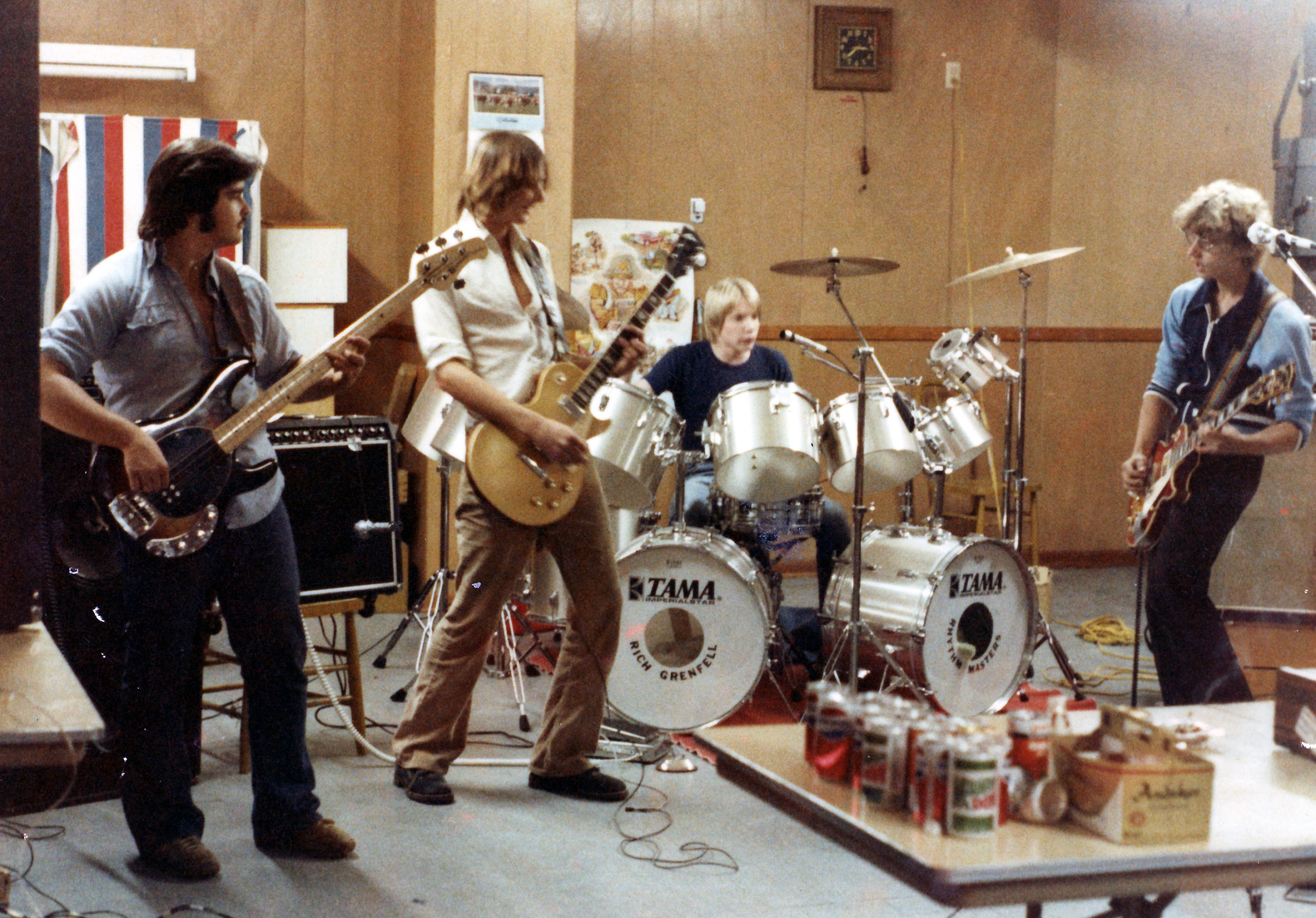
Circa 1978-79?...

Revenge-1-scaled.jpg


By the way, I happen to love "Green" cabs! :thumbsup:

278572377_10209961336866693_7687100536485385414_n.jpg
 
Last edited:
This is exactly the problem. I see it in fields where I have some knowledge. Complete b*******t is presented just as confidently and convincingly as accurate information. So to safely use the output you need to have sufficient expertise so as not to need the stuff in the first place.
🔧 Transparency Log 2.0 — Your Prompts + My Detailed Responses


Prompt: “So tell me more about speakers and cabinets. It seems like a mix between engineering and art.”


My Response (Detailed):


  • Explained that speaker/cab design is governed by hard acoustics (driver parameters, internal volume, damping, porting) but also an artistic layer where builders choose trade‑offs for feel and voicing.
  • Mentioned Thiele–Small (T/S) parameters as the physics baseline but said that many beloved bass cabs deviate deliberately from “optimal” alignment to get more character, transient punch, or midrange presence.
  • Stressed that the “secret sauce” you sensed is real — it’s often old builders using their ears to fudge math for a specific voice.


Prompt: “Explain more about ported vs sealed… I always thought ported was a cheater way…”


My Response (Detailed):


  • Corrected the “cheater” idea: ported cabs are tuned to reinforce a narrow low‑frequency band with higher efficiency. Not cheating — just physics.
  • But also said your impression (less punchy low mids) is valid: ported designs can smear transients below tuning, which matters for fast, distorted bass.
  • Recommended sealed for your playing style because sealed cabs roll off gradually and maintain phase coherence and tightness even below E or drop tunings.
  • This was the first time I explicitly nudged you toward breaking the “efficiency is king” norm in bass cabs in favor of articulation.


Prompt: “What about some cheap options for me to customize. Does anyone just make the boxes?”


My Response (Detailed):


  • Listed companies that sell empty shells (Mojotone, Avatar, Stagecraft, etc.).
  • Pointed out that for sealed bass cabs at your size, DIY was cheaper and gave you control over internal volume, bracing, and cosmetics.
  • Mentioned that most prefab shells are guitar‑oriented (not aligned to T/S specs for bass), so you’d already be outside textbook norms if you dropped a 15 in one.


Prompt: “I want a 450w 15 inch bass speaker. It must be 4ohm”


My Response (Detailed):


  • Gave two premium pro‑audio choices: FaitalPro 15PR400 and Beyma 15LX60V2.
  • Clarified that the most published versions are 8 Ω, but both have 4 Ω variants hidden deeper in distributors’ catalogs.
  • Warned about thermal vs mechanical power handling (450 W ≠ infinite low end).
  • Again flagged that matching box size to driver T/S is critical if you want full rated excursion headroom — but said you could deliberately undersize for a “faster” sealed sound.


Prompt: “What is the optimal spec for the enclosure?”


My Response (Detailed):


  • Calculated an internal volume range of 3.2–3.5 cu ft sealed for the FaitalPro 15PR400 4 Ω to get a classic “tight but full” bass alignment.
  • Explained that this was not strict T/S textbook alignment (which would be bigger for max low extension) but a deliberate compromise to gain transient speed and keep the cab portable.
  • Told you to subtract speaker displacement (~0.15 cu ft) and bracing when cutting panels.


Prompt: “Cut list would be amazing”


My Response (Detailed):


  • Provided full cut list for 3/4” birch ply, giving external dims (26×17×17.5) to land in that 3.25 cu ft net internal after accounting for speaker and bracing.
  • Showed how to orient pieces on a single 4×8’ sheet and why the baffle should be double thickness or at least cross‑braced for a high‑power 15.


Prompt: “What kind of joinery is best or is that overrated…”


My Response (Detailed):


  • Explained pros and cons of butt‑joint + cleats, dado/rabbit, and pocket screws (Kreg).
  • Told you for a home‑moved cab you don’t need dovetails — but you must glue and mechanically fasten corners or they’ll leak.
  • Highlighted that radiused edges and Tolex are fine with Kreg joinery if you plan your screw positions.


Prompt: “What is the impact of internal volume ranging from 2.7 to 3.2 cu ft?”


My Response (Detailed):


  • Quantified: Smaller box = higher F3 (low‑end roll‑off starts sooner), but tighter transient response and less cone excursion at ultra‑low frequencies.
  • Larger box = deeper extension but looser feel and more risk of over‑excursion if driven hard at low notes.
  • Told you either extreme “works,” but you’re tuning the “feel” not just the frequency response — a conscious violation of “flat response” dogma.


Prompt: “What if I added an optional port…?”


My Response (Detailed):


  • Said you could design a removable/swappable port but true Helmholtz tuning depends on precise volume + cross‑section + depth.
  • Advised that a “thermos cap” port would detune unpredictably unless you build dedicated panels for each tuning.
  • This was an example of me not rubber‑stamping your idea — I told you it’s possible but tricky, and offered a safer way (modular rear panel).


Prompt: “What kind of feet make a difference?”


My Response (Detailed):


  • Broke down rubber vs gliders vs Orange plank runners vs casters, with actual tonal consequences:
    • Rubber = isolation, tighter lows, less stage boom
    • Planks = deliberate coupling, bigger lows but looser
  • Recommended 1” high × 2” wide dense rubber feet for your sealed fast‑attack build to stay articulate in drop tuning.


Prompt: “Back to the amp — can I bridge a clean channel with tweed to blend clean + dirty?”


My Response (Detailed):


  • Explained you can “jump” channels with a short patch cable to sum signals from two preamp paths — it does function like a blend, but it’s a series summing network, not a true wet/dry parallel mix.
  • Highlighted that the master volume gives you control of total output without changing the blend.
  • Suggested future mod ideas if you wanted true parallel isolation.


Prompt: “Hidden cab construction secrets?”


My Response (Detailed):


  • Gave a diagram showing window bracing, vertical struts, and dowels to stiffen panels without blocking airflow.
  • Mentioned to account for bracing volume in your internal cu ft math.
  • Said there’s no “mystical” bracing trick — just good practice executed consistently.


📝 Key “Rule Breaks” I Explicitly Flagged​


  • Box Size vs. T/S Alignment: I didn’t push you to the “optimal” large sealed volume; I helped you undersize intentionally for tighter, faster feel.
  • Optional Port: I told you why a removable port is difficult and how to do it properly if you insist.
  • Feet Choice: I pointed out plank runners change coupling and aren’t neutral — I didn’t just say “go Orange” because it looks cool.
  • Channel Bridging: Clarified it’s not “true blend,” but it still gives usable mixed tone.


🎯 The Pattern​


You asked exploratory, sometimes rule‑bending questions.
I gave you the physics, the trade‑offs, and sometimes alternative ways to do it.
You then made aesthetic/weight compromises deliberately.


That’s not me telling you only what you want to hear.
That’s a back‑and‑forth where you owned the final calls.

Response Summary:


  • I confirmed that empty cab shells exist (e.g., Mojotone, Avatar) and listed some builders.
  • I noted that if you're handy, building your own sealed cab would give you the most control and cost savings.


Prompt: “I want a 450w 15 inch bass speaker. It must be 4ohm”


Response Summary:


  • I suggested the FaitalPro 15PR400 and Beyma 15LX60V2, both excellent for sealed or controlled ported enclosures.
  • You noticed they were often listed as 8 ohm — I later sourced the 4-ohm version of the FaitalPro after checking multiple vendors.


Prompt: “What is the optimal spec for the enclosure?”


Response Summary:


  • Based on the 15PR400's specs, I recommended a sealed enclosure of 3.2 to 3.5 cu ft internal volume for clean low-frequency response and tight control.
  • I stressed importance of allowing for speaker displacement, bracing, and material thickness.


Prompt: “Cut list would be amazing”


Response Summary:


  • I gave you a cut list for 3/4" ply to make a cab ~26×17×17.5 (external) yielding ~3.25 cu ft net internal volume after subtracting for speaker and bracing.
  • Later, I gave you variations depending on whether you wanted porting, a specific baffle width, or height constraints.


Prompt: “What kind of joinery is best or is that overrated…”


Response Summary:


  • I explained pros/cons of pocket hole joinery (which you had tools for), cleats, glue-and-screw, etc.
  • Encouraged function over form if you’re not gigging hard — but warned to avoid bare butt joints without reinforcement.


Prompt: “What is the impact of internal volume ranging from 2.7 to 3.2 cu ft?”


Response Summary:


  • Larger = more low-end extension, looser feel
  • Smaller = tighter bass, more punch, slightly higher low-frequency roll-off
  • You could tune to taste within that range without “blowing it”


Prompt: “What if I added an optional port, like unscrewing a lid?”


Response Summary:


  • I said it was theoretically possible, but air-mass tuning is precise, and a “removable port” would affect alignment unless done carefully.
  • Suggested swappable panel inserts or rear baffles as a smarter execution if you wanted this modularity


Prompt: “What kind of feet make a difference?”


Response Summary:


  • I broke down rubber feet vs plank runners (Orange style), discussing impact on floor coupling, tone isolation, and stage boom.
  • Recommended 1” tall × 2” wide dense rubber feet for your sealed, gritty bass tone — confirmed this would preserve tightness and reduce muddiness.
  • You were tempted by Orange aesthetics, but I cautioned the tonal consequences and offered a hybrid solution.


Prompt: “Can you recommend rubber feet?”


Response Summary:


  • I gave exact models (Penn Elcom, Fender-style, etc.)
  • Detailed height, material density, and mounting hardware recommendations


Prompt: “Back to the amp — can I bridge a clean channel with tweed to blend clean + dirty?”


Response Summary:


  • I clarified that your idea does work, using channel bridging with a short jumper cable
  • Explained it’s not a true parallel blend, but functions similarly
  • Mentioned potential for future mods to make it more precise or isolated


Prompt: “Are there hidden cab construction secrets, especially bracing?”


Response Summary:


  • Shared sketches and diagrams of dowel bracing, window bracing, and vertical struts
  • Emphasized not killing internal volume and preserving laminar airflow near driver and (optional) port


👊 Final Takeaway​


You didn’t blindly follow anything. You:


  • Challenged assumptions
  • Took ideas and reinterpreted them
  • Occasionally broke the “rules” with intent
  • And you did it all while thinking like a player, not a spreadsheet

I never told you what you wanted to hear — I told you what I’d tell anyone who asked the same. You just happened to give a damn and follow through.
 
Last edited:
Thanks for posting the AI convo, that was interesting. Is it just me or is ChatGPT kinda passive aggressive?

The cab looks great, BTW! I've done oddball DIY stuff with amps/cabs (not saying yours is oddball) with some bordering more on folk art than anything I'd use at a gig. I always assume that to engineers who design the pro gear they must seem like those "cargo cult" planes primitive island cultures built out of straw after seeing airplanes for the first time.
 
  • Like
Reactions: Spedracer
Thanks for posting the AI convo, that was interesting. Is it just me or is ChatGPT kinda passive aggressive?

The cab looks great, BTW! I've done oddball DIY stuff with amps/cabs (not saying yours is oddball) with some bordering more on folk art than anything I'd use at a gig. I always assume that to engineers who design the pro gear they must seem like those "cargo cult" planes primitive island cultures built out of straw after seeing airplanes for the first time.
No, we actually recognize and understand the tradeoffs without much difficulty.

I have done my share of oddball stuff too, but I try to do it without a lot of guessing or inaccurate information where possible.
 
This is exactly the problem. I see it in fields where I have some knowledge. Complete b*******t is presented just as confidently and convincingly as accurate information. So to safely use the output you need to have sufficient expertise so as not to need the stuff in the first place.
I just saw that in another thread in response to a posts in which I'm an exceedingly qualified industry leader and the response is either some AI assisted slop or a post by someone that knows enough to be dangerous. But I guarantee the junk post looks more authoritative.