
Enjoy the benefits of a premium membership!
Upgrade Account
-
TalkBass has been independent since 1998. Add your voice.
Create a free account to reply to discussions, view embedded media, and browse with fewer display ads.
Join free Log in
Want zero display ads or expanded classifieds tools? Compare plans.
You are using an out of date browser. It may not display this or other websites correctly.
You should upgrade or use an alternative browser.
You should upgrade or use an alternative browser.
IMO, neck dive on expensive guitars is absolutely inexcusable
- Thread starter InternetAlias
- Start date
More options
Who Replied?

Since drones are all the rage now, you could get a quadcopter to hold up the hradstock end

I think any person buying a bass should do their homework on whichever model strikes their fancy. It’s really not hard, and the off the shelf standard instruments that are prone to such a thing as neck dive will have been well documented, especially here.
Some people don’t care, I’m kind of in the middle— love a light bass but it really depends.
Speaking for myself, if I’m going to pay a huge sum for an exquisite instrument, it’s going go be well balanced.
My late 60’s Kalamazoo SG bass is the Mayor of Neck Dive City but it’s not my main, and the super thin & light body make it almost unnoticeable..
Some people don’t care, I’m kind of in the middle— love a light bass but it really depends.
Speaking for myself, if I’m going to pay a huge sum for an exquisite instrument, it’s going go be well balanced.
My late 60’s Kalamazoo SG bass is the Mayor of Neck Dive City but it’s not my main, and the super thin & light body make it almost unnoticeable..
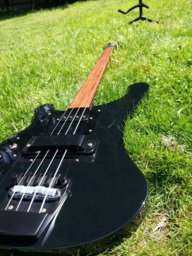
Warwick should just extend the upper horn and be done with it.

He bought a wide neck 6-string(!) bass and is shocked it has neck-dive? How on earth are you supposed to make a 6-string bass without any neck-dive, not to mention a wide neck one? That wide neck with 6 tuners and strings will of course have a lot of weight to it, compared to a Squier. You must have a huge, massive, heavy body or add weights to it to counteract that... And then people would complain about the bass being too heavy
You buy an F bass 6 string.
Just to be fair to Warwick, I have a 6 string corvette. It's fine. They should just use that corvette body and mount the pickups like the thumb. That should take care of it.
"Expensive" often means lighter weight, or feather weight. (Not always, but often).
You can't have ultralight AND no neck dive unless you go to short scales (with upper horns).
If you want a 7 pound, 34" scale bass with no neck dive, the upper horn will need to reach the 9th fret.
If you have eyes, and understand how gravity works, you'll instantly understand why Thumb basses neck dive, and why Corvettes and Fortresses have ridonkulous upper horns.
I think any 34" bass under 9.5 pounds is prone to neck dive unless it's exceptionally engineered. (or headless).
I agree with your general point but i would personally never own a bass that weighs more than 9lbs and at the moment I only have basses that weigh 8 or less. None of them neck dive and all of them are Jazz types of sorts. So no special design there. I think the main thing is to use light weight tuners.

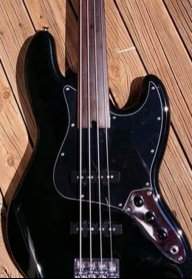
And it moves your shirt into places that are just not comfortable. If it dives badly it's going to be uncomfortable no matter what strap you use. Some can deal with it but, like the OP, i can't do so, particularly with an expensive bass.A good strap solves neck dive as well. All one needs is a strap with some sort of material that "grips" on the inside.

I agree that if you pay that much for a bass they should spend time balancing it, however that's just the way Thumbs are and everyone knows it and just doesn't care. I would never expect a Thunderbird to balance well either, no matter how much I paid for it.
Looks like Carvin found a clever way to fix neck dive. They put the neck on the other side.

HahahaTo everyone who's suggesting a strap as a solution to neck dive - don't.
First off, when a strap holds your guitar in place by friction, it's completely different to the situation where your guitar is held in balance at the strap button alone. It feels completely different and it's a compromise you shouldn't have to make on an almost 2000 euro instrument. Hell, I don't have to make that compromise on any of my own instruments, even my ultra lightweight spector performer which I paid less than 200 euros for.
You aren't supposed to solve a problem that shouldn't exist in first place. If you get your guitar chipped, you aren't supposed to "solve" it by fixing the finish yourself, you send it back.
Second, it's more important to have a properly functional instrument than top tier woods and hardware, because even cheap fender-style hardware functions properly, even cheaper woods will do the job, but a design that's inherently flawed will actually affect playability big time. This is why I am flabbergasted at a design that has great woods, electronics and hardware, yet requires the user to make compromises due to a design flaw this stupid.
BTW, my mate first tried the bass with his nylon strap he had lying around (that's the situation in which headstock just straight up dropped to the ground which was amusing and terrible at the same time), because he always uses it to check basses initially, and even when he used his 3.5" leather strap, neck dive was still present (just not as bad with a nylon strap).
My friend probably has bought things he wasn't satisfied with either. I never once felt the need to go online and complain about them. This reminds me of the old going to the doctor scene "my friend has this terrible rash in an embarrassing place doc, what should he do?".
Solution, do some research, play the bass before buying said expensive bass. I would never buy a bass that expensive without doing my research, and actually holding it my hands.
Last edited:

Unless the builder claims it's perfectly balanced, there's no harm or foul, imho.
That was one simple question that should have been asked before buying
if balance was so important. Never assume..... I've paid for that lesson as well.
That was one simple question that should have been asked before buying
if balance was so important. Never assume..... I've paid for that lesson as well.
I was spoiled by a Steinberger xl2 back in the 90s. Since then, neck dive has been one of the first things I look for. I have purchased several sets of Hipshot ultralite tuners. I know there are a number of wonderful basses out there that I am missing out on sound-wise, but as I play through the back nine of my forties comfort and lack of pain are a must.

On my Tune TWB the upper horn ends at the 14th "fret'
It had neck dive.
Of course.
It's a sixer.
Put on Hipshot Ultralites and was made fretless.
Still had some.
I like my basses to hang at about 45 degrees.
Now I use a Comfort Strapp on both my basses.
Cancels any neck dive.

My Brice's upper horn ends at the 12th fret.
It also had some dive.

It had neck dive.
Of course.
It's a sixer.
Put on Hipshot Ultralites and was made fretless.
Still had some.
I like my basses to hang at about 45 degrees.
Now I use a Comfort Strapp on both my basses.
Cancels any neck dive.
My Brice's upper horn ends at the 12th fret.
It also had some dive.
Last edited:

Wear it lower.So you got some centuries old wood on the bass you crafted, it has pickups hand wound by fairies, hardware precision cast by the best blacksmith in the universe, as well as blessings from severaldietiesdeities... only to have it neck dive.
My mate ordered a Warwick thumb BO6 from thomann and when it got here it looked great, he strapped it aaaand... headstock wanted to go to China to visit its aunt. This wasn't slight neck dive that you'd see on slightly lighter bodied P and J basses. No, this was EB0 levels of neck dive right there on a 1900e instrument.
He just returned the instrument.
I told him if he liked it enough he could just use the extended screw to make the guitar balance better, but he told me that if his 150e squier doesn't have this issue nor require a workaround like that, then sure as hell his 1900e warwick shouldn't, either.
?Wear it lower.
If you wear it lower, the cool factor cancels out laws of physics?
If he wore it lower it'd neck dive just as bad BUT the neck would also be unreachable by his hand.
Also agreed. Some body styles work for a 4 string but don't have large enough bodies to balance the weight of a 6 string neck.He bought a wide neck 6-string(!) bass and is shocked it has neck-dive? How on earth are you supposed to make a 6-string bass without any neck-dive, not to mention a wide neck one? That wide neck with 6 tuners and strings will of course have a lot of weight to it, compared to a Squier. You must have a huge, massive, heavy body or add weights to it to counteract that... And then people would complain about the bass being too heavy
No, it puts the bass at a different angle.?
If you wear it lower, the cool factor cancels out laws of physics?
If he wore it lower it'd neck dive just as bad BUT the neck would also be unreachable by his hand.
My T-bird doesn't dive when worn at or below belt level. It does if you wear it higher.
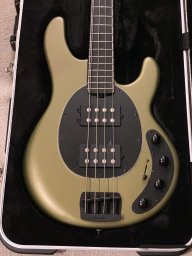
A heavier body could help, but I see TB people complain about that a lot too. I’ve come to appreciate that bass players are pretty delicate flowers about such things


