Ha, I went green on the jewel as well.
I have the old frosted green glass also


TalkBass has been independent since 1998. Add your voice.
Create a free account to reply to discussions, view embedded media, and browse with fewer display ads.
Join free Log in
Want zero display ads or expanded classifieds tools? Compare plans.
Ha, I went green on the jewel as well.

Having used a REDDI for a year and a half in a variety of PA's from great to not so great, the REDDI ALWAYS makes a positive difference even in the worst PA's, as would the Monique. Used to agree with you till I got one. So I'm calling shenanigans.+1 Different tools. It would make little sense to purchase a Monique just to use as a DI in a live setting. The Reddi seems made for that (although I would be surprised if anyone can hear the difference between a Reddi and a JDI in a mix through the vast majority of PA's and gig settings). IMO, a bit of 'listening with the eyes' going on there in some situations.
Having used a REDDI for a year and a half in a variety of PA's from great to not so great, the REDDI ALWAYS makes a positive difference even in the worst PA's, as would the Monique. Used to agree with you till I got one. So I'm calling shenanigans.
If you hear it, it is there. Enjoy!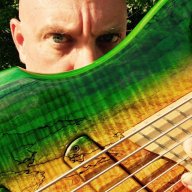
I have the old frosted green glass also
 I know I like mine. That's how you can tell when people are TB Monique users.
 Jule should start stocking those green vintage jewels as an upgrade option.
But seriously, this isn't a competition between the REDDI and the Monique. And I believe that Jule was in some part a consultant in some part (small or large) of the REDDI development, IIRC.
The fact is that the Monique is just as at home on stage and in the studio as a tube preamp with the functionality you expect from one as either a front end or as a signal massager for recording. It also is a high quality DI for stage and studio. If you want to use it as DI only, leave those knobs at noon. I've now had mine in use for about 16 months and I've never ever had a complaint from house sound about what is coming through the DI. Usually the comments are overwhelmingly positive about what the DI provides.
Working in so many situations (different rooms, different sound people, different types of shows with variety of musical genres present on the bill) having post EQ DI is a survival tactic for me. Downstream of my strings, I'm never sending a non-EQ'ed signal anyway. While I'm not a tone tweak on stage, I do make slight adjustments and often alter hand position for tonal changes.
The big problem is working with a soundman who's mixing and EQing for rock when I play in a reggae band. If I give him stuff flat up in the 2khz+ range it ends up in the house which sounds awful. Also, lots of soundmen are used to scooping mids and I actually use a fair amount of mid in my tone (I run my Monique mid between 2 and 3 o'clock, which is often hotter than where I have my low set).
Even when we play a room regularly we get different personnel behind the board, then during the summer we do a line of low level festivals and outdoor events with full day line ups, mix in small rooms, bars, etc. Each of these is subject to interesting FOH mix and tone decisions.
 , and it seems to always come out great. I also rarely see the same soundman twice, since I am a pure freelance player playing a wide variety of music genre's with different bands almost every week in different cities, states and on occasion, countries. However, I am blessed with doing 'non bar gigs' with relatively professional front of house guys for the larger gigs, and it is rare that a sound person doesn't have a bit of a listen to my stage sound prior to slotting me in the mix. Yes, many sound guys love the subs a bit too much, but it is amazing what a polite request to 'make sure my midrange punches through' does
 .
.
Again, lots of different ways to deal with this. If a soundman want to scoop your tone, he is going to do it no matter what type of signal you send him.
I have never sent a post EQ signal to a sound person in 40+ years
However, in a battle of 'who is going to define what the bass sounds like out front', the sound person will always win, pre or post DI, mic'ing, whatever.
Hard to add highs back into my sound if I don't give them to the board in the first place.
+1 that your reggae example is unique and your approach makes total sense. That is one genre I do not perform in. Of course, in some ways, that is what a passive tone control is about
I learned that the hard way. For years I sent post EQ DI to the board, then one theater show back about 15 years ago, I decided to try it the 'conventional wisdom' way and set my DI pre EQ and flattened out my tone controls on the bass. All night long I was hearing super bright top end from the bass off the back of the theater wall. I tried the same setup once or twice more to the same effect before giving up and going back to post EQ.
It is always appropriate to 'do what works for you'. Again though, that is what the passive tone control is for, and that is really the only control I ever touch on the gig, and rarely touch that, since hand position gives me pretty much all I need. However, it is a great control to gently reduce the top end if that is a problem in a given room. This situation could also mean that the inherent voicing of your bass is not really hitting your tonal goals, but that is a different discussion!
+1 though, if you don't want a 'full range' signal going to the board, and like your top end sliced off, there is nothing wrong with doing that, whether it is finding a stand-alone DI that does it for you, are using a passive tone control with a pre EQ setting, or sending a post EQ with everything rolled off up top. Lots of ways to get there. Things are a bit easier for me, since I dig the tone of my basses right into a mixing board or headphone preamp. Makes it pretty easy. I realize others are not into that sort of 'clean transparent tone'.
As long as the player thinks through all of this prior to spending a ton of money, or automatically thinking that stage EQ from an amp is always a good thing to send to the board, all is good, and it is a pure personal preference as long as you respect the person at the board.
For this reason when Sheldon built my #1 bass, he developed a hybrid treble control for it (me) to work with the OBP-1 (which is all boost, and no cut). I explained that seldom have I ever needed to add brightness only roll it off, but the big warm lows of the OBP1 are more in tune with what I want to hear from the 'money' range of the signal. So, he made a treble control that is center detent, passive roll off on the back side, and preamp boost on the front side.
I'm certainly not the guy who doesn't use ANY highs in my tone, I don't roll off all the way and I use a fair amount of mids. I carefully sculpt my tones above mid to hear what I want. A passive tone control has a sweet spot, whether its a P or a Jazz or any of them. I've spent decades riding that spot.

Jule should start stocking those green vintage jewels as an upgrade option.
But seriously, this isn't a competition between the REDDI and the Monique. And I believe that Jule was a consultant in some part (small or large) of the REDDI development, IIRC.
The fact is that the Monique is just as at home on stage and in the studio as a tube preamp with the functionality you expect from one as either a front end or as a signal massager for recording. It also is a high quality DI for stage and studio. If you want to use it as DI only, leave those knobs at noon. I've now had mine in use for about 16 months and I've never ever had a complaint from house sound about what is coming through the DI. Usually the comments are overwhelmingly positive about what the DI provides.
So true, and so well put.For this reason when Sheldon built my #1 bass, he developed a hybrid treble control for it (me) to work with the OBP-1 (which is all boost, and no cut). I explained that seldom have I ever needed to add brightness only roll it off, but the big warm lows of the OBP1 are more in tune with what I want to hear from the 'money' range of the signal. So, he made a treble control that is center detent, passive roll off on the back side, and preamp boost on the front side.
I'm certainly not the guy who doesn't use ANY highs in my tone, I don't roll off all the way and I use a fair amount of mids. I carefully sculpt my tones above mid to hear what I want. A passive tone control has a sweet spot, whether its a P or a Jazz or any of them. I've spent decades riding that spot.

One single bag? I'd love to know which gig bag.I fly all over the world with my Monique and Minnie in a soft gig bag! Never had a single issue and it looks as cool as it sounds!

Wow! Backlined instrument! Yowwzaa!

One single bag? I'd love to know which gig bag.
Although, Todd's (nostatic's) Mono bag for the rugged gear, and custom Monique bag to separate the tube pre is a good idea too.
Do you offer the soft case option Jule? I certainly LOVE the 'soft' case for my RA Mouse.



