my experience has been better w matte paint then clear coat but i suck at clear coat so pick your punishment

Enjoy the benefits of a premium membership!
Upgrade Account
-
TalkBass has been independent since 1998. Add your voice.
Create a free account to reply to discussions, view embedded media, and browse with fewer display ads.
Join free Log in
Want zero display ads or expanded classifieds tools? Compare plans.
You are using an out of date browser. It may not display this or other websites correctly.
You should upgrade or use an alternative browser.
You should upgrade or use an alternative browser.
Lefty Fretless Jazz Bass
- Thread starter Brett Zeppelin
- Start date
More options
Who Replied?
Hopkins
Commercial User
Thanks. What is the cause of that orange peel? Am I going too heavy? Not heavy enough (again)? Spraying from too far away? Spraying too close? Can I do better with a rattlecan or is this just how it is?
Orange peel is caused by the paint flashing off before it has time to level out. Nitro flashes off pretty quickly, which is why retarder helps, but its not an option in a rattle can. A heavier coat takes longer to dry than a light one. The trick is to spray a coat of paint that is on the verge of running, with out crossing the line and running the finish. Knowing how much finish to apply is something you can only learn by experience. You could probably stand to keep your same spray pattern and tempo, just hold the can a few inches closer to your work. Like I said, a little orange peel isn't a big deal, especially with nitro because there are no witness lines to worry about if you sand into a previous layer.
- Jul 1, 2005
- 4,292
- 21,944
- 80
- Disclosures
- CataldoBasses: Designer/Builder ThunderBuckerPickups:Consultant
Getting close! Try to spray at the coolest part of the day, that will lengthen drying time. From the look of it you can apply more paint per pass. Get closer and/or slow down your passes. Or try 'double coats'. That is: go over the same pass left to right, right to left before overlapping 50% for the next pass L to R, R to L.
IMO you have to run some paint or you'll never really learn how to get a smooth enough finish to only require scuff sanding between coats. Take your pick: Spend lots of time sanding down the entire body that's orange peeled or spend less time (with more paint on the body per coat) sanding a run or two...or three. You'll learn a lot more sanding runs than by just leveling orange peel. Live dangerously!
Painting is no different than playing, it takes practice to get it right.
IMO you have to run some paint or you'll never really learn how to get a smooth enough finish to only require scuff sanding between coats. Take your pick: Spend lots of time sanding down the entire body that's orange peeled or spend less time (with more paint on the body per coat) sanding a run or two...or three. You'll learn a lot more sanding runs than by just leveling orange peel. Live dangerously!
Painting is no different than playing, it takes practice to get it right.

Hopkins
Commercial User
Getting close! Try to spray at the coolest part of the day, that will lengthen drying time. From the look of it you can apply more paint per pass. Get closer and/or slow down your passes. Or try 'double coats'. That is: go over the same pass left to right, right to left before overlapping 50% for the next pass L to R, R to L.
IMO you have to run some paint or you'll never really learn how to get a smooth enough finish to only require scuff sanding between coats. Take your pick: Spend lots of time sanding down the entire body that's orange peeled or spend less time (with more paint on the body per coat) sanding a run or two...or three. You'll learn a lot more sanding runs than by just leveling orange peel. Live dangerously!
Painting is no different than playing, it takes practice to get it right.
I agree with this, I would much rather sand out a run or three than sand out a whole body worth of orange peel.

Orange peel is caused by the paint flashing off before it has time to level out. Nitro flashes off pretty quickly, which is why retarder helps, but its not an option in a rattle can. A heavier coat takes longer to dry than a light one. The trick is to spray a coat of paint that is on the verge of running, with out crossing the line and running the finish. Knowing how much finish to apply is something you can only learn by experience. You could probably stand to keep your same spray pattern and tempo, just hold the can a few inches closer to your work. Like I said, a little orange peel isn't a big deal, especially with nitro because there are no witness lines to worry about if you sand into a previous layer.
Getting close! Try to spray at the coolest part of the day, that will lengthen drying time. From the look of it you can apply more paint per pass. Get closer and/or slow down your passes. Or try 'double coats'. That is: go over the same pass left to right, right to left before overlapping 50% for the next pass L to R, R to L.
IMO you have to run some paint or you'll never really learn how to get a smooth enough finish to only require scuff sanding between coats. Take your pick: Spend lots of time sanding down the entire body that's orange peeled or spend less time (with more paint on the body per coat) sanding a run or two...or three. You'll learn a lot more sanding runs than by just leveling orange peel. Live dangerously!
Painting is no different than playing, it takes practice to get it right.
Once again, guys: thanks! OK, so where I am now, what should I do? It seems like for right now what I need to do is sand this back a little bit to try and smooth-out that orange peel. Then, after that is done, hit it again but go even more aggressive this time. Is that accurate? I thought for sure when I was blasting it last night that I was going at it way too thick, but it sounds like I should really just go for it even more.I agree with this, I would much rather sand out a run or three than sand out a whole body worth of orange peel.
Should I sand at this layer as it is or are the "peels" fine enough that they would get smoothed-over with additional coats of paint? I've got everything ready to go, so whatever is the right thing to do, that's what I want to be doing.
I am being punished right now, believe me! I think I am at least learning, though...I think anyway...my experience has been better w matte paint then clear coat but i suck at clear coat so pick your punishment
Thanks. I'm assuming that is sincere.bravo btw

Hopkins
Commercial User
Once again, guys: thanks! OK, so where I am now, what should I do? It seems like for right now what I need to do is sand this back a little bit to try and smooth-out that orange peel. Then, after that is done, hit it again but go even more aggressive this time. Is that accurate? I thought for sure when I was blasting it last night that I was going at it way too thick, but it sounds like I should really just go for it even more.
Should I sand at this layer as it is or are the "peels" fine enough that they would get smoothed-over with additional coats of paint? I've got everything ready to go, so whatever is the right thing to do, that's what I want to be doing.
Sanding it level wouldn't be a bad idea at this point. If you feel you are about to sand down to bare wood, stop and apply more finish.
yes sincereI am being punished right now, believe me! I think I am at least learning, though...I think anyway...
Thanks. I'm assuming that is sincere.
- Jul 1, 2005
- 4,292
- 21,944
- 80
- Disclosures
- CataldoBasses: Designer/Builder ThunderBuckerPickups:Consultant
Sanding it level wouldn't be a bad idea at this point. If you feel you are about to sand down to bare wood, stop and apply more finish.
Sounds good to me.
Sanding it level wouldn't be a bad idea at this point. If you feel you are about to sand down to bare wood, stop and apply more finish.
How does 400-grit sound?Sounds good to me.
I still don't quite understand how smooth to get these layers between coats, but I'll knock down some high spots of the peel and see what that yields.
Oh yeah, it's fairly warm here right now, so I don't have a lot of options other than as late in the evening as possible. That's what I did last night. It was about 9:30pm when I sprayed. It was probably 65°F at that time, which is a bit warm even for where I live (on the coast).Getting close! Try to spray at the coolest part of the day, that will lengthen drying time. From the look of it you can apply more paint per pass. Get closer and/or slow down your passes. Or try 'double coats'. That is: go over the same pass left to right, right to left before overlapping 50% for the next pass L to R, R to L.
IMO you have to run some paint or you'll never really learn how to get a smooth enough finish to only require scuff sanding between coats. Take your pick: Spend lots of time sanding down the entire body that's orange peeled or spend less time (with more paint on the body per coat) sanding a run or two...or three. You'll learn a lot more sanding runs than by just leveling orange peel. Live dangerously!
Painting is no different than playing, it takes practice to get it right.
- Jul 1, 2005
- 4,292
- 21,944
- 80
- Disclosures
- CataldoBasses: Designer/Builder ThunderBuckerPickups:Consultant
How does 400-grit sound?
Like a lot of work. But probably necessary with how thin rattlecan paint is. I use 240 or 320 to level paint. 400 to scuff sand.
I have those others that you mention; I just also have 400 and was thinking that's what I should do because I'm a total novice and learning. If 200-300 is what's best, I'm cool with that. I'm also cool with 400 if that is what I need to do. Whatever it takes, man!Like a lot of work. But probably necessary with how thin rattlecan paint is. I use 240 or 320 to level paint. 400 to scuff sand.
It pained me to have to sand this last coat, as she was looking pretty good when I got home from work. Here she is after 320-grit sanding to flatten the peel and dull it up a bit, followed by a proper tack-cloth wipe-down and (what I thought was) a pretty heavy coat of paint. It's definitely better than the last coat, which I thought was pretty solid. I still haven't popped my paint run cherry yet, though. I thought for sure I would, as I put this on really thick!
I just about finished with the can of paint, which means over the last two nights I have gone through about one can of paint. If I have to buy another can of paint, I might just cry — not because of the price, but because of the expensive and slow shipping.


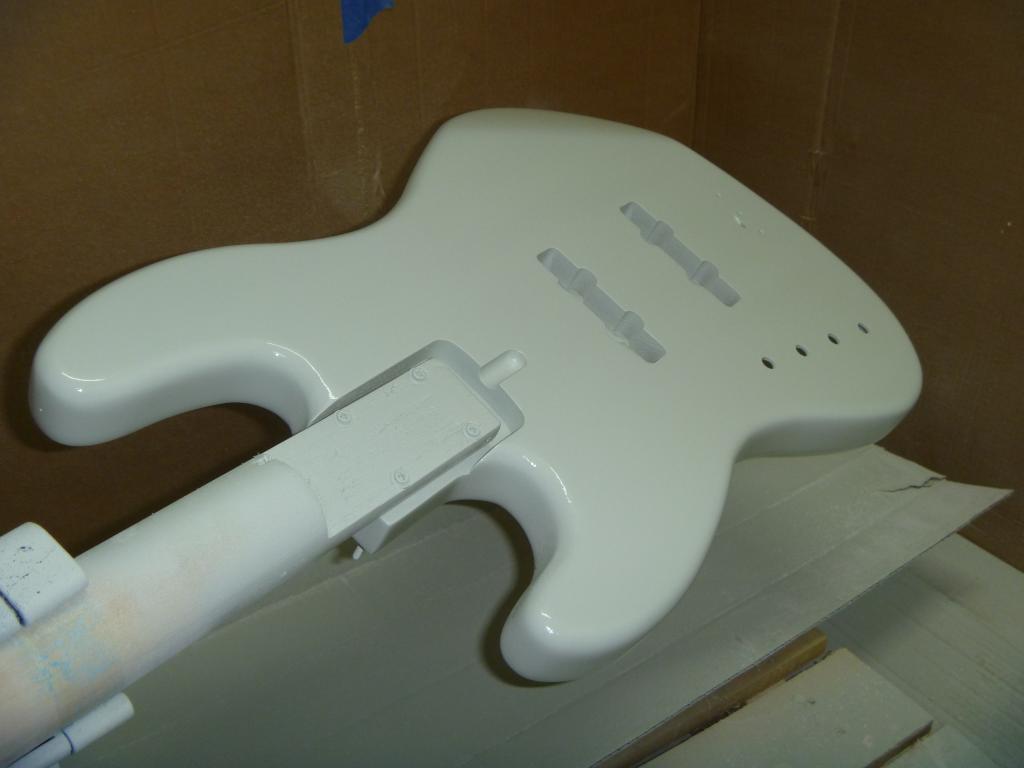
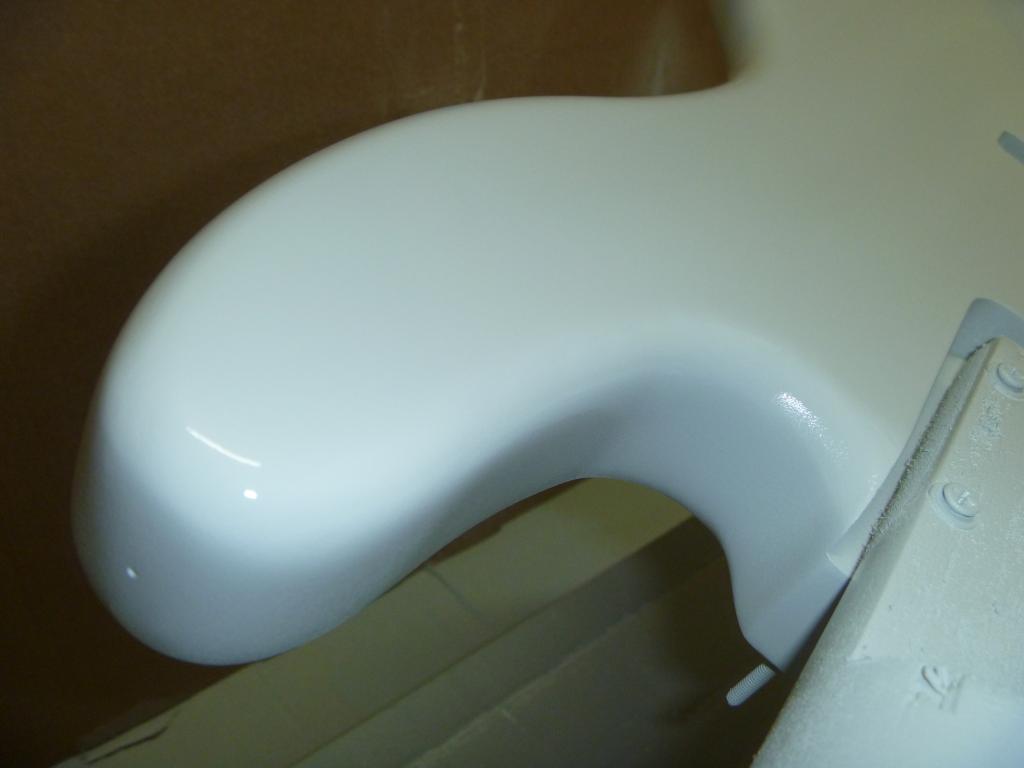

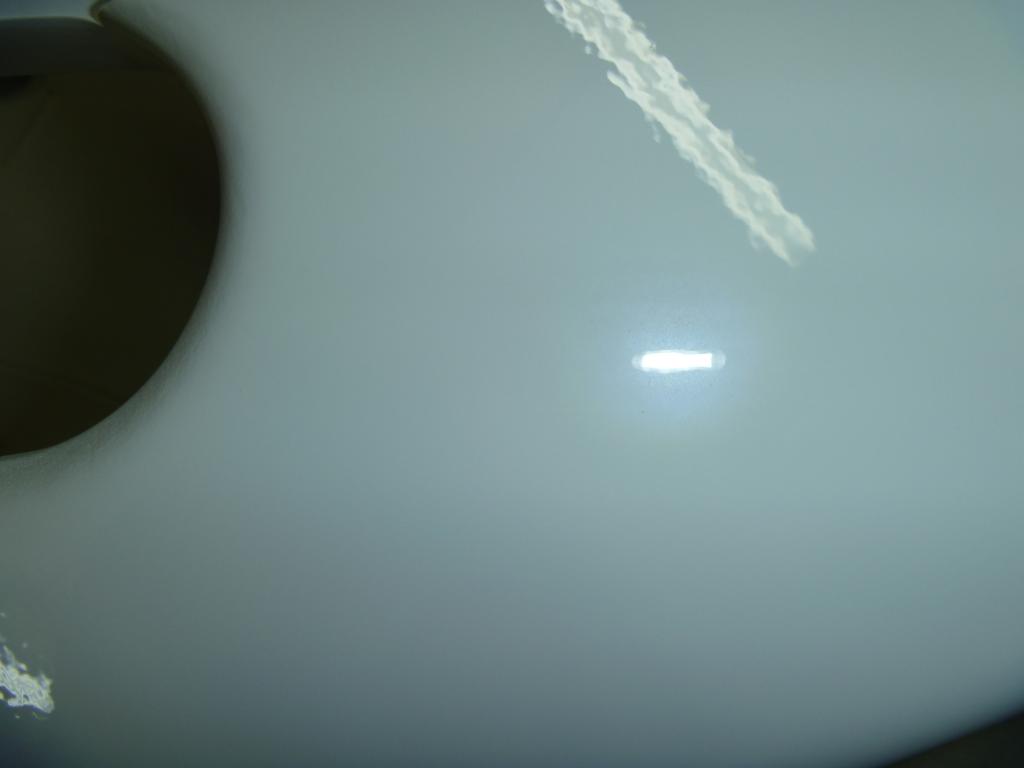
I just about finished with the can of paint, which means over the last two nights I have gone through about one can of paint. If I have to buy another can of paint, I might just cry — not because of the price, but because of the expensive and slow shipping.
Hopkins
Commercial User
That looks much better. I think you can finish that level that off with 4oo grit, then start on your clear coats
I think I may have discovered part of your orange peel problem though. A tack coat is used on a catalyzed finish. A thin coat that is allowed to dry just enough to get tacky will give the heavier coat something to bite into so it doesn't sag or run. Its not necessary on a nitro finish because each coat burns into the underlying coats causing them to melt. It could be that the thin tack coat you are spraying is flashing off, and orange peeling, and the orange peel is showing through the top coat.
I think I may have discovered part of your orange peel problem though. A tack coat is used on a catalyzed finish. A thin coat that is allowed to dry just enough to get tacky will give the heavier coat something to bite into so it doesn't sag or run. Its not necessary on a nitro finish because each coat burns into the underlying coats causing them to melt. It could be that the thin tack coat you are spraying is flashing off, and orange peeling, and the orange peel is showing through the top coat.
Thank you. I am really pleased with the way this looks. Right now, after about an hour or so of curing/drying, this thing looks phenomenal. There may be just a touch of thin spots in the horn cutaways that I think could use another spray; other than that this is really sweet looking and if I didn't know that I was supposed to finish it with a clear, I might think this was finished. That's how nice it looks right now. It's got that mirror-like finish and is very straight, smooth, and clean. To the touch, it feels like a finished product.That looks much better. I think you can finish that level that off with 4oo grit, then start on your clear coats
I think I may have discovered part of your orange peel problem though. A tack coat is used on a catalyzed finish. A thin coat that is allowed to dry just enough to get tacky will give the heavier coat something to bite into so it doesn't sag or run. Its not necessary on a nitro finish because each coat burns into the underlying coats causing them to melt. It could be that the thin tack coat you are spraying is flashing off, and orange peeling, and the orange peel is showing through the top coat.
There were a couple little dust particles (or something) that settled into this layer, so I'll have to get those out before proceeding.
Would there be any harm in hitting this body again with a 320 and then another healthy coat of color before going to clear? There's also that little notch in the wood from what I believe was a milling nick that is still visible. It's right by the bridge pickup and is bothering the crap out of me.
Hopkins
Commercial User
If you are happy with the level of the current coat, no harm in stepping up to 400x paper again. Make sure you change the paper frequently. It will cut smoother and faster. For the small nick, you can try drop filling with CA glue once you are into the clear coats. Assuming of course it is compatible with your clear coat of choice.
Edit: Apparently not advisable with nitro. See Hopkins' response below.
Edit: Apparently not advisable with nitro. See Hopkins' response below.
Last edited:
Hopkins
Commercial User
If you are happy with the level of the current coat, no harm in stepping up to 400x paper again. Make sure you change the paper frequently. It will cut smoother and faster. For the small nick, you can try drop filling with CA glue once you are into the clear coats. Assuming of course it is compatible with your clear coat of choice.
I have had bad luck trying to drop fill mixing CA and nitro. The best thing to drop fill with would be a drop of of the finish.


