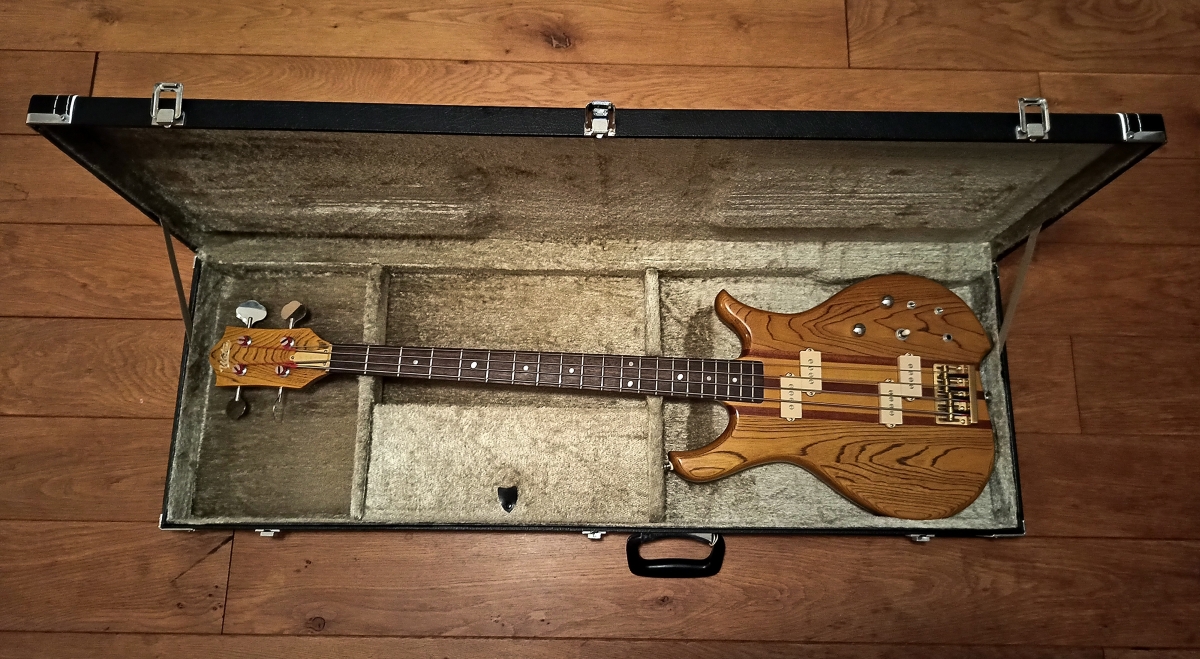
Here's mine- a Fernandes BO-60 with an ETS bridge.

TalkBass has been independent since 1998. Add your voice.
Create a free account to reply to discussions, view embedded media, and browse with fewer display ads.
Join free Log in
Want zero display ads or expanded classifieds tools? Compare plans.



im planning something similar in a custom build, did you get one made in the end?When I was thinking about a custom build, I was thinking about two in reverse with a five-way: neck, bridge, middle (half of each), series, parallel. The idea was to stack them right on top of each other with the “middle” in the normal position. But I have no idea if that would work well.
Something like this:
View attachment 4078939


I disagree.I actually had Warmoth do a body with custom P routes. There's a $45 charge per custom route. I knew exactly what I wanted, but it still took some back-and-forth with the sales team, because there were certain restrictions the shop was facing because of where I wanted the pickups located, and therefore certain adjustments had to be made, but it all worked out smoothly in the end.
So bottom line: Yes, they can do it; yes, they will charge extra; and make your decision about what you want before you call them. I like the normal configuration, not the reverse P, so I'd recommend sticking with that. (People comment about the D & G sounding thinner, as if the E & A wouldn't also sound thinner, and the E & A sound much worse when they're thinner. Also, when you're playing up the neck, you're more likely to be playing on the D & G, which means that part of the pickup relative to the length of string being played is actually similar to the other part relative to the E & A when you're playing down the neck.)

No. I found a Fender PB-555 and it sufficiently scratched the itch.im planning something similar in a custom build, did you get one made in the end?



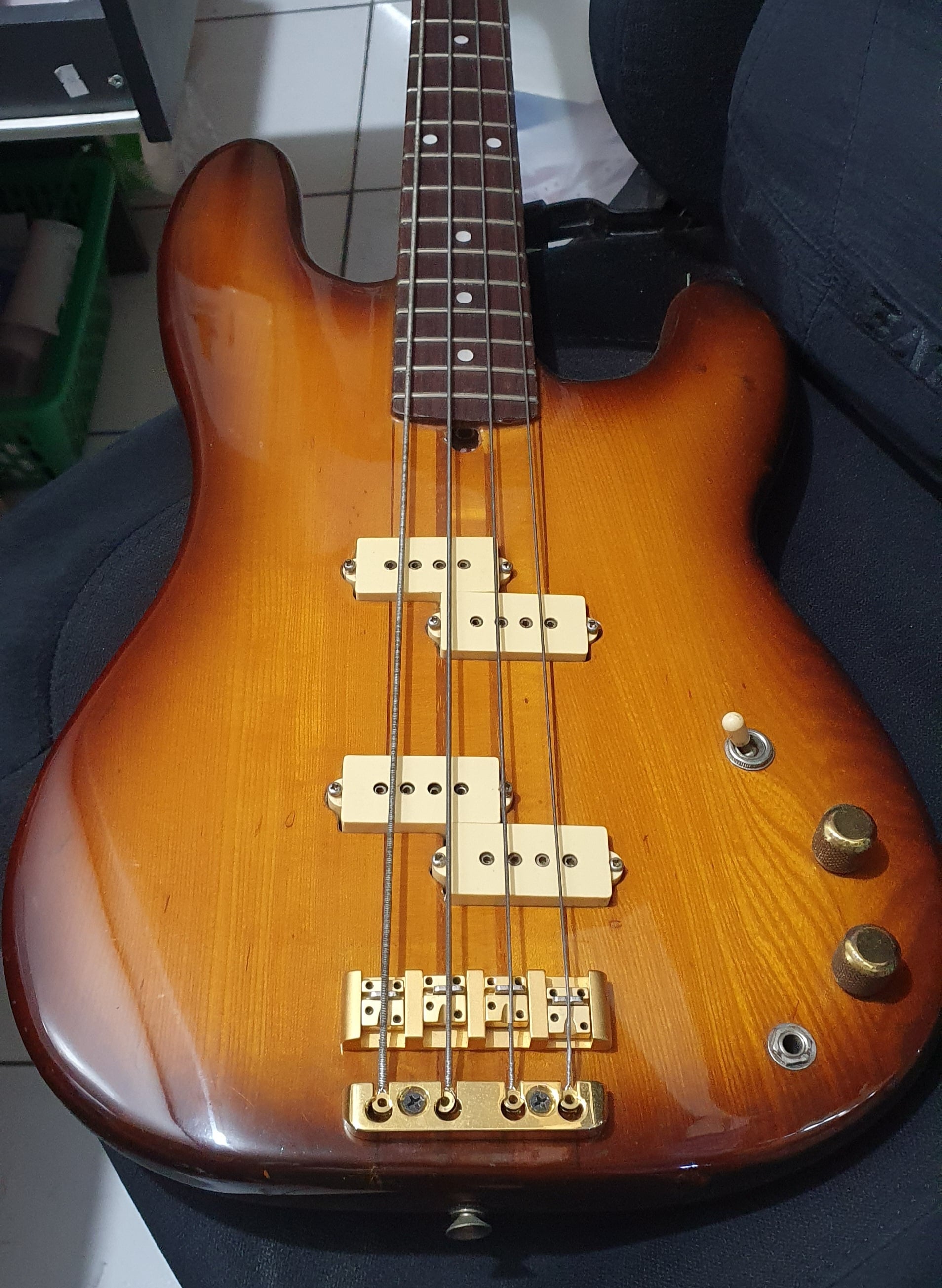
Old post (6 yrs ago!) - love everything you did on this bass, but what's going on with two stacked high-mass bridges?Gratuitous pic of my (medium-scale) double-reverse-P...
View attachment 3412950
(yes, hard to see but that's blue sparkle-flake lacquer...)
View attachment 3412952
The back one acts as a quick-release tailpiece, just so that medium scale bass can use "any long scale string" (not as many medium scale string sets available).Old post (6 yrs ago!) - love everything you did on this bass, but what's going on with two stacked high-mass bridges?
This is awesome, do you notice an increase in string tension?The back one acts as a quick-release tailpiece, just so that medium scale bass can use "any long scale string" (not as many medium scale string sets available).
An actual medium scale set could terminate in the front one, if I had a set handy. That bass was done right at the end of my medium scale fling, which lasted about 2013 thru 2019...
No change in tension but I noticed a very subtle tiny hint of extra 'chime' in the harmonic signature when using long scale strings. Maybe from the two inches of string behind the saddles sympathetically vibrating?This is awesome, do you notice an increase in string tension?
Basses with a tail-piece/string-stop separate from the bridge incorporate that same technology. I have a few basses like that and I've not noticed any increase of 'chime'... but you know, anythings possible.No change in tension but I noticed a very subtle tiny hint of extra 'chime' in the harmonic signature when using long scale strings. Maybe from the two inches of string behind the saddles sympathetically vibrating?

I've never understood why people think making the inactive portion of the string longer affects the string tension. It does not. If it did, the pitch would change.This is awesome, do you notice an increase in string tension?

Probably because of malarkey spouted by otherwise reputable makers, like this one:I've never understood why people think making the inactive portion of the string longer affects the string tension.