Depends how quickly the changes go. You can think minor, harmonic minor, melodic minor, or follow the changes, each ii v chord, 6th degree of melodic minor. It all depends. Also, sometimes the melody might give you a hint as well. Hope this helps.So, I’m a bit of a newb in Jazz, and I’m no music theory major...
From what I understand the Major ii-V-I is pretty straightforward. The progression is diatonic and based off of the natural major (Ionian) scale. The ii would be the Dorian mode of the root scale, and the V would be the Mixolydian mode of the root scale.
However, the Minor ii-V-I seems to be a bit of a mess. I’ve read a few TB threads and read a few other sources and there seems to be many ways to play this progression. A lot of examples actually seem to modulate keys for every chord... WTH is going on?
I’m assuming there’s no standard way to play it, and everyone plays it however they want for the song.
Is there any way someone could list the various ways it can be played, and maybe list which ways are the most common, or recommended for a jazz newb to start with?
Thanks in advance.

Enjoy the benefits of a premium membership!
Upgrade Account
-
TalkBass has been independent since 1998. Add your voice.
Create a free account to reply to discussions, view embedded media, and browse with fewer display ads.
Join free Log in
Want zero display ads or expanded classifieds tools? Compare plans.
You are using an out of date browser. It may not display this or other websites correctly.
You should upgrade or use an alternative browser.
You should upgrade or use an alternative browser.
Minor ii-V-I in Jazz... WTH?
- Thread starter Matthew_84
- Start date
More options
Who Replied?

I confess that I learned my ii/V/i different from most folks and will expect to get slapped around when school starts in a few weeks. I am not as well acquainted with the ii susb9 chord and don't follow Mark Levine's writing on it yet. But until then, I just use the modes approach.
If I start with a melodic minor scale (1 2 b3 4 5 6 7) as the i, and treat the ii as a mode of the same melodic minor scale, then the ii is (1 b2 b3 4 5 6 b7), which is equivalent to a m7b9 13 chord.
If I start with a harmonic minor scale (1 2 b3 4 5 b6 7) as the i, and treat the ii as a mode of the same harmonic minor scale scale, then the ii is (1 b2 b3 4 b5 6 b7), which is equivalent to a m7b5 b9 13 chord.
The difference between the melodic minor and harmonic minor is natural 6 vs b6. When you go from the first mode to the second mode (i-->ii), the 6th degree of the 1 mode becomes the 5th degree of the 2nd mode, so you get 5 and b5 respectively.
If I am wrong on this, please let me know (gently if possible).
If I start with a melodic minor scale (1 2 b3 4 5 6 7) as the i, and treat the ii as a mode of the same melodic minor scale, then the ii is (1 b2 b3 4 5 6 b7), which is equivalent to a m7b9 13 chord.
If I start with a harmonic minor scale (1 2 b3 4 5 b6 7) as the i, and treat the ii as a mode of the same harmonic minor scale scale, then the ii is (1 b2 b3 4 b5 6 b7), which is equivalent to a m7b5 b9 13 chord.
The difference between the melodic minor and harmonic minor is natural 6 vs b6. When you go from the first mode to the second mode (i-->ii), the 6th degree of the 1 mode becomes the 5th degree of the 2nd mode, so you get 5 and b5 respectively.
If I am wrong on this, please let me know (gently if possible).

I'm still a little confused about the three-scale Melodic Minor approach.
If you do as @foal30 and the link I just posted says, with the following chords/scales, you don't get quite get the right notes with the V chord.
ii chord = Dm7(b5) from the F Melodic Minor = D - E - F - G - Ab - Bb - C
V chord = G7(b9) from Ab Melodic Minor = G - Ab - Bb (*) - Cb - Db - Eb - F
I chord = Cm(Maj7) from C Melodic Minor = C - D - Eb - F - G - A - B
(*) The 3rd scale degree of this G7(b9) chord is a Bb, which would make the chord a minor chord, not a Major chord. It seems that to dodge around this problem, people don't really use the 7th mode of the Ab Melodic Minor scale, instead they use the G Altered Scale (G - Ab - Bb - B - Db - Eb - F) and focus more on the G - B - F - Ab for the chord tones.
So, if that's the case, why do people say to use the G7(b9) from the Ab Melodic Minor at all? Why not just say use the G Altered Scale?
Hi Matthew
I'm not 100% sure I've got your question:
- we are using melodic minor, so for the G7(b9) think Abm/maj7
which I spelt out earlier... So it's a B not a Bb.
You look at G7(b9) harmony...but play Abm/maj7.
I confess that I learned my ii/V/i different from most folks and will expect to get slapped around when school starts in a few weeks. I am not as well acquainted with the ii susb9 chord and don't follow Mark Levine's writing on it yet. But until then, I just use the modes approach.
If I start with a melodic minor scale (1 2 b3 4 5 6 7) as the i, and treat the ii as a mode of the same melodic minor scale, then the ii is (1 b2 b3 4 5 6 b7), which is equivalent to a m7b9 13 chord.
If I start with a harmonic minor scale (1 2 b3 4 5 b6 7) as the i, and treat the ii as a mode of the same harmonic minor scale scale, then the ii is (1 b2 b3 4 b5 6 b7), which is equivalent to a m7b5 b9 13 chord.
The difference between the melodic minor and harmonic minor is natural 6 vs b6. When you go from the first mode to the second mode (i-->ii), the 6th degree of the 1 mode becomes the 5th degree of the 2nd mode, so you get 5 and b5 respectively.
If I am wrong on this, please let me know (gently if possible).
@IamGroot
Yes the difference is the 6/13 for Melodic minor v Harmonic minor.
Yes Mark Levine has written an excellent book. Keep at this book, it's a rip snorter.
Yes the difference is the 6/13 for Melodic minor v Harmonic minor.
Yes Mark Levine has written an excellent book. Keep at this book, it's a rip snorter.
Hi Matthew
I'm not 100% sure I've got your question:
- we are using melodic minor, so for the G7(b9) think Abm/maj7
which I spelt out earlier... So it's a B not a Bb.
You look at G7(b9) harmony...but play Abm/maj7.
Sounds as B , written as Cb. Sorry bro.

Sub the Cb for Bb in your G chord in Ab melodic minor and you'll have G7alt (not G7b9 - the fifth of the chord is either Db or Eb), which the characteristic vii chord of the Ab melodic minor scale, so your confusion is not misplaced. The trick is that G7b9 is often voiced without the natural fifth, and such a voicing would be consistent with the Ab melodic minor scale.I'm still a little confused about the three-scale Melodic Minor approach.
If you do as @foal30 and the link I just posted says, with the following chords/scales, you don't get quite get the right notes with the V chord.
ii chord = Dm7(b5) from the F Melodic Minor = D - E - F - G - Ab - Bb - C
V chord = G7(b9) from Ab Melodic Minor = G - Ab - Bb (*) - Cb - Db - Eb - F
I chord = Cm(Maj7) from C Melodic Minor = C - D - Eb - F - G - A - B
(*) The 3rd scale degree of this G7(b9) chord is a Bb, which would make the chord a minor chord, not a Major chord. It seems that to dodge around this problem, people don't really use the 7th mode of the Ab Melodic Minor scale, instead they use the G Altered Scale (G - Ab - Bb - B - Db - Eb - F) and focus more on the G - B - F - Ab for the chord tones.
So, if that's the case, why do people say to use the G7(b9) from the Ab Melodic Minor at all? Why not just say use the G Altered Scale?
The weird thing about melodic minor harmony is that any chord in a specific melodic minor scale can sub for any other chord in that scale. As a result, a ii-v-i progression over the C melodic minor scale could be performed as just one repeated chord (say, Dsus b9 or B7alt), which jazz heads would think is either extremely boring or very clever (if done sparingly). The progression as given keeps a C minor flavour but takes us on a more interesting harmonic excursion than a diatonic approach over the C natural or melodic minor scales.
Matthew you could also try
Lydian Augmented
Use from the b5 bar 1 and from maj3 in bar 2
Em7(b5)/ A7(b9)/ Dm7...
The b5 of E is Bb. Play Lydian augmented from here
The maj3 of A is C#. Play Lydian augmented from here
Lydian Augmented
Use from the b5 bar 1 and from maj3 in bar 2
Em7(b5)/ A7(b9)/ Dm7...
The b5 of E is Bb. Play Lydian augmented from here
The maj3 of A is C#. Play Lydian augmented from here
Lydian Augmented is a Lydian scale with a raised 5th
It is the 3rd Mode of Melodic Minor Harmony
Bb C D E F G A
If we wanted to play a Dm7 chord then those are good notes as well. D F A C.
It is the 3rd Mode of Melodic Minor Harmony
Bb C D E F G A
If we wanted to play a Dm7 chord then those are good notes as well. D F A C.
Groove Master
Commercial User
- Apr 22, 2011
- 1,808
- 1,291
- Disclosures
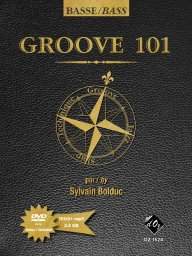
- Author of Groove 101, Slap 101 and Technique 101
Up to 3 minor scales can be involved in a ii-v-i in minor: minor harmonic, minor melodic and minor natural. All this because unlike the Major II-V, the color of the resolving I min chord can be different and will affect the scale to play depending if it is a min6, minMaj7 or min7.
Also because that minor progression is built on alterations, many variations are possible.
But it can be sum up at this: the minor harmonic scale. It is that simple! Major II-V Major scale. minor ii-v minor Harmonic scale.
Also because that minor progression is built on alterations, many variations are possible.
But it can be sum up at this: the minor harmonic scale. It is that simple! Major II-V Major scale. minor ii-v minor Harmonic scale.
So, I’m a bit of a newb in Jazz, and I’m no music theory major...
From what I understand the Major ii-V-I is pretty straightforward. The progression is diatonic and based off of the natural major (Ionian) scale. The ii would be the Dorian mode of the root scale, and the V would be the Mixolydian mode of the root scale.
However, the Minor ii-V-I seems to be a bit of a mess. I’ve read a few TB threads and read a few other sources and there seems to be many ways to play this progression. A lot of examples actually seem to modulate keys for every chord... WTH is going on?
I’m assuming there’s no standard way to play it, and everyone plays it however they want for the song.
Is there any way someone could list the various ways it can be played, and maybe list which ways are the most common, or recommended for a jazz newb to start with?
Thanks in advance.
Last edited:

Up to 3 minor scales can be involved in a ii-v-i in minor: minor harmonic, minor melodic and minor natural.
I think the confusion comes from the Major scale diatonic Modes understanding.
A "perfect" Dorian mode (to start) in the Major 2 5 1 cadence but in case of the same Minor cadence, those 3 forms (interchangeable) of Minor add some questions.
Groove Master
Commercial User
- Apr 22, 2011
- 1,808
- 1,291
- Disclosures
- Author of Groove 101, Slap 101 and Technique 101
This is incomplete. Read my whole explanation. These scales are NOT interchangeable. They are very specific in their application.I think the confusion comes from the Major scale diatonic Modes understanding.
A "perfect" Dorian mode (to start) in the Major 2 5 1 cadence but in case of the same Minor cadence, those 3 forms (interchangeable) of Minor add some questions.
Sub the Cb for Bb in your G chord in Ab melodic minor and you'll have G7alt (not G7b9 - the fifth of the chord is either Db or Eb), which the characteristic vii chord of the Ab melodic minor scale, so your confusion is not misplaced. The trick is that G7b9 is often voiced without the natural fifth, and such a voicing would be consistent with the Ab melodic minor scale.
The weird thing about melodic minor harmony is that any chord in a specific melodic minor scale can sub for any other chord in that scale. As a result, a ii-v-i progression over the C melodic minor scale could be performed as just one repeated chord (say, Dsus b9 or B7alt), which jazz heads would think is either extremely boring or very clever (if done sparingly). The progression as given keeps a C minor flavour but takes us on a more interesting harmonic excursion than a diatonic approach over the C natural or melodic minor scales.
Thanks for this post. It clears up a lot of my confusion... There's still a lot I need to understand, but I gather than will come from studying more jazz theory and tunes, as well as getting a better grip of the melodic minor and altered scales. Thanks again.
Matthew you could also try Lydian Augmented...
Great! I'll have a look at that too! Thanks.
I think the confusion comes from the Major scale diatonic Modes understanding.
A "perfect" Dorian mode (to start) in the Major 2 5 1 cadence but in case of the same Minor cadence, those 3 forms (interchangeable) of Minor add some questions.
This is incomplete. Read my whole explanation. These scales are NOT interchangeable. They are very specific in their application.
I think what @Whousedtoplay meant, was that my confusion came from understanding music theory from the basis of the the diatonic major scale, while not understanding the various minor scales, and possible variations/substitutions within/between them.
Anyways, I'm starting to grasp it now, or at least understand why there are so many possibilities. Now I just need to study more theory and a bunch of tunes to really see the various applications in action.
As always you are correct.This is incomplete. Read my whole explanation. These scales are NOT interchangeable. They are very specific in their application.
The word, interchangeable, is for my explanation only, which perfectly explains to me that Minor has 3 variations/forms that could be applied at any moment without using that word, borrowed or modal interchange,
you, as a very knowledgeable musician should use a different word, and that’s our normal way of socializing at TB.
Groove Master
Commercial User
- Apr 22, 2011
- 1,808
- 1,291
- Disclosures
- Author of Groove 101, Slap 101 and Technique 101
Ok I get it. But there is nothing wrong to use the major scale as starting point to study the minor tonalities because they are related. Like I said, start by looking at the 3 modes (i-ii and v) of the minor harmonic.As for the iimin7(b5) don't forget that the VII mode of the major scale is also a min7(b5) and the only difference would be the alteration of the sixth compared the minor harmonic mode. And you can think of that mode as a mode of the major scale OR the natural minor scale which contain the exact same notes.I think what @Whousedtoplay meant, was that my confusion came from understanding music theory from the basis of the the diatonic major scale, while not understanding the various minor scales, and possible variations/substitutions within/between them.
Anyways, I'm starting to grasp it now, or at least understand why there are so many possibilities. Now I just need to study more theory and a bunch of tunes to really see the various applications in action.
You are correct.I think what @Whousedtoplay meant, was that my confusion came from understanding music theory from the basis of the the diatonic major scale, while not understanding the various minor scales, and possible variations/substitutions within/between them.
Anyways, I'm starting to grasp it now, or at least understand why there are so many possibilities. Now I just need to study more theory and a bunch of tunes to really see the various applications in action.
Many years ago, composers and theorists were dealing with the same problem/ issue of facing that minor V7.
All smart people decided to variate/raise that b7 in order to have that dominant V7. They even called it Harmonic minor due to those Harmony issues.
Also, smart people decided that in order to beautify the Melody (minor), it’s a good idea to “revise” some Minor scale notes; therefore, we have acquired the Melodic minor scale.
The recent posts by GrooveMaster and Whousedtoplay are pretty on track as far as minor scale theor
This (and the follow-up discussions) is spot on.
I learned most of my practical theory playing real book gigs with an much older jazz pianist who explained that there were lots of options/alterations in the minor ii V i . So I asked which one he used and he said whatever he felt at the time.
So much for theory. Just listen.
I am doing a big restudy of minor chord theory but that is for classical theory class.
Up to 3 minor scales can be involved in a ii-v-i in minor: minor harmonic, minor melodic and minor natural. All this because unlike the Major II-V, the color of the resolving I min chord can be different and will affect the scale to play depending if it is a min6, minMaj7 or min7.
Also because that minor progression is built on alterations, many variations are possible.
But it can be sum up at this: the minor harmonic scale. It is that simple! Major II-V Major scale. minor ii-v minor Harmonic scale.
This (and the follow-up discussions) is spot on.
I learned most of my practical theory playing real book gigs with an much older jazz pianist who explained that there were lots of options/alterations in the minor ii V i . So I asked which one he used and he said whatever he felt at the time.
So much for theory. Just listen.
I am doing a big restudy of minor chord theory but that is for classical theory class.


