The LM4250 draws so little current, you can leave the battery in without any switching and it should last years. You could just fit it into the existing cavity, I don’t think the original MM had any kind of convenient way to change the battery or switch to turn it off when you unplug either, it would last years.I forgotten to say that since I'm still using the 9v connector as an workaround, haven't installed the TRS output Jack, I'm still using the original mono jack that came with the Harley Benton MB-4. So I'm still looking for how to wire correctly the TRS to work as the on/off switch. And my plant to the future is also add a Volume pull-push pot to make it active/passive mode.

Enjoy the benefits of a premium membership!
Upgrade Account
-
TalkBass has been independent since 1998. Add your voice.
Create a free account to reply to discussions, view embedded media, and browse with fewer display ads.
Join free Log in
Want zero display ads or expanded classifieds tools? Compare plans.
You are using an out of date browser. It may not display this or other websites correctly.
You should upgrade or use an alternative browser.
You should upgrade or use an alternative browser.
More options
Who Replied?
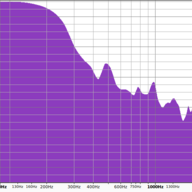
I got some PCBs of my modded/compensated preamp back from OSHPark, loaded one up and installed it. I would say changing the pickups to parallel made the biggest difference. The new amp is brighter than the stock, but I don't have an LM4250 to put into a board to compare, so I don't know how close it is to the original. Certainly SPICE says my version is pretty damn close.
To summarize how we got here: Boscoe showed us that the amp they currently use is the same as original, but with a TL071 and a 10K resistor in the treble feedback path to try and compensate for its higher bandwidth. I showed, using SPICE simulations, that using a TL071 in the original without any compensation fails to fall off at higher frequencies like the LM4250 does. Then I showed that the compensation resistor in the new basses helps, but the peak is not as high, so they don't sound as bright. I added an inductor in parallel to the compensation resistor, and adjusted the value of the resistor in order to mimic the original frequency response more closely. Also, with the pickups in series, the resonant frequency is lower, adding to the loss of brightness compared to the original.
I can share the PCB on OSHPark if anyone wants to check it out for themselves.
Here is a schematic

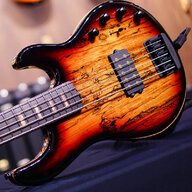
Obligatory 'pictures or it didn't happen'. If you use a 120mH inductor instead of one at 100 and one at 20 like I did, you can eliminate one and free up some space to spread the other stuff out a bit.


And last, I love to see people's basses when they post, so if you're like me, you do too! BTW, these things are on sale at one of the major distributors for $330 right now.

To summarize how we got here: Boscoe showed us that the amp they currently use is the same as original, but with a TL071 and a 10K resistor in the treble feedback path to try and compensate for its higher bandwidth. I showed, using SPICE simulations, that using a TL071 in the original without any compensation fails to fall off at higher frequencies like the LM4250 does. Then I showed that the compensation resistor in the new basses helps, but the peak is not as high, so they don't sound as bright. I added an inductor in parallel to the compensation resistor, and adjusted the value of the resistor in order to mimic the original frequency response more closely. Also, with the pickups in series, the resonant frequency is lower, adding to the loss of brightness compared to the original.
I can share the PCB on OSHPark if anyone wants to check it out for themselves.
Here is a schematic
Obligatory 'pictures or it didn't happen'. If you use a 120mH inductor instead of one at 100 and one at 20 like I did, you can eliminate one and free up some space to spread the other stuff out a bit.
And last, I love to see people's basses when they post, so if you're like me, you do too! BTW, these things are on sale at one of the major distributors for $330 right now.
Last edited:

- Oct 22, 2015
- 21,155
- 256,557
- Disclosures
- I am an affiliate for Ari Cap.
And last, I love to see people's basses when they post, so if you're like me, you do too!
Can oblige, yet unable to contribute to the StingRay preamp knowledge base. Bought it in the spring of 1979. It was rehabbed in 2021.

Last edited:

A thing of beauty.Can oblige, yet unable to contribute to the StingRay preamp knowledge base. Bought it in the spring of 1979. It was rehabbed in 2021.

I'm one of those guys. Feel free to contact me directly through PM if you need any assistance.No problem! I’ll be here if you need help. There is at least one other guy on here that also manufacture these preamps that can also help if you get stuck.
No question about it. I have upgraded a bunch of Ray4s and 5s. Once you use an authentic preamp and an Alnico pickup wound to the original specs, like the Nordstrand MM series or the Aguilar M series, or even the GFS MM-Pro with Alnico (just $40), you have turned those basses in authentic Stingray tone machines!I haven't worked with any of those so your mileage may vary. However I will say that 80% of the Music Man tone is going to be the preamp and parallel wiring, assuming the pickup maker made at least some attempt at a MM style pickup. It's amazing how much better a standard SBMM Ray4 sounds by making just those two changes. Add in a AlNiCo vintage style pickup and you're all the way there. It sounds just like a "real" StingRay because it is a real StingRay at that point.

I've had several MM pickups custom wound at Sentell and they sound amazing. You can tell him exactly how you want them to sound. I always get the extended alnico poles and have them grounded Guitar pickups and repair service Made in USA | Sentell Pickups@TriumphRider99,
Do you have any recommendations for a good MM pickups as GFS MM Pro? This one is currently out of stock.
LT1351 Link RemovedAnd there are other high quality alternatives. I went for the LT1097 on my boards, they were available at Mouser when I bought the rest of the components. I believe $9 a piece. They aren't the original ones and I haven't had the chance to A/B (and I doubt I'd hear the difference, which isn't saying much) but they have been great.
You can buy actual 4250s, but the only way to do it is to buy a minimum of 50, but that way they are only about 60 cents a piece. I've been know to sell a few of mine so contact me if you'd like a few. I sell at cost plus shipping, so the shipping is usually around $7 or less. PM me if you are interested. If you want to buy at least 50, PM me and I will send you the vendor info.LT1351 Link Removed
My experience as well! Recently installed a Bud's Quality Fun Stuff Vintage 70's 2 band preamp and Aguilar AG 4M on a SBMM Ray 4. Sounds like a Stingray to me!!No question about it. I have upgraded a bunch of Ray4s and 5s. Once you use an authentic preamp and an Alnico pickup wound to the original specs, like the Nordstrand MM series or the Aguilar M series, or even the GFS MM-Pro with Alnico (just $40), you have turned those basses in authentic Stingray tone machines!
Thanks (I'm Bud of BQFS)!My experience as well! Recently installed a Bud's Quality Fun Stuff Vintage 70's 2 band preamp and Aguilar AG 4M on a SBMM Ray 4. Sounds like a Stingray to me!!
The LM4250 is obsolete and wasn't intended for audio. It was only used because of its low current draw. The LT1351 sounds a lot better and doesn't draw a lot of currentYou can buy actual 4250s, but the only way to do it is to buy a minimum of 50, but that way they are only about 60 cents a piece. I've been know to sell a few of mine so contact me if you'd like a few. I sell at cost plus shipping, so the shipping is usually around $7 or less. PM me if you are interested. If you want to buy at least 50, PM me and I will send you the vendor info.
There are two kinds of people here. Some are interested in various audio circuits and want to play with different resistors, capacitors, and opamps. There aren't too many of them here. After all, the vintage StingRay preamp isn't the normal kind of design that one would start from should one want to experiment with preamps. As you pointed out, the LM4250 is the "wrong" opamp and yet the original StingRay was so popular.The LM4250 is obsolete and wasn't intended for audio. It was only used because of its low current draw. The LT1351 sounds a lot better and doesn't draw a lot of current
Everyone else (and probably the overwhelming majority) are looking to recreate the exact sound from late 1970s StingRays. They're not looking for "better". They're looking for "same". That obsolete opamp is key to that. Part of the magic of the StingRay is the fact that the preamp is so unusual. Most of us here are trying to recreate that magic.
The way your advice is worded isn't very helpful to those people.

Passinwind
I know nothing.
- Dec 3, 2003
- 23,066
- 45,991
- Disclosures
- Designer/Toaster Tech @ Passinwind Electronics
Maybe yes, maybe no. But if tough love is the play then the LT1351 is also quite obsolete by now, often not that easy to source, and seriously overpriced.There are two kinds of people here. Some are interested in various audio circuits and want to play with different resistors, capacitors, and opamps. There aren't too many of them here. After all, the vintage StingRay preamp isn't the normal kind of design that one would start from should one want to experiment with preamps. As you pointed out, the LM4250 is the "wrong" opamp and yet the original StingRay was so popular.
Everyone else (and probably the overwhelming majority) are looking to recreate the exact sound from late 1970s StingRays. They're not looking for "better". They're looking for "same". That obsolete opamp is key to that. Part of the magic of the StingRay is the fact that the preamp is so unusual. Most of us here are trying to recreate that magic.
The way your advice is worded isn't very helpful to those people.
FWIW, the MM2B was exactly where I wanted to start down the DIY onboard preamp path and the Uncle Fluffy thread and Uncle Fluffy himself were a great help. I've long since moved on to much more advanced and (IMNSHO) better sounding things, but still enjoy the occasional payback moment for what I learned.

The LM4250 is obsolete and wasn't intended for audio. It was only used because of its low current draw. The LT1351 sounds a lot better and doesn't draw a lot of current
I have to respectfully disagree. It was not only chosen for its low current draw, allowing for battery life to essentially be equal to battery shelf life, but it was also chosen as an essential component, working in tandem with the specific Alnico V Stingray pickup, to produce a specific frequency response curve. Unless you use the 4250, your preamp/pickup combination will not sound like an authentic Stingray. Just ask my 80+ satisfied customers...
I have never tried the LT1351, so cannot say how it compares to the LM4250. All I can say is: I installed your preamp with the 2450 along with an Aguilar AG 4M in my Sterling Ray4, and love the way it sounds! For full disclosure, I also installed an Albridge quick release bridge at the same time as those mods, maybe it is contributing to the quality of sound too, but I suspect the improvement is mostly from the preamp and pickupI have to respectfully disagree. It was not only chosen for its low current draw, allowing for battery life to essentially be equal to battery shelf life, but it was also chosen as an essential component, working in tandem with the specific Alnico V Stingray pickup, to produce a specific frequency response curve. Unless you use the 4250, your preamp/pickup combination will not sound like an authentic Stingray. Just ask my 80+ satisfied customers...


Hello all,
Anyone have ever added a push-pull volume por with this PCB/circuit? I'm thinking about to add this to my eq as to make possible choose between active and passive mode. If someone had any ideia if it possible I would be glad to hear from you.
Anyone have ever added a push-pull volume por with this PCB/circuit? I'm thinking about to add this to my eq as to make possible choose between active and passive mode. If someone had any ideia if it possible I would be glad to hear from you.
Funny, a potential customer (I make and sell clones of the pre-EB 2-band preamp) on eBay asked me the almost identical question yesterday. Because the values of the preamp are so non-standard, I think you would have a difficult, if not impossible, time finding a push-pull switch mounted on a B25K (volume), A100K (bass) or C1M (treble) control. The only relatively easy mod would be to put a preamp bypass switch ahead of the preamp so that when, in passive mode, the signal would go directly from the pickup to the input of your amp. A more messy alternative would be to wire the bypass switch and then drill another hole or two for a passive volume and tone control. Other than that, I cannot image how to accomplish what you want.Hello all,
Anyone have ever added a push-pull volume por with this PCB/circuit? I'm thinking about to add this to my eq as to make possible choose between active and passive mode. If someone had any ideia if it possible I would be glad to hear from you.
It is possible that some other manufacturer might make a preamp with a passive/active switch, but I can guarantee you that it would not produce the characteristic Stingray tone, which you only get by pairing a clone of the original Alnico V pickup with a clone of the pre-EB 2-band preamp. There has been plenty of discussion about that and other similar topics in this thread.
Funny, a potential customer (I make and sell clones of the pre-EB 2-band preamp) on eBay asked me the almost identical question yesterday. Because the values of the preamp are so non-standard, I think you would have a difficult, if not impossible, time finding a push-pull switch mounted on a B25K (volume), A100K (bass) or C1M (treble) control. The only relatively easy mod would be to put a preamp bypass switch ahead of the preamp so that when, in passive mode, the signal would go directly from the pickup to the input of your amp. A more messy alternative would be to wire the bypass switch and then drill another hole or two for a passive volume and tone control. Other than that, I cannot image how to accomplish what you want.
It is possible that some other manufacturer might make a preamp with a passive/active switch, but I can guarantee you that it would not produce the characteristic Stingray tone, which you only get by pairing a clone of the original Alnico V pickup with a clone of the pre-EB 2-band preamp. There has been plenty of discussion about that and other similar topics in this thread.
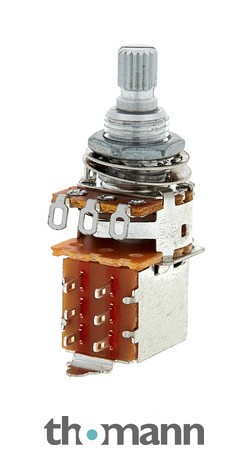
Allparts 25K Push/Pull Pot
Push / Pull Pot Logarithmic, Riffel axis, Thread diameter: 9.5 mm (0.371"), Thread length: 9.5 mm (3/8"), Includes nut and washer
 www.thomann.de
I bought this push-pull pot thinking about the possibility to do it but possibly now it was just a waste of money
 . At the end it was at least funny.
Shows you what I know! I've been involved in electronics consistently since I was 16 (60 years ago) and there is always something new coming along all the time. I should have known better. Anyway, there you go, a 25K switch you could wire to my preamp and use it as a bypass. Isn't that what you wanted to do?Allparts 25K Push/Pull Pot
Push / Pull Pot Logarithmic, Riffel axis, Thread diameter: 9.5 mm (0.371"), Thread length: 9.5 mm (3/8"), Includes nut and washer
I bought this push-pull pot thinking about the possibility to do it but possibly now it was just a waste of money


