I don't have an issue with the make of the bridge, just that the height is maxed out on the B & E, and there is no truss/relief rod. A previous post recommended a new bridge. Not something I need now, maybe later. Or I'm just gonna have a graphite club in a few years. Pups I might like after I swap out the preamp and put some DR strings on there, give the electronics a good air blast. But I really like passive-active setups. Passive is my go to sound. Active preamp to amp preamp to amp is a little too hot and fuzzy for me, but I do like to be able to switch into it when I want that extra oomph. Really just looking for suggestions for down the road!

Enjoy the benefits of a premium membership!
Upgrade Account
-
TalkBass has been independent since 1998. Add your voice.
Create a free account to reply to discussions, view embedded media, and browse with fewer display ads.
Join free Log in
Want zero display ads or expanded classifieds tools? Compare plans.
You are using an out of date browser. It may not display this or other websites correctly.
You should upgrade or use an alternative browser.
You should upgrade or use an alternative browser.
Modulus Mob
- Thread starter rockstarbassist
- Start date
More options
Who Replied?
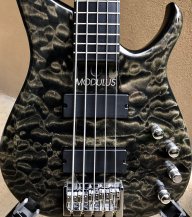
I don't have an issue with the make of the bridge, just that the height is maxed out on the B & E, and there is no truss/relief rod. A previous post recommended a new bridge. Not something I need now, maybe later. Or I'm just gonna have a graphite club in a few years. Pups I might like after I swap out the preamp and put some DR strings on there, give the electronics a good air blast. But I really like passive-active setups. Passive is my go to sound. Active preamp to amp preamp to amp is a little too hot and fuzzy for me, but I do like to be able to switch into it when I want that extra oomph. Really just looking for suggestions for down the road!
At least on my Q5, Fatbeams sounded with way more low mids than my bass was already producing so I switched it to DR Lo Rider Nickels with very good results.
About the preamp, yes you need to install the EMG one and test it, get use to the sound and decide what to do. In my case I know it is probable that I will switch all to Nordstrand (around December I guess) since it is the sound that I like.

At least on my Q5, Fatbeams sounded with way more low mids than my bass was already producing so I switched it to DR Lo Rider Nickels with very good results.
About the preamp, yes you need to install the EMG one and test it, get use to the sound and decide what to do. In my case I know it is probable that I will switch all to Nordstrand (around December I guess) since it is the sound that I like.
Yeah I got some hi beams and pure blues. Might get some fat beams. I noticed it was really dark sounding with whatever strings were on there. I tend to like to bring out that 200-600Hz'ish range, but we shall see. Each of my basses I end up dialing in differently til I feel/internalize the tone.
Yeah I got some hi beams and pure blues. Might get some fat beams. I noticed it was really dark sounding with whatever strings were on there. I tend to like to bring out that 200-600Hz'ish range, but we shall see. Each of my basses I end up dialing in differently til I feel/internalize the tone.
Let me know how it goes with the Hi Beams.
Larry
Anyone have a cross section of what a 95 Q6 neck looks like? Are they hollow? I am putting a strap nut in under the 22nd fret, and I am wondering if I am dealing with a solid chunk of graphite, or is it only a 1/4" thick and then hollow (or some such). Yes, I will be taking precautions (slow drilling, finding the right screw, etc.)

are your strings tapered? if you need more height from your saddles, you could put a shim under the bridge.I don't have an issue with the make of the bridge, just that the height is maxed out on the B & E, and there is no truss/relief rod. A previous post recommended a new bridge. Not something I need now, maybe later. Or I'm just gonna have a graphite club in a few years. Pups I might like after I swap out the preamp and put some DR strings on there, give the electronics a good air blast. But I really like passive-active setups. Passive is my go to sound. Active preamp to amp preamp to amp is a little too hot and fuzzy for me, but I do like to be able to switch into it when I want that extra oomph. Really just looking for suggestions for down the road!

I am with pnutz the original pics of the bass listing had a tapered B string on it as why the B string saddle would seem to be maxed out in height. Go with a set that is not tapered if that has not been tried yet.
Steven
Steven
I am with pnutz the original pics of the bass listing had a tapered B string on it as why the B string saddle would seem to be maxed out in height. Go with a set that is not tapered if that has not been tried yet.
Steven
You both make a very good point... DRs aren't tapered, so once the WD-40 dries and put I them on, I might have to lower the bridge. Mostly, what I was worried about is the fretboard being dried out and thus causing the neck to bend/straighten. With no truss rod, the bridge is the only way to affect the string action. And since it was maxed out, I was worried I had no where to go if the neck continued to bend. A new bridge was recommended in that case, from an earlier post. Or replace the neck.
my pre-truss rod tbx had a bit of a front bow that was straightened out with a fingerboard plane.You both make a very good point... DRs aren't tapered, so once the WD-40 dries and put I them on, I might have to lower the bridge. Mostly, what I was worried about is the fretboard being dried out and thus causing the neck to bend/straighten. With no truss rod, the bridge is the only way to affect the string action. And since it was maxed out, I was worried I had no where to go if the neck continued to bend. A new bridge was recommended in that case, from an earlier post. Or replace the neck.
had a steinberger (no truss rod) a couple of lifetimes ago also needed a plane.
i use dr sunbeams and none of my bridge saddles are maxed.
hope it all works out.

Anyone have a cross section of what a 95 Q6 neck looks like? Are they hollow? I am putting a strap nut in under the 22nd fret, and I am wondering if I am dealing with a solid chunk of graphite, or is it only a 1/4" thick and then hollow (or some such).
I'm not 100% positive but my understanding is that it's a mostly hollow structure with some reinforcing members parallel to the frets that go from just underneath the fingerboard all the way to the back of the neck located at several spots along the length of the neck. So the hollow neck is divided into several "chambers"
I could be totally wrong...

After reading the recent posts, I am thinking wiping WD-40 on my Moduli phenolic fingerboards, but so far with not doing anything to them for 20 years they seem to be holding up fine. What have others doing with their phenolic boards?
I absolutely 100% recommend that you DO NOT do this!!!Anyone have a cross section of what a 95 Q6 neck looks like? Are they hollow? I am putting a strap nut in under the 22nd fret, and I am wondering if I am dealing with a solid chunk of graphite, or is it only a 1/4" thick and then hollow (or some such). Yes, I will be taking precautions (slow drilling, finding the right screw, etc.)
The neck is hollow. It's not even 1/4" thick, more like 1/8". There is no "right screw" for what you're proposing - the neck isn't designed to have a strap button screwed into it like that. It's just not.
If you want to see how thin the carbon fiber layup is, take out one of your tuners. Yes, the headstock is hollow, too. And yes, I know there are screws that go into the neck that hold the tuners, but they're a whole lot smaller and carry much, much less of a load than a strap button.
If you want to move your strap button, the best approach is going to be to take out one of the neck screws and get one that's a little longer, put your strap button there. It'll be close enough to the 22nd fret to let you see if the bass hangs better for you - without doing irreversible damage to the bass.
Honestly, if I was in the market for a Quantum and saw one with a strap button screwed straight in where it shouldn't be, like you're planning, it'd be a deal breaker. I'd absolutely pass on it. If you do that, you're going to seriously devalue your bass.
You both make a very good point... DRs aren't tapered, so once the WD-40 dries and put I them on, I might have to lower the bridge. Mostly, what I was worried about is the fretboard being dried out and thus causing the neck to bend/straighten. With no truss rod, the bridge is the only way to affect the string action. And since it was maxed out, I was worried I had no where to go if the neck continued to bend. A new bridge was recommended in that case, from an earlier post. Or replace the neck.
I was going to suggest non-tapered strings, too, but also understand that the bridge saddle height adjustment screws are not the only way to affect string action - you can change the neck angle by adding or removing a shim. If you haven't had your neck off, you might want to remove it to have look in the pocket. It could very well be that someone previously put a shim in there and didn't do a great job of it (a neck shim seems like a pretty simple thing, but it's easy to get it wrong).
You usually shim a neck when the bridge saddles are bottomed out and your action is still too high. The typical practice is to cut a strip from a business card and put it under the end of the heel nearest the bridge to make the neck "lay back" by a fraction of a degree.
You can also put a shim under the whole bridge to raise it up so your saddle height screws can come down a little.
Now, as far as your neck "continuing to bend" - the first thing you need to do is see if it's actually bending at all. Check your neck's relief - You have to check to see how flat the neck itself actually is, ignoring the bridge for the moment. Get a capo, clamp it on at the first fret. Then press down a string at the 24th fret, and check to see how much clearance there is at the 12th fret. Should be about 2mm, but less is OK. There is no absolute rule on how much neck relief is too much, too little, etc. - it is a player preference thing. Guys that pluck with a light touch and like low action often like their neck very nearly or completely flat. Heavier technique usually requires a bit more relief. I'd say the maximum is 3 or 4mm, anything more than that and you're looking at a possible problem.
Here's a pretty good guide on set up -
Invalid Link Removed
This guy does a "two hand" method for checking relief; that's fine once you've done it a few times and gotten a feel for it, but using a capo frees up one hand to measure more precisely. I use a feeler gauge set to get really accurate measurements, which makes it easier to set things up consistently.
Once you establish that your neck relief is acceptable, THEN you get into bridge saddle height adjustment and assess the possible need to shim the neck (or bridge).
I absolutely 100% recommend that you DO NOT do this!!!
The neck is hollow. It's not even 1/4" thick, more like 1/8". There is no "right screw" for what you're proposing - the neck isn't designed to have a strap button screwed into it like that. It's just not.
If you want to see how thin the carbon fiber layup is, take out one of your tuners. Yes, the headstock is hollow, too. And yes, I know there are screws that go into the neck that hold the tuners, but they're a whole lot smaller and carry much, much less of a load than a strap button.
If you want to move your strap button, the best approach is going to be to take out one of the neck screws and get one that's a little longer, put your strap button there. It'll be close enough to the 22nd fret to let you see if the bass hangs better for you - without doing irreversible damage to the bass.
Honestly, if I was in the market for a Quantum and saw one with a strap button screwed straight in where it shouldn't be, like you're planning, it'd be a deal breaker. I'd absolutely pass on it. If you do that, you're going to seriously devalue your bass.
Everyone has told me to not do this for every bass I own. You make the best point, tho, as all my other basses are wood and solid at the joint. The neck isn't solid where it meets the body? I have a hard time believing that. What about into the body wood of the joint? I was thinking that might be a better option for this bass.
Right now, the bass is practically unplayable for me, just like every bass with the strap nut in the horn. I can either set it up so I can play comfortable in the lows, or set it up for the highs, but not both. My wrists can't handle sharp angles while noodling my fingers around, anymore. So the "value" of it is moot if it is just going to be a wall decoration.
Putting the strap nut in where a neck screw is, isn't a bad idea... However, having tried a similar approach with a cheapy short scale I was experimenting with, I can say that a strap nut on the back side tends to make the bass flop forward, and doesn't pull the neck up and hold it the same. Neck dive was consistently an issue.
I have to take the neck off in order to properly put the strap nut in, anyway (lower horn is in the way). I'll take a closer look on how those screw holes were made and reassess then. Thanks, tho! I certainly don't want to cause the neck to crack.

I agree with BruceWayne! I would not recommend this at all! Trust me, I used to work at Modulus and built quite a few of these necks. The peg heads from the era I worked on at least had a piece of wood laminated into it for installing the tuning pegs. The area you are talking about is hollow and not suitable for connecting a strap button the way you suggest.Everyone has told me to not do this for every bass I own. You make the best point, tho, as all my other basses are wood and solid at the joint. The neck isn't solid where it meets the body? I have a hard time believing that. What about into the body wood of the joint? I was thinking that might be a better option for this bass.
Todd
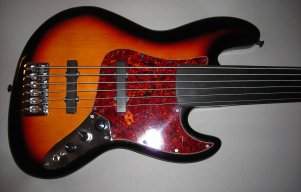
I agree with all the don't do it advice! But to make the bass playable, what to do? I'd suggest this. Have you ever seen the strap bracket on a Steinberger bass? It's a flat piece of metal that screws on with the neck screws and extends off the bass. In your case (looking at my Q6) I'd suggest attaching to the neck screws with maybe some spacers so the bracket doesn't mash the paint from the recessed screws and having it rise straight up vertically so you can get the strap button at the 22nd fret or wherever works for you. This allows you to try different places just by making a different shape bracket and also does not ruin the value of the bass since the bracket is easily removed to put the bass back to original. I'd say try this!


 Wd-40 works great to recondition a phenolic fretboard. Wish I had some before pics. Did three coats on this one. First two sucked up real quick and I wiped the third dry, let it set over night.
Took the neck off. Shimmed! I'm assuming that's post production. Are you sure the 95s aren't solid at the joint? I have a very hard time believing the screw inserts are only attached to an 8th inch thick wall. That seems like a structurally unsound design.
Took the neck off. Shimmed! I'm assuming that's post production. Are you sure the 95s aren't solid at the joint? I have a very hard time believing the screw inserts are only attached to an 8th inch thick wall. That seems like a structurally unsound design.[/QUOTE said:There should be wood laminated in the heal to help secure the inserts.
Todd
Took the neck off. Shimmed! I'm assuming that's post production. Are you sure the 95s aren't solid at the joint? I have a very hard time believing the screw inserts are only attached to an 8th inch thick wall. That seems like a structurally unsound design.
Sure, I'd assume there is some type of block in the area of the neck screw inserts, but I'd also assume that this block doesn't extend past the flat area of the neck heel at all. There's no reason for it to, and in order to do that, the block would have had to be well-fitted to mate up precisely with the flat area, the the curved/contoured area, and the transition - which would be quite a bit of work. For no reason.
Did the shim cover the whole neck pocket, or only part of it? If only part, where was it - at the bridge end of the neck pocket, or at the top of the neck pocket, i.e. towards the headstock end of the pocket?


