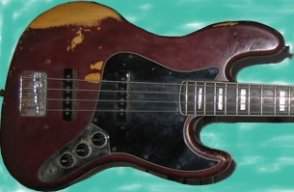
Aside from the hands (which isn't applicable here) the tone and resonance of the instrument is greatly effected by these main areas:
1. The condition of the nut. If you haven't filed out (very lightly and very minimally) the nut in a while...a couple passes angled slightly down towards the headstock will do you some good. This gets rid of conflicting material and if there is binding happening...the binding will act to deaden the strings prematurely. This should be done once every 3 to 5 years or so. Be very sparing in your light passes. This is about cleaning out unwanted material...not about sawing a canal.

Also if the nut is made of bone...really check the structure to make sure you don't see any hairline cracking affecting the overall structure of the nut.
2. Nut lubrication. In order for strings to move freely..the nut of your instrument should be lubricated once every couple of months to once every 6 months after a good cleaning of the area. Especially in hot and dry climates.
3. Nut material. This is a lesser concern because plastic composites have become pretty good in the last 20 years or so and also proper maintenance of the nut will go a long way. For resonance...generally the harder the substance used along with proper routing...the more resonant the bass will be. Brass, Bone and some graphite like composites will generally lead to better resonance.
4. Pickup output. You will want to check your signal output on pickups every couple of years or so in order to see if there may be an output problem or an output change. Keep a diary of your instruments outputs.
5. Pickup height. Overtime pickup height will vary and every instrument has it's own sweet spot. You'd be surprised what two or three twists on a screwdriver can do to your overall sound. This is especially important if you use the pickups as a thumb anchor because you will be moving the pickup more than you may realize over time.
6. Bridge. Make sure your bridge saddles are completely cleaned...not just wiped off. Anything a string touches needs to be cleaned and lubricated. Nut lubricant can most usually be used on saddles.
7. Make sure the saddle angles match the arc of your frets. This is very subtle...but if your saddles are a straight plane and your frets are on a curve...there is a small amount of conflict when the string from the flat plane hits the arched plane of the fret. Be very minimal in recreating the arc on the saddles. The arcs should be done (If a 4 string) on the E and G strings. Generally it's o.k. to leave the A and D strings on a flat plane...because often that's very close to what's happening on the frets themselves. Radius matters in the equation to a fully resonant and optimally playable instrument.
8. The material of the bridge and bridge saddles matter. The harder the substance...with proper placement, routing and care, the more resonance the instrument will have. Make sure all the screws are tightened down firmly...but not over-tightened. You want the strongest connection to the wood you can get but you also want to make sure the tension of the screws is even so there isn't a strong side/weak side.
And yes...in response to your original post and not the newer questions...having way too many windings can throw a tuner off by having too much mass on it's furthest point...but if you keep it in the ballpark of 2 to 5 windings with the string coming out to the nut closest to the headstock itself because the angle of the string hitting the nut matters in cutting down play...you're golden on a traditional winder.