I added some new functionality to the studio that I initially didn't think I would need in as small of a studio space as I have. A talkback mic!
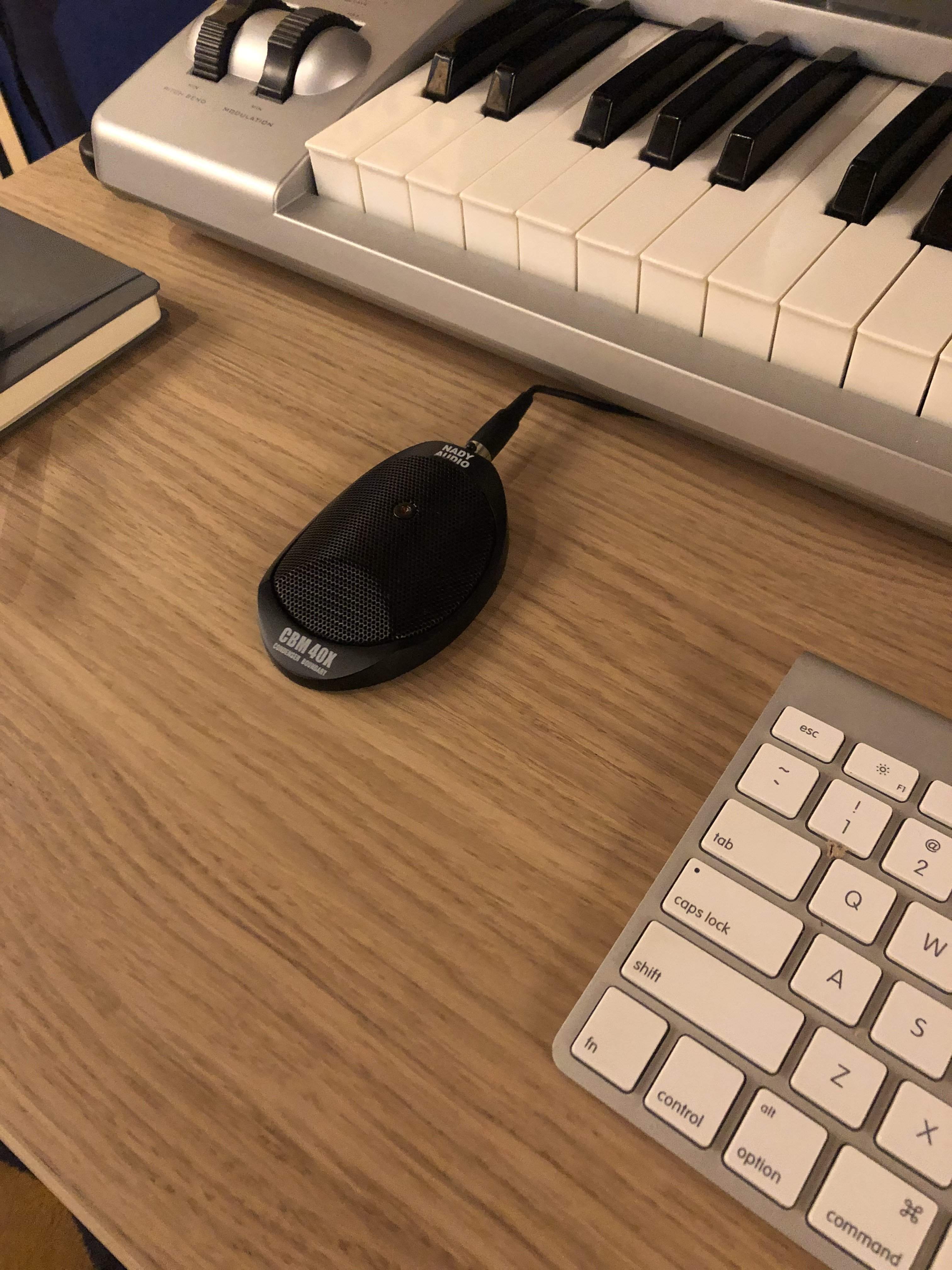
The first part is the mic itself, which is a cheap Nady boundary microphone (also sometimes called a PZM or Pressure Zone Microphone). I wanted something low profile that wouldn't be in my way. Initially I considered a gooseneck that would sit behind my keyboard, but I didn't want it poking up in front of my screen in a distracting way. These types of mics are what get used in large office conference rooms, so it'll be fine for my purposes.
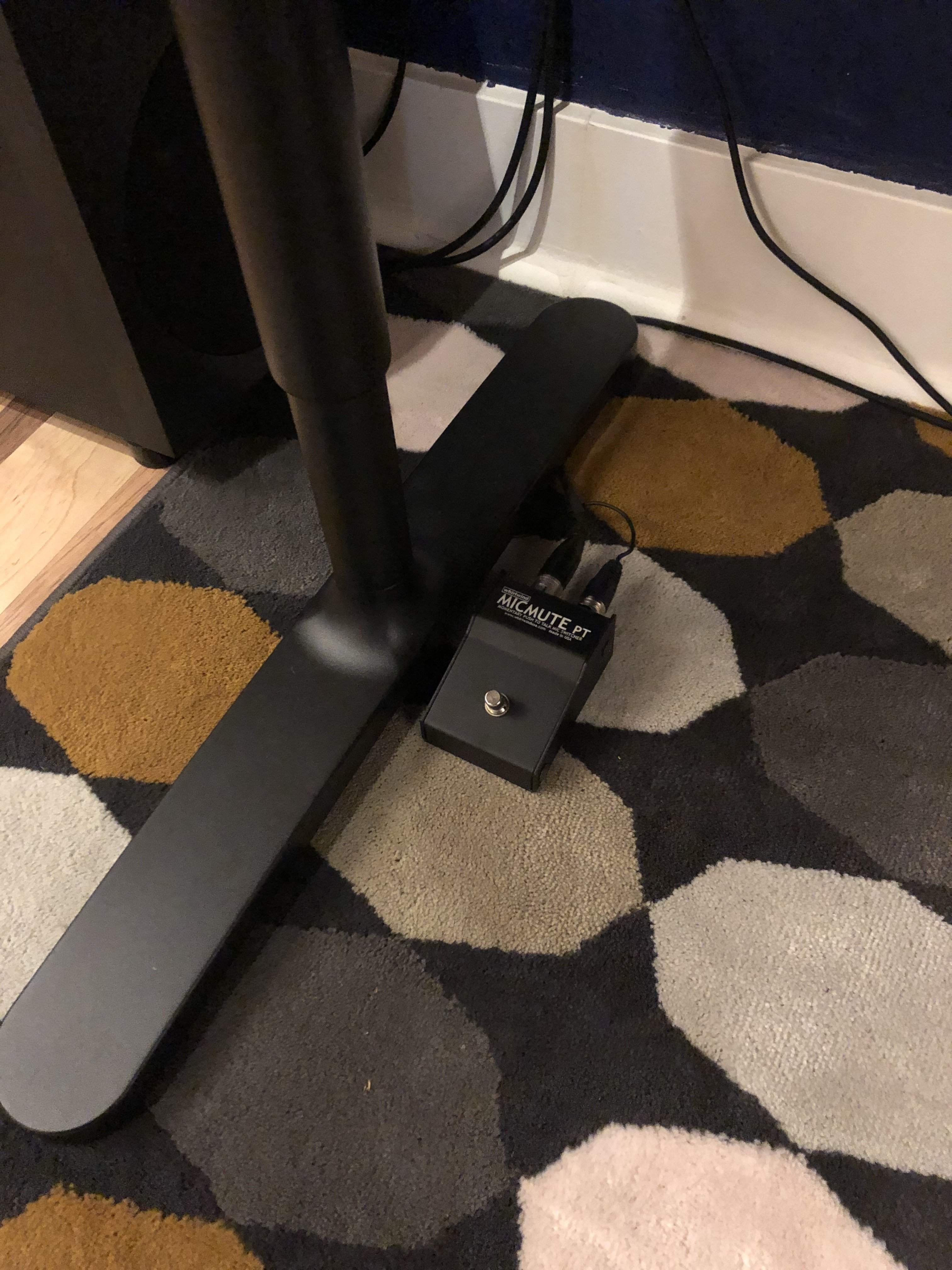
From the microphone the signal travels down to this Whirlwind Micmute PT, which constantly mutes the mic signal until you depress the momentary, non-latching footswitch. That unmutes the signal, effectively engaging the talkback mic which I have living on channel 16. I typically only need around 12 channels for large mic setups so having it monopolize a channel won't be a big deal, but if I do need all 16 I can just remove it for that session. The software mixer for the interfaces allows me to dial in how much of it goes to the performer's mix. The Micmute passes phantom power so it all works very well.
For being such a cheap microphone it sounds about like all the talkback mics I've heard built into consoles, which is admittedly not pristine, but it gets the job done. The hardware remote for my interfaces allows one of the buttons to be programmed as a dim function to reduce the level of the playback but not the input if you want to communicate with a performer in the middle of a take. I suspect I'll rarely do that, but it's a nice option if you need to communicate something to the performer while they're in a non-performing portion of a take, like a lead vocal sitting out during a solo.
The big deal for this is that if I need to tell a performer "let's try that again" or something similar, I won't have to take off my isolating headphones, have them take off their isolating headphones, give them some instruction, have both of us put our headphones back on and then resume working. It will be much smoother and faster this way.


 .
.

 (jokes...)