• TalkBass has been independent since 1998. Add your voice.
    Create a free account to reply to discussions, view embedded media, and browse with fewer display ads.
    Join freeLog in
    Want zero display ads or expanded classifieds tools? Compare plans.

Nash vs Vintage P

Does feel like its part of my body when I play it. I want nothing more of the sound, just great....BUT I wish I am able to compare to a real old fender.
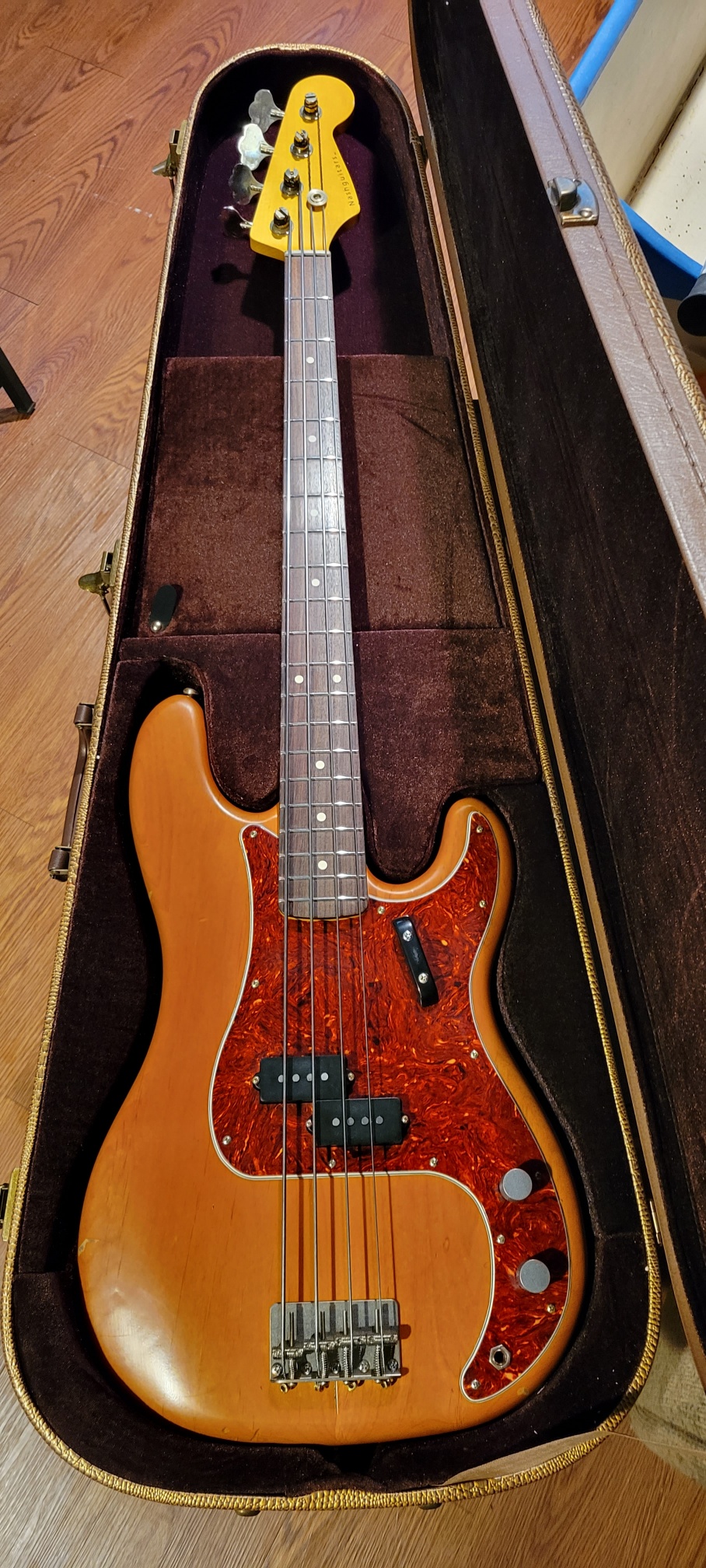
20220725_173521_resized.jpg
 
It's milling and shaping wood. Different, more modern, production methods do not prevent the same level of precision; it's the opposite.

If anything, the challenge of using modern production methods is how to mimic vintage characteristics that are a function of inconsistency in pre-CBS Fender's production methods that lacked precision.

I believe this is driving home the point of my question above. There's a lack of unanimity in what defines what's being sought by the OP and everyone else.

I wouldn't disagree with any of that though my comment was speaking to yours, "FMIC doesn't produce its parts the same way that pre-CBS" - These are examples where they do produce those parts in very similar ways and with excellent results, even if less consistent (and I've seen old stock Brazilian rosewood on some as well).
 
If it’s a newer Nash, I’d maybe go for it. They supposedly are using better necks and bodies now.

Older ones?No way.
Nash was built using All Parts necks and bodies. Literally bought the same necks and bodies that anyone can buy, and assembled them. The same as anyone else.

So, people will justify their purchases, but at the end of the day, you have an All Parts “parts” bass with a relic finish and a Lollar pickup for $2000.
Something you could build yourself for 1/4 the price.

Super ironic post given you’ve recently called Sadowsky “hand made”, when in fact they’re made essentially like what you just described and you know it.

FWIW, I’m a NYC Sadowsky owner going on 10 years now, and never even seen a Nash in person.

Fender *is* essentially hand made, in house. Gibson too. Watch any factory tour video. They’re often using the same machines, tools and methods as way back in the day, and some of the same workers.
 
Last edited:
  • Like
Reactions: REV
I wouldn't disagree with any of that though my comment was speaking to yours, "FMIC doesn't produce its parts the same way that pre-CBS" - These are examples where they do produce those parts in very similar ways and with excellent results, even if less consistent (and I've seen old stock Brazilian rosewood on some as well).

But again, what's the difference in the results other than greater precision and consistency? What's less excellent about the parts that are a function of modern computer numerically controlled production methods?

There are only two main aspects to this parts-making equation: production methods (methods of woodworking) and the wood used.

I think this is driving home the point of my question above. There's a lack of unanimity in what defines what's being sought by the OP and everyone else.

If I pay $450 more for an old stock Brazilian rosewood fretboard it's going to be pretty but what difference is that going to make to how the instrument plays, feels, responds to my inputs and sounds? I've never felt or heard it despite once owning and playing a Fender ('65 L-serial number) with an old-growth Brazilian rosewood fretboard myself.
 
Last edited:
Vintage instruments are about how they feel and how they sound.

Nash does a great job at creating that used, played in broken in feel. I had one many years ago and that was a great bass to play.
The Nash P bass I had had Lollar pickups and sounded reasonably vintage. Vintage can be elusive anyways because you get great vintage basses and average ones.

I currently have a Fender Custom shop that is reliced. I would say that Fender Custom Shop is better than Nash but that Nash is better than Fender Road Worn series.
Again it's hard to generalize because each instrument has its own characteristics.

I recently played a Fender American Vintage II 60's P bass and I was impressed by this bass. For a new bass it does a great job preproducing the character of vintage instruments even though this model is brand new. Great neck on that bass. The pickup on the 60's Bass is a bit plain vanilla but it works for that bass.
 
If it’s a newer Nash, I’d maybe go for it. They supposedly are using better necks and bodies now.

Older ones?No way.
Nash was built using All Parts necks and bodies. Literally bought the same necks and bodies that anyone can buy, and assembled them. The same as anyone else.

So, people will justify their purchases, but at the end of the day, you have an All Parts “parts” bass with a relic finish and a Lollar pickup for $2000.
Something you could build yourself for 1/4 the price.

Certainly not in the last 5 or 6 years anyway.

I have and do build better for myself but not for 1/4 the price, it's closer to 2/3 to 3/4.
 
  • Like
Reactions: StayLow
Nacho is admittedly an outlier. Bravewoods are about the same as a Nash - IF you can find one. Nash basically charges luthier made prices for parts guitars that many here could put together on their own. I do agree they play well - though a good local luthier should be able to achieve the same with a fret dress and set up.

On Nash's headstock painting technology, well, see the photos in my post. I'm not impressed.

Dave Reimer in Vancouver is worth mentioning as well as he makes great vintage type basses, though without the relic treatment.
In the case of the one Nash I've owned, purchased new, it wasn't horrible fresh out of the shipping box but there was plenty of room for further refinement of the neck, frets, nut, and general setup.
 
  • Like
Reactions: Dynacord
If we're talking Fender vs Nash I'd say the most critical thing is the QC. Both instruments are most likely made with modern manufacturing methods but in my experience the QC on Nash instruments is better than Fender. If we bring vintage instruments into the discussion, a vintage instrument has most likely gone through years of playing and has probably been tweaked here and there to bring it into good playing condition. This to me is one of the things that add value to a vintage instrument. Most of the bugs have been worked out.
 
Super ironic post given you’ve recently called Sadowsky “hand made”, when in fact they’re made essentially like what you just described and you know it.

FWIW, I’m a NYC Sadowsky owner going on 10 years now, and never even seen a Nash in person.

Fender *is* essentially hand made, in house. Gibson too. Watch any factory tour video. They’re often using the same machines, tools and methods as way back in the day, and some of the same workers.

"Hand-made" is a massive marketing weasel word.

There have been virtually no products (production items) made without machines for at least 80 years and I'd be pressed to name any that were hand-made 100 years ago.

There are no Fenders and Fender-like instruments that were hand-made. That's not a thing.

 
  • Like
Reactions: StayLow
I got to play a pre CBS P and it was truly a magical experience! I can’t afford one so was wondering how the Nash bass compared to an early 60s P?

There are none around to play so would love to hear how they compare.

I've played several Nash P-Basses over the years and they were all stellar. They're a relatively good value on the used market as I routinely see them being sold in the $1800 - $2200 range which ain't bad for a boutique Fender knockoff.
 
Last edited:
  • Like
Reactions: Danny C and Auer
"Hand-made" is a massive marketing weasel word.

There have been virtually no products (production items) made without machines for at least 80 years and I'd be pressed to name any that were hand-made 100 years ago.

There are no Fenders and Fender-like instruments that were hand-made. That's not a thing.

Thanks. Great point.

I even contradicted myself by using “hand made” while at the same time referring to machine use. I meant made in house, and for some parts (all parts? - no pun intended) using machines operated by in-house staff then usually finished by hand… in house.

I also agree with your others points of distinction in this thread, btw. For some the line in the sand is whether things are done in house, for others it doesn’t matter where as long as it’s to (somewhat) custom specs for the brand in question. Some don’t care at all, while others aren’t consistent when it comes to their sacred cows.
 
  • Like
Reactions: Grinderman
I have a Nash PB63 that is a factory PJ. It also has a 1 1/2" width nut. It is a spectacular bass that is worth every cent I paid for it. It gets 80% of my gigging time. The only other bass I own that does not feel inferior to the Nash is a MIM P bass that was put together by Nino Valenti. I believe it has just a standard MIM body with some kind of deluxe MIM Fender neck. It has a Aguilar Hot P pickup that sounds incredible. Of the 13 basses that I own, I paid the least amount for this one.

No matter the brand, there will always be detractors, who cares what they think! Think for yourself.
 
  • Like
Reactions: Auer and jimmydean