
You forgot the option "my <insert obviously neck divey by design model> doesn't neck dive at all!"

TalkBass has been independent since 1998. Add your voice.
Create a free account to reply to discussions, view embedded media, and browse with fewer display ads.
Join free Log in
Want zero display ads or expanded classifieds tools? Compare plans.


Neck dive is the ONLY reason I don’t like Gibson basses. I think they’re some of the coolest looking basses, and I haven’t heard one that sounds bad yet… but they’re a misery to play.This is one reason why I don't like Gibson Thunderbirds, Epiphone EB-3s, and similar basses.

I almost bought a Jack Casady 6 months ago. Neckdive was too horrendous.I will vote "don't like." Which is (IMHO) sort of duh!
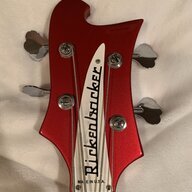
However, IMHO it depends on how severe the problem is. My 1st bass, Ric 4001, had a bit of neck dive. I found it irritating, but I would not say it made me dislike the bass...perhaps like it less is more accurate...
Over the years I modded the Ric quite a bit. Installed Alembic Activator pickups, a Bad Ass II, and finally a 2-Tek and a battery compartment. The 2-Tek killed the neck dive, but it also made a heavy bass even heavier. In general, I'll take balance over weight.
I am tempted by the Jack Casady...I expect it will have neck dive, and that is definitely a negative. It's not like I actually need another bass, so maybe in this case, neck dive is a good thing.




I played an Epiphone Embassy in GC a few weeks ago and it sounded great. I don't remember there being any neck dive.Neck dive is the ONLY reason I don’t like Gibson basses. I think they’re some of the coolest looking basses, and I haven’t heard one that sounds bad yet… but they’re a misery to play.

Yup!This is one reason why I don't like Gibson Thunderbirds, Epiphone EB-3s, and similar basses.


Funny thing about that. I have four Thunderbirds and a Fenderbird that is essentially a Thunderbird shaped Precision. None dive at all. What dives? My Fender Precision. Go figure. I also have an EB-2 that is well behaved. I am highly unlikely to play an SG shaped bass. I cannot say from experience that they dive, though. I have never played one. My Ric copy is pretty well behaved, but not as easy to place as the Thunderbirds.This is one reason why I don't like Gibson Thunderbirds, Epiphone EB-3s, and similar basses.


The only Spector that has any appreciable neck dive is the Rebop, and that is easily remedied by lightweight tuners. The bass is nice and light (I have a 5 string that weighs in at about 8.1 lbs) and has a phenomenal neck otherwise. The neck thru's are heavier and are pretty well balanced.As enamored as I am with Spector basses, the potential for neck dive has kept me from ever getting one. I have never actually played one though, so its possible I may change my mind.
Many moons ago I bought a Warwick Thumb off eBay which had severe neck dive that I hated and sold right away.

I feel like "You like basses with neck dive" is a poor wording for a choice. I doubt anybody plays a bass specifically because it dives. It's really, "do you care about neck dive or do you not?"My assertion is there are far too many neck heavy basses that manufacturers put out for sale. As such, it's a blatant rip-off that takes our money for a badly designed instrument.
I'm sure there are clever engineers/designers working for manufacturers that can solve this issue before finalizing production runs. But it seems some bass makers don't care enough to do so.
I've had enough of this garbage. Recently passed up two new (not used) basses in a music store I would've liked. Settled on a third choice that wasn't neck heavy.
Anyway, to support my assertion, I need numbers as to how many of you do or don't like neck heavy basses.
I'll be pegging on neck heavy manufacturers as I find them and will need numbers as support if the numbers are overwhelmingly "don't like neck dive".
I'm aware of the multitude of workarounds suggested in this forum, and web, to correct neck dive. No need to repeat them here. My entire point is we shouldn't have to be working around and settling for deficient products that are new from the manufacturers.