
A couple of Darkstars are probably very effective counterweights as well. Are you an inch shorter after a long set?

Enjoy the benefits of a premium membership!
Upgrade Account
-
TalkBass has been independent since 1998. Add your voice.
Create a free account to reply to discussions, view embedded media, and browse with fewer display ads.
Join free Log in
Want zero display ads or expanded classifieds tools? Compare plans.
You are using an out of date browser. It may not display this or other websites correctly.
You should upgrade or use an alternative browser.
You should upgrade or use an alternative browser.
More options
Who Replied?
If it was, it was a delusion that I shared with my doctor, my physiotherapist and my masseuse while I was working through the problem.Are you sure it wasn't all in your mind? At least one previous post suggested something along those lines.


Stand up, put your hand out about 55 cm from you with a softball in it.
Now stand there for 99 minutes.
Do you get it now?
Now stand there for 99 minutes.
Do you get it now?

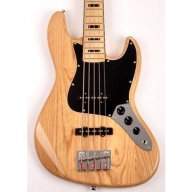
For you.Neck dive is a minor nuisance and nothing more.
Yes, for me and not necessarily for others.For you.

I used to think neck dive was a problem but the basses I have with neck dive also happen to be the best sounding basses. So maybe all that heavy wood translates to a better sound. Just my guess.

Not me making disparaging remarks about a certain manufacturer's apparent refusal to show any concern about balance in bass guitar design.If you think about that statement for a few seconds, the realization might come to you that another big bass building company (who's designs don't neck dive) outsells Gibson by a very wide margin. You might also realize that there are lots of companies that copy that other company's designs, and very few that copy Gibson's.

Again, for people who like that kind of thing, that's the kind of thing they like.
For those of us more interested in functional design, you're right, most manufacturers follow Leo's early design decision to extend the upper horn for balance on a strap. Form follows function, a fundamental modernist design tenet.

Playing a divey-necked bass for hours on end has definitely caused me shoulder/back discomfort.I'm no stranger to neck dive. My first bass was a neck-divey Thunderbird and of the 6 basses I own currently, 3 or 4 of them are quite neck-divey. My solution to this was a leather/suede strap that I got for $8 at a pawn shop a long time ago. The strap is slightly wider than normal at 2.25'', but is otherwise not as potentially intrusive as a massively wide or thick strap. I get zero neck dive in any situation when using it.
But a line I occasionally hear is... "grippy straps are a band-aid, what you really need is a balanced bass".
... why?
I mean... I guess I could see the novelty in a bass that feels well-balanced. I own a couple. But with my bass-playing habits, neck dive simply isn't a problem that concerns me. Even when I practice and am not using the strap, it's really more of a minor inconvenience than an issue of any import.
Is there something I'm missing? Can a divey neck throw your back out, or something crazy like that?
Not an issue I run into with Spector basses, fortunately.
If it doesn't bother you then... don't give it any more thought
Last edited:


neck dive is a problem for me as having to hold up the neck means i'm using my left hand for that, which slows down my playing and makes it less fun.
if i had a grippy strap that kept the neck up, that wouldn't be a problem as long as i always had a grippy strap and my shirts always stuck to it and i never wore stage clothes that get pulled to the side by the strap. but many of the clothes i used to wear would move a lot with a grippy strap.
if i had a grippy strap that kept the neck up, that wouldn't be a problem as long as i always had a grippy strap and my shirts always stuck to it and i never wore stage clothes that get pulled to the side by the strap. but many of the clothes i used to wear would move a lot with a grippy strap.

i am curious as to how a 'grippy strap' prevents neck dive. won't the strap simply pull and twist your clothing as the neck continues to dive?
This has been my experience unless standing relatively still. I refuse to wear an uncomfortably wide strap to compensate for a weirdly balanced / shaped bass or an overweight bass. There are just too many great basses out there that DO NOT have these issues to be encumbered with them. I simply don't buy those instruments that do.

Or rest the forearm of your plucking hand on the body?The best analogy I've read on here is it's like trying to keep your steering wheel straight when the wheel alignment is off. Sure I can keep it from veering to the left or right, just as I could constantly hold the bass neck up, or wear a massive strap that pulls hard on one spot of my shoulder, but why if I don't have to?

 I have long-standing RSI issues (tendinitis, carpel tunnel, etc.), and neck dive aggravates it.
 There are just too many great basses out there that DO NOT have these issues to be encumbered with them. I simply don't buy those instruments that do.
My position exactly - don't buy instruments that need to be "fixed", and you don't have to figure out what "fix" you can live with.
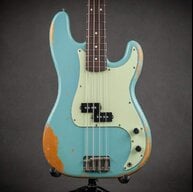
Maybe you mean light wood? Neck dive is a result of the body being too light, usually. Or unbalanced designs like the Thunderbird.I used to think neck dive was a problem but the basses I have with neck dive also happen to be the best sounding basses. So maybe all that heavy wood translates to a better sound. Just my guess.

Light weight tuners??? Haaa! Exactly how heavy are oem tuners? Spend $200 to save 2 ounces at the headstock?
Shaving off a little weight at the far end of the headstock makes a bigger difference than you might think. A small change shifts the centre of gravity enough to change the balance. It’s fairly fundamental physics if you remember the principles of levers.
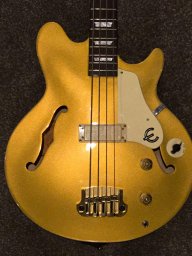
Neck dive doesn’t bother me. Neither does string spacing, maple neck or rosewood, and Humbuckers. Weight is a factor to me, and I prefer short scale. Certain colors are out. I don’t like baseball bat necks. Other than that, if it sounds good and plays good, I’m open.
When i go to buy/try a new bass, neck dive is a turn off right away. When can i get my sip of beer between tunes if i got to hold the neck  Give me a break.
Give me a break.
I think this is a topic where people can sometimes get overly picky. A little bit of neck dive usually isn’t that hard to fix. I’ve learned a few tricks to balance basses over the years. Wireless pack as a counterweight, a decent strap, sometimes if the bass is already beat up some I’ll even relocate the strap buttons. So it’s kind of a shame that some people sell otherwise great basses for this reason when it could have been ironed out easily.
But at the same time neck dive can be really bad on some basses. I’ve had a few dozen basses over my almost 30 years of playing bass. Some as cheap as a couple hundred used to several thousand dollars. The only bass where I just flat out couldn’t deal with the neck dive was a ESP viper. On most basses that have some neck dive the headstock might drop a couple inches when you let go of the bass, on that viper it dropped a couple feet. It was ESPs take on the gibson SG/EBO shape. EBO basses themselves are notorious for neck dive. The ESP was even worse probably because it’s that shape with a longer scale bass. The EBO I believe is 30” scale. The viper is 34” scale. When I bought the bass it was strictly to have a backup at the time so I didn’t put much thought into it. But with that bass it was a pain. Not only could I not let go of the bass but it was wasted energy to hold it in position when playing.
I’ve owned a bunch of basses that I’ve seen get negative comments about neck dive. And for me it pretty minimal. I’m honestly convinced some of this issue is the body shape of the player. If you're a somewhat big guy with big broad shoulders it’s not going to be as hot of an issue for you as maybe it is for someone else with a different body type.
But at the same time neck dive can be really bad on some basses. I’ve had a few dozen basses over my almost 30 years of playing bass. Some as cheap as a couple hundred used to several thousand dollars. The only bass where I just flat out couldn’t deal with the neck dive was a ESP viper. On most basses that have some neck dive the headstock might drop a couple inches when you let go of the bass, on that viper it dropped a couple feet. It was ESPs take on the gibson SG/EBO shape. EBO basses themselves are notorious for neck dive. The ESP was even worse probably because it’s that shape with a longer scale bass. The EBO I believe is 30” scale. The viper is 34” scale. When I bought the bass it was strictly to have a backup at the time so I didn’t put much thought into it. But with that bass it was a pain. Not only could I not let go of the bass but it was wasted energy to hold it in position when playing.
I’ve owned a bunch of basses that I’ve seen get negative comments about neck dive. And for me it pretty minimal. I’m honestly convinced some of this issue is the body shape of the player. If you're a somewhat big guy with big broad shoulders it’s not going to be as hot of an issue for you as maybe it is for someone else with a different body type.
Latest posts
-

-
-

-

-
Need Recommendation for Repair Shop In Western Connecticut
- Latest: averagejoe53
