

Enjoy the benefits of a premium membership!
Upgrade Account
-
TalkBass has been independent since 1998. Add your voice.
Create a free account to reply to discussions, view embedded media, and browse with fewer display ads.
Join free Log in
Want zero display ads or expanded classifieds tools? Compare plans.
You are using an out of date browser. It may not display this or other websites correctly.
You should upgrade or use an alternative browser.
You should upgrade or use an alternative browser.
New Head: Valkyrie from Baer Amps... Thoughts?
- Thread starter Hollow Man
- Start date
More options
Who Replied?
And not to be a pest, but what's driving the numerical drop in power at 4 ohms? Old Youtube video from 2010 says 750w, website shows 685w and black-faced fact sheet shows 675w. I realize the impact is more academic than anything, but I'm curious if there was a different way of measuring power that was used or a change in amp specs?We are working on the final manufacturing prototype right now and qualifying the vendors who will be making the components.
The Valkyrie's pre amp is very flat. There is no baked in mid cut or top end boost at all in this preamp. As most players are used to hearing amps with a fairly substantial top end boost, I felt making the top end EQ sound just a hair brighter would allow more players to dial in a sound that is familiar to them.

And not to be a pest, but what's driving the numerical drop in power at 4 ohms? Old Youtube video from 2010 says 750w, website shows 685w and black-faced fact sheet shows 675w. I realize the impact is more academic than anything, but I'm curious if there was a different way of measuring power that was used or a change in amp specs?
The original prototype was a actually a fairly crude working model and specs at NAMM were based on specs for what we thought would be available in the final amp. Current specs are based on the most recent prototype, which is close, but not locked. Once we have the final manufacturing prototype, which should be done in the next month or so, all the components will be set in stone and we will have to test again to come up with the final specs. One of the most frustrating aspects of this process has been the fact that electronic components tend to go obsolete on a fairly regular basis. Replacement parts may or may not share the same specs, so the job of tracking down parts becomes a never ending process.
That certainly makes sense and I can appreciate the complexities of the development process.The original prototype was a actually a fairly crude working model and specs at NAMM were based on specs for what we thought would be available in the final amp. Current specs are based on the most recent prototype, which is close, but not locked. Once we have the final manufacturing prototype, which should be done in the next month or so, all the components will be set in stone and we will have to test again to come up with the final specs. One of the most frustrating aspects of this process has been the fact that electronic components tend to go obsolete on a fairly regular basis. Replacement parts may or may not share the same specs, so the job of tracking down parts becomes a never ending process.
On another note, if a player wanted to quickly go between solid-state and tube between songs, for example, would hitting the tube button and dialing in the amount of tube saturation just affect the tone or would the volume change thereby requiring an adjustment to volume, as well?

It looks quite manly now. I liked the red but the black grew on me more and more, and now I like it better.The black and clear anodizing is cheaper, easier to produce and easier to touch up. Once we set on the black/clear scheme, I went in and redesigned the front panels to give the amp a kind of Harley Davidson type feel and I'm really happy with how it came out.

I loved the red frontpanel but after learning that only toxic products guaranty a good result, I applaud that you switched to black/white.Apparently, most of the really good red anodized products you see are done overseas, as China uses chemicals and dyes for red that are not allowed here in the US. We are set on using US vendors, so that was out.
Also Roger, I would like to thank you for taking the time to answer all our questions so thoroughly.
I can't wait to hear the amp.

I wonder what my friends at Deity are using for their mountain bike components
[Invalid or Expired Link Removed]
[Invalid or Expired Link Removed]
That certainly makes sense and I can appreciate the complexities of the development process.
On another note, if a player wanted to quickly go between solid-state and tube between songs, for example, would hitting the tube button and dialing in the amount of tube saturation just affect the tone or would the volume change thereby requiring an adjustment to volume, as well?
Hitting the tube section takes the solid state signal and runs it through a tube amplification circuit before it hits the power section. As this is an actual gain stage, adjustment of the master volume, may, or may not be needed depending on the position of the tube gain knob. If you like a clean tube sound, then you are probably pretty close. If you are pushing the tube section hard, the volume can jump up quite a bit.
In practice, once you understand the amp and get used to it, switching the tube in and adjusting the master volume takes all of about 2 seconds. When I'm using the amp, I engage the tube section, back off the master volume 2 hash marks on the volume knob and I'm done. This is the main reason why we didn't put the tube section on a footswitch.
I wonder what my friends at Deity are using for their mountain bike components
It can be done here, but every vendor I talked to commented on how the red is very hard to keep consistent from batch to batch. The red also oxidizes and gets darker over time, which varies due to the amount of impurities in the metal and in the anodizing tanks. I've seen some old Focusrite stuff that had turned an almost brick red years later. You can get around some of this by using a very high quality red dye and making a lot of pieces all at once, so everything is from the same batch. At our volume, it just wouldn't be practical to do. We were talking with the company that does the Maglite flashlights, but it was far too expensive to use them in small quantities. The black anodize is easier to find vendors, cheaper, more consistent and is also fairly easy to touch up with these special dye markers that are available. After spending a year on various finishing techniques, this really was the best solution for us, and personally, with the new front panel design, I like the black an clear way more than the red.
it will be interesting to see the price-point on this amp. i'm sure it is too early to say anything. however, i'm already basing my expectation on how the ML112 cabs are priced.

I like the black look. However, it would be pretty cool to be able to order it in a custom color for an upcharge, similar to what some of the boutique fx makers are doing. Just dreaming...
I sure hope this amp comes out soon, I'll soon be in the market, and this sounds like a likely contender. Love the two sweepable mid bands and big transformer.
I sure hope this amp comes out soon, I'll soon be in the market, and this sounds like a likely contender. Love the two sweepable mid bands and big transformer.
...Love the two sweepable mid bands and big transformer.
14lbs. of copper lonv'n!
Keep in mind that a cab like the ML112 is just plain more expensive to build than the traditional woofer/ tweeter cab that most companies are doing. We should have pricing on the Valkyrie in a couple months. The Valkyrie is our flagship product and was never meant to compete with the smaller class D amps, or other mass produced amps on the market. The Valkyrie is hand built in the US with an all aluminum cassis and front panels, all through hole components, Bourns pots, Plitron transformer, Tung-Sol tubes, 2ohm capability, etc... all those things really add up. Heck, that transformer alone cost twice what most of those IcePower modules cost. We always figured this would end up somewhere between the bigger Mesa amps, Thunderfunk and the Aguilar DB751.it will be interesting to see the price-point on this amp. i'm sure it is too early to say anything. however, i'm already basing my expectation on how the ML112 cabs are priced.
14lbs. of copper lonv'n!
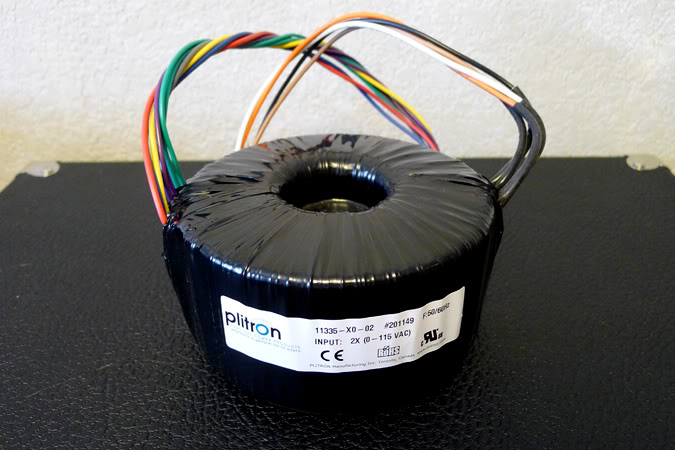
Keep in mind that a cab like the ML112 is just plain more expensive to build than the traditional woofer/ tweeter cab that most companies are doing. We should have pricing on the Valkyrie in a couple months. The Valkyrie is our flagship product and was never meant to compete with the smaller class D amps, or other mass produced amps on the market. The Valkyrie is hand built in the US with an all aluminum cassis and front panels, all through hole components, Bourns pots, Plitron transformer, Tung-Sol tubes, 2ohm capability, etc... all those things really add up. Heck, that transformer alone cost twice what most of those IcePower modules cost. We always figured this would end up somewhere between the bigger Mesa amps, Thunderfunk and the Aguilar DB751.
saving my nickles and waiting. it would take a fair amount of "difference" for me to want to change out my M6 in any hurry, but i've got no mortgage and no kids to put through school either

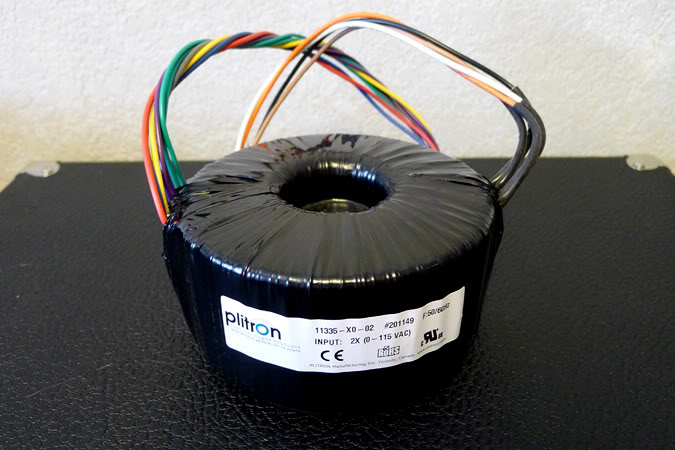
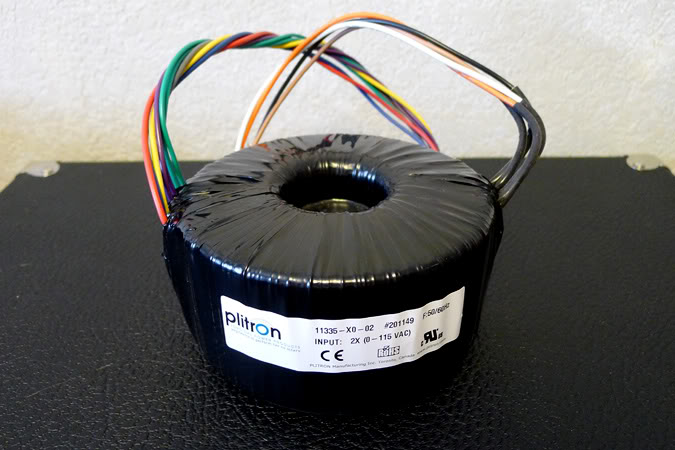
That is the most beautiful thing-a-ma-jig-encased-in-black-plastic-with-wires-coming-out that I've ever seen.14lbs. of copper lonv'n!


I wonder what my friends at Deity are using for their mountain bike components
[Invalid or Expired Link Removed]
Well, consider that Klein Bicycles got the largest fine ever* issued by the Washington State Department of Ecology for their anodizing waste disposal.
*Taken from Bike Magazine.

Chef
In Memoriam
It's really, really nice to see someone stick to their quality guns, and product goals.
Awesome.
I have room for this in my toolkit.
Awesome.
I have room for this in my toolkit.
14lbs. of copper lonv'n!
Keep in mind that a cab like the ML112 is just plain more expensive to build than the traditional woofer/ tweeter cab that most companies are doing. We should have pricing on the Valkyrie in a couple months. The Valkyrie is our flagship product and was never meant to compete with the smaller class D amps, or other mass produced amps on the market. The Valkyrie is hand built in the US with an all aluminum cassis and front panels, all through hole components, Bourns pots, Plitron transformer, Tung-Sol tubes, 2ohm capability, etc... all those things really add up. Heck, that transformer alone cost twice what most of those IcePower modules cost. We always figured this would end up somewhere between the bigger Mesa amps, Thunderfunk and the Aguilar DB751.
forgive my ignorance on the issue, but i have questions on amps with active vs. passive EQ adjustments. searching gets me flooded with "active vs passive input" results. feel free to point me elsewhere, or reply here.
my frame of reference is my M6, and Roger seems familiar with that amp, so I'll start there:
my impression (right or wrong?) is that the M6 EQ(excluding the voicing adjust) is set passive, so all adjustments are shades of "cut" at selected frequencies. whereas, the Baer seems to be offering boost/cut at selected frequencies, similar to a graphic EQ, but in knob-form (with the two "mid" points being adjustable). i am also interested in finding the EQ points of my M6, but have not had much luck off the bat with google. i'm also interested in what the points and boost/cut amounts are in the "voices." i'm guessing that has been covered in a M6 thread already. i'm trying to imagine the differences the Baer will offer, thus reasons to consider adding one to the arsenal.
my frame of reference is my M6, and Roger seems familiar with that amp, so I'll start there:
my impression (right or wrong?) is that the M6 EQ(excluding the voicing adjust) is set passive, so all adjustments are shades of "cut" at selected frequencies. whereas, the Baer seems to be offering boost/cut at selected frequencies, similar to a graphic EQ, but in knob-form (with the two "mid" points being adjustable). i am also interested in finding the EQ points of my M6, but have not had much luck off the bat with google. i'm also interested in what the points and boost/cut amounts are in the "voices." i'm guessing that has been covered in a M6 thread already. i'm trying to imagine the differences the Baer will offer, thus reasons to consider adding one to the arsenal.
The big difference in these amps is that the Valkyrie's preamp is extremely flat. The Mesa M series is anything but. My problem with baked in EQ curves, is that if the built in curve isn't just right for you, any attempts to manipulate the EQ on the amp is pretty much a crap shoot. Let's say you think the amp needs a little mid bump So you boost the mid control on the amp. Problem is, unless the mid control is centered on the same frequency as the built in mid cut and shares the same Q (highly unlikely). You are now putting a hump into the built in dip somewhere. You adjust to +6, but you it's not really +6 because starting off, that built in mid dip may have been -6dB, or whatever. Even with that mid boost, you could actually still be -3dB from flat. See where I'm going with this? Your knob tweaking starts to turn the frequency response of the amp into a roller coaster full of peaks and dips.
Now, start with a pre amp that is flat and add +6dB at 400Hz and guess what? Your amp is still reproducing the exact tone of you bass, but with 400Hz boosted 6dB. Now, this isn't an attempt to knock the other guys, they make a great amp too. It's just a difference in design philosophy. I find it much more intuitive to start off with a great sounding, flat preamp and dial in exactly what I want. I'm convinced that the reason a lot of players become never ending knob twiddlers, is that they are dealing with a built in EQ that isn't working for them and their attempts to twist their tone knobs to sonic bliss only leads them farther away from the tone they are after.
Now, start with a pre amp that is flat and add +6dB at 400Hz and guess what? Your amp is still reproducing the exact tone of you bass, but with 400Hz boosted 6dB. Now, this isn't an attempt to knock the other guys, they make a great amp too. It's just a difference in design philosophy. I find it much more intuitive to start off with a great sounding, flat preamp and dial in exactly what I want. I'm convinced that the reason a lot of players become never ending knob twiddlers, is that they are dealing with a built in EQ that isn't working for them and their attempts to twist their tone knobs to sonic bliss only leads them farther away from the tone they are after.
I'm with you. However, are the Mesa controls actually boost/cut at specific frequencies? I get the impression they are more like tone controls on a passive bass. Turning the high knob up doesn't boost the high, it just opens up the filter, and turning it down rolls the frequencies off. Same for mids and trebble. Am I thinking about this right, or have I made some false assumption?


