On the expensive side, sure. But not overpriced.Looks oddly similar to the new SolidGoldFX Beta V bass preamp pedal, but almost double the price. Is it me or Origin Effects pedals are on the overpriced side of things?

TalkBass has been independent since 1998. Add your voice.
Create a free account to reply to discussions, view embedded media, and browse with fewer display ads.
Join free Log in
Want zero display ads or expanded classifieds tools? Compare plans.
On the expensive side, sure. But not overpriced.Looks oddly similar to the new SolidGoldFX Beta V bass preamp pedal, but almost double the price. Is it me or Origin Effects pedals are on the overpriced side of things?
Huh? Both pedals have volume and drive as well as a 3-way switch, but that's about where the similarities end. (If you want to be pedantic then I suppose you could say they are both 125B-sized enclosures, have top-mounted jacks and a single stompswitch, etc.) The tonal goals and quality of components differ widely.Looks oddly similar to the new SolidGoldFX Beta V bass preamp pedal
Huh? Both pedals have volume and drive as well as a 3-way switch, but that's about where the similarities end. (If you want to be pedantic then I suppose you could say they are both 125B-sized enclosures, have top-mounted jacks and a single stompswitch, etc.) The tonal goals and quality of components differ widely.
Didn’t mean to perturb anyone, just an observation. The 4 knobs and the 3 way switch appear to have the same functions and are in the same position.

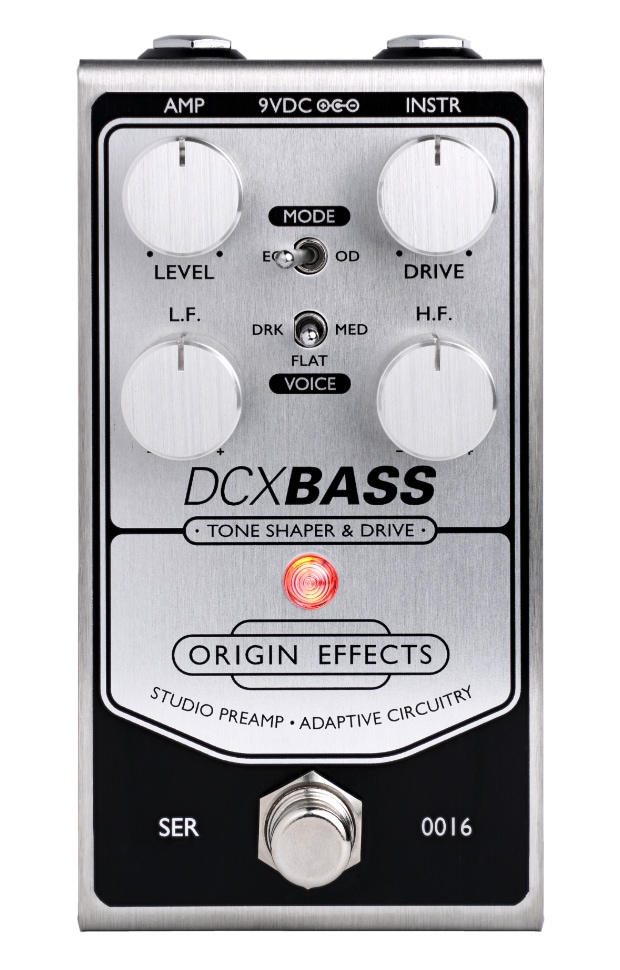


Naw, don't worry about perturbation: it's a discussion forum! You are correct about the 4 knobs and 3-way switch, but that's like noting a Fender Precision and Warwick Thumb both have four strings and a 34" scale and then concluding they are the effectively the same. Form often follows function, yes, but the differences are in the details.Didn’t mean to perturb anyone, just an observation. The 4 knobs and the 3 way switch appear to have the same functions and are in the same position.
Cali76 is still a top tier compressor found on many pro boards. There are many of us here (including, and especially, me) that are just doing this for fun and enjoy chasing the next flavour of the month, which the Cali76 isn't (at the moment). The build quality, unique features, and excellent sound make Origin pedals in general a higher end brand.I’m obviously interested in the Origin Effects bass pedals and here to learn, because they are very expensive compared to other “comparable” pedals. What caught my attention with the DCX is that the switch (like with the Beta V) is also a 3-way hi end cut or LPF. There is also little or no middle frequency control, which is unusual for this sort of thing. That said, the Beta V works out very well for me. If the DCX is similar but worth the much higher price it would push me over the fence.
I would point out the Cali76 compressor is also more expensive than compressor pedals from Empress, Broughton, and Diamond. Yet from what I have read few will say it is preferable to these regardless of price differences. Hence my hesitation with this brand.

i have two and use one as a heavy overdrive and it's great in a band mix. it's now my go to pedal for that. i use the other one for clean or as a sligthly saturated drive.
I disagree: in my experience, most drive pedals have either a single pot tilt-style EQ or a LPF/high-end roll-off EQ. 2-band EQs, while hardly rare, are far more unusual.There is also little or no middle frequency control, which is unusual for this sort of thing.
I've never played the Beta-V so I have no personal insight. But I would not expect them to be substitutes because, as I said earlier, they have different tonal goals. Without getting into Origin Effect's whole vintage studio gear repackaged mission, it's worth remembering that the DCX Bass is marketed as a boost with drive capabilities. The Beta-V is marketed as a preamp. Only way to know for sure is to try both pedals yourself.That said, the Beta V works out very well for me. If the DCX is similar but worth the much higher price it would push me over the fence.
Compressors, like drive pedals, are often a matter of personal taste and, crucially, also highly dependent on the rest of your signal chain. What sounds the best with my gear may not sound the best for someone else. For example, I used an Origin Effects Cali76 TX-L for years. I now use an Empress because I prefer how it sounds with my signal chain. That doesn't make it better or worse, just use-case specific. I did try a Cali76 CB and I stayed with the Empress. I think the Cali76 CB often sounds best with passive Fender-style instruments. I play a more hi-fi, active bass and, to my ears, the Empress provides what I want from a compressor.For instance, the Cali76 compressor is also more expensive than compressor pedals from Empress, Broughton, and Diamond. Yet from what I have read few will say it is preferable to these regardless of price differences. Hence my hesitation with this brand.
This is well said. Flavor of the month is real on TB, especially with compressors. That's just how the compressor community on here works. Right now the flavor is most decided the Niche Devices Humboldt DE and the Lusithand Alma MKII. The fact that the Cali76 CB (and Empress, Photon Death Ray, Broughton Omnicomp, etc.) continue to be talked about after all these years speaks to their quality as well as popularity with players.Cali76 is still a top tier compressor found on many pro boards. There are many of us here (including, and especially, me) that are just doing this for fun and enjoy chasing the next flavour of the month, which the Cali76 isn't (at the moment). The build quality, unique features, and excellent sound make Origin pedals in general a higher end brand.
I really like the Barbershop v2 and it sounds like you do as well; if so, you'll likely dig the DCX Bass as well. Both pedals offer a responsive, natural and uncompressed-sounding drive. But they have very different voices: the Barbershop is inherently darker/warmer/more woolly; the DCX Bass is inherently brighter with more top-end sizzle. Another different is the Barbershop's breakup affects more frequencies in the spectrum; the DCX Bass's breakup is limited to the upper register. The DCX Bass's top-jacks are a clear win from a design standpoint (for me), but, when it comes to tone, both pedals bring something unique to the table: the Sag feature versus the Adaptive Voicing.Do you prefer it to Barbershop for a low gain drive? Is DCX as transparent as Barbershop?

Is the Barbershop more OD than Distortion?I disagree: in my experience, most drive pedals have either a single pot tilt-style EQ or a LPF/high-end roll-off EQ. 2-band EQs, while hardly rare, are far more unusual.
I've never played the Beta-V so I have no personal insight. But I would not expect them to be substitutes because, as I said earlier, they have different tonal goals. Without getting into Origin Effect's whole vintage studio gear repackaged mission, it's worth remembering that the DCX Bass is marketed as a boost with drive capabilities. The Beta-V is marketed as a preamp. Only way to know for sure is to try both pedals yourself.
Compressors, like drive pedals, are often a matter of personal taste and, crucially, also highly dependent on the rest of your signal chain. What sounds the best with my gear may not sound the best for someone else. For example, I used an Origin Effects Cali76 TX-L for years. I now use an Empress because I prefer how it sounds with my signal chain. That doesn't make it better or worse, just use-case specific. I did try a Cali76 CB and I stayed with the Empress. I think the Cali76 CB often sounds best with passive Fender-style instruments. I play a more hi-fi, active bass and, to my ears, the Empress provides what I want from a compressor.
This is well said. Flavor of the month is real on TB, especially with compressors. That's just how the compressor community on here works. Right now the flavor is most decided the Niche Devices Humboldt DE and the Lusithand Alma MKII. The fact that the Cali76 CB (and Empress, Photon Death Ray, Broughton Omnicomp, etc.) continue to be talked about after all these years speaks to their quality as well as popularity with players.
I really like the Barbershop v2 and it sounds like you do as well; if so, you'll likely dig the DCX Bass as well. Both pedals offer a responsive, natural and uncompressed-sounding drive. But they have very different voices: the Barbershop is inherently darker/warmer/more woolly; the DCX Bass is inherently brighter with more top-end sizzle. Another different is the Barbershop's breakup affects more frequencies in the spectrum; the DCX Bass's breakup is limited to the upper register. The DCX Bass's top-jacks are a clear win from a design standpoint (for me), but, when it comes to tone, both pedals bring something unique to the table: the Sag feature versus the Adaptive Voicing.
YesIs the Barbershop more OD than Distortion?
Is the Barbershop more OD than Distortion?
 . I posted this on the dedicated Super Vintage thread, but I got some terminology mixed up (cannot edit). Maybe I can get some additional tips here!
 ...
... !
!


I believe the adaptive circuit is available only in eq mode...OK, I will try my luck here...
A question about using the DCX to boost Origin's SuperVintage (SV)
To cut through the mix in 'sweet nothing metal tunes' I record (no live playing), I have the 'ultra HI' on the SV almost always on. Now that I am using my DCX to boost the SV a lot, I am a little lost as to how I should set the DCX's adaptive circuitry switch in conjunction with the 'ultra HI' on the SV.
Please take a listen and let me know if you have suggestions about how I can play around with those settings to better cut thru the mix in this two minute mini-song...
[Invalid or Expired Link Removed]
In a genre like the above/at those gain levels:
I am of course, trying settings-combinations, but would appreciate input from professionals if possible.
- How would you set the DCX adaptive circuitry (in boost mode)?
- For those who might be familiar with the SV - would you turn ultra HI 'off' (switch from top to middle) to avoid 'ice picky' highs?
Cheers!