
Pretty much the same for me. Only exceptions have been rosewood boards that had been treated with somehing to leach out oil/moisture.I think humidity matters with acoustic instruments where you have cross grain glue joints like the sides to the top and back and internal bracing. On solid bodies, not so much. Many of the techs here say an ebony board can benefit from a little oil now and then. If ebony can benefit from oil, then I guess other woods can too. I haven't ever oiled any of mine though.

Enjoy the benefits of a premium membership!
Upgrade Account
-
TalkBass has been independent since 1998. Add your voice.
Create a free account to reply to discussions, view embedded media, and browse with fewer display ads.
Join free Log in
Want zero display ads or expanded classifieds tools? Compare plans.
You are using an out of date browser. It may not display this or other websites correctly.
You should upgrade or use an alternative browser.
You should upgrade or use an alternative browser.
oil vs. water
- Thread starter Killed_by_Death
- Start date
More options
Who Replied?
Link Removed
This little home workshop experiment shows that surface treating of hardwood uptook nearly zero extra weight from oil. Full immersion after many days uptook 6 grams of oil, and appeared to disperse the oil uniformly into the wood. Wood cells are by design optimized to transport moisture along the grain, in the longitudinal direction of the cells. Thats how ambient humidity enters and exits the wood, at the end grain, and affects the wood rapidly: overnight changes to relief on an instrument neck.
So please explain to me how a bit of oil on ONE SIDE ONLY of a slab of wood will prevent moisture loss through the end grain.
The only benefit is you seal the very top few cells from intrusion of dirt and keep salty sweat from getting into the wood. Your Natural body oils and waxy substances do the same thing. Sebaceous gland - Wikipedia
Conclusion, imo: a little oil will likely block dirt. It will not moisturize the wood to any extent by merely occasional wipe downs. Total Immersion for a long period of time is the only way to get enough oil in the wood to make a difference. But i am not convinced that actually does much other than swell the cells making them softer and less resistant to wear such as round wound strings scraping against it.
A little oil on a new neck to initially keep the skin salts out and then daily wipe down with a dry cloth to wipe away the dirt and distribute natural skin sebum will be sufficient.
A hard paste wax like furniture or car wax (non silicone) would seal against dirt better and not soften the wood.
We want our boards to be hard and wear resitant, not soften a few top cells so they wear away quickly, repeat, and so on.
This little home workshop experiment shows that surface treating of hardwood uptook nearly zero extra weight from oil. Full immersion after many days uptook 6 grams of oil, and appeared to disperse the oil uniformly into the wood. Wood cells are by design optimized to transport moisture along the grain, in the longitudinal direction of the cells. Thats how ambient humidity enters and exits the wood, at the end grain, and affects the wood rapidly: overnight changes to relief on an instrument neck.
So please explain to me how a bit of oil on ONE SIDE ONLY of a slab of wood will prevent moisture loss through the end grain.
The only benefit is you seal the very top few cells from intrusion of dirt and keep salty sweat from getting into the wood. Your Natural body oils and waxy substances do the same thing. Sebaceous gland - Wikipedia
Conclusion, imo: a little oil will likely block dirt. It will not moisturize the wood to any extent by merely occasional wipe downs. Total Immersion for a long period of time is the only way to get enough oil in the wood to make a difference. But i am not convinced that actually does much other than swell the cells making them softer and less resistant to wear such as round wound strings scraping against it.
A little oil on a new neck to initially keep the skin salts out and then daily wipe down with a dry cloth to wipe away the dirt and distribute natural skin sebum will be sufficient.
A hard paste wax like furniture or car wax (non silicone) would seal against dirt better and not soften the wood.
We want our boards to be hard and wear resitant, not soften a few top cells so they wear away quickly, repeat, and so on.
Last edited:


Carrot juice to bring out the red in the rosewoods. Lemon Pledge on the maples, and Johnson’s baby oil on everything else. Hope this helps.

Turnaround
Commercial User
The test in the link purports to determine the degree of penetration of the oil into the wood. That is not relevant in consideration for use as a coating on a fingerboard. It's not the penetration that is important, in fact it is counter productive for a fingerboard. What an oil does on a fingerboard is to coat the surface and, when polymerized, will inhibit moisture ingress/egress. We certainly don't want to introduce enough oil to soften the wood.Link Removed
This little home workshop experiment shows that surface treating of hardwood uptook nearly zero extra weight from oil. Full immersion after many days uptook 6 grams of oil, and appeared to disperse the oil uniformly into the wood. Wood cells are by design optimized to transport moisture along the grain, in the longitudinal direction of the cells. Thats how ambient humidity enters and exits the wood, at the end grain, and affects the wood rapidly: overnight changes to relief on an instrument neck.
So please explain to me how a bit of oil on ONE SIDE ONLY of a slab of wood will prevent moisture loss through the end grain.
The only benefit is you seal the very top few cells from intrusion of dirt and keep salty sweat from getting into the wood. Your Natural body oils and waxy substances do the same thing. Sebaceous gland - Wikipedia
Conclusion, imo: a little oil will likely block dirt. It will not moisturize the wood to any extent by merely occasional wipe downs. Total Immersion for a long period of time is the only way to get enough oil in the wood to make a difference. But i am not convinced that actually does much other than swell the cells making them softer and less resistant to wear such as round wound strings scraping against it.
A little oil on a new neck to initially keep the skin salts out and then daily wipe down with a dry cloth to wipe away the dirt and distribute natural skin sebum will be sufficient.
A hard paste wax like furniture or car wax (non silicone) would seal against dirt better and not soften the wood.
We want our boards to be hard and wear resitant, not soften a few top cells so they wear away quickly, repeat, and so on.
If we introduce enough oil to significantly penetrate the wood, it will soften the fibres - that's not what we want at all. So all those suggestions of moisturizing the wood with oil are not well-founded. The cracking that may appear on an overly dry fingerboard are a result of internal stresses in the wood, not just dryness at the surface. What is needed is the natural moisture to be restored inside the wood, and that natural moisture is water. We're not talking about water on the surface of the wood, but water moisture in the internal fibres. That will relieve the internal stresses caused by the shrinkage of the wood cells throughout the wood. Attempting to treat internal stresses with surface oil is like trying to cure an internal hemorrhage with a band aid.

I posted something similar on another forum & at least three folks who do re-frets complained that over-oiled boards are a serious problem when trying to put in new frets.
Turnaround
Commercial User
I would tend to agree with them. If you keep your instrument in a properly humidified environment, there is no need to apply anything to the fretboard. The only reason you might do so is to make it look sexy.I posted something similar on another forum & at least three folks who do re-frets complained that over-oiled boards are a serious problem when trying to put in new frets.
I have a lot of difficulty with so many folks, even highly regarded builders, who advocate using oils on the fretboards to prevent cracking. If you need to apply oils to prevent cracking either you are subjecting the instrument to far too low or high RH conditions (you need a humidifier or dehumidifier) or the wood was not properly cured in the first place. And it may not be the fingerboard that wasn't properly cured, the problem may be the neck. Maple is more reactive to RH change than rosewood, ebony or many of the other fingerboard woods. The stresses to the fingerboard may originate in the neck wood if it's expanding or contracting at a different rate than the fingerboard, there are stresses that will be introduced in both pieces. But the neck is thicker, so it will win in the stress battle.
I have a lot of difficulty with so many folks, even highly regarded builders, who advocate using oils on the fretboards to prevent cracking.
That's the problem, this myth has been spread by the builders & the manufacturers of fretboard treatments.
Someone reads that Taylor recommends linseed oil, so they take that as gospel & then burn down their home, because Taylor didn't warn them that linseed oil will spontaneously combust.
The link posted was to illustrate that oiling is practically futile. I’m unsure why you thought I put it up to do anything but debunk oiling. Also, Most people use products that are mainly mineral oil which doesn’t polymerize like boiled seed oils do.The test in the link purports to determine the degree of penetration of the oil into the wood. That is not relevant in consideration for use as a coating on a fingerboard. It's not the penetration that is important, in fact it is counter productive for a fingerboard. What an oil does on a fingerboard is to coat the surface and, when polymerized, will inhibit moisture ingress/egress. We certainly don't want to introduce enough oil to soften the wood.
If we introduce enough oil to significantly penetrate the wood, it will soften the fibres - that's not what we want at all. So all those suggestions of moisturizing the wood with oil are not well-founded. The cracking that may appear on an overly dry fingerboard are a result of internal stresses in the wood, not just dryness at the surface. What is needed is the natural moisture to be restored inside the wood, and that natural moisture is water. We're not talking about water on the surface of the wood, but water moisture in the internal fibres. That will relieve the internal stresses caused by the shrinkage of the wood cells throughout the wood. Attempting to treat internal stresses with surface oil is like trying to cure an internal hemorrhage with a band aid.
Turnaround
Commercial User
Sorry, I wasn't arguing with you - I was agreeing.The link posted was to illustrate that oiling is practically futile. I’m unsure why you thought I put it up to do anything but debunk oiling. Also, Most people use products that are mainly mineral oil which doesn’t polymerize like boiled seed oils do.
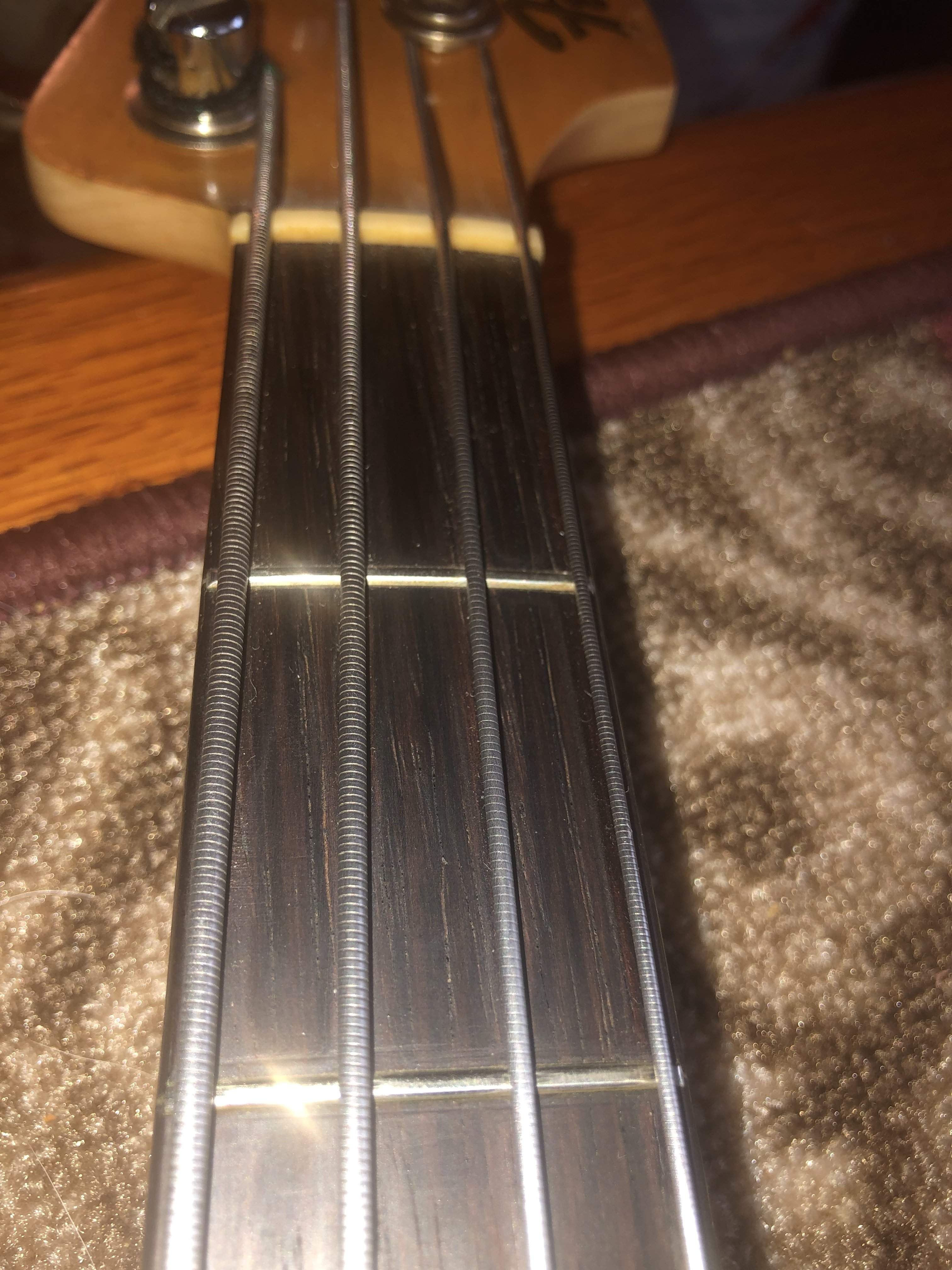
So here’s my 57 year old board. I know it’s provenance and that it’s never seen a drop of oil. It has spent its life here where the climate is considered by weather experts as extreme: very cold dry winters and very hot humid summers. It’s fine. A little dirty right now, but you know, flats: never come off the bass
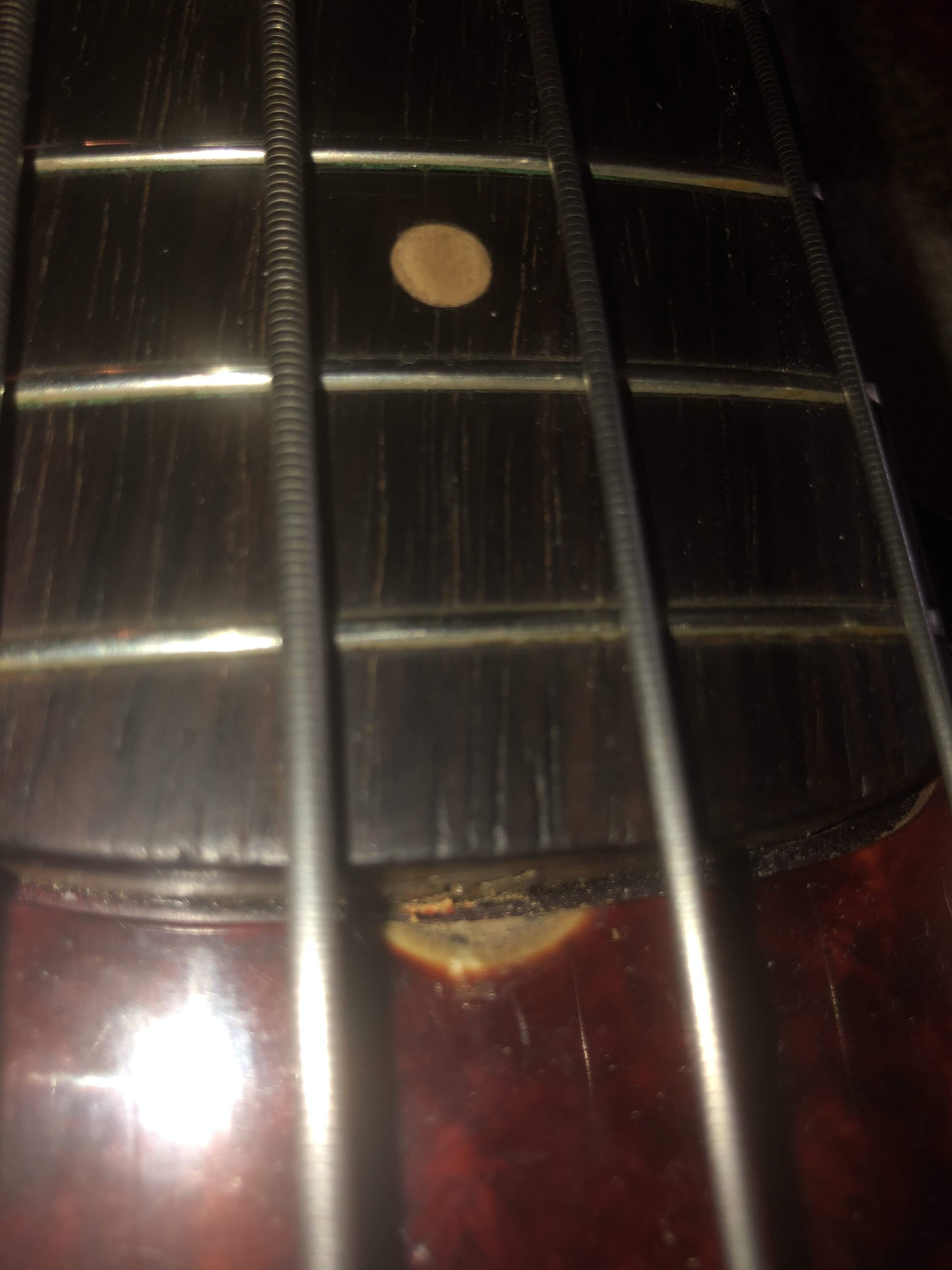


I’ve been playing since 1969 and have a multitude of stringed instruments, the oldest being a 1955 Les Paul, Jr. and a 1965 Epiphone Rivoli and have never oiled a single one of them. No fret sprout issues, dried out boards or other issues. Tennessee has hot and humid summers and relatively mild winters, so just lucky , I guess.


On my unfinished boards, I used to use just a touch of a furniture oil, just enough to make the would not look dry. More for aesthetics than anything else. I'd apply it to a rag, then to the board. On fretted boards, I always started between two frets and tried to keep it from pooling against the frets, I knew nothing about "fret sprout", but was a-feared of the oil attracting dust and gunking up around the frets. These days, I've been using FDA-approved cutting board stuff. It seems to keep a sheen a little longer.

I suppose mineral oil does not prevent the transfer of moisture from wood to the environment, it only reduces the speed at which this transfer of moisture occurs.
An interesting side note: the increase in moisture in the wood to the point of saturation results in an impressive volumetric expansion force. This technique was used to break stones, before the invention of the explosives.
An interesting side note: the increase in moisture in the wood to the point of saturation results in an impressive volumetric expansion force. This technique was used to break stones, before the invention of the explosives.
I invite all to read this, a book on wooden antique furniture conservancy. Just scroll up a bit to “Surface treatment of wood”
Caring for Your Cherished Possessions
Caring for Your Cherished Possessions

I have a lot of difficulty with so many folks, even highly regarded builders, who advocate using oils on the fretboards to prevent cracking.
Agreed. Oiling wood does NOT prevent cracking.

So here’s my 57 year old board. I know it’s provenance and that it’s never seen a drop of oil.
Untrue. Human skin oil is oil.
I've had a couple of basses that needed mineral oil when I first got them because they literally made my skin hurt after playing, they sucked so much oil out of my fingers. Beyond that, just play them.
You know what i mean by oil.Untrue. Human skin oil is oil.
I've had a couple of basses that needed mineral oil when I first got them because they literally made my skin hurt after playing, they sucked so much oil out of my fingers. Beyond that, just play them.

Besides, if you looked at my previous posts you’d see my mention and links about sebum(body oil)

Like I've said before; it depends where you are. If you live where there's actual humidity - even for only part of the year? No, you probably don't need to do anything, unless you just like a shiny fingerboard. But, if you live someplace where a day with 40% humidity is a really humid day - like here in Vegas? Well, unless you want your fingerboard to look like the boards in an abandoned prospector's shack, you better treat it with something to keep what moisture there is in it, from going away completely. I like pure lemon oil for ebony boards (like Alembic recommends); a wipe with a damp cloth for lacquered (Ricks), sealed Maple (Fender, etc,), or Ebanol (Kramer lumies) boards; and linseed oil for everything else. Just a quick wipe on/wipe off, about once a year, does the trick for me. But, yeah, I agree that for most people, in most places, it's pretty much cosmetic, and not really necessary...
Last edited:

I oil my fretboard with a little mineral oil, but only if I just gave them a "deep cleaning". Scrubbing off all the dead skin and oils that were already on there.


