• TalkBass has been independent since 1998. Add your voice.
    Create a free account to reply to discussions, view embedded media, and browse with fewer display ads.
    Join freeLog in
    Want zero display ads or expanded classifieds tools? Compare plans.

Peavey "bad wrap"

I purchased a pair of of the 410TX(?) cabs back in the early 90's. I compared one of them directly to an SWR GII and they sounded almost identical. Of course, the GII had been around longer (I actually think Peavey had just come out with those cabs and they were so similar to the SWR in every way it was scary) but considering I bought two Peaveys to the price of one Goliath I didn't mind!
 
Part of Peavey's problem is that they were cheap when they started. Then the prices were low but the quality was much higher than competing products in the same price range. This was largely due to Hartley adopting modern manufacturing methods when the rest of the MI industry was wallowing in the '20s still. Peavey was the first US MI company to use automatic insertion of components into circuit boards. While Tapco, Fender, et. al. were having someone put resistors into a PC board with a pair of needle nose pliers, Hartley invested in a machine to put everything in quickly and accurately. He then paid that person to inspect each component before it went into the assembly line. That's just one small example, but it's the kind of thing that lead to them having some pretty sophisticated gear at quite low prices.

Another huge factor was that Peavey made things for a LONG time focused on the guy doing gigs at the local bar, not for stars. Add in that they offered some rather high-end features when few other companies were, and doing it at a price week-end warriors could afford you get a curious problem. Giving someone who doesn't have a clue about how to use a graphic EQ and an active crossover for the same price as a Shure Vocal Master or a Fender Bassman 135 lead to some really awful sounding rigs. Not because the amps etc. were bad sounding, but because they didn't work the way other stuff did.

So many people with those '80s Peaveys immediately drew a smiley face or a deep V on their graphic EQ and sounded bad. Or they cranked the knobs on the amps because that's what you had to do with a Fender. Except on the Peavey each increment made a big change. But the people hearing the bad sounding bands just focused on how many times they saw that awful looking Peavey logo and heard a bad sound.

Now that everyone in the MI industry has learned the lessons the Japanese TV makers taught Peavey, the price advantage isn't there. And he had to move production overseas to remain competitive in large parts of the market, parts that were the company's bread and butter.

It's good stuff. If you don't like the sound, that don't make it crappy gear. I don't like Ampegs at all (I know, TB blasphemy) and there're a lot of crappy sounding Ampeg rigs. But that's not Ampeg's fault, it's the operator.

John

John
 
My backup head is a Peavey Mark IV. My BEAD tuned bass is a Peavey Milestone IV.

One of the guitarists I play with uses a Peavey Mace VT or whatever it is. Another uses a Peavey Triple X, and a Peavey tweed amp that I forget what it's called. Both sound fantastic.

My PA is Peavey as well.

I am in favor of Peavey.
 
Part of Peavey's problem is that they were cheap when they started. Then the prices were low but the quality was much higher than competing products in the same price range. This was largely due to Hartley adopting modern manufacturing methods when the rest of the MI industry was wallowing in the '20s still. Peavey was the first US MI company to use automatic insertion of components into circuit boards. While Tapco, Fender, et. al. were having someone put resistors into a PC board with a pair of needle nose pliers, Hartley invested in a machine to put everything in quickly and accurately. He then paid that person to inspect each component before it went into the assembly line. That's just one small example, but it's the kind of thing that lead to them having some pretty sophisticated gear at quite low prices.

Another huge factor was that Peavey made things for a LONG time focused on the guy doing gigs at the local bar, not for stars. Add in that they offered some rather high-end features when few other companies were, and doing it at a price week-end warriors could afford you get a curious problem. Giving someone who doesn't have a clue about how to use a graphic EQ and an active crossover for the same price as a Shure Vocal Master or a Fender Bassman 135 lead to some really awful sounding rigs. Not because the amps etc. were bad sounding, but because they didn't work the way other stuff did.

So many people with those '80s Peaveys immediately drew a smiley face or a deep V on their graphic EQ and sounded bad. Or they cranked the knobs on the amps because that's what you had to do with a Fender. Except on the Peavey each increment made a big change. But the people hearing the bad sounding bands just focused on how many times they saw that awful looking Peavey logo and heard a bad sound.

Now that everyone in the MI industry has learned the lessons the Japanese TV makers taught Peavey, the price advantage isn't there. And he had to move production overseas to remain competitive in large parts of the market, parts that were the company's bread and butter.

It's good stuff. If you don't like the sound, that don't make it crappy gear. I don't like Ampegs at all (I know, TB blasphemy) and there're a lot of crappy sounding Ampeg rigs. But that's not Ampeg's fault, it's the operator.

John

John

Well said.
 
I always thought of peavey as decent equipment but the only gripe I have is how they started rating and advertising their new combos at peak power. Alot of people can see through this but even the salesman at music stores call the new tnt 600 watts when in reality it is only 450 watts if an extension speaker is used and in the 300 watt range as it sits. I always think of companies that do this as low end. You would never see ampeg or other top companies doing this.
 
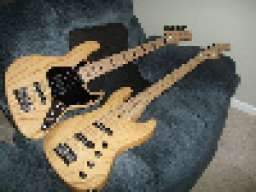
A picture is worth a thousand words, so I'll give you a few thousand worth...

rsz_002_2.gif


rsz_001_3.gif


0012.gif


Peavey gear? Have it, use it and love it.
 
In 1987 I bought my first new pro bass cab. Peavey's 3620 rock solid cab.(400w 4ohms) A huge cabinet in size and sound. This cab weighed over 100lbs. In 2008 I physically cut the cabinet in half and replaced screen with diamond cut aluminum grill. So it is now a 1820 cab. Original Black Widow speakers. I would imagine now a 350 watt cab. Also In 2008 I bought a Peavey Tour 700. This has been my rig since 2008 gigging 40-47 weekends a year. Next month I will retire my 1987 Peavey cab. Moving on to a 40lb GK410 MBE that can technically handle 700. watts. I would recommend Peavey any day of the year.
 

Latest posts