• TalkBass has been independent since 1998. Add your voice.
    Create a free account to reply to discussions, view embedded media, and browse with fewer display ads.
    Join freeLog in
    Want zero display ads or expanded classifieds tools? Compare plans.

Peavey "bad wrap"

Back when I was a performing bassist, late 70's/ early 80's, I had a Peavey T-40 and MKIII head with an Ampeg 810 cab. I loved the heck out of this setup, clean, clear, thumping power. Wish I had kept it all now!!!
Anyone have a suggestion for a 200w Peavey 2x12 combo amp with extension speaker output and a 1x15 Peavey cab?
The older the better!
 
JHandley said:
Back when I was a performing bassist, late 70's/ early 80's, I had a Peavey T-40 and MKIII head with an Ampeg 810 cab. I loved the heck out of this setup, clean, clear, thumping power. Wish I had kept it all now!!!
Anyone have a suggestion for a 200w Peavey 2x12 combo amp with extension speaker output and a 1x15 Peavey cab?
The older the better!

If you want old why not hunt down another Mk III and get a 2x12 cab?
 
Wow, better hook mine up again :). What cab are you playing it through?

Flint? Wow you're kinda close. :D

I ran my MegaBass bi-amped with a Hartke 210 and a Mesa/Boogie Diesel 115. Loved that rig.

You have one lying around? Drop me a line if you ever think of selling it; I have thought about buying one, but it's heavy to ship, eh?

--Steve
 
Did the MegaBass have a crossover? What frequency do you crossover at?

Yes, it did. Screwdriver dial on the front panel. I can't remember where I set it, but the manual says variable from 200Hz - 2Hz. I recall that I found a sweet spot and left it there. I often left the Boogie at a practice place and did smaller gigs with the Hartke (used it full range with single cabs). Again, I loved that sound. Manual:

Invalid Link Removed

Later I custom built a 1x15 (TL 606 clone) and a 2x8 of my own design for bi-amp. I never liked that as much, and those cabs actually sounded better full range. The 2x8 was a pretty tight cabinet, actually. Way more punch than you'd think.

All that gear is gone now. I switched to DB many years ago and am just getting back to electric.

--Steve

P.S. Lest you think I'm some kind of Peavey cheerleader, that amp was awful for double bass (not designed for it, though).
 
Stev187 said:
Yes, it did. Screwdriver dial on the front panel. I can't remember where I set it, but the manual says variable from 200Hz - 2Hz. I recall that I found a sweet spot and left it there. I often left the Boogie at a practice place and did smaller gigs with the Hartke (used it full range with single cabs). Again, I loved that sound. Manual:

Invalid Link Removed

Later I custom built a 1x15 (TL 606 clone) and a 2x8 of my own design for bi-amp. I never liked that as much, and those cabs actually sounded better full range. The 2x8 was a pretty tight cabinet, actually. Way more punch than you'd think.

All that gear is gone now. I switched to DB many years ago and am just getting back to electric.

--Steve

P.S. Lest you think I'm some kind of Peavey cheerleader, that amp was awful for double bass (not designed for it, though).

Thanks.

I'm running an EV tl606 (of which the Diesel appears to be a direct copy...even used an EV driver!) and a Hartke 210xl not crossed over. Hence the question. The Peavey Mk III has a crossover. I may play around.

P.S. Don't consider myself a Peavey cheerleader either but think their better stuff is good. Fwiw I am about to buy a valve or valve/solid state hybrid and Peavey didn't make the shortlist, though that has more to do with distribution issues in Australia.

P.P.S I am yet to find an amp I like for upright. Can I ask what you are using?
 
I love my Peavey gear! I play a Cirrus 6 now, and have a B-Quad 4 in the bedroom I got new in '95. Started my bass journey on a Foundation 4 string. Played through a Mark VIII for 10 years, through a 410TX and BW single 15". I loved that rig. I still have my original TKO-80 with a hole punched in the speaker from a flight where it was badly mis-handled. Still works great though. Also had a BAM 210 combo which sounded fantastic, but was just too heavy for me at the time. I've had a ton of PA gear... CS-800x, CS-1000X, CS-1200X, CS-800S, PV-2000, DTH-218 subs, SP-2's from the 80's, EQ's and other random bits. Not a single piece has ever let me down in the last 21 years of playing. Not once. The closest I've come is buying the CS-800S used broken for $40 and having it repaired. Peavey is killer gear, and to my ears sounds pretty darn good. Sure, some of it is heavy, but that's about the only detractor! Built like a tank, sounds good... what's not to love? Heck, my Cirrus gets equal play-time to my Roscoe SKB-3006. Fantastic instrument.
 
I have a peavey grind4 ntb and is a very nice bass, but since i now own a stingray the difference is miles apart.
The peavey feels great to play but i would need to make significant changes to the hardware, before i would ever consider using it live again!


Hence why we all say scour for quality USA bass and/or be very careful of the era and production country of your bass
 
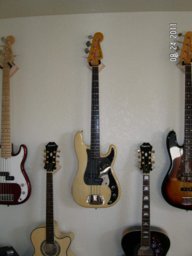
Great responses and pictures everyone! I guess you just have to ignore gear snobs and go for what you want and can afford. Indeed Peavey is really solid gear, I know all of it I have owned and do is.
 
Part of Peavey's problem is that they were cheap when they started. Then the prices were low but the quality was much higher than competing products in the same price range. This was largely due to Hartley adopting modern manufacturing methods when the rest of the MI industry was wallowing in the '20s still. Peavey was the first US MI company to use automatic insertion of components into circuit boards. While Tapco, Fender, et. al. were having someone put resistors into a PC board with a pair of needle nose pliers, Hartley invested in a machine to put everything in quickly and accurately. He then paid that person to inspect each component before it went into the assembly line. That's just one small example, but it's the kind of thing that lead to them having some pretty sophisticated gear at quite low prices.

Another huge factor was that Peavey made things for a LONG time focused on the guy doing gigs at the local bar, not for stars. Add in that they offered some rather high-end features when few other companies were, and doing it at a price week-end warriors could afford you get a curious problem. Giving someone who doesn't have a clue about how to use a graphic EQ and an active crossover for the same price as a Shure Vocal Master or a Fender Bassman 135 lead to some really awful sounding rigs. Not because the amps etc. were bad sounding, but because they didn't work the way other stuff did.

So many people with those '80s Peaveys immediately drew a smiley face or a deep V on their graphic EQ and sounded bad. Or they cranked the knobs on the amps because that's what you had to do with a Fender. Except on the Peavey each increment made a big change. But the people hearing the bad sounding bands just focused on how many times they saw that awful looking Peavey logo and heard a bad sound.

Now that everyone in the MI industry has learned the lessons the Japanese TV makers taught Peavey, the price advantage isn't there. And he had to move production overseas to remain competitive in large parts of the market, parts that were the company's bread and butter.

It's good stuff. If you don't like the sound, that don't make it crappy gear. I don't like Ampegs at all (I know, TB blasphemy) and there're a lot of crappy sounding Ampeg rigs. But that's not Ampeg's fault, it's the operator.

John

John

The thing about making gear for stars-I remember a long time ago, watching country acts on TV, back when Hee Haw was big. It seemed the performers always had Peavey amps behind them.

I also remember the One More From the Road album cover from Lynyrd Skynyrd. Lots of Peavey gear behind those guys, especially Leon Wilkeson. I really liked the tone he got from that rig. :hyper: