Kinda reminds me when my wife, after years of Charmin, brought Norhern Quilted. At first I was skeptical butt after I tried it, it felt ok.

Enjoy the benefits of a premium membership!
Upgrade Account
-
TalkBass has been independent since 1998. Add your voice.
Create a free account to reply to discussions, view embedded media, and browse with fewer display ads.
Join free Log in
Want zero display ads or expanded classifieds tools? Compare plans.
You are using an out of date browser. It may not display this or other websites correctly.
You should upgrade or use an alternative browser.
You should upgrade or use an alternative browser.
More options
Who Replied?

I suppose it really depends how fine the subdivision is. I can't imagine Q. would build in something with a significant design flaw. However, the post-master XLR does raise a few eyebrows, so I'm not sure how I feel about this, having no real world experience.

The detents are fine with me. Aside from the DI issue, the only thing i could harp on is the sloped front, insofar as it makes it a hassle to rackmount the head. I had a wireless unit above it, and had to use a seperate DI that was always plugged into the head as an adapter of sorts, as i couldn’t plug and unplug from the input without taking out the wireless unit.
But that’s a small price to pay.
But that’s a small price to pay.


I myself really like the detents and their quality feel.
Knob positions are very easy to set and recall with them.
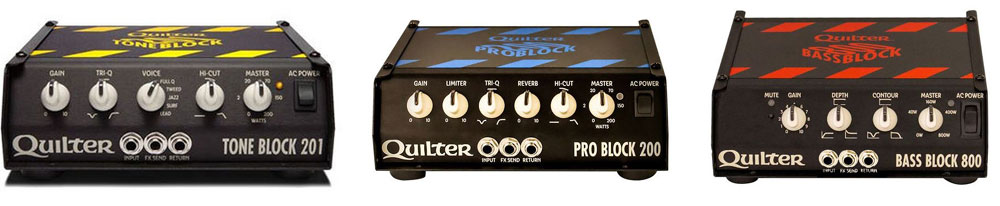
Regarding the slanted front panel and upward angle of phone plugs when inserted, I hope future relocation of the jacks will resolve this and other issues (as per my mock-up below.)
Cheers!
Knob positions are very easy to set and recall with them.
Regarding the slanted front panel and upward angle of phone plugs when inserted, I hope future relocation of the jacks will resolve this and other issues (as per my mock-up below.)
Cheers!

And similar to Eden's each click makes a noticeable difference. I like the click feature.

- Apr 29, 2003
- 9,078
- 9,800
- Disclosures
- Contributor- Bass Musician Magazine | Marketing Manager- Trickfish Amplification
wish my BB800 was from the series that had the Fx loop. I have the one with the active and passive jacks on the left side of the faceplate. Having a 1/4" effects return would be real handy, assuming its post EQ.
wish my BB800 was from the series that had the Fx loop. I have the one with the active and passive jacks on the left side of the faceplate. Having a 1/4" effects return would be real handy, assuming its post EQ.
To clarify: There has only been one version of BB800 to date, with the input jacks on the left side and sans effect loop.
The graphic above is a mock-up I did in Photoshop depicting my ideas for improvement and not an actual product release.

- Apr 29, 2003
- 9,078
- 9,800
- Disclosures
- Contributor- Bass Musician Magazine | Marketing Manager- Trickfish Amplification
aha. that explains it. Quilter needs to hire you 
Thats really the only gripe I have with the Quilter is the lack of FX loop (well, that and the XLR out being tied to the master of course). I would use it mainly for line in to the power section, but since it has an XLR input on the back, and my tube DI is XLR out, it works fine, but occasionally I prefer to run my pedalboard through an amps FX loop. Some amps seem to like it more than others.
Thats really the only gripe I have with the Quilter is the lack of FX loop (well, that and the XLR out being tied to the master of course). I would use it mainly for line in to the power section, but since it has an XLR input on the back, and my tube DI is XLR out, it works fine, but occasionally I prefer to run my pedalboard through an amps FX loop. Some amps seem to like it more than others.
aha. that explains it. Quilter needs to hire you
Thats really the only gripe I have with the Quilter is the lack of FX loop (well, that and the XLR out being tied to the master of course). I would use it mainly for line in to the power section, but since it has an XLR input on the back, and my tube DI is XLR out, it works fine, but occasionally I prefer to run my pedalboard through an amps FX loop. Some amps seem to like it more than others.
Thanks!
I have a short list of other such improvements in my NAD thread: NAD: Quilter Bass Block 800
Cheers!

More likely my recollection of his explanation, hence putting the question mark in my reply.That's not how detented pots are constructed. Your tech is misinformed.
Can you explain to us how they are constructed?

Another fan here in favor of the slanted panel. It's the only amp I have that I can actually see.
As for my detent problem, I have not tested the high gain compression in the wild yet, so the master level/detent setting may turn out to be a non-issue. But for practice, it's noticeable.
But to reiterate: I love this amp and everything I complain about is nitpicking!
As for my detent problem, I have not tested the high gain compression in the wild yet, so the master level/detent setting may turn out to be a non-issue. But for practice, it's noticeable.
But to reiterate: I love this amp and everything I complain about is nitpicking!

This amp is my favorite flavor of micro so far. Stout tone, meticulously engineered, and priced friendly for non-superstar sidemen.

Bob Lee (QSC)
In case you missed it, I work for QSC Audio!
- Jul 3, 2001
- 12,668
- 2,036
- 67
- Disclosures
- Former Technical Communications Developer, QSC Audio
More likely my recollection of his explanation, hence putting the question mark in my reply.
Can you explain to us how they are constructed?
The resistive element and wiper are the same as in an equivalent non-detented pot. There are no detents in the electrical part of the pot.
But also attached to the shaft is typically either a toothed or a slotted wheel with a small spring-loaded ball that you can feel gently drop into place as you turn the shaft. That's what creates the feel of detents. The spacing of the teeth or slots in the wheel and the size of the ball determines how many detents there are over the sweep of the pot. Some have 11, some have 21, and so on.

Where this does come into play for me is that the self-noise of the amplifier is always at it's maximum- the amp seems to essentially be wide open, and the master is used to dial back the feed to the amplifier section. If it was a true master volume control and not a feed to the power section, you could dim the power section resulting in a lower self-noise floor at quieter volumes.However, the post-master XLR does raise a few eyebrows, so I'm not sure how I feel about this, having no real world experience.

I suppose it really depends how fine the subdivision is. I can't imagine Q. would build in something with a significant design flaw. However, the post-master XLR does raise a few eyebrows, so I'm not sure how I feel about this, having no real world experience.
The post Master line out is the only thing about the amp that I don't care for but it's been far from a dealbreaker for me.
When looking at my amp for the detentes I realized I had numbers on the gain control. I also realized during this exercise how often I actually look at my amp... not very.
Other than being able to control my stage volume alone from the Master I really wouldn't change anything else about the amp. I understand that's my particular situation and others have their own. I'm not racking mine, can't hear an audible difference between using effects with or without a loop, set my gains by ear versus feeling clicks, etc.
Last edited:
The post Master line out is the only thing about the amp that I don't care for but it's been far from a dealbreaker for me.
I guess I've sorta waffled on the want, which means I probably don't *really* want it. When I get excited about gear, it comes home. Not saying the Quilter wouldn't be good, but that I'm saturated with gear, and I can't own all the things.
I guess I've sorta waffled on the want, which means I probably don't *really* want it. When I get excited about gear, it comes home. Not saying the Quilter wouldn't be good, but that I'm saturated with gear, and I can't own all the things.
If you haven't had a chance to have a BB800 stick foot into your cab in a live setting, to parphrase Ferris Bueller...
"I highly recommend it".

Actually I realize that I glance at my amp like I glance at my analog watch or analog gauges in my cars. No reading necessary.
The resistive element and wiper are the same as in an equivalent non-detented pot. There are no detents in the electrical part of the pot.
But also attached to the shaft is typically either a toothed or a slotted wheel with a small spring-loaded ball that you can feel gently drop into place as you turn the shaft. That's what creates the feel of detents. The spacing of the teeth or slots in the wheel and the size of the ball determines how many detents there are over the sweep of the pot. Some have 11, some have 21, and so on.
That being the case, I'd love to know why all the pots with detents on both my old Eden heads became noisy, crackling as they went over every notch.
Has the design changed in the last 20 years?


