• TalkBass has been independent since 1998. Add your voice.
    Create a free account to reply to discussions, view embedded media, and browse with fewer display ads.
    Join freeLog in
    Want zero display ads or expanded classifieds tools? Compare plans.

Rattle Can Refinish Club

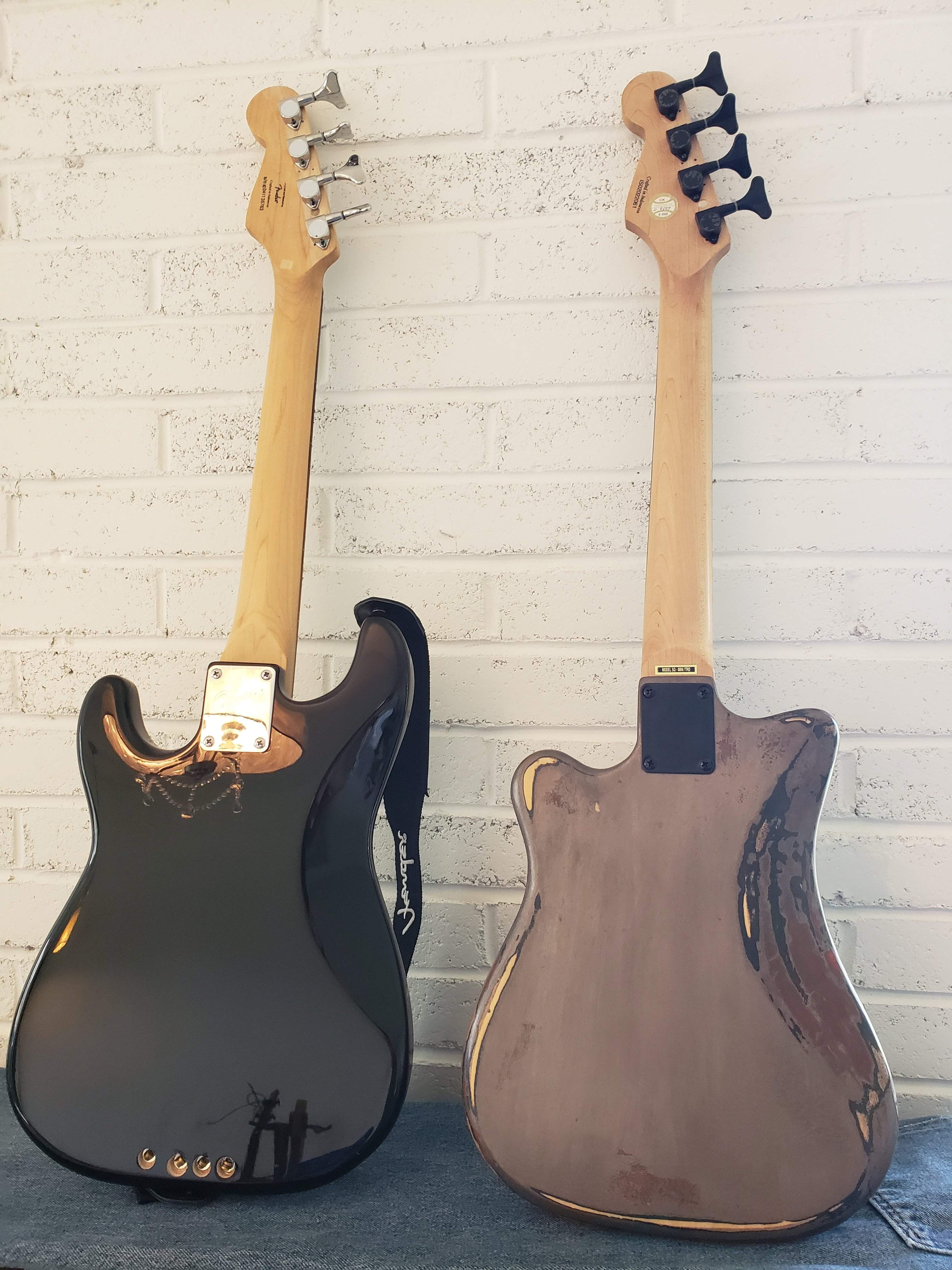
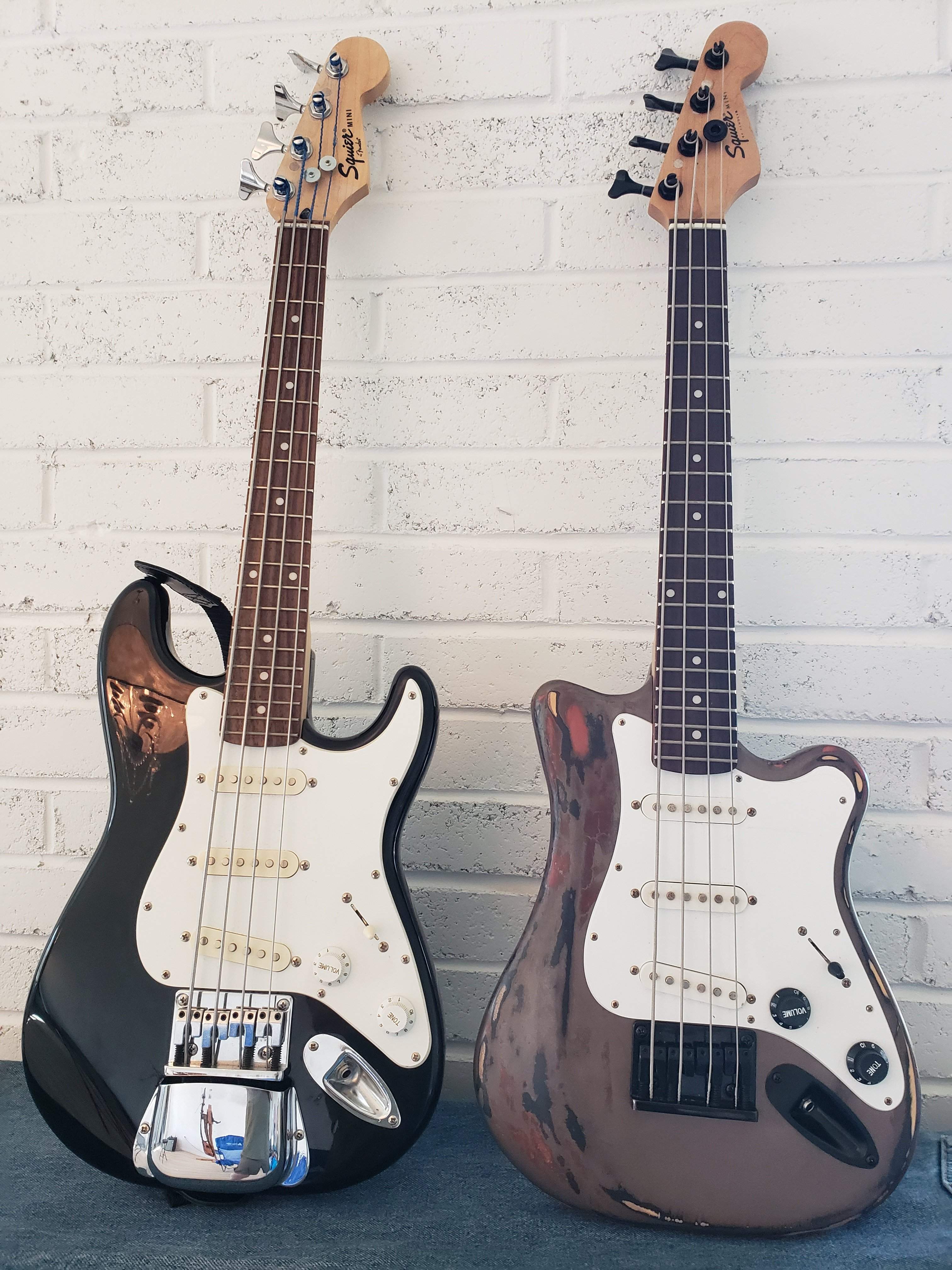
Painted a bass conversion with a hammered rattle brown. Had a paint blocking situation going on. Took it down to reshoot top coat. Liked the unintended sort of relic appearance as did my wife. A few coats of wipe on poly and calling it good. First conversion on left
20190223_143438.jpg
20190223_143527.jpg
 
Hey, a question... on my first build, I got the paint ... eh... good enough I'm not going to redo it. But still, there's this very fine not-smoothness to the finish that gives it a matte appearance. I'd rather get something much glossier on the next go-round. If the pictures are even enough to tell what I'm talking about, can y'all give me some advice on how to prevent this?

My starting assumption is that I didn't sand the color smooth enough before applying the clear coat...

IMG_3186.JPG


IMG_3185.JPG
 

Attachments

  • IMG_3184.JPG
    IMG_3184.JPG
    708.8 KB · Views: 87
Ideally you shouldnt have to sand the color coat much, if at all. You want to build up enough thickness of clearcoat that you can sand and buff out the orange peel without cutting through to color. Its an aquired skill of practice and failure, unfortunately. In your shoes now, id probably strip it and try again. Once the clearcoat cures fully, you cant overcoat more clear without witness lines showing through.
 
Ideally you shouldnt have to sand the color coat much, if at all. You want to build up enough thickness of clearcoat that you can sand and buff out the orange peel without cutting through to color. Its an aquired skill of practice and failure, unfortunately. In your shoes now, id probably strip it and try again. Once the clearcoat cures fully, you cant overcoat more clear without witness lines showing through.

So... it’s the clear coat that is causing the effect?
 
Probably a little of both, but the orange peel is in the clearcoat. You have nothing to lose by trying to wetsand it with very fine grit (800 grit+) Wet and dry automotive paper and a drop of dish soap. If the clearcoat is too thin, you'll go right though it, so its a commitment once you start. 1000 great tutorials on Youtube, dont try to wing it.
 
  • Like
Reactions: Willicious

A tip on weight reduction - if you use a drill-press and a smaller forstner bit (5/8") you can remove more wood in the same space while maintaining the structural integrity. With a drill press you can set the depth of holes down to 1/4" which leaves plenty of wood at the base.

Update: on a typical Jazz bass - chambering the way I did on my Teiscobird under a J pg (which isn't as large an area) will reduce weight by (only) 6oz. Just throwing this out there in case you are considering the process.

On this example I removed nearly a pound which the pg/control plate cover. You just need to avoid the rear belly-bevel area so you don't break through.

fullsizeoutput_1260.jpeg

in progress - sans clear coat Teiscobird projects
fullsizeoutput_1270.jpeg
 
Last edited:
Mulling this job but unsure of how to approach the prep. This is a solid and great playing instrument but someone was unkind to it along the way and with the surface dings and what appears to be a poor relic attempt has some areas that would need filling and sanding before prime and paint. What methods and materials would you recommend i this case to create a nice, as like new as possible, starting surface? I am planning on a full, non transparent coloe choice, possibly a metallic green.

IMG_2540.jpg
IMG_2543.jpg
IMG_2544.jpg
IMG_2545.jpg
IMG_2546.jpg
IMG_2548.jpg
IMG_2549.jpg

IMG_2656.jpg
IMG_2659.jpg
 
  • Like
Reactions: GotRoot?
Question, if I may. I got rid of an Epiphone Thunderbird Pro IV several years ago and I’m regretting it as it was a very well built bass and sounded awesome! It was black and I can’t seem to find black ones anywhere and Epi has discontinued the color. I was thinking of getting one in burst or natural, stripping it and refinishing it in the black stain. Has anyone ever stripped a Pro IV? What can I expect?
 
  • Like
Reactions: Klondike
Question, if I may. I got rid of an Epiphone Thunderbird Pro IV several years ago and I’m regretting it as it was a very well built bass and sounded awesome! It was black and I can’t seem to find black ones anywhere and Epi has discontinued the color. I was thinking of getting one in burst or natural, stripping it and refinishing it in the black stain. Has anyone ever stripped a Pro IV? What can I expect?
Have you considered the Epiphone Vintage Pro? It is an amazing bass and sounds straight out of the sixties, every bit as good if not better that a 64 Bird. And the come in Black so you wouldn't even have to redo it. Best part is they are about 600 bucks. Exceptionaly reasonable considering your getting what is arguably better in many ways than a "for real" Gibson.
 
  • Like
Reactions: JIO
Painted a bass conversion with a hammered rattle brown. Had a paint blocking situation going on. Took it down to reshoot top coat. Liked the unintended sort of relic appearance as did my wife. A few coats of wipe on poly and calling it good. First conversion on leftView attachment 3333765

Both of those look great! Is there anything under the ashtray on the black one?
 
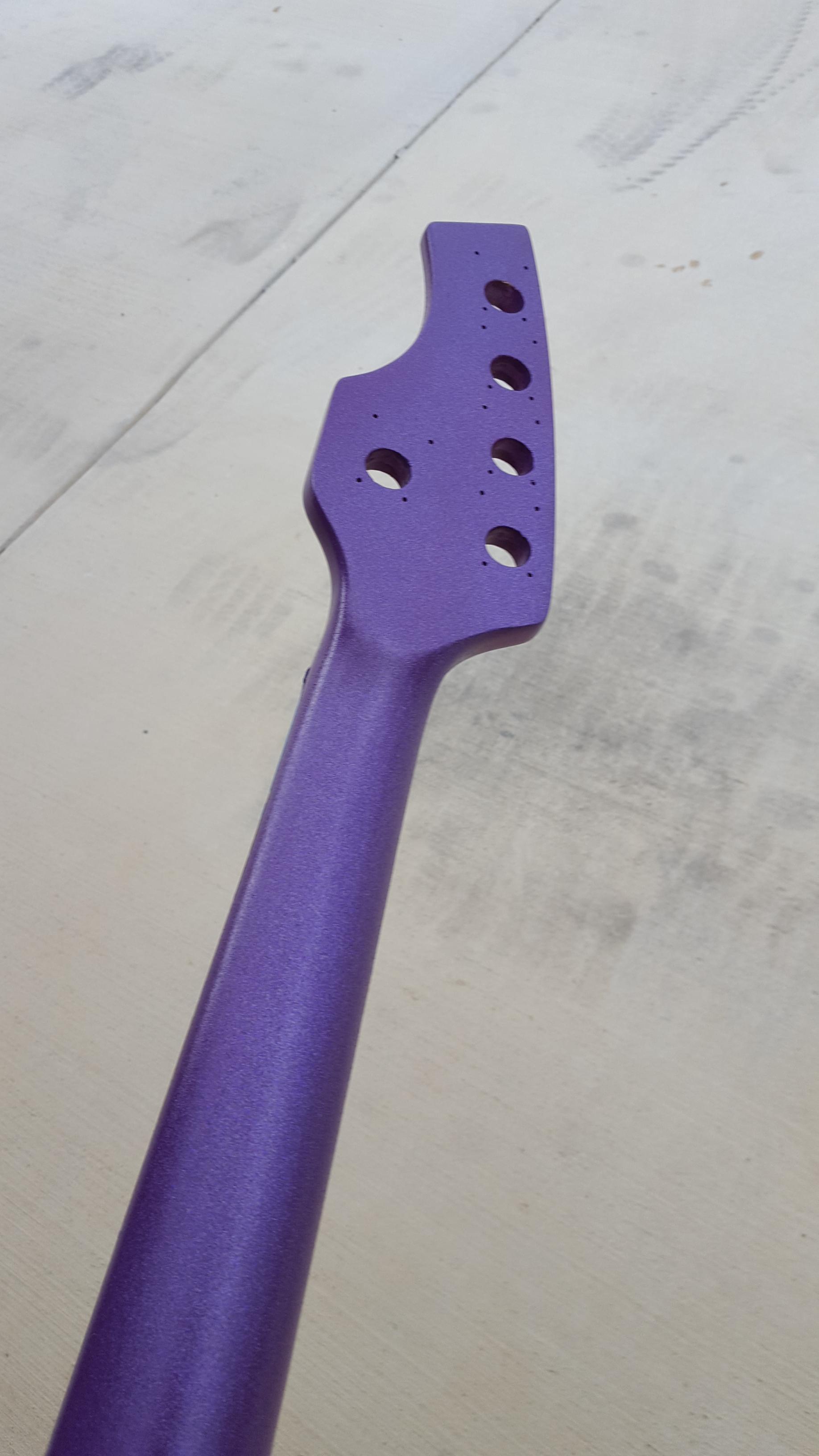
What's that paint? love that color!

BnB

Colors I used were: Krylon Colormaster Paint & Primer Gloss Rich Plum as a base coat. Once dry, I used Krylon Glitter Blast Grape Glitz as the top coat. Then used Krylon Colormaster Gloss Crystal Clear to seal it in.
 
Last edited:

Latest posts