
Enjoy the benefits of a premium membership!
Upgrade Account
-
TalkBass has been independent since 1998. Add your voice.
Create a free account to reply to discussions, view embedded media, and browse with fewer display ads.
Join free Log in
Want zero display ads or expanded classifieds tools? Compare plans.
You are using an out of date browser. It may not display this or other websites correctly.
You should upgrade or use an alternative browser.
You should upgrade or use an alternative browser.
Renaissance/Turner Basses Club
- Thread starter EdwardofHuncote
- Start date
-
- Tags
- club
More options
Who Replied?
I am very interested in buying a Renaissance 5 Fretted online but I am very concerned it may have too much neck drive for me. I have a Washburn acoustic bass that I just can’t get comfortable with because of the neck dive. I have tried a non slip strap and a strap that ties to neck by the nut but neither work well. How is the balance of the Renaissance 5? Does that extender bar that connects to the neck joint bolts solve the neck dive problem?

The Dingus helps but does not solve the neck-dive. Even the 4-stringer has neck-dive.I am very interested in buying a Renaissance 5 Fretted online but I am very concerned it may have too much neck drive for me. I have a Washburn acoustic bass that I just can’t get comfortable with because of the neck dive. I have tried a non slip strap and a strap that ties to neck by the nut but neither work well. How is the balance of the Renaissance 5? Does that extender bar that connects to the neck joint bolts solve the neck dive problem?

I am very interested in buying a Renaissance 5 Fretted online but I am very concerned it may have too much neck drive for me. I have a Washburn acoustic bass that I just can’t get comfortable with because of the neck dive. I have tried a non slip strap and a strap that ties to neck by the nut but neither work well. How is the balance of the Renaissance 5? Does that extender bar that connects to the neck joint bolts solve the neck dive problem?
Ren basses do have a neck dive issue. It’s a comparatively normal neck teamed with a very light body - it’s physics at work.
With that mentioned, the neck dive never bothered me very much - I just learned how to work around it. I do use a leather strap with an unfinished rough underside, which provides enough friction to keep the bass in one place. Since I started playing, my forearm has a comfortable tendency to clamp the bass body to my body, which also helps immobilize the instrument.
I never got involved with the Dingus stick strap extension, but I have heard of players adding some sort of cleverly disguised bit of weight to the end of the strap where it meets the butt end of the body. This serves to weight up the body end and pull the neck up higher. This would be more useful in standing position, although the neck dive issues do exist in sitting position as well.
These are just my personal experiences with the bass. I could see the neck dive bothering other players a lot, and if it’s a thing, it’s a thing. Some players move them out of their collection for that reason.
I look at the Renaissance as a very unique instrument that requires unique accommodations. If it all possible, I always recommend getting one in hand to try out through someone that owns one already, at a showroom, or from an online dealer that has fair return policies. That’s sometimes a big ask because of the relative scarcity of these instruments, but it’s worth the investigation. I absolutely love mine.
Last edited:

Thanks JeffThe Dingus helps but does not solve the neck-dive. Even the 4-stringer has neck-dive.
Thanks for your detailed response. I was at NAMM earlier this month and was hoping the Rick Turner guys would be there but they were not. I guess because Rick had just passed away in April. There are no stores in my area of the country that stock Rick Turner guitars so unfortunately I can’t try one out.Ren basses do have a neck dive issue. It’s a comparatively normal neck teamed with a very light body - it’s physics at work.
With that mentioned, the neck dive never bothered me very much - I just learned how to work around it. I do use a leather strap with an unfinished rough underside, which provides enough friction to keep the bass in one place. Since I started playing, my forearm has a comfortable tendency to clamp the bass body to my body, which also helps immobilize the instrument.
I never got involved with the Dingus stick strap extension, but I have heard of players adding some sort of cleverly disguised bit of weight to the end of the strap where it meets the butt end of the body. This serves to weight up the body end and pull the neck up higher. This would be more useful in standing position, although the neck dive issues do exist in sitting position as well.
These are just my personal experiences with the bass. I could see the neck dive bothering other players a lot, and if it’s a thing, it’s a thing. Some players move them out of their collection for that reason.
I look at the Renaissance as a very unique instrument that requires unique accommodations. If it all possible, I always recommend getting one in hand to try out through someone that owns one already, at a showroom, or from an online dealer that has fair return policies. That’s sometimes a big ask because of the relative scarcity of these instruments, but it’s worth the investigation. I absolutely love mine.

Hello, all. Here's me. Are we still doing club numbers?
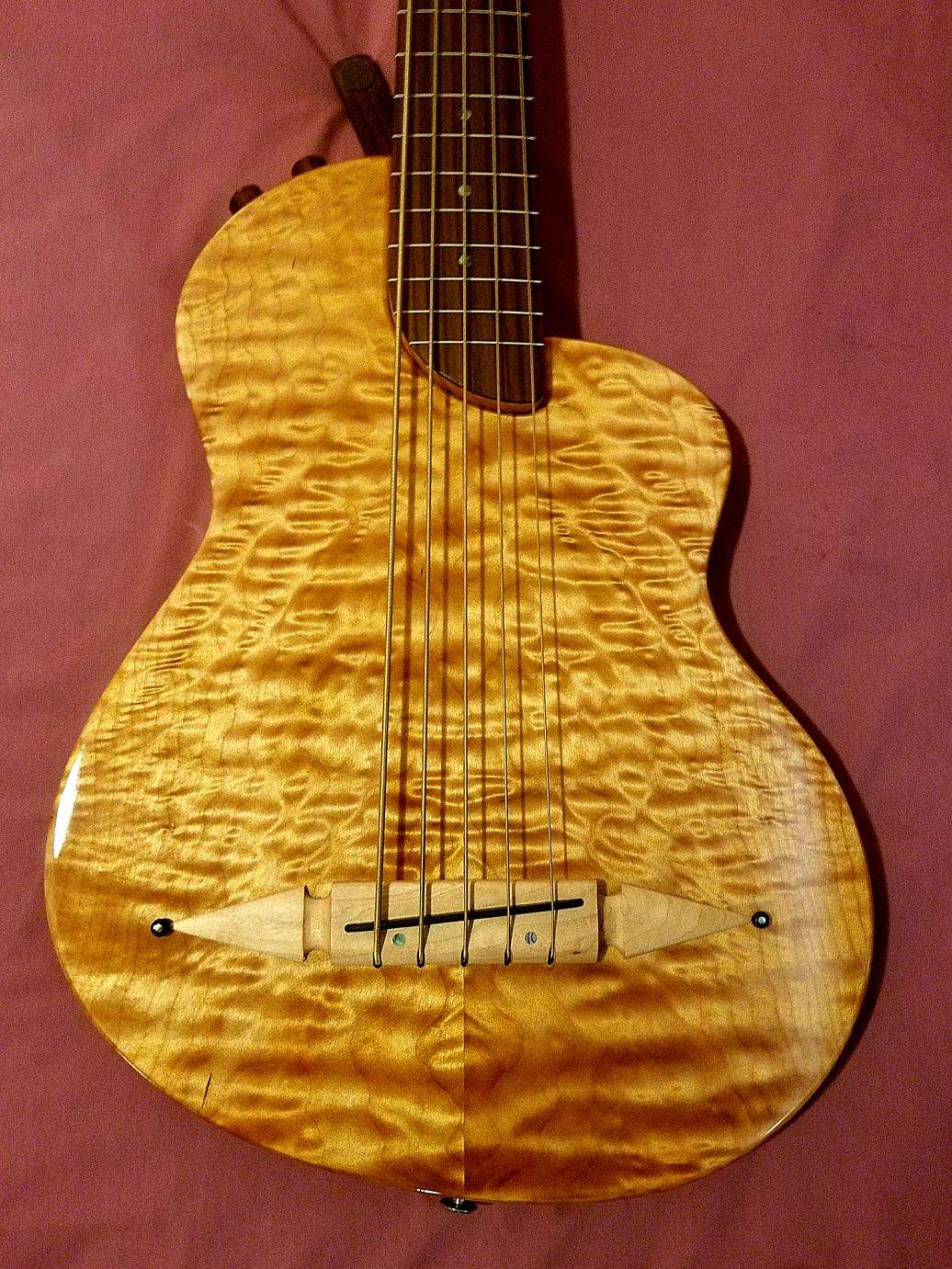
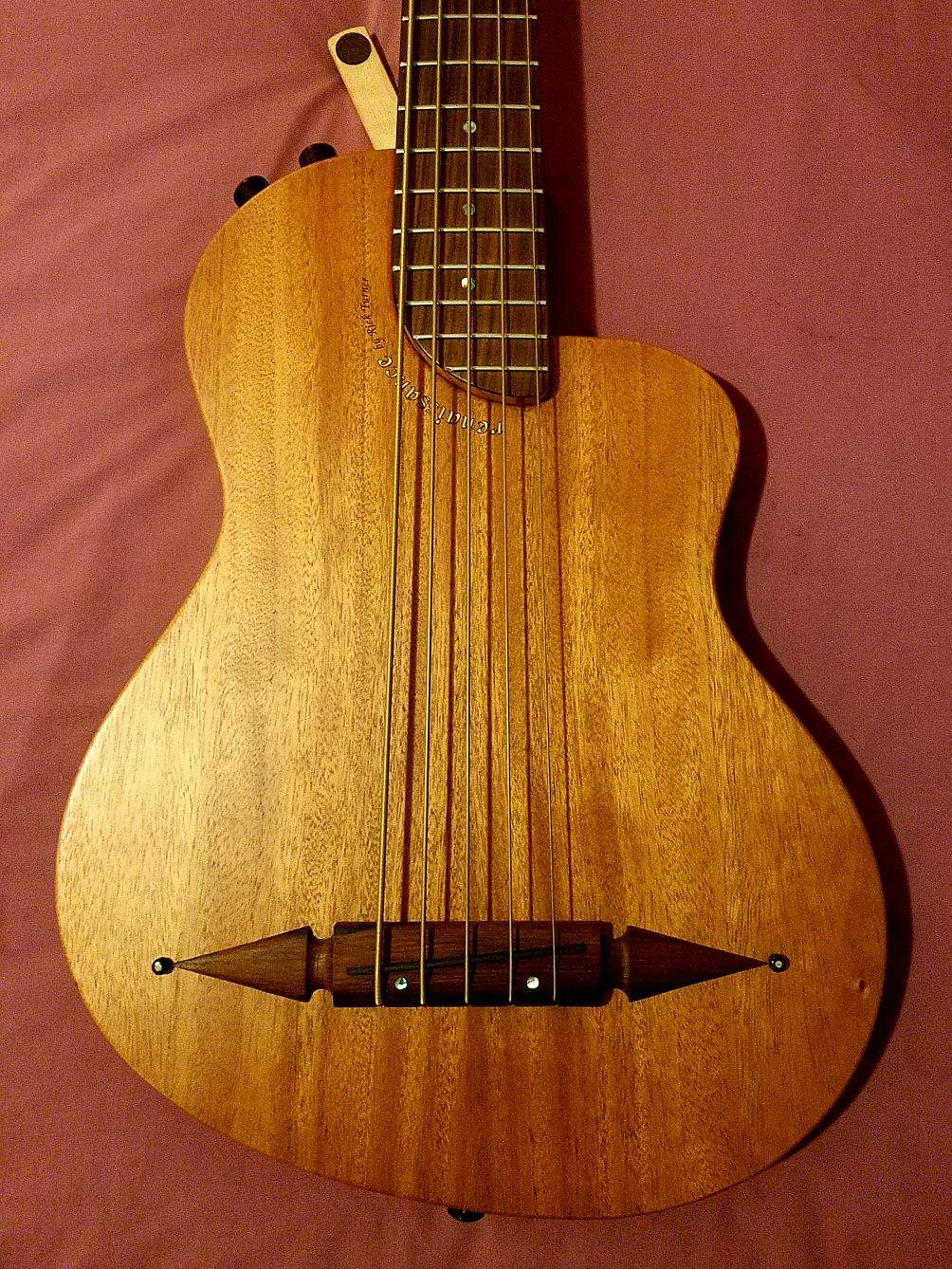
I'm pretty sure it's a "Standard", with gloss spruce top and satin finished back/sides, and i guess the back & sides are supposed to be mahogany, but i'm not sure with that grain. But whatever it is, it looks plays and sounds great! Thanks, Rick!
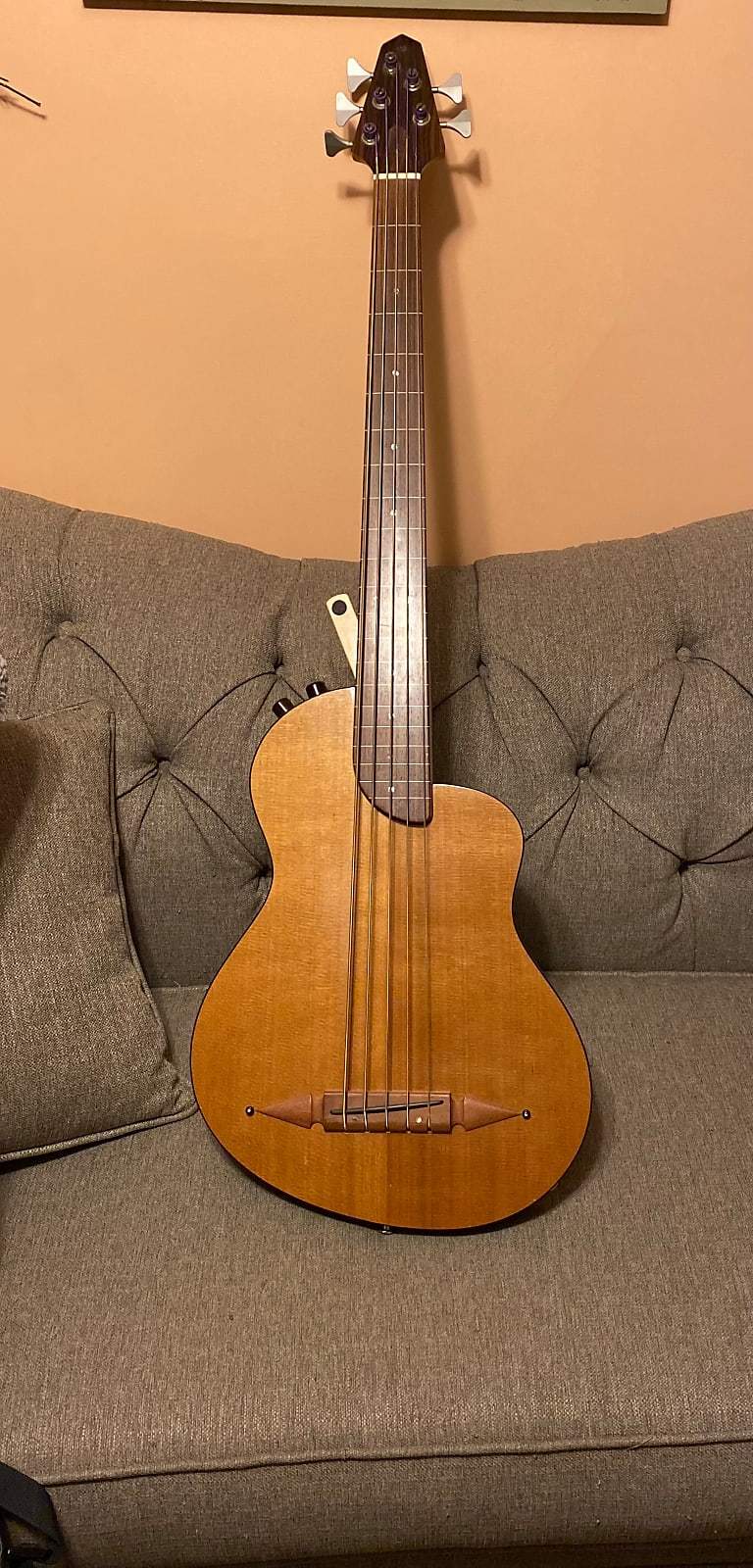
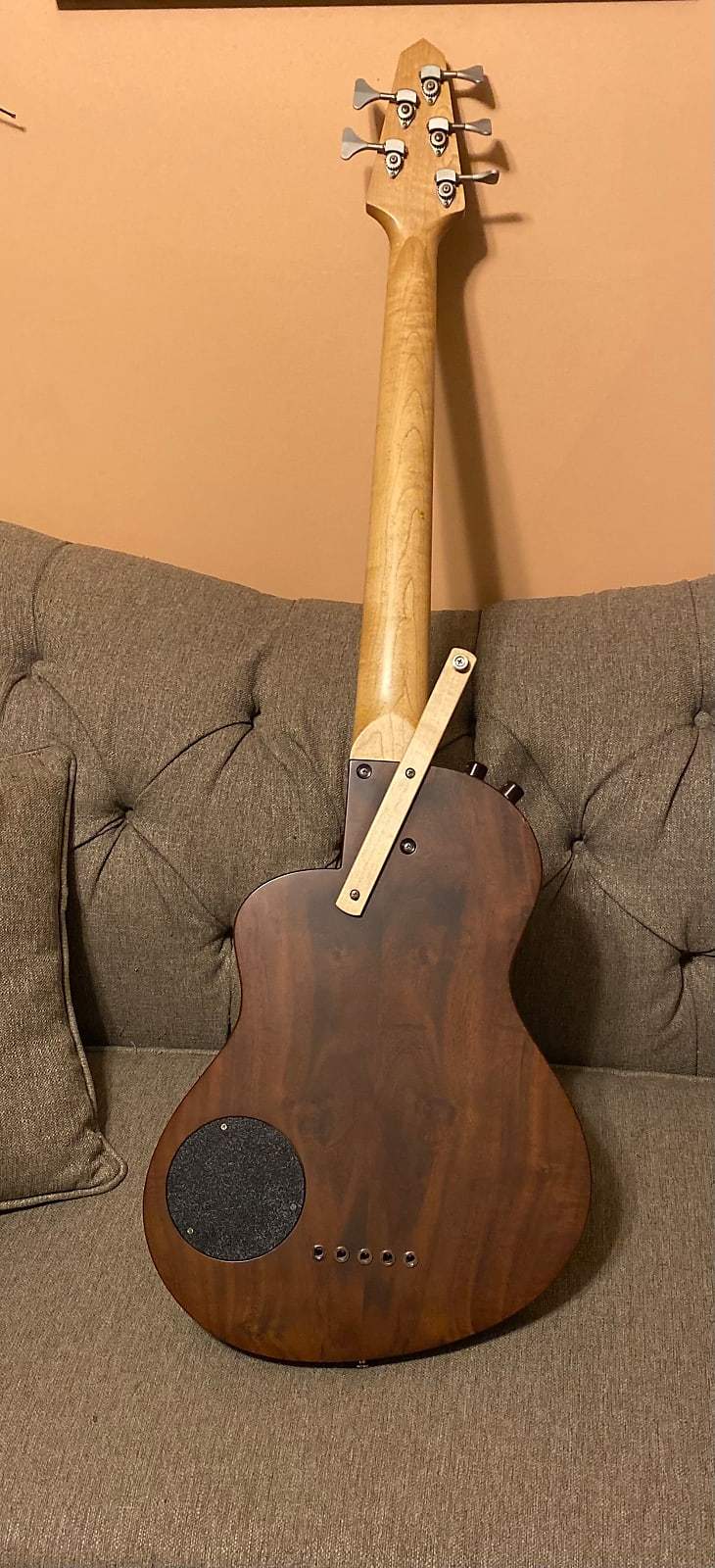

I'm pretty sure it's a "Standard", with gloss spruce top and satin finished back/sides, and i guess the back & sides are supposed to be mahogany, but i'm not sure with that grain. But whatever it is, it looks plays and sounds great! Thanks, Rick!
Nice bass! I would guess the back might be walnut, or maybe rosewood. I like the hipshot tuners too
Walnut & rosewood are both good guesses. They're not listed on the website among the usual woods used for this model, but i've seen lots of other variations too.
I assumed the Hipshot tuners were standard for these... are they not?
Hello, all. Here's me. Are we still doing club numbers?
I'm pretty sure it's a "Standard", with gloss spruce top and satin finished back/sides, and i guess the back & sides are supposed to be mahogany, but i'm not sure with that grain. But whatever it is, it looks plays and sounds great! Thanks, Rick!
View attachment 4737842 View attachment 4737843 View attachment 4737844
That's definitely walnut back and sides. Looks like it might be a cedar top vs spruce?
That's definitely walnut back and sides. Looks like it might be a cedar top vs spruce?
I bought one of the early RB4s in 1997 after playing a prototype when visiting with Henry Kaiser. Even though I exclusively play five-string I wanted a Renaissance because of its unique tone, at the time Rick wasn't building five-strings yet. When they became available in 1998 I got one of those too. Both instruments had what was standard at the time, a walnut back and sides and cedar top. Facing on the headstocks back then was all the plastic fake tortoise shell look and none of the instruments had the decal on the body below the neck yet. The decals were available by sometime in 1978 or early 79, when I brought both basses to Rick for adjustments he added the decal to my RB4 but not the five for some reason, he also upgraded the electronics packages free-of-charge. At the time the battery compartment was integrated into the electronics compartment which was accessed through the side, not the back and the hipshot tuners were standard.
I am finding it a bit odd that mjmOs Ren has no decal on the body, I thought that became standard issue early on in the cosmetic evolution of these instruments, but the back and sides definitely look like walnut and cedar. I prefer the look of cedar on these since it makes them look more like an acoustic guitar. The fancy wood tops are beautiful but for me visually give the look of the instruments a more solid-body vibe.

- Aug 21, 2013
- 6,668
- 2
- 16,474
- Disclosures
- I privately own and operate a local musical instument repair shop.
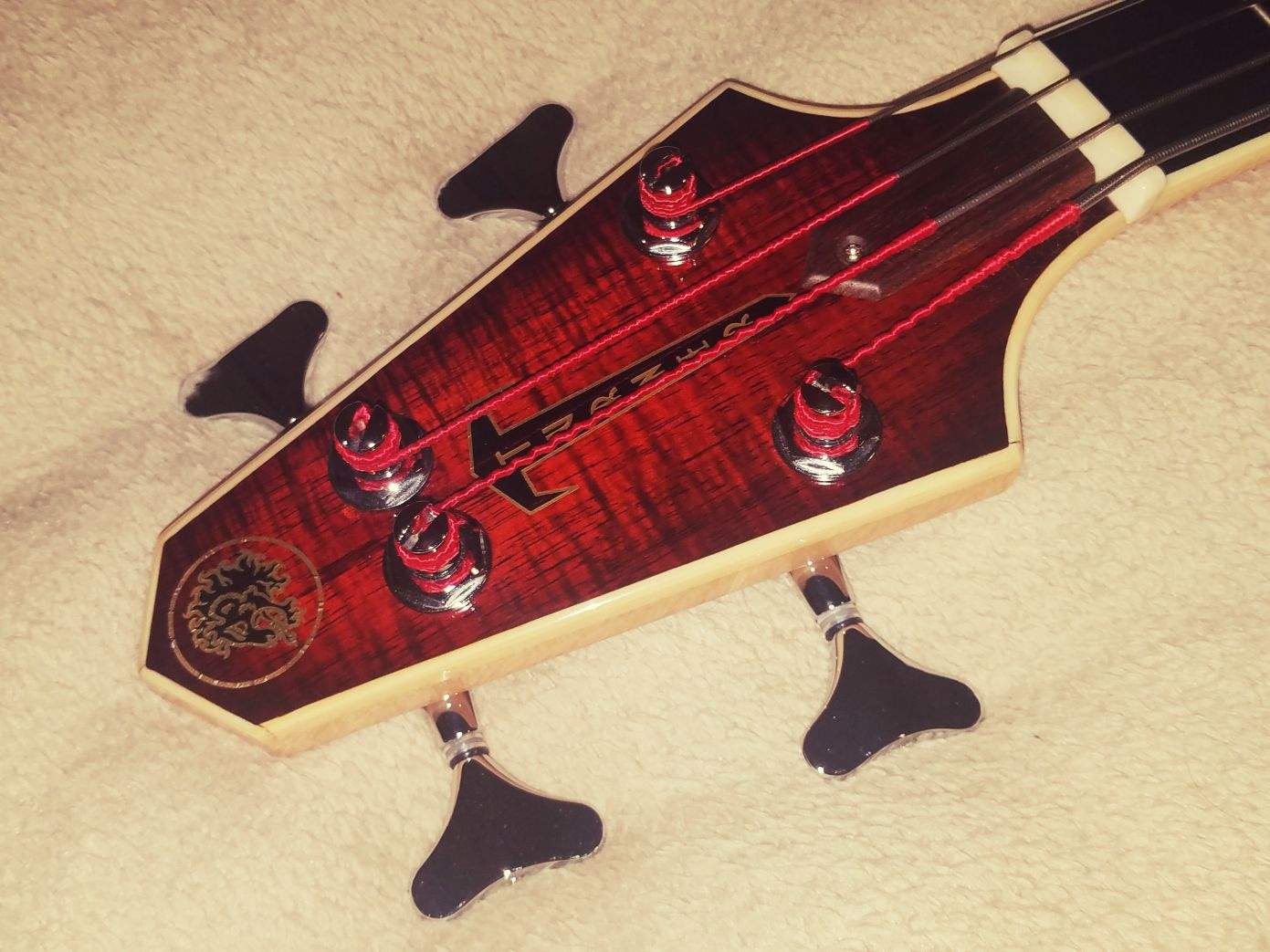
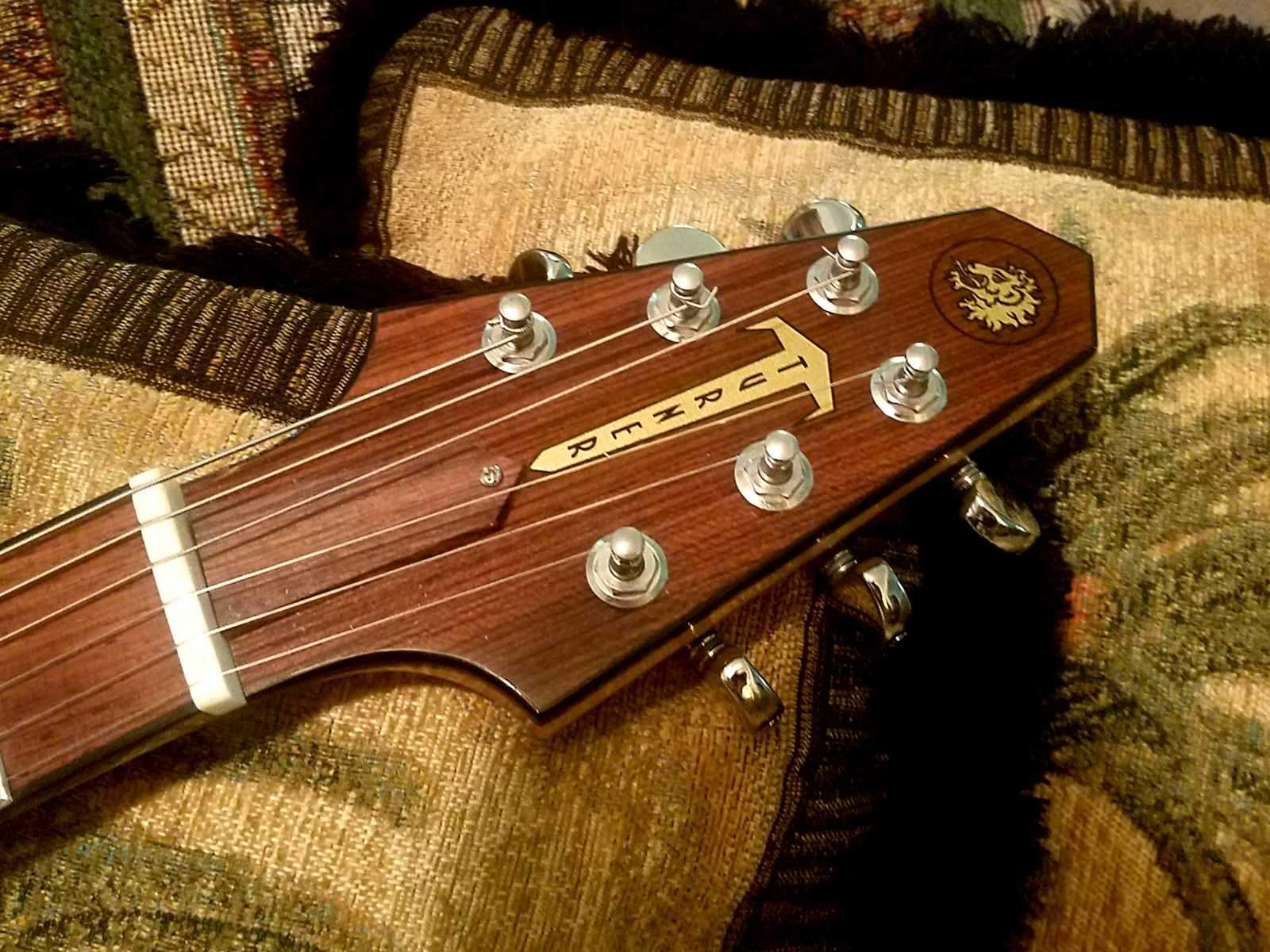
I don't know if there was a hard-and-fast rule on decals/logos. My 2013 fretless has no Renaissance banner, but does have a Sun Lion. The 2010 Special has both. Note the Lion is gold, encircled in a black ring.
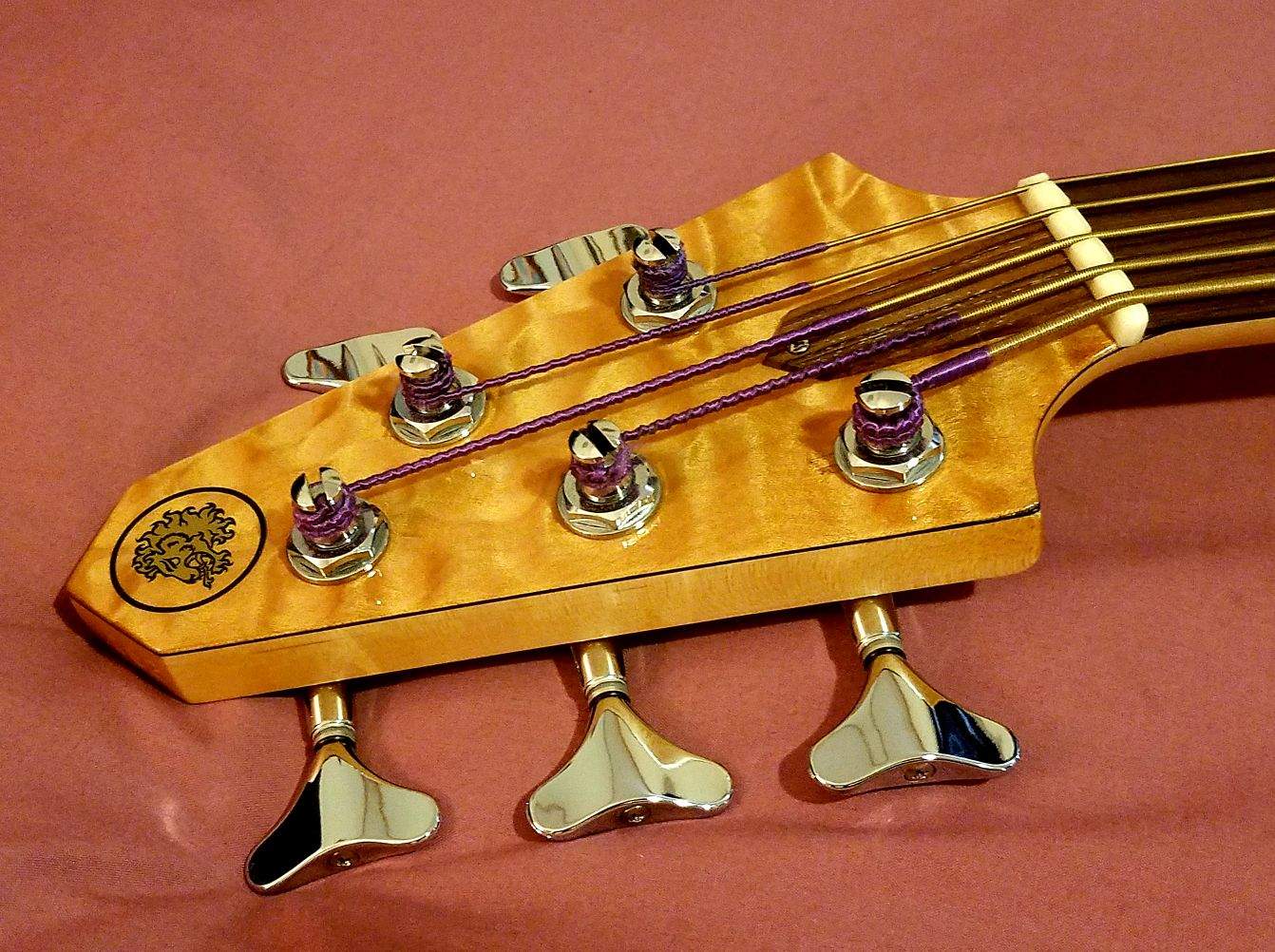
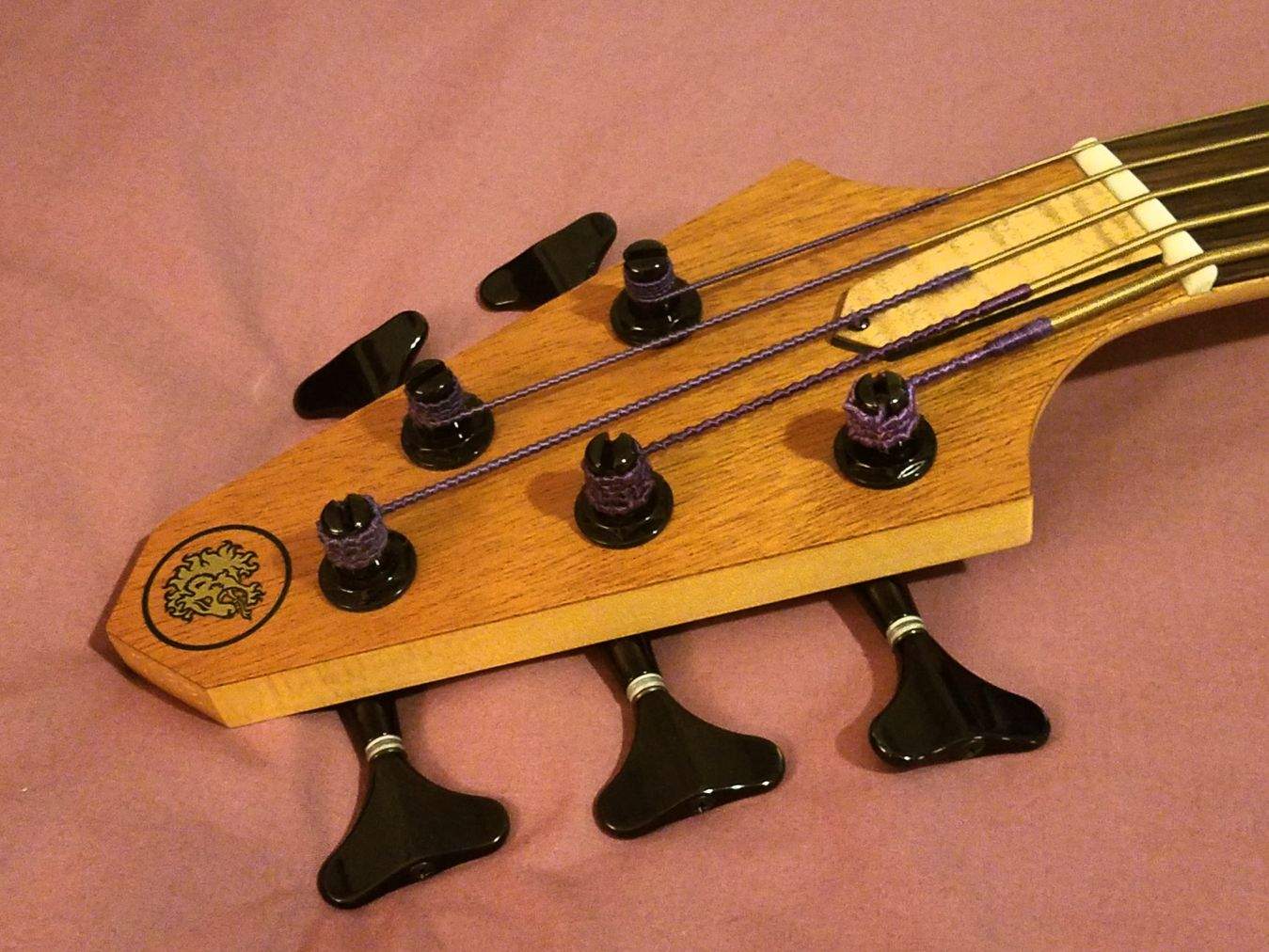
My Model Ones are opposite, presumably -and this is only a presumption- one is ivoroid bound, the other black. Note the Lion on the bass is black, encircled by gold.
I would love to have asked Rick about it, but I'm guessing that the decision just came down to whatever pleased him aesthetically at the time.
Here's the story of the Sun Lion logo, another of Bear's drafts- [Invalid or Expired Link Removed]
My Model Ones are opposite, presumably -and this is only a presumption- one is ivoroid bound, the other black. Note the Lion on the bass is black, encircled by gold.
I would love to have asked Rick about it, but I'm guessing that the decision just came down to whatever pleased him aesthetically at the time.
Here's the story of the Sun Lion logo, another of Bear's drafts- [Invalid or Expired Link Removed]
- Aug 21, 2013
- 6,668
- 2
- 16,474
- Disclosures
- I privately own and operate a local musical instument repair shop.
Hello, all. Here's me. Are we still doing club numbers?
I'm pretty sure it's a "Standard", with gloss spruce top and satin finished back/sides, and i guess the back & sides are supposed to be mahogany, but i'm not sure with that grain. But whatever it is, it looks plays and sounds great! Thanks, Rick!
View attachment 4737842 View attachment 4737843 View attachment 4737844
Hmmm. I'm fairly certain I made that maple 'dingus' strap extension on your new-to-you Renaissance 5. Right down to the felt cover over the strap button screw hole. Or it's an amazing coincidence. I've made a few of them for guys with these... but only a couple in maple, and one is on my RB-5 Special. Weird-o-rama!
Note the felt grommet...

*By the way, Welcome, and Congratulations & Compliments. We don't really do numbers here, just because there really aren't very many of us to begin with. Rick's basses are pretty special though, each is an individual. Glad to have another Member here. Tell us how you like that bass!
Last edited:
Hi guys, I’ve already posted this in a couple of other places and it was suggested this might be a more appropriate place.
A long time ago I made the bass shown below, sort of inspired by Rick’s Renaissance basses. It has TI acoustic bass strings on it and I've been thinking I'd like to try the TI 'Jazz' flat wound strings as I think the Ren basses were available with either.
Then I was thinking that perhaps the Ren basses were made for one sort of strings or the other as, in theory, the steel core Jazz flats ought to need a lot more intonation than the nylon core acoustics and the bass has a fixed bridge.
A 5-string set of Jazz Flats is expensive and I don't want to buy them and find the bass doesn't play in tune, although I’m just a ‘plonker’ and never get up the dusty end so I might not be able to hear the difference.
Then I started thinking "Why don't I make another bass (that looks even more like an acoustic guitar than this one") for Jazz Flats? But I'd still like to know if anyone can tell me whether the Jazz Flats will need more intonation.
By the way, I showed Rick photos of it on one of the forums and he said nice things about it.

A long time ago I made the bass shown below, sort of inspired by Rick’s Renaissance basses. It has TI acoustic bass strings on it and I've been thinking I'd like to try the TI 'Jazz' flat wound strings as I think the Ren basses were available with either.
Then I was thinking that perhaps the Ren basses were made for one sort of strings or the other as, in theory, the steel core Jazz flats ought to need a lot more intonation than the nylon core acoustics and the bass has a fixed bridge.
A 5-string set of Jazz Flats is expensive and I don't want to buy them and find the bass doesn't play in tune, although I’m just a ‘plonker’ and never get up the dusty end so I might not be able to hear the difference.
Then I started thinking "Why don't I make another bass (that looks even more like an acoustic guitar than this one") for Jazz Flats? But I'd still like to know if anyone can tell me whether the Jazz Flats will need more intonation.
By the way, I showed Rick photos of it on one of the forums and he said nice things about it.
Hi guys, I’ve already posted this in a couple of other places and it was suggested this might be a more appropriate place.
A long time ago I made the bass shown below, sort of inspired by Rick’s Renaissance basses. It has TI acoustic bass strings on it and I've been thinking I'd like to try the TI 'Jazz' flat wound strings as I think the Ren basses were available with either.
Then I was thinking that perhaps the Ren basses were made for one sort of strings or the other as, in theory, the steel core Jazz flats ought to need a lot more intonation than the nylon core acoustics and the bass has a fixed bridge.
A 5-string set of Jazz Flats is expensive and I don't want to buy them and find the bass doesn't play in tune..
When you use the term “more intonation”, do you mean a changed witness point or node where the string terminates at the bridge?
If these remarks apply at all, I’ve had many types and makes of strings on my fretless Renaissance. In my experience there’s no such thing as a set of strings that’s noticably way off in terms of intonation. Admittedly, I never checked with a tuner or any sort of process like that - didn’t feel or hear a need to do that.
The player, of course, has a lot of control of intonation in the fretless experience, but in terms of a comparison between a harmonic over the 12th “fret” and a stopped note at the 12th “fret”, all the strings I’ve tried worked fine and were entirely usable and gig-ready. No adjustments except truss rod tweaks required.
Thanks for your reply. I should have specified that this is a fretted bass. As I understand it, a fretless player automatically adjusts the position of his fingers to acount for intonation. When building a fretted bass guitar with an adjustable bridge, the standard procedure is to adjust the saddles to their maximum forward position (towards the headstock) and then install the bridge with the distance from nut to saddles at twice the distance of the nut to 12th fret.The saddles are then pulled away from the headstock until the stopped note at the 12th fret is the same as the harmonic. This can be as much as half an inch or more for a low B string; it all depends on the stiffness of the string's core. Classical nylon strings need little or no intonation.
*By the way, Welcome, and Congratulations & Compliments. We don't really do numbers here, just because there really aren't very many of us to begin with. Rick's basses are pretty special though, each is an individual. Glad to have another Member here. Tell us how you like that bass!
I think it's pretty fantastic. It sounds amazing acoustically, and sounds nearly identical plugged in, which is not the case for a lot of other piezo-pickup instruments. Rick really nailed it. The strings all have a clear, piano-like ring, even the B. The B just thunders like no other 5-string i have, which are a lot -- my usual favorites are Music Man Stingrays and Bongos, which generally have very good B strings, and my Kubicki Key Factor 5, which had the most clear and thunderous B-string of all my basses prior to the Renaissance arriving.
It also feels great, despite the extra-wide neck and string spacing (i like wide, but it's even wider than i'm used to). I found the Thomastic strings a little weird at first, because they *roll* under my fingers, but it has fretless mwah for days, even with a bit too much relief (truss adjustment seems maxed out) and too-high action. Amazing.
Hmmm. I'm fairly certain I made that maple 'dingus' strap extension on your new-to-you Renaissance 5. Right down to the felt cover over the strap button screw hole. Or it's an amazing coincidence. I've made a few of them for guys with these... but only a couple in maple, and one is on my RB-5 Special. Weird-o-rama!
Oh, i just assumed the dingus came standard on these from Turner Guitars... No?
Thanks for your reply. I should have specified that this is a fretted bass. As I understand it, a fretless player automatically adjusts the position of his fingers to acount for intonation. When building a fretted bass guitar with an adjustable bridge, the standard procedure is to adjust the saddles to their maximum forward position (towards the headstock) and then install the bridge with the distance from nut to saddles at twice the distance of the nut to 12th fret.The saddles are then pulled away from the headstock until the stopped note at the 12th fret is the same as the harmonic. This can be as much as half an inch or more for a low B string; it all depends on the stiffness of the string's core. Classical nylon strings need little or no intonation.
Gotcha - B strings get a little more demanding, and even a tapered B will require saddle adjustment to intonate right on electric.
It’s likely someone with more insight than I have will respond, but this is still a Rick Turner owner thread that might not get in front of everyone’s eyes. If you’re not already aware there is a Luthier’s Forum here at Talkbass frequented by a good number of talented and experienced builders, with professional luthiers among them. It might make sense to raise this question there. Those guys will speak your language as well, as you appear to be quite an accomplished craftsman.


