• TalkBass has been independent since 1998. Add your voice.
    Create a free account to reply to discussions, view embedded media, and browse with fewer display ads.
    Join freeLog in
    Want zero display ads or expanded classifieds tools? Compare plans.

Roscoe Club

IMG-4153.jpg


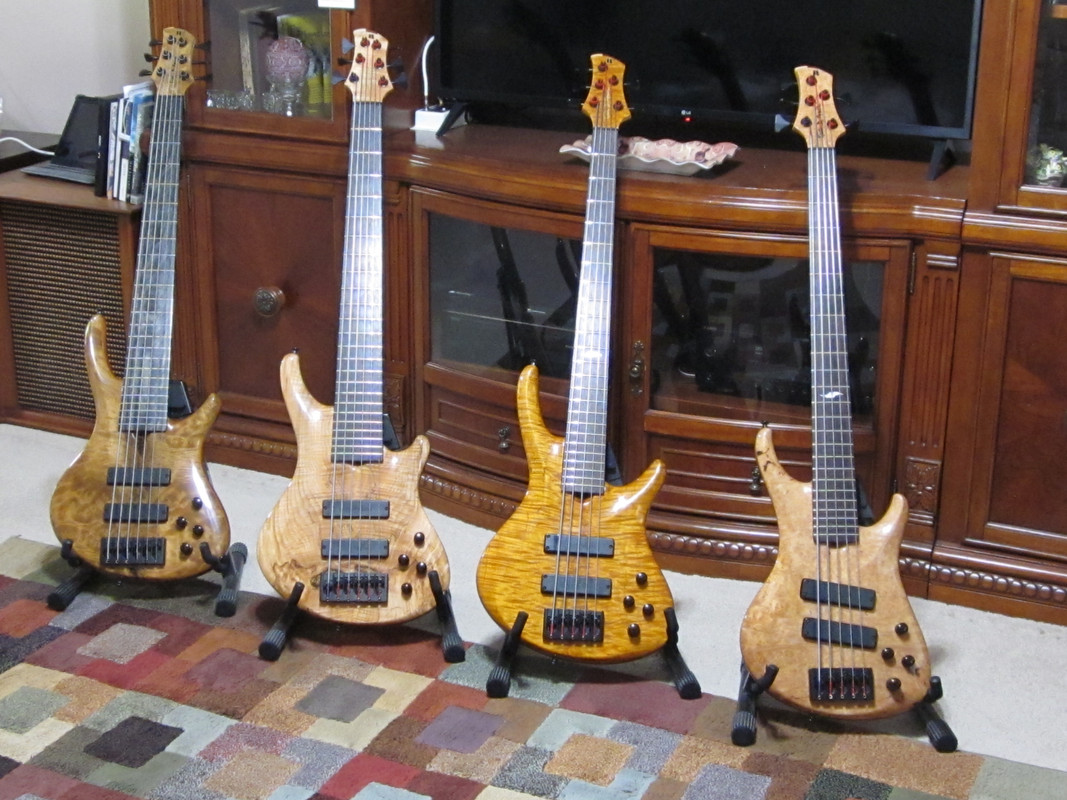
My Roscoe collection is up to four basses again. I tried to resist buying Jimmy's LG but finally gave in. It took me a bit to bond with it but now I enjoy it very much.

I am trying very hard to simply be satisfied with all the great basses I have. I also own Modulus and G.Gould 6's. We are a fickle bunch buying and selling basses and most of us have regrets about the one we let go. The bass I miss the most is the Bubinga top SKB 6 with the J pickups mounted toward the bridge. I deeply regret selling it.

IMG-3224.jpg
 
Yeah. Priced a bit high for a STD Plus (even though it was played by a well known TB Moderator at a Jimmy Haslip lesson)!
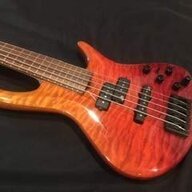
It does have a pretty quilt top though.
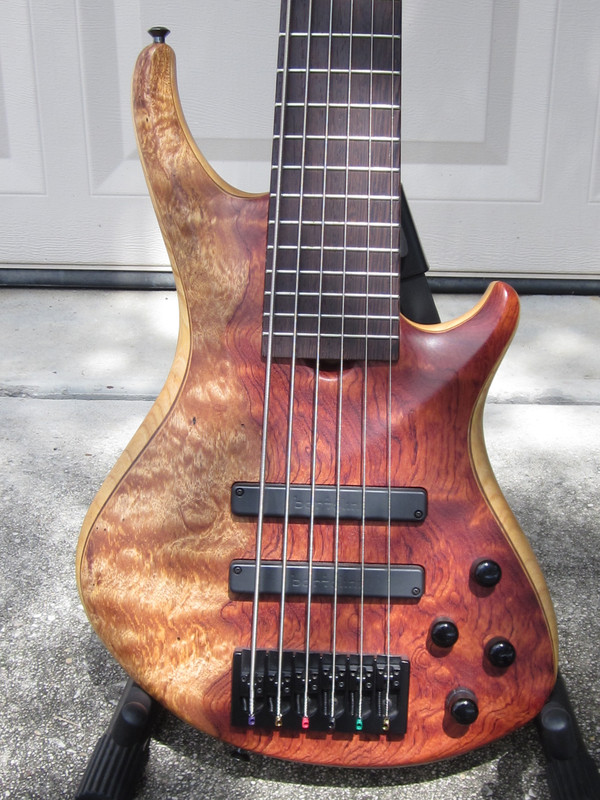
I dare say that’s one of the thickest and most beautiful “standard plus” top that has come out of the shop. And the wenge board has amazing grain and a great circular grain right around the 12th fret. Really, an amazing example of a standard plus. Put a clear gloss coat on that and wow, it would rival a custom or signature. Of course I’m biased.
 
Last edited:
I was playing my SKB 6 this morning and noticed that it had a bit more forward bow than I like. I made a small adjustment to the truss rod and that wide neck responded just as one would like. The truss rod nut has very little pressure on it and was almost loose when I adjusted it this morning.

I have other basses by other manufacturers and most require a lot of tension on the truss rod to reduce forward bow. I have one that has the truss rod quite tight to give me the action I like but my Roscoe basses always seem to be easy to adjust without having to really crank on the truss rod nut.

It is another thing I appreciate about my Roscoe basses. The SKB 6 now plays really fine and sounds fantastic.
 
It is interesting that spalted woods are now popular for fingerboards. I personally do not care for that look. Odd luck in that all of my Roscoe basses came to me used and I favor dark wood tops with figure and instead I have spalted Maple tops on two, spalted Myrtle on one and flame/quilt Maple on one.

Buying used means I got great prices but I did not get to pick the woods used in the builds. They are all still very fine basses and each of them plays great and sounds wonderful.
 
  • Like
Reactions: JOME77
It is interesting that spalted woods are now popular for fingerboards. I personally do not care for that look. Odd luck in that all of my Roscoe basses came to me used and I favor dark wood tops with figure and instead I have spalted Maple tops on two, spalted Myrtle on one and flame/quilt Maple on one.

Keith actually started using the spalted purpleheart, spalted rosewood and spalted ebony (for fingerboards) in 1995 (sometimes referred to as sapwood). It was part of what most players considered the Roscoe signature look for many years.
 
Last edited:
Keith actually started using the spalted purpleheart, spalted rosewood and spalted ebony (for fingerboards) in 1995 (sometimes referred to as sapwood). It was part of what most players considered the Roscoe signature look for many years.
Yep, my first 2 Roscoes had Bolivian rosewood w/sapwood and spalted purpleheart boards. I remember seeing lots of Roscoes with those types of boards back then.
 
Well used is (almost) always a better value, but I was actually going to say that's a good price for a new instrument... my ordered USA MTD and NYC Sadowsky are both a bit more than that... and it's not a standard, it has the carved top too...
I was expecting it to be more than that, actually. That’s not a bad price at all for a brand new Century Custom. (If it was fretless I’d be in trouble).