
Enjoy the benefits of a premium membership!
Upgrade Account
-
TalkBass has been independent since 1998. Add your voice.
Create a free account to reply to discussions, view embedded media, and browse with fewer display ads.
Join free Log in
Want zero display ads or expanded classifieds tools? Compare plans.
You are using an out of date browser. It may not display this or other websites correctly.
You should upgrade or use an alternative browser.
You should upgrade or use an alternative browser.
Roscoe Club
- Thread starter JOME77
- Start date
More options
Who Replied?


Maybe, but more likely it's that the Century bridge is a lot closer to the endpin. This moves the whole playing scale closer to the plucking hand......But the Century 6’s don’t give me the same problem. Might be the extended upper horn?
I must not be understanding what you're saying.I have debated playing exclusively fretless before, but I like the variety I have.
With 2 fretted Roscoes, I have all the versatility I could want.
I just usually want to play the fretless more.
I'm not going to get that Bernard Edwards' funky clank on We Are Family on the fretless, but that's about the only song we do where I can't quite get the tone I'd like.

gregbackstrom
These aren't stock curves--things move around!
One of the few, but not the only one! Years ago, I was the musical director for an Elvis / Neil Diamond impersonator. We were touring Canada and played the Mad Dog Saloon in Lac La Biche Alberta. Very rough crowd. Their favorite sport was trying to spin bottle caps through the chicken wire. By 1am, they were chucking ashtrays. The band hunkered down at the back of the stage and let the frontman be the frontman.Yeah, this has happened more than once when I have played. I bet I am one of the few here who has played behind chicken wire in front of the stage.


My Roscoe is available:
For Sale - Roscoe SKB 3005 Signature
Beautiful Roscoe!
Not sure it’s a Signature though. Looks like a Custom.
GLWTS
Last edited:

That is Brian's old Roscoe Mango. Nice bass.
Yes sir, it was Brian's Roscoe. Terrific guy!That is Brian's old Roscoe Mango. Nice bass.
Beautiful Roscoe!
Not sure it’s a Signature though. Looks like a Custom.
GLWTS
Attachments

Wooo hooo! I picked out my top and it will me glued up and cut this week.
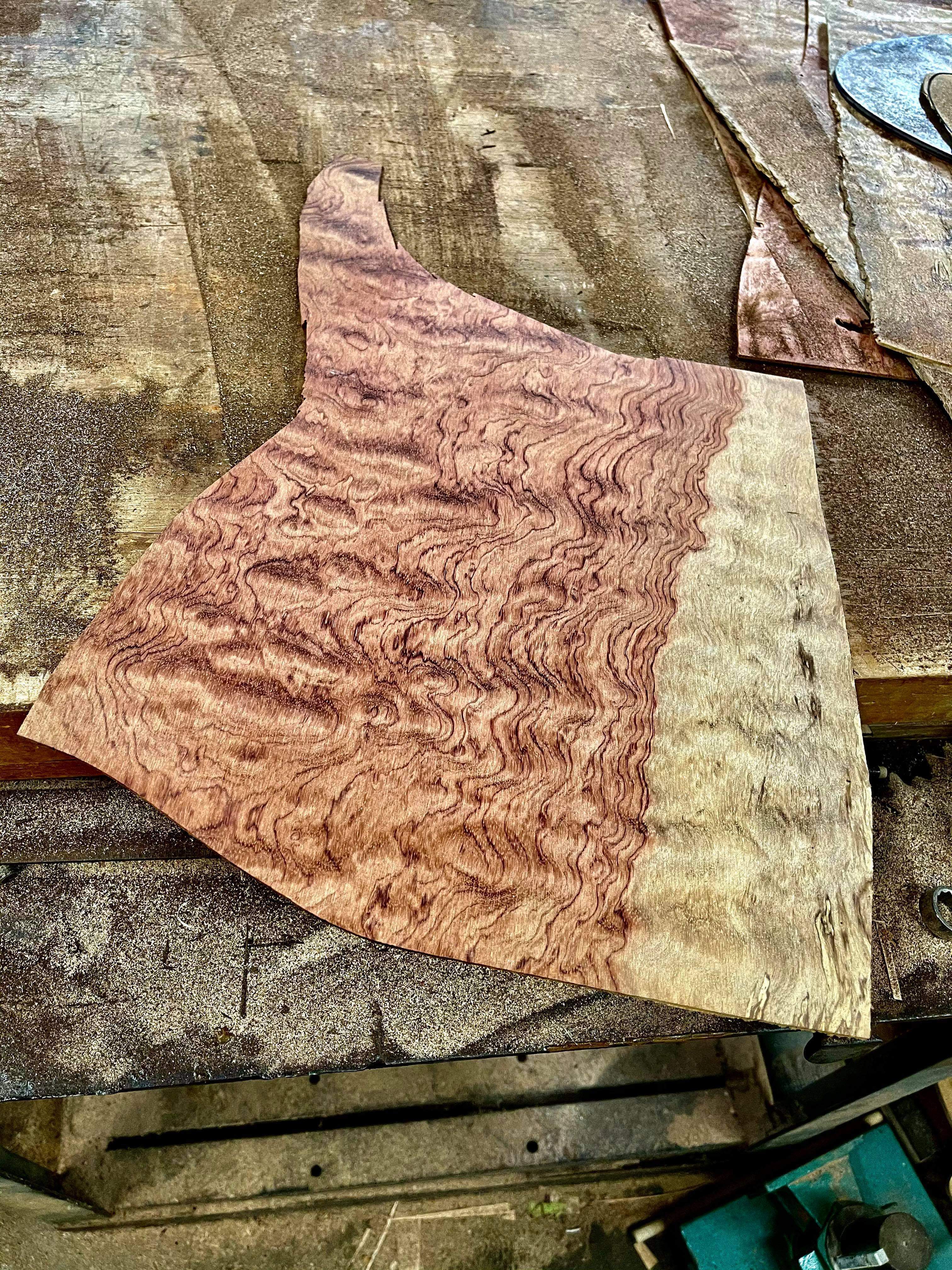
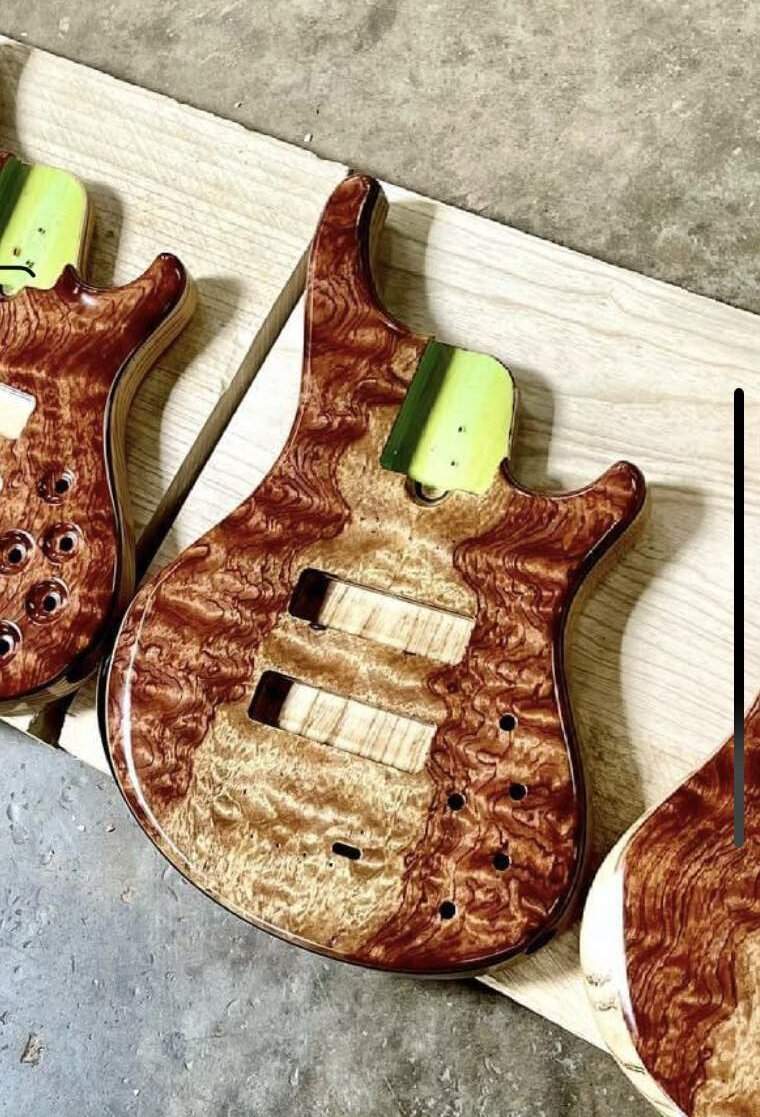
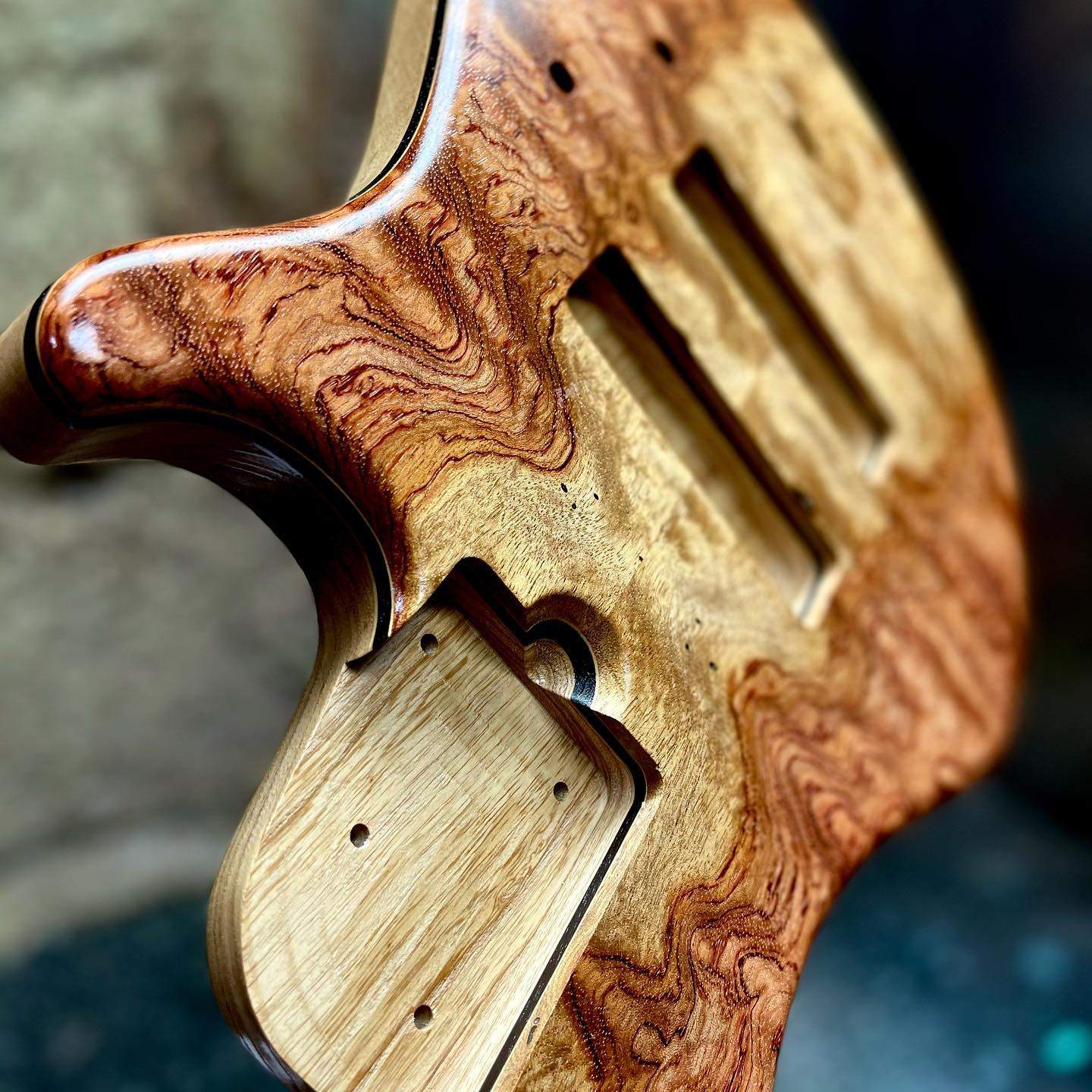
It's seems as though the Waterfall Bubinga Keith had in stock is going fast. It is beautiful wood for sure. I can't wait to get mine as it should be any day now. Or maybe 2 more weeks lol.

We all know the pain of the “two more week” wait!
It's seems as though the Waterfall Bubinga Keith had in stock is going fast. It is beautiful wood for sure. I can't wait to get mine as it should be any day now. Or maybe 2 more weeks lol.
View attachment 4317261 View attachment 4317262 View attachment 4317263
Oh man that is gorgeous. I can’t wait for mine but I’m realistically hoping for an October surprise and will try not to get too anxious lol.

I agree with the premise of this statement. Of note, however, is an assumption that may or may not be true: That a certain bridge is "a lot closer to the endpin," due to Century model design.Maybe, but more likely it's that the Century bridge (location, making it easier to play) is a lot closer to the endpin. This moves the whole playing scale closer to the plucking hand.
For example, older handmade Roscoes have some significant variances in many "tolerances," including bridge placement, depending on who worked on the bass.
You could pick a sample of 3 LGs for example, all of the same neck scale, and the bridges vary in location in relation to the endpin. This is an example that illustrates that it is not model specific in the SKB vs Century, which-is-better debate.
The standardization that has occurred as the result of technology implementation in the Roscoe shop may lend more truth to ArtechnikA's statement, but I am not sure. I am sure that some amazing older Roscoes are in existence. I've played a bunch of them. Their specs are all over the map, beyond the custom spec'ing that continues today.
One such SKB, over 20-years old, became the spec template for the Roscoe that Keith and company crafted for me 2-years ago, July. It is an amazing bass, and I love playing it every time I touch it. There is not one change needed, something that is indeed rare for me. And, it's not of the current Roscoe spec, as that was part of the discussion with the shop during the order phase. It's definitely a keeper, as is the 20+ year old that it often sits next to.
Moral of this story? Find a Roscoe you like/love, old or new, and hold onto it as long as you can. .
Last edited:

Find a Roscoe you like/love and hold onto it a s long as you can.
Some members of this club will need to avert their eyes from this sage advice, as they follow the mantra: "if you love a Roscoe, set it free..."


Agree, especially when having multiple Roscoes of varying configuration allows discernment in finding favorites, resulting from head-to-head comparisons. It can be a useful part of a refinement process that can result in fewer Roscoes. More is not better. Better is better. Catch and release the great fish. . Share the greatness with others.
Last edited:
I agree with the premise of this statement. Of note, however, is an assumption that may or may not be true: That a certain bridge is "a lot closer to the endpin," due to Century model design.
For example, older handmade Roscoes have some significant variances in many "tolerances," including bridge placement, depending on who worked on the bass.
You could pick a sample of 3 LGs for example, all of the same neck scale, and the bridges vary in location in relation to the endpin. This is an example that illustrates that it is not model specific in the SKB vs Century, which-is-better debate.
The standardization that has occurred as the result of technology implementation in the Roscoe shop may lend more truth to ArtechnikA's statement, but I am not sure. I am sure that some amazing older Roscoes are in existence. I've played a bunch of them. Their specs are all over the map, beyond the custom spec'ing that continues today.
One such SKB, over 20-years old, became the spec template for the Roscoe that Keith and company crafted for me 2-years ago, July. It is an amazing bass, and I love playing it every time I touch it. There is not one change needed, something that is indeed rare for me. And, it's not of the current Roscoe spec, as that was part of the discussion with the shop during the order phase. It's definitely a keeper, as is the 20+ year old that it often sits next to.
Moral of this story? Find a Roscoe you like/love, old or new, and hold onto it as long as you can. .
To paraphrase this (which was so eloquently stated by Fritz) …..
Roscoes are like fingerprints and snow flakes, no two are exactly alike!

One of the few, but not the only one! Years ago, I was the musical director for an Elvis / Neil Diamond impersonator. We were touring Canada and played the Mad Dog Saloon in Lac La Biche Alberta. Very rough crowd. Their favorite sport was trying to spin bottle caps through the chicken wire. By 1am, they were chucking ashtrays. The band hunkered down at the back of the stage and let the frontman be the frontman.
Lol
Sounds like a crazy gig!
I never played behind chicken wire but I did play one gig that I wish there had been chicken wire between us and the audience!


To paraphrase this (which was so eloquently stated by Fritz) …..
Roscoes are like fingerprints and snow flakes, no two are exactly alike!
This! Being the reason why you need more than..... two!


