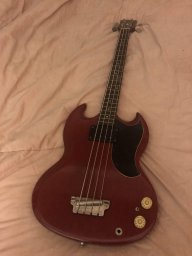
What is going on with that SG/EBO?! It looks playable and interesting! An original mudbucker and then what happened?

TalkBass has been independent since 1998. Add your voice.
Create a free account to reply to discussions, view embedded media, and browse with fewer display ads.
Join free Log in
Want zero display ads or expanded classifieds tools? Compare plans.
What is going on with that SG/EBO?! It looks playable and interesting! An original mudbucker and then what happened?
That’s the biggest woman I’ve ever seen. Even holding a short scale she has to be 10 feet tall!



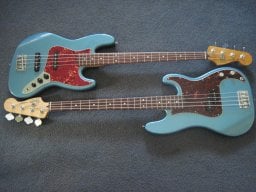
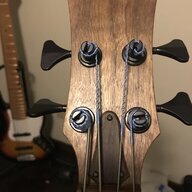
My custom MTD AG430-24 (alder body/purple-heart fb)…love that shorty’s fit perfectly in an EG length gigbag!View attachment 5211793


What kind of bass is that?
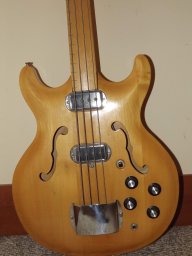

What is going on with that SG/EBO?! It looks playable and interesting! An original mudbucker and then what happened?
 That's my beloved Gibson EB-0(MG!)... originally a 1962 EB-0 that came to me in pretty rough shape and in need of rescuing. At the time it still had the original neck pickup, but had been assaulted with a hideous, crookedly-mounted "Badass" style bridge and a Japanese minibucker in the bridge position, along with extra holes drilled for a second set of Vol/Tone controls and an old/solid neck repair. I'd been waiting for a good deal on something exactly like this, so that I could transform it into the hi-fi Alembic-esque machine I'd had in mind for a long time, but I didn't want to do that to a stock original specimen. It turned out exactly as I had dreamed it up and is an absolute monster player and hands down the most versatile bass in my stable. Side note, for anyone who hasn't played one of these early EB-0 basses, the necks are amazing. Clearly designed with upright players in mind, as they're super chunky!