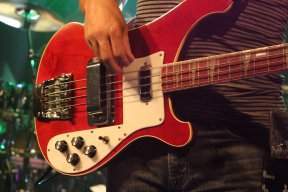
I tend to run the bass control around 10 o’clock and the treble around 2. I could cut more bass with a regular EQ pedal before buying something new, but I could use an explanation on how that solves the projection issue. Thanks!
Here's a good post on the topic from the mega thread:
1) A HPF helps deals with boomy venue and/or stage acoustics (like putting your rig on a stand or a pad, which I also recommend, to disconnect from stage)
2) decreases speaker "floppyness" by reducing mechanical movement, especially in ported cabs. Still, it works for sealed cabs too.
3) Protects speakers from transient spikes.
4) Keeps your amp from working so hard and gives more headroom by cutting unneeded/unnecessary frequencies (below port tuning or speaker ) from being reproduced (mud).
5) Help balance string to string volume.
6) Better stage volume and clarity.
7) Allows your bass amp tone control(s) to boost or cut frequencies that matter. If you add a LPF (low pass filter), depending on your style, you can tame the highs as well.
8) Allows you to control what you send to the FOH mixing board. Why send mud to the FOH? Same for LPF.
9) Helps keep your rig from stepping on the kick drum's slot.
10) Can also be used by guitar and keyboard players to cut their low-end incursions into bass guitar territory
11) Helps you sit in the mix better because your rig is not reproducing muddy and/or sub-sonic, non-hearable lows even if it sounds good on stage
12) Allows your passive or active bass guitar tone controls to be more effective
13) Will help control 5 and 6 string and other down-tuning bass's low frequencies and help your rig go louder and sound clearer and cleaner
14) Controls and protects speakers from effects that produce sub-octave tones. Can also improve sub-octave tracking along with improving the tone of effects that produce too much low and mid-lows, especially distortion effects. Some pedals come with an HPF and some come with an internal splitter that creates both distortion and clean, allowing you to blend both for best effect before outputting to your amp
15) Also known as a low-cut filter, rumble filter or sub-sonic filter, it could also be called an anti-distortion filter or equalizer. It cuts low frequencies your speakers can't reproduce or reproduce well.
16. Cuts muddy, sub-sonic frequencies so that effects are working with a cleaner signal. This will help keep compressors from reacting too soon and distortion to produce a better tone.