
Enjoy the benefits of a premium membership!
Upgrade Account
-
TalkBass has been independent since 1998. Add your voice.
Create a free account to reply to discussions, view embedded media, and browse with fewer display ads.
Join free Log in
Want zero display ads or expanded classifieds tools? Compare plans.
You are using an out of date browser. It may not display this or other websites correctly.
You should upgrade or use an alternative browser.
You should upgrade or use an alternative browser.
More options
Who Replied?

Nothing wrong with them, fine strings, just not for me - first thing I do is swap them.AFAIK, those came originally with D'addario EXL170 (.045 - .100) for 4 strings. I'm fine with them. Can't tell whether they fit your needs..

jacoby75
Supporting Member
- Mar 11, 2010
- 5,661
- 10,716
- Disclosures
- Endorsing Artist: Mike Lull Custom Guitars, DR Strings
Nickel strings are smoother/softer than stainless steel. My current favorites are DR Nickel Lo-Riders, but I like a stiff string, and those have a hex core (stiffer than strings with a round core). DR Sunbeams would be another great, more flexible option.Hi I have a V7 gen 1 & got it used; it came with some chunky, used, somewhat rough strings. Not sure what these would come with originally, might be the same?
Can I ask advice on the smoothest, lightest, easiest to play for a quite new player, please?
The strings on my Fender P bass Japan are far superior but got that used too!
Any help would be appreciated.

I use Fender 9050 stainless steel flatwounds. They are soft to touch but still have more zing than regular flats. I like 'em. On Sires I put Dunlop steel Marcus Millers. They are rough in the beginning but they do get smoother over time. They don't lose zinginess as quick as nickels, too. All in all, I think I like steel strings most.
Thank you that is great - I will try out the DR sunbeams I think. Heard them mentioned here before in Bass dreamworld!Nickel strings are smoother/softer than stainless steel. My current favorites are DR Nickel Lo-Riders, but I like a stiff string, and those have a hex core (stiffer than strings with a round core). DR Sunbeams would be another great, more flexible option.


Hi I have a V7 gen 1 & got it used; it came with some chunky, used, somewhat rough strings. Not sure what these would come with originally, might be the same?
Can I ask advice on the smoothest, lightest, easiest to play for a quite new player, please?
The strings on my Fender P bass Japan are far superior but got that used too!
Any help would be appreciated.
"Smooth and light" sounds like Thomastik Jazz Flats, no?
I am using Thomastik Jazz Flats (JF345) on my M7 5-string at the moment and they are not as smooth as the Dunlop flatwounds that I was using before them. I was really surprised on how the B string felt more like a round than a flat. I am waiting for them to settle in (I installed them four months ago) but I may go back to the Dunlops as I like the feel and sound of them better (not to mention the better price)."Smooth and light" sounds like Thomastik Jazz Flats, no?
jacoby75
Supporting Member
- Mar 11, 2010
- 5,661
- 10,716
- Disclosures
- Endorsing Artist: Mike Lull Custom Guitars, DR Strings
Yes, if you want SUPER smooth, flat wounds are of course the way to go. But that's a different conversation/tonal ballpark altogether. I put chromes on my P7, and it's great, if you want "thumpy" smooth old school tone. But I think you're better off learning on round wounds. Earn those blood blisters and callouses the right way.

Yes, if you want SUPER smooth, flat wounds are of course the way to go. But that's a different conversation/tonal ballpark altogether. I put chromes on my P7, and it's great, if you want "thumpy" smooth old school tone. But I think you're better off learning on round wounds. Earn those blood blisters and callouses the right way.
Speaking of: How is the bass? Did it get her voice back? Did the new cap help in making it more "P-bassy"?
jacoby75
Supporting Member
- Mar 11, 2010
- 5,661
- 10,716
- Disclosures
- Endorsing Artist: Mike Lull Custom Guitars, DR Strings
My friend resoldered the output jack together this evening, but I haven't had a chance to put it back together to try it out yet. Hopefully tomorrow.Speaking of: How is the bass? Did it get her voice back? Did the new cap help in making it more "P-bassy"?

+1. I use Pressurewounds on my V7s and prefer them to roundwound strings. The fundamental is more clear and pronounced and there is no need to tame excessive highs. But if I dig in there is some serious growl. If you do a lot a slap maybe these won't be the best, but for just about everything else Pressurewounds are amazing.Or try pressurewounds for an even smoother feel (GHS Pressurewounds, Ken Smith Compressors, etc.)
DR HI-BEAMS!
Soft, smooth and less stiff compared to LO-RIDERS.
Give them an hour or two of playtime and suddenly you will never want anything else!
Soft, smooth and less stiff compared to LO-RIDERS.
Give them an hour or two of playtime and suddenly you will never want anything else!
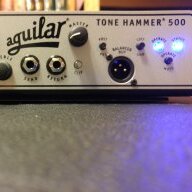
I would say that using my Aguilar Tone Hammer DI pedal and cutting a lot of the high mids, I get a sound I like from the TI flats. I don't have to cut those high mids with the Dunlop flats if I remember correctly. I would also say that the DI on that pedal is hotter than my dedicated active DI pedals which makes up for the low output level of the M7 gen 1 pickups when sending a signal to a mixer board/front of house.I am using Thomastik Jazz Flats (JF345) on my M7 5-string at the moment and they are not as smooth as the Dunlop flatwounds that I was using before them. I was really surprised on how the B string felt more like a round than a flat. I am waiting for them to settle in (I installed them four months ago) but I may go back to the Dunlops as I like the feel and sound of them better (not to mention the better price).
jacoby75
Supporting Member
- Mar 11, 2010
- 5,661
- 10,716
- Disclosures
- Endorsing Artist: Mike Lull Custom Guitars, DR Strings
I finally had a chance to get everything back together today. I did not go about this in a terribly scientific fashion. It has been a while since I've played the bass with the original tone cap on, so I don't have the clearest recollection of what it sounded like. I only recall it being a bit brittle and not to my liking, and rolling the tone down seemed to do next to nothing until you got all of the way down, and that sounded bad. And then I went at least a little over two weeks with the bass taken apart making the cap swap and later the output repair, so my memory is not the freshest.
That being said, the new tone cap sounds fantastic. It really is a fairly significant difference, if memory serves correctly. Though I may not be able to specifically quantify how much better it sounds, if nothing else I can say I am much happier with the current sound of the P7 with flats and the .47 tone cap. To me, it sounds way more like a P bass should sound. Especially with the tone rolled down.
The pickups are still a bit thin sounding to me, so I'll probably swap them out at some point. But I don't think it's my imagination. The tone cap swap definitely made a noticeable difference in giving me a more traditional p bass tone.
Thanks for the tip, @LowEndLobster !
That being said, the new tone cap sounds fantastic. It really is a fairly significant difference, if memory serves correctly. Though I may not be able to specifically quantify how much better it sounds, if nothing else I can say I am much happier with the current sound of the P7 with flats and the .47 tone cap. To me, it sounds way more like a P bass should sound. Especially with the tone rolled down.
The pickups are still a bit thin sounding to me, so I'll probably swap them out at some point. But I don't think it's my imagination. The tone cap swap definitely made a noticeable difference in giving me a more traditional p bass tone.
Thanks for the tip, @LowEndLobster !
jacoby75
Supporting Member
- Mar 11, 2010
- 5,661
- 10,716
- Disclosures
- Endorsing Artist: Mike Lull Custom Guitars, DR Strings
I'm thinking I'm going to have to try this! Glad you got it worked out and back together!I finally had a chance to get everything back together today. I did not go about this in a terribly scientific fashion. It has been a while since I've played the bass with the original tone cap on, so I don't have the clearest recollection of what it sounded like. I only recall it being a bit brittle and not to my liking, and rolling the tone down seemed to do next to nothing until you got all of the way down, and that sounded bad. And then I went at least a little over two weeks with the bass taken apart making the cap swap and later the output repair, so my memory is not the freshest.
That being said, the new tone cap sounds fantastic. It really is a fairly significant difference, if memory serves correctly. Though I may not be able to specifically quantify how much better it sounds, if nothing else I can say I am much happier with the current sound of the P7 with flats and the .47 tone cap. To me, it sounds way more like a P bass should sound. Especially with the tone rolled down.
The pickups are still a bit thin sounding to me, so I'll probably swap them out at some point. But I don't think it's my imagination. The tone cap swap definitely made a noticeable difference in giving me a more traditional p bass tone.
Thanks for the tip, @LowEndLobster !
I`m going to try this. As I can see, you did the same thing as Lobster did in his video, putting the new cap on the other side. Was there already two holes where you pushed the two "wires" through?I finally had a chance to get everything back together today. I did not go about this in a terribly scientific fashion. It has been a while since I've played the bass with the original tone cap on, so I don't have the clearest recollection of what it sounded like. I only recall it being a bit brittle and not to my liking, and rolling the tone down seemed to do next to nothing until you got all of the way down, and that sounded bad. And then I went at least a little over two weeks with the bass taken apart making the cap swap and later the output repair, so my memory is not the freshest.
That being said, the new tone cap sounds fantastic. It really is a fairly significant difference, if memory serves correctly. Though I may not be able to specifically quantify how much better it sounds, if nothing else I can say I am much happier with the current sound of the P7 with flats and the .47 tone cap. To me, it sounds way more like a P bass should sound. Especially with the tone rolled down.
The pickups are still a bit thin sounding to me, so I'll probably swap them out at some point. But I don't think it's my imagination. The tone cap swap definitely made a noticeable difference in giving me a more traditional p bass tone.
Thanks for the tip, @LowEndLobster !
Thanks.
jacoby75
Supporting Member
- Mar 11, 2010
- 5,661
- 10,716
- Disclosures
- Endorsing Artist: Mike Lull Custom Guitars, DR Strings
Yep. The original tone cap goes through the circuit board. The new one I chose to use . . . as you can see . . . is pretty large, and didn't fit on the top side. I mean, it would fit, but wouldn't be able to put the preamp back in the bass, lol. Maybe the layout of the controls for the V7 would be different and allow more space. So we were able to slide it through from the bottom and attach it that way. There is a corresponding large space in the body cavity where the new tone cap is currently situated. But to have it on top or facing the other direction would have been difficult because of all the wiring that is in that area.I`m going to try this. As I can see, you did the same thing as Lobster did in his video, putting the new cap on the other side. Was there already two holes where you pushed the two "wires" through?
Thanks.
Thanks!! I`ll give it a shot. I`m thinking of ordering these caps:Yep. The original tone cap goes through the circuit board. The new one I chose to use . . . as you can see . . . is pretty large, and didn't fit on the top side. I mean, it would fit, but wouldn't be able to put the preamp back in the bass, lol. Maybe the layout of the controls for the V7 would be different and allow more space. So we were able to slide it through from the bottom and attach it that way. There is a corresponding large space in the body cavity where the new tone cap is currently situated. But to have it on top or facing the other direction would have been difficult because of all the wiring that is in that area.
https://www.amazon.com/dp/B0719KM5Y...olid=1V0YXX5ITP7FG&psc=1&ref_=lv_ov_lig_dp_it
Or do you happen to have a link to the one you used?
(Sorry for the onslaught of questions
 )
)
As an Amazon Associate, TalkBass may receive commissions from qualifying purchases made via links on this site.


