• TalkBass has been independent since 1998. Add your voice.
    Create a free account to reply to discussions, view embedded media, and browse with fewer display ads.
    Join freeLog in
    Want zero display ads or expanded classifieds tools? Compare plans.

Sire Bass Club!

What color/wood combination do you own?

  • Bright Metallic Red/ Ash

    Votes: 17 1.6%
  • Bright Metallic Red/ Alder

    Votes: 33 3.2%
  • Natural/ Ash

    Votes: 173 16.7%
  • Sunburst/ Ash

    Votes: 104 10.0%
  • Sunburst/ Alder

    Votes: 165 15.9%
  • White/ Ash

    Votes: 86 8.3%
  • White/ Alder

    Votes: 122 11.7%
  • Black/ Alder

    Votes: 104 10.0%
  • M3

    Votes: 28 2.7%
  • M7

    Votes: 85 8.2%
  • I'm a heretic - I don't own one yet, but I'll see the light soon enough!

    Votes: 243 23.4%

  • Total voters
    1,039
  • Poll closed .
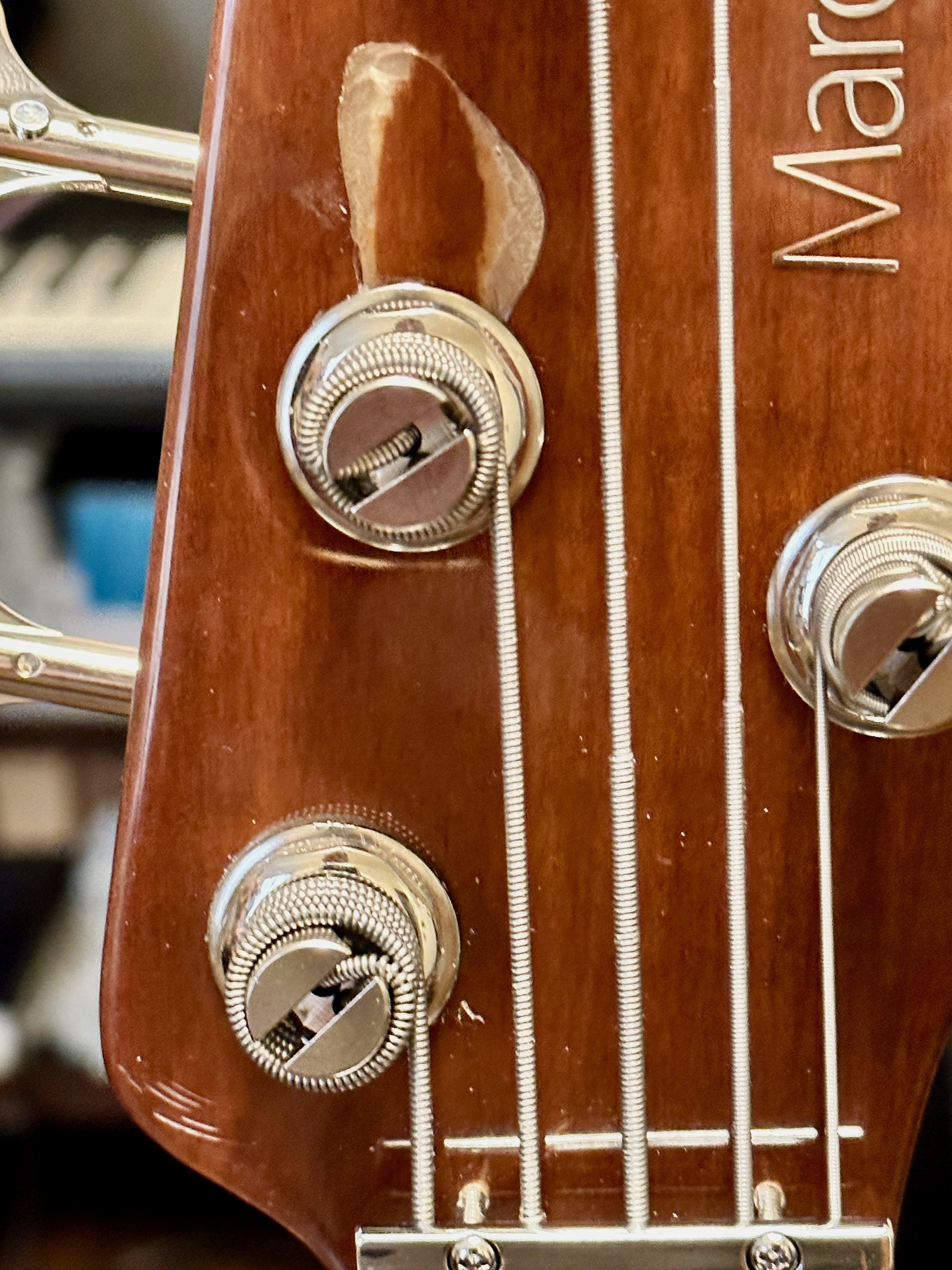
I stand corrected. Here's a picture of the Sire V5 24 in the classifieds with a significant chunk missing from the headstock that I was referring to as well.
img_8389-jpeg.5196521

Ouch! I wonder if the previous owner was attempting to replace the tuners and this happened when they were trying to push out a bushing. I think something like this happened to @LowEndLobster when he was changing tuners in one of his videos.

EDIT: never mind...I just read his post above yours. Not the same thing I guess...
 
Ouch! I wonder if the previous owner was attempting to replace the tuners and this happened when they were trying to push out a bushing. I think something like this happened to @LowEndLobster when he was changing tuners in one of his videos.

Yeah, they're aftermarket Gotohs. I'm assuming he had the same problem as Lobster. This also makes me wonder if Sire is rushing to get these made so quickly that the poly on the headstock isn't fully cured by the time they're pressing in the tuner ferrules.
 
Yeah, they're aftermarket Gotohs. I'm assuming he had the same problem as Lobster. This also makes me wonder if Sire is rushing to get these made so quickly that the poly on the headstock isn't fully cured by the time they're pressing in the tuner ferrules.
Hard to tell...I was pressing a ferrule out of a bass headstock I was modding a few years ago and the wood splintered a bit around the hole for the E tuner (I wasn't being as careful as I should've been :cautious:).

That neck was several years old (Fender NOS neck) and I was adding a Hipshot extender tuner to the E string. I was able to repair the headstock so the splinters all but disappeared. Gotta love CA glue.

After all that, I realized the "extender" wasn't for me and out it came, I never could get used to the E string being dropped to D....muscle memory and all that. I think that extender tuner is in a junque box somewhere.
 
Last edited:
From the forums:

Roasted Maple necks are cut from Maple wood blanks that are "baked" in high-tech ovens. This process removes moisture and all kinds of other organic "impurities" that affect the stability of the wood and make it much more rigid while adding a deep and warm amber color for a natural vintage look. The sound is tight and punchy while still retaining the natural warmth of Maple in the midrange. Roasted Maple is highly recommended for touring musicians who value neck stability while traveling.
 
Quick research via Google:

It's color is consistent all the way through.
The roasting process is performed to the raw lumber, long before it's shaped.
You may have to oil it after reshaping to match non sanded areas.

I paid nothing for this information. If someone knows better, please chime in.

IF you are correct about the color being complete through the neck, then Sire would be false advertising ut would seem?
 
  • Like
Reactions: Juergen Joherl
Maybe what you are seeing in that photo is cracking in the clear coat finish. I could be wrong about this, but it could also explain it. All we have is a photo.

I looked at the Sire website and there is color variation in most every roasted neck shown on the site.

I don't own any bass guitars with a roasted neck, but I'm interested in this topic.
 
Maybe what you are seeing in that photo is cracking in the clear coat finish. I could be wrong about this, but it could also explain it. All we have is a photo.

I looked at the Sire website and there is color variation in most every roasted neck shown on the site.

I don't own any bass guitars with a roasted neck, but I'm interested in this topic.

The fingerboard is coated in something too btw. I scraped it with a razor blade and dark dye came off exposing a lighter, more figured wood beneath. It came off like penetratred oils I'm guessing whatever finish they used has dye in it.

My actual neck - note the color by the chip-out.
20231016_093656.jpg
 
I've seen lots of color tones for "roasted" maple. One thing I've considered is that it's roasted but comes out kinda light in color so whatever finish they apply darkens it up which could explain my photo.

I actually don't really care either way. I'm just curious about things so I usually tear stuff down to the studs to see what it's all about. So I'll be curious to know what others think.
 
To roast maple boards and get the interior to Sire neck color, the outside of the board would have to be ash

I am confident that they’ve roasted the maple, and applied a stain to the finished necks as an aesthetic touch or as a way to easily differentiate from their non-roasted necks. I’d prefer a lighter stain, like so called “vintage tint”, but it is what it is.
 
And I did some research. I'd actually considered a V10dx fretless. Until I realized I would pay the same, but lose the beautiful abalone inlays! No dots even. Uuuuuuh, not me!
I'd get the fretted version, if the price was different. The V5 shows the only fretless fretboard you get with any Sire which isn't a dx model.

528146-SIRED5FLA4BB (13).jpg


20231113_152619.jpg
 

Attachments

  • Like
Reactions: Rod Barchetta