• TalkBass has been independent since 1998. Add your voice.
    Create a free account to reply to discussions, view embedded media, and browse with fewer display ads.
    Join freeLog in
    Want zero display ads or expanded classifieds tools? Compare plans.

Sire Bass Club!

What color/wood combination do you own?

  • Bright Metallic Red/ Ash

    Votes: 17 1.6%
  • Bright Metallic Red/ Alder

    Votes: 33 3.2%
  • Natural/ Ash

    Votes: 173 16.7%
  • Sunburst/ Ash

    Votes: 104 10.0%
  • Sunburst/ Alder

    Votes: 165 15.9%
  • White/ Ash

    Votes: 86 8.3%
  • White/ Alder

    Votes: 122 11.7%
  • Black/ Alder

    Votes: 104 10.0%
  • M3

    Votes: 28 2.7%
  • M7

    Votes: 85 8.2%
  • I'm a heretic - I don't own one yet, but I'll see the light soon enough!

    Votes: 243 23.4%

  • Total voters
    1,039
  • Poll closed .
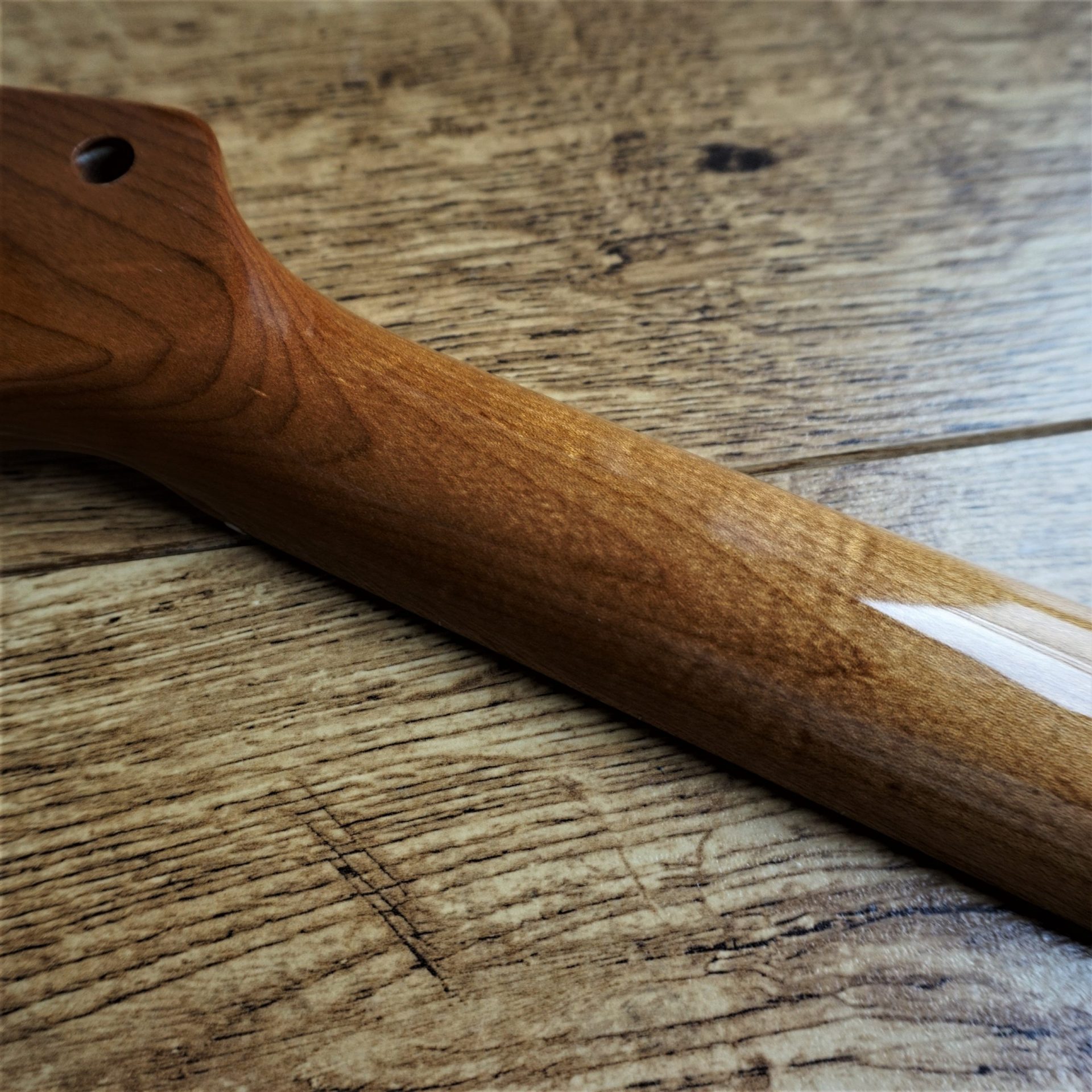
To roast maple boards and get the interior to Sire neck color, the outside of the board would have to be ash

I am confident that they've roasted the maple, and applied a stain to the finished necks as an aesthetic touch or as a way to easily differentiate from their non-roasted necks. I'd prefer a lighter stain, like so called "vintage tint", but it is what it is.

I agree.

There's no legal definition of "roasted maple" concerning amount or time spent roasting as far as I know. Sire might technically be "roasting" them for a minimum amount of time to make a legally defensible claim to have roasted necks, but not enough to get the color we are used to seeing. Every hour neck blanks spend in the oven is money lost, so it seems like a business decision to dye them to meet consumer expectations.
 
This process is achieved by thermally treating the wood in a roasting kiln. The temperature of which is controlled very carefully to slowly heat the wood and remove any moisture and impurities. This kiln is kept completely oxygen-free so that the wood does not combust, very similar to how charcoal is made. As you may have guessed, this is where the words "Roasted" and "Baked" originate from.


During this process, the wood darkens due to a chemical reaction between the oils and sugar content, with the wood becoming a darker colour the longer it is roasted. This colour change happens throughout the wood. The key here is to roast the maple for the right amount of time, too much and it will become charcoal, too little and the wood will still contain impurities. You can often tell you are holding a piece of roasted maple due to its unique odour; sweet, smoky and caramel.
 
This process is achieved by thermally treating the wood in a roasting kiln. The temperature of which is controlled very carefully to slowly heat the wood and remove any moisture and impurities. This kiln is kept completely oxygen-free so that the wood does not combust, very similar to how charcoal is made. As you may have guessed, this is where the words "Roasted" and "Baked" originate from.


During this process, the wood darkens due to a chemical reaction between the oils and sugar content, with the wood becoming a darker colour the longer it is roasted. This colour change happens throughout the wood. The key here is to roast the maple for the right amount of time, too much and it will become charcoal, too little and the wood will still contain impurities. You can often tell you are holding a piece of roasted maple due to its unique odour; sweet, smoky and caramel.

My warmoth roasted maple necks smell great! I sniffed the headstock recently as my wife walked into the room. Thought I was about to get Section 12'd.
 
I like clean fretboards, but no fret/no inlays should come in at less $$

Well, with Sire's first generation, fretless models had the same price as their fretted counterparts, with the introduction of the 2nd generation, they started to treat them as "custom orders" and increased prices. Fretless basses do need less material and potentially less work but there is apparently way less demand, which will make industrial produced instruments more expensive. So I think the price increase is OK with me — and I'm glad they do offer almost any non-entry level model as fretless...

I like my 1st gen V7 FL, but a fretless with roasted necks leads to GAS...
 
[...]
I am confident that they've roasted the maple, and applied a stain to the finished necks as an aesthetic touch or as a way to easily differentiate from their non-roasted necks. I'd prefer a lighter stain, like so called "vintage tint", but it is what it is.
It seems the "darkness" of Sire's roasted necks does differ quite a lot even in the same model ranges (at least this is implied by pictures on their own website, too), so I guess there are lighter and darker necks to have. Would be interesting if this is due to the differences in the original wood, the roasting process or the treatment afterwards?
For example, the necks of my S7 guitar and a V5 I had for a short time are certainly lighter than the D5 fretless neck a few posts above.
 
  • Like
Reactions: Rod Barchetta
From the forums:

Roasted Maple necks are cut from Maple wood blanks that are "baked" in high-tech ovens. This process removes moisture and all kinds of other organic "impurities" that affect the stability of the wood and make it much more rigid while adding a deep and warm amber color for a natural vintage look. The sound is tight and punchy while still retaining the natural warmth of Maple in the midrange. Roasted Maple is highly recommended for touring musicians who value neck stability while traveling.
good work Rod!
 
  • Like
Reactions: Rod Barchetta
I've been so impressed by my Sire V3P 4 string that I'm thinking about buying a V3P 5 string. What do people think of the B string on Sire basses? The V models are 34 not 35 inches but I've heard that a thicker B string (130) compensates for this. The stock strings are D'Addario .045-.130 (45, 65, 80, 100, 130).
The B string on my V7 Swamp Ash/Maple is nice and taught and sounds huge. It allows for some low action as well with no fret rattle. Good Luck!
 
Oh man ... this isn't really all good!
For another few months, I have zero extra time in my schedule.

And I just figured out exactly why Royal Blood uses short scale basses with effects ... and no guitars. :wideyed::jawdrop:
I've never been able to play a guitar worth a crap. Chords were the hard part, not lead.
BUT with just 4 strings and super low action, I'm playing chords everywhere.
And through the Boss GT-1B ???
Woooooah Nelly!

I can now play different parts to the songs I've written! I do NOT have time for this yet !!!:banghead::confused: