
Enjoy the benefits of a premium membership!
Upgrade Account
-
TalkBass has been independent since 1998. Add your voice.
Create a free account to reply to discussions, view embedded media, and browse with fewer display ads.
Join free Log in
Want zero display ads or expanded classifieds tools? Compare plans.
You are using an out of date browser. It may not display this or other websites correctly.
You should upgrade or use an alternative browser.
You should upgrade or use an alternative browser.
Steinberger Club
- Thread starter king_xanadu
- Start date
-
- Tags
- club
More options
Who Replied?
I'm back. Was an early member of this group and was given the number 002. Stupidly I sold my 'L2 a few years later, to pay for a Dingwall Z3. A week and a half ago, I was contacted by a member of the (Australian) Oz Bass forum, to ask if I was interested in buying his '85 XL2. He'd seen me comment on wanting another one, but the prices had risen too much.
Anyway, I bought it and it arrived yesterday. There was a ground hum that needed fixing. I pulled it apart and saw NRS inside and got excited, thinking Ned may have actually made my new bass. I then thought he'd just be NS, so it was most likely somebody else. I sent the photo to the guy I bought it from and he contacted NS Designs to ask if NRS was Ned. They replied right away, saying yes, definitely Ned!! So Ned made my bass. I doubt it's related, but this one is definitely better than the L2
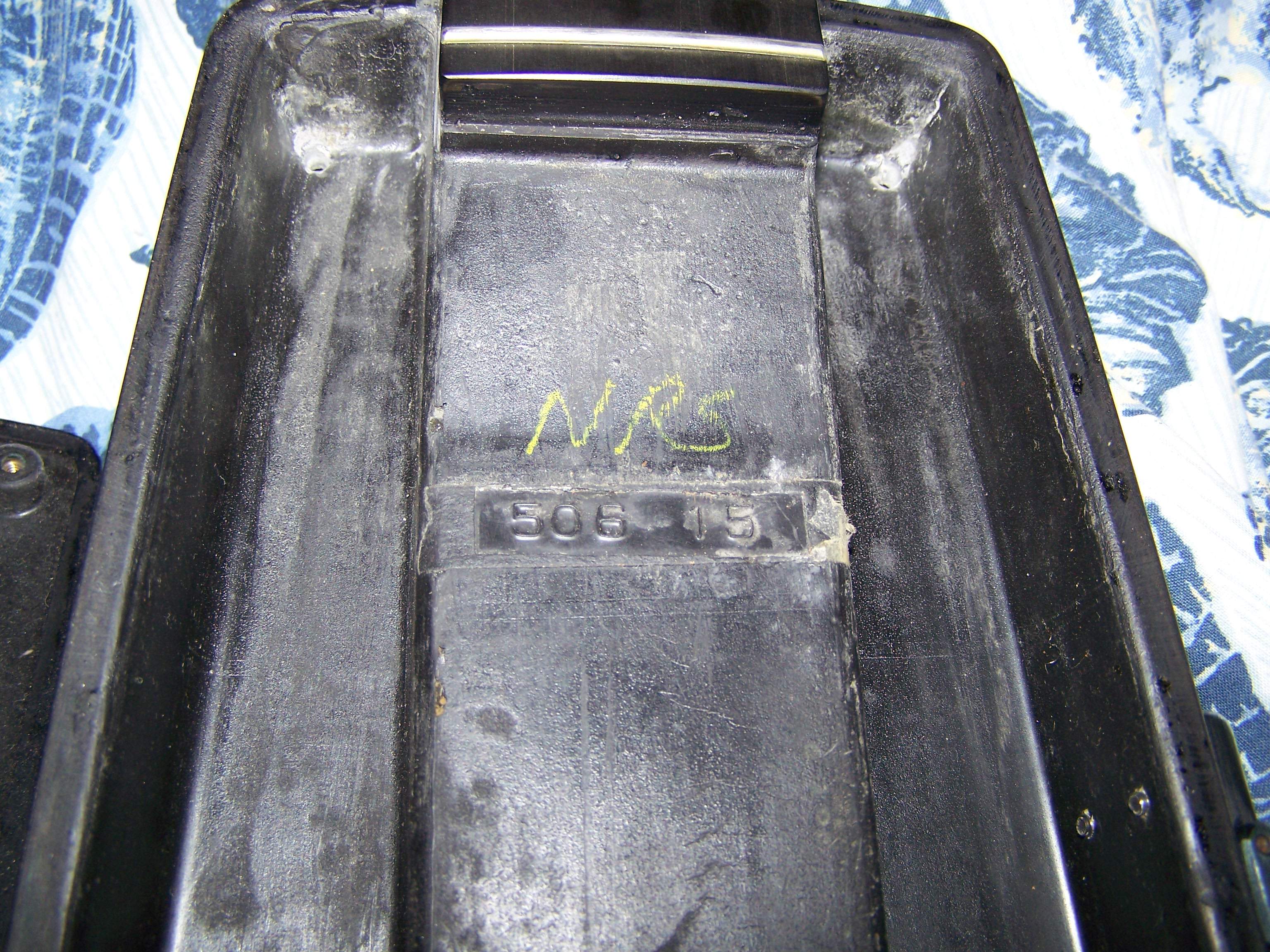
Anyway, I bought it and it arrived yesterday. There was a ground hum that needed fixing. I pulled it apart and saw NRS inside and got excited, thinking Ned may have actually made my new bass. I then thought he'd just be NS, so it was most likely somebody else. I sent the photo to the guy I bought it from and he contacted NS Designs to ask if NRS was Ned. They replied right away, saying yes, definitely Ned!! So Ned made my bass. I doubt it's related, but this one is definitely better than the L2

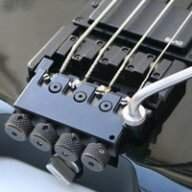
I pulled it apart and saw NRS inside and got excited, thinking Ned may have actually made my new bass. I then thought he'd just be NS, so it was most likely somebody else. I sent the photo to the guy I bought it from and he contacted NS Designs to ask if NRS was Ned. They replied right away, saying yes, definitely Ned!! So Ned made my bass. I doubt it's related, but this one is definitely better than the L2
Hmmm… I've asked the same question in 2012, and this is the answer I received from Jeff Babicz back then:
NRS are the initials of Naomi from the finishing department at the
Newburgh factory. I don't remember her middle or last name though. I also
worked with her husband Al at the factory. He mostly worked in the mold
room and the machining department.
That NRS tag is in almost all my old Newburgh L-type Steinbergers, and it's not very likely Ned made them all. Actually Ned didn't "make" any serial production instruments at all. He was the one who designed and developed them.
That's what I would have thought too. In that case, I wonder what the story behind it is then?Hmmm… I've asked the same question in 2012, and this is the answer I received from Jeff Babicz back then:
That NRS tag is in almost all my old Newburgh L-type Steinbergers, and it's not very likely Ned made them all. Actually Ned didn't "make" any serial production instruments at all. He was the one who designed and developed them.
That's what I would have thought too. In that case, I wonder what the story behind it is then?
Well, the simple story is: Naomi did her work on this instrument, and thus signed it on the inside. There are also a lot of instruments with Jeff's "JB" signature. In many cases there are also other signatures, numbers, and dates, most of them cannot be linked to any special info today. These were just internal manufacturing related marks (also lot numbers, mold numbers, etc.).

I've owned a few L2's and XL2's. Curious to see if others who have owned both had a preference in one model over the other in the areas of, 1- tone, 2- feel, 3- hardware/setup.
I currently am using my L2, but miss my XL2.
I currently am using my L2, but miss my XL2.
I own an XL2 and used to own an L2. It's been about 5 years since I sold the L2, but the XL2 definitely sounds better. I don't know why, but this one has a more consistent sound. Better balance between the strings. I believe they use the same pickups. This one has the SS pickups, which I believe is what the L2 had as well. [Correct me if I'm wrong.] The bridge on the XL2 is much easier to intonate. I never liked having to slide the saddle on the L2. Too imprecise. The necks feel very similar, although I think the L2 may have been slightly boxier.I've owned a few L2's and XL2's. Curious to see if others who have owned both had a preference in one model over the other in the areas of, 1- tone, 2- feel, 3- hardware/setup.
I currently am using my L2, but miss my XL2.

Sorry Dave, you're not getting it back!I've owned a few L2's and XL2's. Curious to see if others who have owned both had a preference in one model over the other in the areas of, 1- tone, 2- feel, 3- hardware/setup.
I currently am using my L2, but miss my XL2.

I'll sign up. Recently bought L2 #1560. The bass is mostly in good condition apart from possibly needing levelling of the frets (the g on D-string 5th fret and some other points on the fretboard are worn to the point of slight buzz). I'l know as soon as some LaBella flats arrive and I set the bass up in BEAD tuning and adjust the action accordingly. At the moment the action is on the low side, so rising it a tad may make it possible to postpone the fret work.
However, the previous owner used to gig with the bass "straight into board" (w/out DI, I'm guessing) and has had the original 1/4" jack replaced with a XLR jack with a squarish baseplate bolted where the original jack used to be. I popped the top off to check and saw that the jack sits in a (to my eyes) largish round hole and started to wonder: how much did the person who did the modification enlarge the hole? Could some kind soul check the diameter of the original output jack hole on their L2?
One love,
Rootz
However, the previous owner used to gig with the bass "straight into board" (w/out DI, I'm guessing) and has had the original 1/4" jack replaced with a XLR jack with a squarish baseplate bolted where the original jack used to be. I popped the top off to check and saw that the jack sits in a (to my eyes) largish round hole and started to wonder: how much did the person who did the modification enlarge the hole? Could some kind soul check the diameter of the original output jack hole on their L2?
One love,
Rootz

I can tell you right now that you will not be able to fit a 1/4" socket in where that XLR has been without fitting a spacer of some kind.I'll sign up. Recently bought L2 #1560. The bass is mostly in good condition apart from possibly needing levelling of the frets (the g on D-string 5th fret and some other points on the fretboard are worn to the point of slight buzz). I'l know as soon as some LaBella flats arrive and I set the bass up in BEAD tuning and adjust the action accordingly. At the moment the action is on the low side, so rising it a tad may make it possible to postpone the fret work.
However, the previous owner used to gig with the bass "straight into board" (w/out DI, I'm guessing) and has had the original 1/4" jack replaced with a XLR jack with a squarish baseplate bolted where the original jack used to be. I popped the top off to check and saw that the jack sits in a (to my eyes) largish round hole and started to wonder: how much did the person who did the modification enlarge the hole? Could some kind soul check the diameter of the original output jack hole on their L2?
One love,
Rootz
Yeah, gotta use some kind of mounting plate. I'll probably have to make a plate (or 2, to sandwich the graphite between them) that fits the XLR mounting holes to avoid doing any more damage.
I was just curious as to how the original jack had been affixed.
One love,
Rootz
I was just curious as to how the original jack had been affixed.
One love,
Rootz
I
I'll open mine up later.Yeah, gotta use some kind of mounting plate. I'll probably have to make a plate (or 2, to sandwich the graphite between them) that fits the XLR mounting holes to avoid doing any more damage.
I was just curious as to how the original jack had been affixed.
One love,
Rootz


In Jim Reilly's book "Steinberger: A Story of Creativity and Design" the author says that:
“As this book wraps up, there are new bass and guitar designs, both with patents applied for, in the works. The bass is an evolution of the Steinberger XL2—forty years after Ned designed the first Steinberger bass. The new bass has five strings, a thirty-four-inch scale length, and an extended upper bout that stabilizes the instrument more than any of his previous bass designs. The extended bout eliminates the need for the pivot plate and, believe it or not, leads to an even more consistent and even tone across the entire neck. The final modernization is a scooped back/neck joint allowing for full access to all twenty-four frets. The new prototype utilizes hardware designed for the Synapse bass with a maple body and composite neck. Ned has designs for professional grade basses both in wood and a molded composite much like the original L2 and XL2....Ned is excited about the new bass and guitar designs and is very open to exploring opportunities with Gibson. Time will tell where all this goes. Regardless, Ned shows no signs of slowing down.”
Here's two photos from the book below.
I hope Ned will consider a four string too.

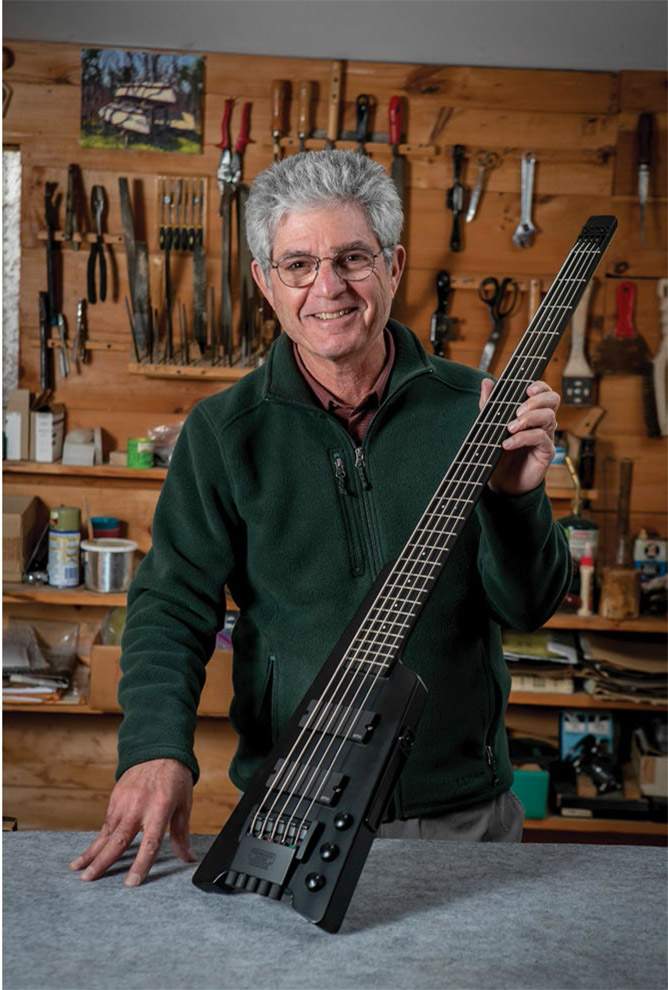
“As this book wraps up, there are new bass and guitar designs, both with patents applied for, in the works. The bass is an evolution of the Steinberger XL2—forty years after Ned designed the first Steinberger bass. The new bass has five strings, a thirty-four-inch scale length, and an extended upper bout that stabilizes the instrument more than any of his previous bass designs. The extended bout eliminates the need for the pivot plate and, believe it or not, leads to an even more consistent and even tone across the entire neck. The final modernization is a scooped back/neck joint allowing for full access to all twenty-four frets. The new prototype utilizes hardware designed for the Synapse bass with a maple body and composite neck. Ned has designs for professional grade basses both in wood and a molded composite much like the original L2 and XL2....Ned is excited about the new bass and guitar designs and is very open to exploring opportunities with Gibson. Time will tell where all this goes. Regardless, Ned shows no signs of slowing down.”
Here's two photos from the book below.
I hope Ned will consider a four string too.

Quick question for the group. Can you retrofit a boomerang strap system for the pivot plate on an XL-2?
Thanks,
Bones
Thanks,
Bones

Ned has designs for professional grade basses both in wood and a molded composite much like the original L2 and XL2...
Interesting... But for me, no one-piece molded fully composite bass = no thanks. Time will tell. I thought the whole reason for Gibson dropping the XL series was the cost and required technical expertise of manufacturing. What's changed in that regard?
I think Gibson trashed the moulds and the plugs (accidentally or otherwise) before Henry J shut down Steinberger and Tobias on a petty whim.Interesting... But for me, no one-piece molded fully composite bass = no thanks. Time will tell. I thought the whole reason for Gibson dropping the XL series was the cost and required technical expertise of manufacturing. What's changed in that regard?
I cannot see why, in this day and age of 3D printing, that new plugs and moulds cannot be made.
Quick question for the group. Can you retrofit a boomerang strap system for the pivot plate on an XL-2?
Ask Andy Yakubik (Steinberger World). If I recall correctly he got a batch of modified ones from Ned, for exactly this purpose. I don't know if he still has them, but he should be able to help.
Quick question for the group. Can you retrofit a boomerang strap system for the pivot plate on an XL-2?
Thanks,
Bones
You can balance well withouth pivoting the 2nd unused straplock putting down back near electronics...


