
It sounds like the prototypes are completely new molds. I hope that Gibson doesn't get involved. They did a terrible job with the Synapse with poor QC, many, many broken truss rods. Perhaps Ned will utilize Bohemia Musico in the Czech Republic where the euro Spector basses are made.

Enjoy the benefits of a premium membership!
Upgrade Account
-
TalkBass has been independent since 1998. Add your voice.
Create a free account to reply to discussions, view embedded media, and browse with fewer display ads.
Join free Log in
Want zero display ads or expanded classifieds tools? Compare plans.
You are using an out of date browser. It may not display this or other websites correctly.
You should upgrade or use an alternative browser.
You should upgrade or use an alternative browser.
Steinberger Club
- Thread starter king_xanadu
- Start date
-
- Tags
- club
More options
Who Replied?
Somebody started another thread elsewhere looking for a Headless bass tremolo bridge assembly. To my knowledge, the Steinberger bass Transtrem was the only one available, and only for insane Ed Roman Guitars prices since they bought up all the NOS parts. I think the Chinese Overlords of Music makes one, but all their bridges are pretty much universally junk. Has anybody seen a headless trem bridge? There are some out there with fine tuners, but not intended for a full tuneup from slack to pitch.
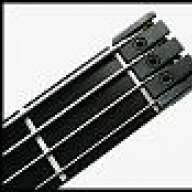
I've owned a few L2's and XL2's. Curious to see if others who have owned both had a preference in one model over the other in the areas of, 1- tone, 2- feel, 3- hardware/setup.
I currently am using my L2, but miss my XL2.
I have one of each--an early "transition" XL2A (it retains the curved detachable leg rest and SS pickups from the L series) and an L2UF (unlined fretless). Both are from 1984.
I love them both. They are different, however. The L must be at least a pound lighter and the neck both feels more hollow and is a bit thicker, front to back. I would say that the XL is definitely a little nicer, fit and finish-wise. You can easily see where the fingerboard attaches to the neck on the L, for instance, whereas you can't on the XL.
I can't compare the sound very precisely since I keep flats on the L, but I'd say they're quite similar. The only claims I've ever heard regarding a difference in sound centers primarily on the pickups. Early in the production of the XL series they modified the pickups (from SS to HB designation) which according to many rendered them a bit less warm in tone. I can't vouch for that personally since both of my basses have the earlier SS design. EMG however now makes an HBCS model that replicates the features of the SS so there must be at least something to the idea.
I have read on many occasions that the bridges on the L series were produced in-house out of milled steel while those on the the later XL series were some kind of molded zinc and were produced by an outside supplier. That might make some small difference in the quality of the sound, I guess. I have heard that they are not as durable.
The L series were more expensive on the used market for a long time, but I notice that difference less these days. I think it was mostly driven by collectors (who presume, because it's true of vintage Fenders, that older models are more rare and better) and not by player preference, though. It might also have reflected the fact that most of the really famous players that took them up for a while (Sting, Geddy Lee, etc.) played L series instruments. That was the only available model when they played them, however, so it couldn't reflect any particular preference by them.
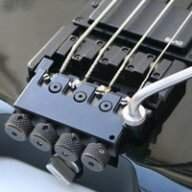
I have read on many occasions that the bridges on the L series were produced in-house out of milled steel while those on the the later XL series were some kind of molded zinc and were produced by an outside supplier. That might make some small difference in the quality of the sound, I guess. I have heard that they are not as durable.
The v2 (made in Newburgh) and v3 (made by Schaller in Germany) bridges on the XL were still milled steel. Only the v4 bridges by Zen-On were made from Zamac. Detailed info from SteinbergerWorld.


Tina Weymouth
Sting
Geddy Lee
Tony Levin
Robbie Shakespeare
Foal30
Pino Palladino
Curt Smith
Tim Commerford
Sting
Geddy Lee
Tony Levin
Robbie Shakespeare
Foal30
Pino Palladino
Curt Smith
Tim Commerford
you have a list of famous bass players who use steinberg or who have used?
Here is a pretty detailed list: Steinberger Players

Had a chance at one of those years ago, for way too much money, and gave it a pass - I'd figured out that my right hand doesn't like narrow string spacings. Have occasionally regretted it. My holy grail was an XL2-5W, but they all seem to be in the vaults of Japanese collectors. So I bought a Status Graphite 5er. A couple of them, in fact. The Stealth and Streamline have a lot of the same properties I love about my XL-2A: the insane sustain and utter stability, and are significantly lighter (they're graphite/epoxy around a lightweight core, like a surfboard). They have a great range of tone, but they don't sound quite as bad-assed as the 'berger set with the EQ flat. And they ain't got a pivot plate.Here's my XL2-5. Someone on Reverb recently listed a bunch of NOS Steinberger guitar stands, still in the original packaging. Works great!
Here is a pretty detailed list: Steinberger Players
Bit of a notable omission from your list, eh @foal30 ?

Tina Weymouth
Sting
Geddy Lee
Tony Levin
Robbie Shakespeare
Foal30
Pino Palladino
Curt Smith
Tim Commerford
Seeing this topic and all of the cool pictures in it I find it even more strange that Gibson seems to refuse to do more with the brand. I'd love some reissues of the full body ones, for example.

Early in the production of the XL series they modified the pickups (from SS to HB designation) which according to many rendered them a bit less warm in tone. I can't vouch for that personally since both of my basses have the earlier SS design. EMG however now makes an HBCS model that replicates the features of the SS so there must be at least something to the idea.
When I bought my XL2 it was in need of some restoration including a refret, and one of the pickups (HB) had died. It went to Peekamoose, the only place to go back then for Steinbergers here in NYC. We decided to replace both pickups, not knowing how long the working one would last.
The HBCS were very new then. I was told the HB was slightly warmer than the HBCS, so we put HB at the neck and HBCS at the bridge.
I can't compare it to an L2, but I can say it sure sounds killer.
yes,Tina Weymouth
Sting
Geddy Lee
Tony Levin
Robbie Shakespeare
Foal30
Pino Palladino
Curt Smith
Tim Commerford
I didn't know that Pino was ... Leland Sklar too, yes?
Do you think the steinberger is cool
to work in studio record? Just as precision bass is the bassist's favorite, do you think the steinberger has that sound that works for everything in a studio?
to work in studio record? Just as precision bass is the bassist's favorite, do you think the steinberger has that sound that works for everything in a studio?

Do you think the steinberger is cool
to work in studio record? Just as precision bass is the bassist's favorite, do you think the steinberger has that sound that works for everything in a studio?
IME, no. But that’s from studio engineers that insisted for me to play that P Bass they have in the corner with 15+ yr old flats.
They are (or at least mine is) incredibly neutral - the sound is imposed by the player, not the instrument. So in that sense, it's a really good and very versatile instrument for the studio. On the other hand, while the ergonomics for playing standing up are just amazing, the 'berger leg brace system for seated playing is pretty meh. And if what the engineer or producer has decided he wants to hear is vanilla P or J Fender, they're going to expect you to play the Fender instead of fussing with your 'berger.Do you think the steinberger is cool
to work in studio record? Just as precision bass is the bassist's favorite, do you think the steinberger has that sound that works for everything in a studio?
They are (or at least mine is) incredibly neutral - the sound is imposed by the player, not the instrument. So in that sense, it's a really good and very versatile instrument for the studio. On the other hand, while the ergonomics for playing standing up are just amazing, the 'berger leg brace system for seated playing is pretty meh. And if what the engineer or producer has decided he wants to hear is vanilla P or J Fender, they're going to expect you to play the Fender instead of fussing with your 'berger.
I understood.
more if it's versatile it's already a good thing....
solves many situations
I went looking for a 'berger in the late 80s, after the were fashionable but before they became collector's items, because I was going back and forth between the SF Bay Area and Austin and the 'bergers were famous for fitting overhead racks. Thought it was a really good instrument, but, as I think many people do, I took the lack of imposed character as a lack of "soul". But over the years, time after time, I hit points where there was some tricky or athletic bass part that I couldn't get to come out consistently right on any of my other basses, but which was just plain easier to nail on the 'berger. At some point, 9-10 years ago, I had a "Doh!" moment and embraced the headless graphite perfection of it all as my default.I understood.
more if it's versatile it's already a good thing....
solves many situations
I've had my XL2 for many years and I totally opt out of the "sounds sterile" contingent. Though I have not recorded with it and cannot comment on an engineer's embedded preference for a certain bass, I've done years of gigs with various rigs (including provided backlines) to know it sounds the way an excellent bass with EMG's will sound = great.I understood.more if it's versatile it's already a good thing....
solves many situations
You can do whatever you need to do. Will it be exactly like a certain '62 P with 15 year old flats? Maybe not. But it will cut it in its own way. It's not supposed to be the ultimate one bass that does it all. But it certainly does enough. It always makes me smile!!

It's not supposed to be the ultimate one bass that does it all. But it certainly does enough.
Love this quote. This is why I still love playing headless Basses even if I get judged from engineers. Steinberger/NS Design are my ride or die!


