

Enjoy the benefits of a premium membership!
Upgrade Account
-
TalkBass has been independent since 1998. Add your voice.
Create a free account to reply to discussions, view embedded media, and browse with fewer display ads.
Join free Log in
Want zero display ads or expanded classifieds tools? Compare plans.
You are using an out of date browser. It may not display this or other websites correctly.
You should upgrade or use an alternative browser.
You should upgrade or use an alternative browser.
Steinberger Club
- Thread starter king_xanadu
- Start date
-
- Tags
- club
More options
Who Replied?
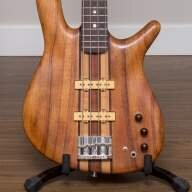
OK. A lot less than the estimate, but still must make it the most expensive 'Berger ever sold, unless this one sold for more again.

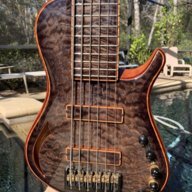
Do you think the steinberger is cool
to work in studio record? Just as precision bass is the bassist's favorite, do you think the steinberger has that sound that works for everything in a studio?
So I am no studio bassist at all, but I have a 92 Q4 that I used on a friend’s album. The producer was a rather well-experienced one (did work for Springsteen and had a Grammy). I’m not at that level to have that kind of production, but he was a friend of the guy whose album I worked on. Anyway, we recorded the tracks and I did my bass parts on a Steinberger. He specifically made a comment to my friend about how good the tone was. I used a Wishbass fretless for another track. He was not a fan. Lol. So, he liked it enough to comment on it.


Anyone know where I can get an original HAZLab preamp the Steinbergers came with? Not looking to get the one from HeadlessUSA but if that’s the only way to get one then I guess I’ll have to go with that then.. 


This is what Rob Greene of Status Graphite did ~10 years ago with the Streamline, an discreetly extended upper bout to get to a decent position for a strap button, instead of a pivot plate. I have both a Streamline and an XL-2A. They are both superb instruments. The Status is lighter, has better EQ, and has 5 strings. The 'berger has a bigger natural tone and has the pivot plate, which I absolutely love. It also plays a bit better in the highest register - there's some odd sculpting where the Status neck merges with the body, to provide support for seated playing.In Jim Reilly's book...“As this book wraps up, there are new bass and guitar designs, both with patents applied for, in the works. The bass is an evolution of the Steinberger XL2—forty years after Ned designed the first Steinberger bass. The new bass has five strings, a thirty-four-inch scale length, and an extended upper bout that stabilizes the instrument more than any of his previous bass designs. The extended bout eliminates the need for the pivot plate and, believe it or not, leads to an even more consistent and even tone across the entire neck...

You guys are dangerous for a guy like me. So I found this, but I will not buy it ( I hope ).
Status Graphite Streamline 5 Black Carbon Fiber | Neil's gear | Reverb
Not a 6, but from the looks of the string spacing, they sure have the room for it. Interesting.
Status Graphite Streamline 5 Black Carbon Fiber | Neil's gear | Reverb
Not a 6, but from the looks of the string spacing, they sure have the room for it. Interesting.
That's not enough cheaper than new for me to be interested.
I love my SR/SRC 6's so much that any other 6 would have to be so good for me to replace them, and both together are about 1/2 the cost of the Streamline. I would still like a 5 though, the spiritual companion to the XL2 and my S3000.
I wonder if I ordered new whether Rob would put a Steinberger style insert so I could use the pivot plates/boomerang.
I love my SR/SRC 6's so much that any other 6 would have to be so good for me to replace them, and both together are about 1/2 the cost of the Streamline. I would still like a 5 though, the spiritual companion to the XL2 and my S3000.
I wonder if I ordered new whether Rob would put a Steinberger style insert so I could use the pivot plates/boomerang.
To those who have experience playing both instruments:
How would you characterize the difference in playing feel and tone between the more
massive/dense composite construction of the Steinberger L/XL series bass and the lighter, foam-filled core design of the Status Graphite Streamline? Do both instruments have similar sustain characteristics?
The Streamline’s construction reminds me a bit of Parker’s Fly guitars, which utilized a very stiff composite exoskeleton over selected “tone” woods, yielding a lightweight, resonant design.
I assume that pickups and electronics may ultimately have the greatest influence on the tone of an instrument at the receiving end of a cable, but on a purely tactile and acoustic basis, I’m curious how different the XL and the Streamline feel and sound when playing them back-to-back.
Would you have a preference for one over the other when considering a fretless bass?
How would you characterize the difference in playing feel and tone between the more
massive/dense composite construction of the Steinberger L/XL series bass and the lighter, foam-filled core design of the Status Graphite Streamline? Do both instruments have similar sustain characteristics?
The Streamline’s construction reminds me a bit of Parker’s Fly guitars, which utilized a very stiff composite exoskeleton over selected “tone” woods, yielding a lightweight, resonant design.
I assume that pickups and electronics may ultimately have the greatest influence on the tone of an instrument at the receiving end of a cable, but on a purely tactile and acoustic basis, I’m curious how different the XL and the Streamline feel and sound when playing them back-to-back.
Would you have a preference for one over the other when considering a fretless bass?
Both instruments are extremely rigid. Both have insane sustain. The Steinberger neck is very good. The Status necks are amazing. The XL-2A controls are volume, volume, tone. The Streamline has pickup blend, volume, treble, bass. So I can do more subtle things with the Streamline. But they both sound amazing, and both get me compliments on the sound once people get past appearances. The pivot plate and folding leg brace of my XL-2A make it the ergonomics winner - but it rarely comes out of the case, as I am pretty exclusively playing 5ers now.
But there's a little bit more to my Status Graphite story. My Streamline wasn't my first Status. I was looking for a 5er with similar characteristics to my XL-2A, I discovered Status, and I looked at the Streamline. And I hesitated. Because I was really skeptical about whether a headless, bodyless design would really be workable without a pivot plate, I ordered a headless Status Stealth. Same construction as the Streamline, monocoque epoxied graphite fiber over a lightweight core, but with a conventional body.

(Not mine, but a decent small pic of the config)
Same scale and pickups as the Streamline, though the electronics are a little more sophisticated blend, volume, treble, bass, plus a +6db, +0db, -6db midrange switch with a sweepable frequency. It is on the whole a slightly better instrument than the Streamline. It's easier to play sitting down, sits better against my torso standing, and is playable all the way up the neck (though I'm not the kind of bassist who goes up there very often). The neck is the most perfect I've ever played. But despite it being my best bass for recording and gigging, it's still the Streamline that gets played the most, just because it's so damned compact and easy to transport. Both are light enough to play for a full evening and not have my back complain, or even notice.
This whole adventure might have been missed if only I'd been able to find an XL-25W....
But there's a little bit more to my Status Graphite story. My Streamline wasn't my first Status. I was looking for a 5er with similar characteristics to my XL-2A, I discovered Status, and I looked at the Streamline. And I hesitated. Because I was really skeptical about whether a headless, bodyless design would really be workable without a pivot plate, I ordered a headless Status Stealth. Same construction as the Streamline, monocoque epoxied graphite fiber over a lightweight core, but with a conventional body.
(Not mine, but a decent small pic of the config)
Same scale and pickups as the Streamline, though the electronics are a little more sophisticated blend, volume, treble, bass, plus a +6db, +0db, -6db midrange switch with a sweepable frequency. It is on the whole a slightly better instrument than the Streamline. It's easier to play sitting down, sits better against my torso standing, and is playable all the way up the neck (though I'm not the kind of bassist who goes up there very often). The neck is the most perfect I've ever played. But despite it being my best bass for recording and gigging, it's still the Streamline that gets played the most, just because it's so damned compact and easy to transport. Both are light enough to play for a full evening and not have my back complain, or even notice.
This whole adventure might have been missed if only I'd been able to find an XL-25W....
Last edited:
He *does* make a 6-string Stealth...^^ If only Rob would make the Streamline in a 6...
If I wanted a 4-string fretless, I'd take a new XL-2A over a new Streamline, just for the ergonomics. But you can't buy a new XL-2A fretless. In fact, on a given day, you may not be able to buy an XL-2A fretless at all. Status hasn't built nearly as many as Steinberger did, but they're still at it, they are more finely crafted instruments, and the used ones you find are generally in better shape than 1980s Steinbergers. If you can find a good 'berger, for goodness' sake, buy it and hang onto it. They are wonderful and unique, and there won't be any more of them. But if you want a superb compact fretless, either will do.Would you have a preference for one over the other when considering a fretless bass?
Don't want a full size body. I already have an S3000 and prefer the smaller bodies.He *does* make a 6-string Stealth...

Just got these old photos from a bandmate. Mid 1990s, rocking my L2. Wow, I still had hair back then, who knew 


Do you think the steinberger is cool
to work in studio record? Just as precision bass is the bassist's favorite, do you think the steinberger has that sound that works for everything in a studio?
I did a session once where the engineer wasn't happy with my L2 and asked me to try my P bass (with rounds) instead. He was happy and that was what ended up on the album. I was just a sideman so no skin off my nose.
The next time I used the L2 was as a member of a celtic band with the bass detuned a whole step to DGCF. That engineer had no comment whatsoever, he was fine with the sound.
When strung with roundwounds and the controls wide open like most engineers prefer (so they can EQ as needed during the mix) my L2 is really, really bright. That "piano string" sound. That's hardly suitable for all styles of music!!! It can certainly be EQed during the mix for less treble or if the engineer is OK with the player rolling off some treble, using flats, stuffing foam under the strings, I think it's versatile enough. It has one huge advantage over a typical P bass...the note definition is never lost regardless of the tone control setting.


