

Enjoy the benefits of a premium membership!
Upgrade Account
-
TalkBass has been independent since 1998. Add your voice.
Create a free account to reply to discussions, view embedded media, and browse with fewer display ads.
Join free Log in
Want zero display ads or expanded classifieds tools? Compare plans.
You are using an out of date browser. It may not display this or other websites correctly.
You should upgrade or use an alternative browser.
You should upgrade or use an alternative browser.
Stoner/Doom Bassists 51: Back To The Future
- Thread starter Corey Y
- Start date
More options
Who Replied?The zoom H2.
It's good for capturing ideas, but not to produce anything of good quality.
We need to just put the cash down for studio time.
It's no substitute for a quality multitrack recording, but if you utilize some fundamentals of recording engineering, you'll probably get a better result. Forgive me for a little bit of a long post, but I'll boil it down to 3 things:
1. Gain staging
2. Use your ears
3. Take your time
Overly generalized, but they all kind of overlap in places as well. Let me specify:
1. Gain staging - Adjust your input gain so you do not get any signal clipping. Signal clipping on the input can never be fixed in a satisfactory way later. Familiarize yourself with the H2's user manual and learn how to use the controls. They may have different labels for specific functions, but they should explain what they DO, so you'll be able to figure out what controls the volume level of the mic signal that's being recorded.
2. Use your ears - If you turn the input gain down to the point where you're not getting any clipping (with a decent margin for safety, songs have dynamic volumes) and it sounds like crap...change something. Try moving it farther away from the source. Move it around the room, find a spot where it sounds best, the input gain level might need to be higher or lower in different areas, it might sound better with the input gain lower and the instruments louder (or vice versa). Don't forget you're in 3 dimensional space, move it up and down as well. It might sound better closer to the floor, at waist height or high up, aiming down. Experiment, but always listen back to the result and adjust accordingly.
If you don't have a lot of gain controls for individual tracks, then most of your gain staging is in the room. So if you can't mix individual tracks, mix the environment. You can turn the volume of individual amplified instruments up and down, adjust EQ, but you can also MOVE the amps. Also, since you can't adjust the volume of the drums (presumably), that's your fixed point, change everything in relation to the drums. If you don't like the way the drums sound you can physically change them too. Tape a quarter or a piece of cloth to the beater head of the kick drum to change the attack, fill the shell with a pillow or blanket, dampen the snare or tom heads with gaffer's tape to change the resonance. You can also adjust the tuning of the drums, if they sound too "thwacky" or "boingy" (most overlooked issue with bands recording, tuning drums). Too much cymbals? Again, move the recorder around (height especially), it's all a big balancing act. For everything you change, you might have to adjust something else.
On the subject of use your ears...make sure they can be trusted. Use a decent pair of over ear headphones to check your sounds or pump them through a PA. Use a reference, plug in your ipod or something and play a song you know, compare how it sounds (adjust the volume of the reference song to match the H2 output, not the other way around, your music isn't mastered). Record a bit, listen back, adjust and repeat until you're happy with the sound.
3. Take your time - Don't rush through the process, know that it's going to take time and have realistic expectations. Rushing will not improve anything. If you have to, do this for a whole practice, leave everything where it is (you can always mark settings, lay down painter's tape to mark positions), then come back and focus on your performance another time. They're separate parts of the recording process. If you don't give them each their due time and attention, one or both will suffer. Using your ears a lot wears them out. Know when to walk away, because if you do this setup portion too long and THEN try to record, you're more likely to just say "good enough" and rush through things. Your performance is probably going to be a lot better if you're not worrying about the engineering portion of the project. Get it done, then let it go and move on to the next point. Then you can listen back from a performance point of view, now that you've got the sound the way you like. You can always make some minor tone adjustments as you go if you like, just don't forget to check the RECORDED result, don't trust what you're hearing in the room will translate to the recording.
The best resource you have to make a good recording is time, critical thought and patience.

Assuming I eventually get mine, you're welcome to try it out if you guys come through Pittsburgh before you place an order! I was going to wait until Geoff's was finished and try his out, but since he's spawned of the devil's seed and left-handed I figured it wouldn't help me make my decision lol.

I have a problem with that and my traben array 5 limited right now. I spent a ton of time getting it all fixed up after all the chrome was corroded and now I can't get myself to play it. Not a huge 5 fan but it's mostly that for some reason it has the lowest output volume of my basses. It sounds really strange with fuzz without a lot of tweaks that just aren't worth the trouble. It looks awesome and I'd love to use it... wondering if changing the preamp might fix it. Seems like a lot of work but the wife would kill me if I sold it.
Edit: I know most of you guys like passive, anyone ever replace a preamp before? The only ones I know of are the ones made by aguilar and stuff.
Edit: I know most of you guys like passive, anyone ever replace a preamp before? The only ones I know of are the ones made by aguilar and stuff.

- Sep 3, 2003
- 3,312
- 756
- 41
- Disclosures
- Endorsing Artist: Fuzzrocious Pedals
Assuming I eventually get mine, you're welcome to try it out if you guys come through Pittsburgh before you place an order! I was going to wait until Geoff's was finished and try his out, but since he's spawned of the devil's seed and left-handed I figured it wouldn't help me make my decision lol.
If I can hold out that long I will definitely take you up on the offer. But either way, Bongripper needs to get out east again, in which case a show will definitely be in order.

Thank you, Corey!
I'm checking with a local doomer now about possibly getting some free recording.
I don't think there is an easy way to do this without spending some cash...
I am going to try some of your suggestions once we have an actual practice... whenever that is.
I'm checking with a local doomer now about possibly getting some free recording.
I don't think there is an easy way to do this without spending some cash...
I am going to try some of your suggestions once we have an actual practice... whenever that is.

And was travis bean inspired by kramer or was it the other way around?
bean and kramer only worked together for a year or so from like 74 to 75. then gary kramer split off and made kramer. bean only lasted for 5 years producing like 3k instruments in total, and kramer was a much bigger company after that.
beans are psycho overpriced for what they are. at this point their value is based on collectibility and the rare factor. ive played one and for the 3500 price tag i wasnt impressed at all. but some people swear by them.
Vintage Morley PWF for sale, $200 plus shipping. Should I?
too expensive. should be around 130 with shipping.
Thank you, Corey!
I'm checking with a local doomer now about possibly getting some free recording.
I don't think there is an easy way to do this without spending some cash...
I am going to try some of your suggestions once we have an actual practice... whenever that is.
I'm always happy to pass on the benefit of years of DIY recording mistakes

Most of those lessons are applicable to studio recording too. The only difference is that it's a lot harder to be contemplative about what you're doing when you're paying by the hour. In that case it pays to be well prepared and know exactly what you want before you get there. I have worked up check lists for pre-production for dozens of bands as a recording engineer (or even for bands I'm in, when going to a studio) and most of them do maybe half to three quarters of it at best. If you're going to pay for recording, use as much of your own free time as possible to prepare and ask the engineer for some pointers to help them out. That way you make the most of the time you're paying for, instead of standing figuring out some arrangement part of a song or realizing you need new strings or have to tune the drums while you're on the clock.
Studio recording pre-production pointers are a whole other megapost.

Corey's advice is good, not sure what I can add but here's something that worked for us with practice recordings:
We put an SM57 on the guitar cab, a behringer 58 clone on a bass cab (sounded ok, surprisingly) and some other cheap 58 clone hanging from the rafters about 5-6 feet in front of the drums. We also took a vocal line direct from singer/guitarists vocal processor. All of those went into a mixer, then we took the tape out from the mixer into the line in on a tascam handheld recorder (similar to the zoom). It took a few weeks of messing with levels and panning but we ended up with a few surprisingly decent practice recordings.
So if you have a few mics and a mixer it couldn't hurt to give this a try.
But mostly, listen to Corey.
We put an SM57 on the guitar cab, a behringer 58 clone on a bass cab (sounded ok, surprisingly) and some other cheap 58 clone hanging from the rafters about 5-6 feet in front of the drums. We also took a vocal line direct from singer/guitarists vocal processor. All of those went into a mixer, then we took the tape out from the mixer into the line in on a tascam handheld recorder (similar to the zoom). It took a few weeks of messing with levels and panning but we ended up with a few surprisingly decent practice recordings.
So if you have a few mics and a mixer it couldn't hurt to give this a try.
But mostly, listen to Corey.
I think our biggest thing is going to be turning down the volume on bass and guitar. The last round of recording made the drums real low in the mix (zoom was almost on top of drums too) The last few practices have been getting material practiced. We just haven't had a lot of time to mess around with recording. When you only have a couple hours and you need to go over songs from last week, it takes almost all time away from writing and other things bands should be doing.
And, I mentioned that the guitar player didn't even make it last time. And, we have a new song that has to be played this Saturday. The drummer and I have been working on it the last few weeks. We've probably played the song 20 times (or more). The guitar player has only been around for a handful of those. I am pretty nervous that the song is going to not go over so well. All I can do is be ready with my parts, right? *sigh*
And, I mentioned that the guitar player didn't even make it last time. And, we have a new song that has to be played this Saturday. The drummer and I have been working on it the last few weeks. We've probably played the song 20 times (or more). The guitar player has only been around for a handful of those. I am pretty nervous that the song is going to not go over so well. All I can do is be ready with my parts, right? *sigh*
Corey's advice is good, not sure what I can add but here's something that worked for us with practice recordings:
We put an SM57 on the guitar cab, a behringer 58 clone on a bass cab (sounded ok, surprisingly) and some other cheap 58 clone hanging from the rafters about 5-6 feet in front of the drums. We also took a vocal line direct from singer/guitarists vocal processor. All of those went into a mixer, then we took the tape out from the mixer into the line in on a tascam handheld recorder (similar to the zoom). It took a few weeks of messing with levels and panning but we ended up with a few surprisingly decent practice recordings.
So if you have a few mics and a mixer it couldn't hurt to give this a try.
But mostly, listen to Corey.
I also thought about this. We would need more mics/borrow some mics. We do have a mixer we use with the PA so it might be an option later, once we have cash for more mics.
A long time ago I recorded a band with just SM58 knockoffs (we might have had 2 actual Shures), a PA as a mixer, running out of the headphone output into a digital 4 track recorder, with 2 inputs. I think we did the drums with a modified Glyn Johns style technique, had the guitar play a quiet practice amp off in a corner, enough so the drummer could hear it. Then went back and recorded the guitar and bass separately and had the vocalists share a mic for lead and backups. We had just enough tracks to record everything that way. I still have the recording. It's not great, the performance is kind of awful (not one of my bands either, so I feel kind of bad saying that, but still...), but it's still probably better than the first 3 or 4 demos I paid money at a studio to record. Paying for a "real studio" and trying to record 3-5 songs, mix and master in one day on the cheap hardly ever yields good results. You just end up sacrificing quality for time/price. You're paying for time, knowledge and gear. Your time is free, knowledge is accumulated over time and gear...well, good gear is convenient, but inconvenience can be overcome. Creativity and patience can overcome a lot of limitations.
That's not to say studios are pointless AT ALL. I would love to go record at a nice studio and not have even think of the engineering portion of things. You just get a better result when you have reasonable expectations about budget and time. Like most things you get what you pay for, but there are deals to be had and ways to get the most for your money.
That's not to say studios are pointless AT ALL. I would love to go record at a nice studio and not have even think of the engineering portion of things. You just get a better result when you have reasonable expectations about budget and time. Like most things you get what you pay for, but there are deals to be had and ways to get the most for your money.

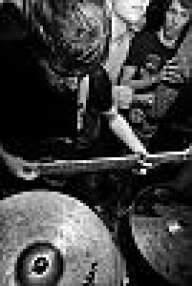
Some pictures from the Catapult the Dead show: Invalid Link Removed
Black and white photos just look cooler, for some reason.
Black and white photos just look cooler, for some reason.
Some pictures from the Catapult the Dead show: Invalid Link Removed
Black and white photos just look cooler, for some reason.
The color ones with the green backlighting look cool.
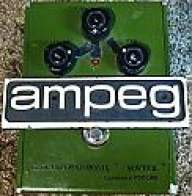
Vintage Morley PWF local for sale, $200 plus shipping. Should I?
Seems like a lot
Seems like a lot
theres 4 different ones (at least) on ebay right now all for 160 or less.
Latest posts
-
-
 Does the truss rods engagement add stability to the neck?
- Latest: Zootsuitbass
-
-

