

Enjoy the benefits of a premium membership!
Upgrade Account
-
TalkBass has been independent since 1998. Add your voice.
Create a free account to reply to discussions, view embedded media, and browse with fewer display ads.
Join free Log in
Want zero display ads or expanded classifieds tools? Compare plans.
You are using an out of date browser. It may not display this or other websites correctly.
You should upgrade or use an alternative browser.
You should upgrade or use an alternative browser.
Sustain - Is it Overrated?
- Thread starter TheCouchBassist
- Start date
More options
Who Replied?

I’m in the rhythm section. I want impact.
So am I and I want everything. Then I can choose how I'm going to play the song.
Sustain isn't a prerequisite in every style but I use one bass for everything so it needs to cover all the options. I can play songs with semi breve or 4 beat notes. I don't want the note to die half way through the bar so long sustain is necessary. Also the tone has to be good so that these long notes sound good right to the end of the bar. I find that if the bass sustains well on the long notes, I'll sound pretty good on the shorter notes.

Except for playing the last note of a song , I can't remember playing anything that required more than two measures of sustain. Even my first garbage P bass copy from the 60's could handle that.

We are playing everything from 60's r&b to to new wave to hard rock to grunge to alt. I need to use my hands, pedals, and eq to go from dead to long ringing notes.
Caution - over-generalizations ahead.
It has become more important as the role of bass has changed (which is why basses no longer come with mutes, and we generally don't use them, unless we are looking to replicate that vibe). When basses had mutes, the choice of strings was limited to flats.
Yes, I think the fixation for some is silly, other than to ensure that response is even for all strings.
Rickenbacker's still have mutes.
All this emphasis on sustain can't last.

I spend most of my playing time muting strings. I guess I have to write a song just using the prominent dead spots on Fender basses, the only thing they ever got right
Seriously: I use and used a lot of different playing styles, some very melodic and prominent, but I can't remember a single situation, where I stood or sat there and thought: F*ck, why did this note stop ringing, before I wanted it to stop. Now I still hear it ringing in my head, but it doesn't ring in the real world - and everyone's looking at me...
Seriously: I use and used a lot of different playing styles, some very melodic and prominent, but I can't remember a single situation, where I stood or sat there and thought: F*ck, why did this note stop ringing, before I wanted it to stop. Now I still hear it ringing in my head, but it doesn't ring in the real world - and everyone's looking at me...

I need to use my hands, pedals, and eq to go from dead to long ringing notes.
Exactly. I typically like my bass percussive and punchy, but songs are going to need what they need. Given this thread, sustain has been on my mind a bit today - and my general thought was that I typically don't have any need for long sustain with my current bands. Then I remembered that time earlier this year when we decided to do this:
The solution? Cranking boost, playing with a light touch, and a few other right and left-hand technique tricks here and there to keep things ringing. As soon as the song ended, boost back down, and back to "normal"!

Invalid Link Removed
Can someone explain why my basswood bass has more sustain than my boat anchor basses? Similar strings and hardware.
I see one fretless. What are the differences in the others?
Amplified, sustain is easy. Muting is hard. I lay my pinky on the G (or C) string and my ring on the next lower string along with a floating thumb like a fingerstyle guitarist for my best muting. Then there is fretting hand muting. I practice muting more than anything else it seems.
IMHO don't think sustain is over-rated. But sure is nice to have and play with. Personally, that is why I play my Neck Through Spectors. I love it.
View attachment 3589860
I see one fretless. What are the differences in the others?
I've posted on TB about the (to me) weird obsession with eternal sustain, as if there was anything that really called for a 1:37 whole note.
And I play PROG. Drone notes are left to bass pedals or keyboards or open notes and a delay/loop.
OTOH, I am ALWAYS concerned with muting. Strings over-ringing or goofy harmonics beaming out from one string because of a poorly fretted note on another string (should've muted the nearby strings!) Muting too quickly so the note is cut short when it shouldn't be. Jumping strings and hitting an open something that wasn't muted and it muddies up my intended note. Muting for punch. Muting for effect, as in doubling the kick drum or a quick guitar muted sweep. Muting, muting, muting. Muting on bass on nearly every note to one degree or another, rarely am I ever worried if a note will not sustain long enough or not.
Yes I am concerned about playing the correct note length, but it's never been the length of a tax audit.
I suppose if you're big into atmospheric, experimental stuff, bass note sustain would be of some concern, but again I think bass pedals, keys, something other than say, the real world vagrancies of a vibrating string.
Amplified, sustain is easy. Muting is hard. I lay my pinky on the G (or C) string and my ring on the next lower string along with a floating thumb like a fingerstyle guitarist for my best muting. Then there is fretting hand muting. I practice muting more than anything else it seems.
Sustain is important and it isn't. In reality it is all up to the person. Sometimes you want a tone that rings long because it fits the song. Other times you need a simple thump with no sustain. So this question is useless. Just as we choose specific notes or sounds for a song we also choose the type of sustain or decay that fits the music.So I’ve been playing for around 10 or 11 years now and have been a TalkBass junkie for pretty much the entire time. I’ve had around 20-25 different basses during this timeframe from $300-$400 models all the up to ones in the $2,500 range. With all those basses I’m not sure I’ve ever had one that truly (by definition) didn’t have at least one dead spot. Obviously some were more pronounced than others. That said one of thing I’ve learned with playing is the importance of your technique especially in the sense of muting strings so you don’t get the sympathetic vibration string noise (I.e. playing cleanly). I play primarily with my fingers so it’s usually some variation of the floating thumb technique. My point and question is this, it seems like controlling the dynamics and/or unwanted sustain/ringing of the wrong notes is more important than sustain and yet it seems we fixate on finding the unicorn bass where each note rings out perfectly on every fret on every string. I get the importance of sustain from a guitars perspective, but do we overrate sustain when it comes to bass? For example, so many of or 60’s and 70’s bass heroes used flats and stuck sponges under the strings close to the bridge. That seems to suggest sustain wasn’t at all important to them. Why then has it become so important to us?


 For me, and the kind/style of music I like to play (and I no longer have to play anything I don't like)? Yes, sustain is vastly overrated. This MIK Rogue VB-100, with Roto 88 tapes, actually has more than I really need - and, it has almost no sustain at all. The 20 other basses I own all have considerably more sustain than I need - or want. Some of them - like my Ricks and my Fender P-Bass - have mutes; and I use the heck out of them. The others? Well, I do the best I can to control it. And some of them -
 like this stupid thing - have enough sustain for 12 basses. This Kramer 450B can give the piano at the end of the Beatles' "A Day In the Life" a run for it's money. I understand that there's music that requires some sustain out of a bass. And I have no problem with that; but I don't need that much. I just don't play that kind of music. But, honestly; no kind of music needs as much sustain from a bass as my Kramer cranks out...
Last edited:

I think it’s not so much the “sustain” per se, it’s that sustain speaks to the general build quality of the instrument. A through body neck with exotic tone woods custom
Built by hand will probably have more sustain than a bolt on generic bass.
whether you use it or not is up to you.
it’s like the 0-60mph time on a new car. You’re probably never going to need to use the cars max acceleration, but a Porsche is going to be quicker off the line than a Kia.
Built by hand will probably have more sustain than a bolt on generic bass.
whether you use it or not is up to you.
it’s like the 0-60mph time on a new car. You’re probably never going to need to use the cars max acceleration, but a Porsche is going to be quicker off the line than a Kia.
Can someone explain why my basswood bass has more sustain than my boat anchor basses? Similar strings and hardware
Heavy doesn't necessarily correlate with rigid. And all else being equal, a more rigid platform should sap less energy from a vibrating string than a less rigid platform.
At least that's my understanding, and why so many popularly held beliefs about certain construction materials and methods are questionable when it comes to actually leading to increased sustain.
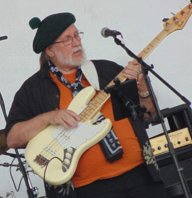
Actually, I think sustain is pretty important on a bass. My '82/'83 Maple-neck Jazz (my White Lady) has significantly more sustain than my 1965 Jazz (maple neck with rosewood fretboard) did. Of course, I had to take the open cell foam off the inside of the ashtray pickup cover back then so I could have some sustain. Those foam mutes were put on there to make it sound more similar to a stand-up bass...didn't need or want that so those suckers came off. sustain was OK after that but nothing to really write home about.So I’ve been playing for around 10 or 11 years now and have been a TalkBass junkie for pretty much the entire time. I’ve had around 20-25 different basses during this timeframe from $300-$400 models all the up to ones in the $2,500 range. With all those basses I’m not sure I’ve ever had one that truly (by definition) didn’t have at least one dead spot. Obviously some were more pronounced than others. That said one of thing I’ve learned with playing is the importance of your technique especially in the sense of muting strings so you don’t get the sympathetic vibration string noise (I.e. playing cleanly). I play primarily with my fingers so it’s usually some variation of the floating thumb technique. My point and question is this, it seems like controlling the dynamics and/or unwanted sustain/ringing of the wrong notes is more important than sustain and yet it seems we fixate on finding the unicorn bass where each note rings out perfectly on every fret on every string. I get the importance of sustain from a guitars perspective, but do we overrate sustain when it comes to bass? For example, so many of or 60’s and 70’s bass heroes used flats and stuck sponges under the strings close to the bridge. That seems to suggest sustain wasn’t at all important to them. Why then has it become so important to us?
In 1985 I bought my current Jazz bass. It has an all-maple neck and it has always had more sustain than my '65 did. I like it because when I need to let a note ring out, it rings out. One of the songs we've done that really needs that sustain is Eminence Front by The Who.
We start it with 2 measures of guitar only and then drums and bass come in on the downbeat of the third measure. My first note is a low F and I have to hold that for two measures, then a Db on the A string, again hold for two measures. Repeat those last 4 measures and then I hit the same notes and hold them for one measure each. After the second time of that, then I can move and play around the octave of the F. My '65 would not have been able to hold those notes much, if at all, beyond the first measure. My current Jazz holds out nicely almost to the end of the 2nd measure.
There are a bunch of other songs where I need to hold the note for full measure and I am never at a disadvantage with this bass. So, having had what I considered a GREAT bass - my 1965 Jazz - and comparing it my current bass (my White Lady), I have to give my White Lady the nod because of the sustain. I'm not worried about open strings ringing out. My playing technique takes care of that. I do really like the fact that my bass has enough sustain for me to hold out a note if I want to.
Another way you can get sustain of course is to use a compressor. Run the ration somewhere between about 4 to 1 (4:1) or 8 to 1 (8:1)and you'll lose some attack, but you will get extra sustain. That ration of 4:1 or 8:1, etc. means to that it takes a 4db (4:1) or 8db (8db) increase of input into the compressor to get 1db increase in your sound. All the rest of the energy from that compressed note goes into sustain. So it lowers your attack volume and increases the sustain
Obviously, 8:1 has about twice the sustain that a ration of 4:1 does. So if your bass is really nice but sucks on sustain, get a compressor and learn how to use it - find that sweet spot. The problem with running really high compression ratios (12:1, 15:1 or more) is that you lose your attack on the note and begin to sound like an organ pedal that has no dynamics. That is it starts at one level and keeps that same level throughout...you don't really want that for most songs. A little compression will let you still have some decent attack, and thus dynamics to your playing, while adding some sustain that you would otherwise be missing.


I think all my basses have had or has sustain enough. Never ever in some 40 years and playing all kinds of music, stage, studio, radio, TV etc., no one: other players, conductor, the recording engineer, has ever even talked basses sustain. Not to mentioning to complaining it.
Last edited:

JeezyMcNuggles
Inactive
- Feb 23, 2018
- 14,723
- 20,970
- Disclosures
- I suck, but nobody really notices
What about that one time, when you want a note to sound exactly the same for 16 measures, without touching the string again?So I’ve been playing for around 10 or 11 years now and have been a TalkBass junkie for pretty much the entire time. I’ve had around 20-25 different basses during this timeframe from $300-$400 models all the up to ones in the $2,500 range. With all those basses I’m not sure I’ve ever had one that truly (by definition) didn’t have at least one dead spot. Obviously some were more pronounced than others. That said one of thing I’ve learned with playing is the importance of your technique especially in the sense of muting strings so you don’t get the sympathetic vibration string noise (I.e. playing cleanly). I play primarily with my fingers so it’s usually some variation of the floating thumb technique. My point and question is this, it seems like controlling the dynamics and/or unwanted sustain/ringing of the wrong notes is more important than sustain and yet it seems we fixate on finding the unicorn bass where each note rings out perfectly on every fret on every string. I get the importance of sustain from a guitars perspective, but do we overrate sustain when it comes to bass? For example, so many of or 60’s and 70’s bass heroes used flats and stuck sponges under the strings close to the bridge. That seems to suggest sustain wasn’t at all important to them. Why then has it become so important to us?

With my amp at moderate volume (so limited acoustic "feedback" into the bass), I sometimes find scenarios where a note is fading out too fast. It does not fade out completely, but in a 8 person band with horns etc, bass energy fading out will be noticed. That happens in the odd slow jazz tune or some ballads. Band members have commented on it.
This happens with my Gretsch G5123B and Danelectro Longhorn Pro. With my 34" solid bodies, it is a non-issue. I have fresh rounds on all basses.
The partial cure for the Gretsch is narrow and generous EQ, as both the sustain AND initial volume is clearly worse for some specific frequency ranges. For the Dano, more amp gain and "selective technique" is what I use, and it helps.
Still, those two basses are simply NOT suitable for some genres, which my Fenders easily do.
This happens with my Gretsch G5123B and Danelectro Longhorn Pro. With my 34" solid bodies, it is a non-issue. I have fresh rounds on all basses.
The partial cure for the Gretsch is narrow and generous EQ, as both the sustain AND initial volume is clearly worse for some specific frequency ranges. For the Dano, more amp gain and "selective technique" is what I use, and it helps.
Still, those two basses are simply NOT suitable for some genres, which my Fenders easily do.


