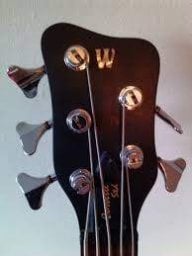
Makes me very happy. I do what I do to bring happiness to others. I put more than just technique into the objects, I honestly try to make them each with emotional investment.
Thanks Don!
Thanks Don!

TalkBass has been independent since 1998. Add your voice.
Create a free account to reply to discussions, view embedded media, and browse with fewer display ads.
Join free Log in
Want zero display ads or expanded classifieds tools? Compare plans.
Did I miss some final pics?This bass has officially became my number 1.
There isn’t anything that I don’t like about it.
Thanks @/\/\3phist0 !


I still need to do a NBD thread....dragging my feet...Did I miss some final pics?
It worked well, but I used a Fender combo amp that was there…not an ideal amp for bass…IMO. It was at an apartment building.I’m talking it to a audition/rehearsal. The first real workout. It still plays like a dream an sounds fantastic.
I’ve been using just the neck PU for learning songs. It sounds great even alone without the treble PU.
Many thanks to @/\/\3phist0 , it really is what I wanted for a long time.
It worked well, but I used a Fender combo amp that was there…not an ideal amp for bass…IMO. It was at an apartment building.
 I mean… no offense or anything, but I feel your pain

Those Brantley's seem quite special.I played all my basses yesterday. This Tasty bass is by far my favorite. I also played it for a long time guitarist friend…ya…he’s not a fan of the switches. But he confessed he plays his guitars with the knobs turned all the way up…
He did say it sounded the best of my 4 basses.
Well stated!Those Brantley's seem quite special.
And I'm quite certain that the pickups respond sonically very differently than they would if they had all those nasty resistors loading up the signal, and the caps shunting all of that lovely treble to ground!
The wood species used here ( sorry wood doesn't matter folks) must ring with harmonic complexity with each pluck. I'm certain that the Bubinga neck the string contact back to the body with a fair amount of energy.
I know that body came from a board that rang like the bar of a Xylophone when rapped by my knuckles.
And Bubinga is loosely grouped as a rosewood type, which is what is used to make the bars on Xylophones and Marimbas.
I wish we weren't so geographicly distant I'd love to experience the whole effect (and meet you IRL of course)
Well thought out , and executed plan.
The whole is certainly greater than the parts.


I totally believe this bass rings like a bell. It was made from hard stuff and built well. Wood definitely matters. I doubt a pine bass would sound like that. If you told me that you swapped the fingerboard to rosewood and it changed how it sounded (all else the same), ....that.....I don't think I would believe.sorry wood doesn't matter folk
Finally done with the re-wired switch. Jeesh…eyes, shaky hands, mind isn’t as sharp…I still need to do a sound clip…
I’m redoing the stereo/mono switch. I made an error in the wiring of it.
Still loving the bass!
 Haven't seen @/\/\3phist0 in nearly as long, hope he's alright.
All went….ok…Finally done with the re-wired switch. Jeesh…eyes, shaky hands, mind isn’t as sharp…
Still POed at myself. I repaired the top of my bass the only way I could think of. I was making room for a different stereo/mono switch and the top of the bass cracked…All went….ok…
The top got damaged while making more room for the mini switch…dang it…
I’m in the(not in a hurry) process of fixing it…
Not really happy with myself.
Still POed at myself. I repaired the top of my bass the only way I could think of. I was making room for a different stereo/mono switch and the top of the bass cracked…
I’m still not very happy…but as they say. It is