• TalkBass has been independent since 1998. Add your voice.
    Create a free account to reply to discussions, view embedded media, and browse with fewer display ads.
    Join freeLog in
    Want zero display ads or expanded classifieds tools? Compare plans.

Tech 21 VT Bass 1969 head!

So, chiming in after some more VT fun...

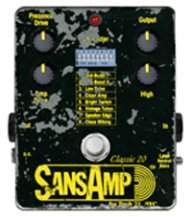
I really think that with precision tweaking of my VT Bass which would be so much cooler in a rack mounted preamp format!!!! (are you listening Tech 21?) I can say that I will be perfectly okay letting go of my SVT-II. I get a lot more useful tones out of this pedal than the actual amp produces without an isolation room and a lot of patience. Yes, it will never sound exactly like an SVT, but man, I'm with the rest of you when I say it sounds goood. It does a very convincing phat t00b reactor on the verge of meltdown through an 810 made of chainsaws tone. Okay, I'm exaggerating a little. However, I really like how it sounds through my 1001RB.
 
I think the issue is that were this amp released 5 years ago, it would have been a big deal. Now in the age of the microsaurus, it seems dodo-esque. Both GB and Aggie have buzz with their new amps (and they have been forthcoming with price and shipping dates). By comparison this seems somewhat lacking unless you are a diehard VT fanatic. And even then, where's the value-add if you already have a VT?
 
I think the issue is that were this amp released 5 years ago, it would have been a big deal. Now in the age of the microsaurus, it seems dodo-esque. Both GB and Aggie have buzz with their new amps (and they have been forthcoming with price and shipping dates). By comparison this seems somewhat lacking unless you are a diehard VT fanatic. And even then, where's the value-add if you already have a VT?

Exactly.
 
Anyone know the back story on why Tech 21 discontinued the Landmark 600? I'd heard it had to do with a reliability issue with the power section, but I've not read much about Landmark600 owner's amps breaking down so I don't know if that's true.

The power section from the 600 would definitely make more people interested in the 1969.

I'm pretty sure it was just the price. I can't remember the exact price the 600 was new, but it was in the $1200-1500 range. I always planned to get one, but they got discontinued before GAS got the best of me. I was lucky enough to eventually pick up a couple of them used in the 500-600 range. Well worth it. No problems with reliability (with mine anyway), and they are built very, very well. They are heavy (40+lbs), require an 18" deep rack, and are three spaces high. But I don't care, I love em!

Tech 21 seems very honest with their power ratings, and do indeed know how to build a good power section - the LM600 can really pump the volume, right up there with the M6 and the 2001RB I had, as well as the DB728, CA9, etc. I have found that the LM600 is one of the few amps you can pretty much crank all the way up on the master and still have plenty of reserve power for the transients, and no nasty clipping. Their 600 watt power section, I am certain, would cover everyone's volume needs - this is coming from a guy that clips his CA9 into a pair of Berg NV's just jammin at home :) I would expect the 300 watt version to be on par with something like an GK 800 or 400RB. While I love my 800, and it would probably suffice for most things, I do want more juice, especially when driving the big cabs. Maybe I don't need it, but I want it. I would expect the 1969 head to outperform the 500 watt offerings from Markbass that I briefly owned. I had no problem bouncing off of their limiters all day long, and found the 800RB to be more useable. Where am I going with all this.. not sure... do you guys hear that ringing? :D
 
Y'know, I really want to like this head. It would be great sometimes (road dates, load-ins down 2 flights of stairs) to not have to lug the SVT around, but still get the sound I love.

Problem is, I know what 300 Ampeg tube watts sound like through a big cab, and every solid state head of similar wattage I've played through the same cab has been completely underwhelming in comparison.

Unless I hear a lot of experience otherwise, I'm thinking a Hartke LH1000 with a VT Pedal would be a better deal.
 
It is possible to try them together but no one who's posted here has tried to line in a VT bass pedal to the Landmark 300's power section that I know of.
I don't know what point you're trying to make asking this question. Let me know.

I ran the VT Deluxe to the LM300 return out to a Tech 21 B410 cab at practice when I first got the VT back in October. Sounded great only pushing the rated 200 Watts at 8 ohms. Can't mix channels together, and didn't use a second 8 ohm cab though so not a fair comparison to the 1969 and full stack scenario. With the gain switch engaged it pushes nice and hard. My band mates liked it and so did I. My live go to rig is my LM300 with the VT in front. I use it as an OD pedal.
 
I ran the VT Deluxe to the LM300 return out to a Tech 21 B410 cab at practice when I first got the VT back in October. Sounded great only pushing the rated 200 Watts at 8 ohms. Can't mix channels together, and didn't use a second 8 ohm cab though so not a fair comparison to the 1969 and full stack scenario. With the gain switch engaged it pushes nice and hard. My band mates liked it and so did I. My live go to rig is my LM300 with the VT in front. I use it as an OD pedal.

Did you find the VT any louder through the Landmark 300's power section than the preamps in the amp?
 
... In addition, you'd think Tech21 would like to hear feedback on their product. I like the idea of the amp, but I think it needs a lot more work if it's going to be successful, and I think a lot of people would agree.

We love to hear feedback about our products.While it's nice to see so many take an interest in our new bass head, I'm a little perplexed by all the emotion over it. Come on guys (and gals) it's a bass amp.

Most companies, including ours, offer a range of different products to meet the different needs of their customers. We make some very versatile gear but nothing will ever be all things to all people. The player that plays in a wedding band, the weekend warrior that plays in local bars, the metal guy, the acoustic/eclectic player and the concert touring pro all have a different set of requirements for their given gigs and choose their gear accordingly. I have no desire to engage in any type of argument with anyone here. My job is to try to educate people about our products as well as to correct the various misinformation that seems to be part of the internet community. Some people like active basses and some like passive, some prefer tube amps some prefer solid state.

There is really no right or wrong, just different tastes and opinions and that's fine. When we start trying to compare technical data between manufacturers, there comes a point where you need to either possess the information or at least have a basic understanding of electronics and sometimes physics.

As some have said, watts are all well and good but the bottom line is really how much volume you actually get. That's the SPL that your speaker produces. It's moving air molecules. Normally I don't like to mention other manufacturers' products but I will comment as I own and have used some of these products. For the last couple of years I have used the QSC K Series speakers for my small PA system. They sound wonderful and QSC as many know has been around for years and make great products. Before I bought my K Series I was also using the slightly older HPR Series and recently they came out with the KW Series which is based on the K Series but utilizes light weight birch enclosures instead of the composite material that the K Series uses. Let me compare the 12" models as they exist in each product line.

The HPR 12 has a 400 watt class H amp for the low end driver and a 100 watt class AB+B for the HF driver. 500 watts

The K and KW Series share the same power amplifiers. Two Class D power amps running 500 watts each for 1000 watts continuous power and 2000 watts peak.

Why do I mention all of this? They all produce the same maximum SPL. 131 dB.

This is not to imply in any way that QSC is misrepresenting their products. The speakers sound great and they are very loud but according to the specifications they give, it "seems" that the newer speakers that utilize the more powerful Class D amplifiers should be louder. Hmm... Maybe I'll pay a visit to their forum.
 
Did you find the VT any louder through the Landmark 300's power section than the preamps in the amp?

Actually yes. The VT seemed to be hotter and more finicky in level placement than the pre's in the LM300. I just turned the knobs to the tone I wanted, pushed the 1/4" boost and set the level. I don't remember how much headroom I had but I know the level was turned up to at least 50% to 75% volume.

I usually run my LM300 at the SVT settings on both channels, mixed, and tweaked a little bit. The VT Deluxe has so many tones in there I just went for a cutting through the mix tone and got it.
 
We love to hear feedback about our products.While it's nice to see so many take an interest in our new bass head, I'm a little perplexed by all the emotion over it. Come on guys (and gals) it's a bass amp.

Most companies, including ours, offer a range of different products to meet the different needs of their customers. We make some very versatile gear but nothing will ever be all things to all people. The player that plays in a wedding band, the weekend warrior that plays in local bars, the metal guy, the acoustic/eclectic player and the concert touring pro all have a different set of requirements for their given gigs and choose their gear accordingly. I have no desire to engage in any type of argument with anyone here. My job is to try to educate people about our products as well as to correct the various misinformation that seems to be part of the internet community. Some people like active basses and some like passive, some prefer tube amps some prefer solid state.

There is really no right or wrong, just different tastes and opinions and that's fine. When we start trying to compare technical data between manufacturers, there comes a point where you need to either possess the information or at least have a basic understanding of electronics and sometimes physics.

As some have said, watts are all well and good but the bottom line is really how much volume you actually get. That's the SPL that your speaker produces. It's moving air molecules. Normally I don't like to mention other manufacturers' products but I will comment as I own and have used some of these products. For the last couple of years I have used the QSC K Series speakers for my small PA system. They sound wonderful and QSC as many know has been around for years and make great products. Before I bought my K Series I was also using the slightly older HPR Series and recently they came out with the KW Series which is based on the K Series but utilizes light weight birch enclosures instead of the composite material that the K Series uses. Let me compare the 12" models as they exist in each product line.

The HPR 12 has a 400 watt class H amp for the low end driver and a 100 watt class AB+B for the HF driver. 500 watts

The K and KW Series share the same power amplifiers. Two Class D power amps running 500 watts each for 1000 watts continuous power and 2000 watts peak.

Why do I mention all of this? They all produce the same maximum SPL. 131 dB.

This is not to imply in any way that QSC is misrepresenting their products. The speakers sound great and they are very loud but according to the specifications they give, it "seems" that the newer speakers that utilize the more powerful Class D amplifiers should be louder. Hmm... Maybe I'll pay a visit to their forum.


A few people have mentioned the emotion getting expressed over this amp. I see a couple posts by people who were bothered by the press on the amp, but I'm not seeing the emotion over the amp itself. This seems to mostly be a discussion between people saying the amp is not good for their needs and they wish it was different or it does meet their needs.
The "watts from different sources" debate always flares things up a bit, but that's a general phenomenon of this board, not specific to the 1969 amp head.

While the SVT and the Ampeg amplifier line have proven useful in a variety of music, they clearly are favored by the rock/heavy metal crowd. With the 1969's aim to provide Ampeg like tones, it's obvious where the chief market for this amp will be.

Are the HRP and K and KW speakers from QSC all the same size and weight? If you're using this example to say your 300 watt amp is as loud as higher rated class D amps it seems to work against your point, because you're now saying your 18lb. amp is as loud as another company's 5 lb. amp.

Personally I don't care about an amp's weight if it delivers the volume I want. If the 1969 was twice the weight but had a 700-1000 watt power amp in it I'd be pretty happy with it. Of course I'm in the minority on that here. :)
 
I'm a little perplexed by all the emotion over it. Come on guys (and gals) it's a bass amp.
OK, if you are cool with the prior market success of the Landmark heads, then keep thinking that way. We're actually trying to help you here.
My job is to try to educate people about our products as well as to correct the various misinformation that seems to be part of the internet community.
Then please explain what you meant by saying that "analog" amps sound great with their power section driven into heavy clipping, because they don't have limiters. Because that's just false.

Oh, you didn't mean all analog amps, or even most of them? You only meant the few solid-state amps that sound good when their power section is driven into clipping, and that happen to not have limiters? Or did you just mean tube amps...
When we start trying to compare technical data between manufacturers, there comes a point where you need to either possess the information or at least have a basic understanding of electronics and sometimes physics.
Some of us here do.
The HPR 12 has a 400 watt class H amp for the low end driver and a 100 watt class AB+B for the HF driver. 500 watts.
The K and KW Series share the same power amplifiers. Two Class D power amps running 500 watts each for 1000 watts continuous power and 2000 watts peak.
Why do I mention all of this? They all produce the same maximum SPL. 131 dB.
You are trying to compare the dB output of two totally different speaker cabinets as a way of showing how wattage is not relevant? Seriously now. The speaker cabinets themselves have a massive role in how much of the wattage gets turned into SPL, and even within one cab that varies from one frequency to the next. Different brands use different methods of measuring and reporting SPL. So what we have here is one manufacturer, with their test and measure methods, reporting on their speaker cab design, given a certain amount of wattage, before the speaker starts clipping; and another manufacturer reporting on their own totally different variables on all those points.

This says nothing about wattage qua wattage. If you want to make a reasonable point, use one SPL test and one speaker cab, where the speakers are rated to tolerate the maximum amount of wattage from the higher-powered amp, and then test the two different amps into that one speaker cab. I'd be very curious to see if the maximum SPL in that case would be the same. What do you think?
 
We love to hear feedback about our products.While it's nice to see so many take an interest in our new bass head, I'm a little perplexed by all the emotion over it. Come on guys (and gals) it's a bass amp.

Most companies, including ours, offer a range of different products to meet the different needs of their customers. We make some very versatile gear but nothing will ever be all things to all people. The player that plays in a wedding band, the weekend warrior that plays in local bars, the metal guy, the acoustic/eclectic player and the concert touring pro all have a different set of requirements for their given gigs and choose their gear accordingly. I have no desire to engage in any type of argument with anyone here. My job is to try to educate people about our products as well as to correct the various misinformation that seems to be part of the internet community. Some people like active basses and some like passive, some prefer tube amps some prefer solid state.

There is really no right or wrong, just different tastes and opinions and that's fine. When we start trying to compare technical data between manufacturers, there comes a point where you need to either possess the information or at least have a basic understanding of electronics and sometimes physics.

As some have said, watts are all well and good but the bottom line is really how much volume you actually get. That's the SPL that your speaker produces. It's moving air molecules. Normally I don't like to mention other manufacturers' products but I will comment as I own and have used some of these products. For the last couple of years I have used the QSC K Series speakers for my small PA system. They sound wonderful and QSC as many know has been around for years and make great products. Before I bought my K Series I was also using the slightly older HPR Series and recently they came out with the KW Series which is based on the K Series but utilizes light weight birch enclosures instead of the composite material that the K Series uses. Let me compare the 12" models as they exist in each product line.

The HPR 12 has a 400 watt class H amp for the low end driver and a 100 watt class AB+B for the HF driver. 500 watts

The K and KW Series share the same power amplifiers. Two Class D power amps running 500 watts each for 1000 watts continuous power and 2000 watts peak.

Why do I mention all of this? They all produce the same maximum SPL. 131 dB.

This is not to imply in any way that QSC is misrepresenting their products. The speakers sound great and they are very loud but according to the specifications they give, it "seems" that the newer speakers that utilize the more powerful Class D amplifiers should be louder. Hmm... Maybe I'll pay a visit to their forum.

Bad example. In this case the speakers are the volume limiting factor, not the amp.
 
OK, if you are cool with the prior market success of the Landmark heads, then keep thinking that way. We're actually trying to help you here.

Then please explain what you meant by saying that "analog" amps sound great with their power section driven into heavy clipping, because they don't have limiters. Because that's just false.

Oh, you didn't mean all analog amps, or even most of them? You only meant the few solid-state amps that sound good when their power section is driven into clipping, and that happen to not have limiters? Or did you just mean tube amps...

Some of us here do.

You are trying to compare the dB output of two totally different speaker cabinets as a way of showing how wattage is not relevant? Seriously now. The speaker cabinets themselves have a massive role in how much of the wattage gets turned into SPL, and even within one cab that varies from one frequency to the next. Different brands use different methods of measuring and reporting SPL. So what we have here is one manufacturer, with their test and measure methods, reporting on their speaker cab design, given a certain amount of wattage, before the speaker starts clipping; and another manufacturer reporting on their own totally different variables on all those points.

This says nothing about wattage qua wattage. If you want to make a reasonable point, use one SPL test and one speaker cab, where the speakers are rated to tolerate the maximum amount of wattage from the higher-powered amp, and then test the two different amps into that one speaker cab. I'd be very curious to see if the maximum SPL in that case would be the same. What do you think?

Arent' you sales rep for a competitor of Tech21?