• TalkBass has been independent since 1998. Add your voice.
    Create a free account to reply to discussions, view embedded media, and browse with fewer display ads.
    Join freeLog in
    Want zero display ads or expanded classifieds tools? Compare plans.

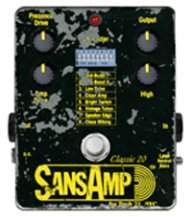
Tech 21 VT Bass DI

Some of you may remember my epic search for a dirt/DI pedal last year. The result of which was that I found the MXR M80 to be the best balance of features, price, sound and build quality. Of the VT Bass pedal at the time, I said that it sounded great--maybe even the best--but that it was expensive and did not have a DI.

Well, now that it has one I think I may flip my M80 and pick one of these up. If I can get at least a bill for the MXR that'll soften the blow of the VT Bass DI price tag.

Thoughts?

it's easy: pick both of them.

 
Noobish question but here it goes. Why would I want to place my vt bass at the end of the signal besides being able to send all my effects through the DI? Wouldn't I want to start off with the SVT sound and then add delay, chorus and overdrive etc instead of adding the SVT sound on top of overdrive, delay etc.? I've experimented with my VT at the beginning of my signal and it just sounds better but then if I use the DI on my VT has no effects on the signal...can anyone enlighten me? I'm kinda just confused.

This is what I'm working with. The B3 will be replaced soon.
 

Attachments

  • pedals.jpg
    pedals.jpg
    79.5 KB · Views: 176
If you're using the VTDI's DI, why wouldn't you want your effects to go into the PA? Anyway, when I use a VT, I treat it sort of like an amp, where the last thing in the chain is the amp. Plus I've tried in front of other distortion pedals, and it sounds better after all my distortion pedals than before.
 
So with the Blend "off", the signal is "clean" to the DI? It (the Blend) does not affect the tone to my cab? Sorry for what is probably a dopey question.

The blend allows you to add the SansAmp portion of the circuit to your dry sound. When the blend is turned off you are no longer using the SansAmp and it will function as a regular DI box though the tone controls are still active. You can also just put the unit in bypass as well.

Whether or not the "blend" changes the tone of you amp will depend upon how you have it configured. If you are using the pedal in-line to the front end of your bass amp via the 1/4" output the sounds going to your amp and PA will be the same. If you are using the SansAmp's parallel output to your amp and just sending the effected signal to the board (which was the original design intent of the unit) then obviously your amp's sound won't change.
 
Noobish question but here it goes. Why would I want to place my vt bass at the end of the signal besides being able to send all my effects through the DI? Wouldn't I want to start off with the SVT sound and then add delay, chorus and overdrive etc instead of adding the SVT sound on top of overdrive, delay etc.? I've experimented with my VT at the beginning of my signal and it just sounds better but then if I use the DI on my VT has no effects on the signal...can anyone enlighten me? I'm kinda just confused.

This is what I'm working with. The B3 will be replaced soon.

Anyway that "you" want to use the pedal that works is fine. I think the term DI gets a little confusing for some. DI's have several purposes. To convert a high impedance signal to low impedance to interface with a mixing console, to match an unbalanced line with a balanced one, to isolate a signal to reduce noise and interference etc. Our DI's will interface fine with any mixer via the XLR or 1/4" output. If you go 1/4" you will no longer be able to use phantom power or lift the ground though.

You didn't mention how you are using the VT. To a mixer, with an amp or both?

In general we recommend time domain effects like reverb and delay to be used "after" the SansAmp but that is coming more from the "lead guitar" paradigm. Usually with bass, most guys aren't using delays and reverbs except for the occasional special effects. If you think of the SansAmp as an amp you probably wouldn't run an amp into a distortion pedal. We recommend using OD's distortion, fuzz and compressors before the SansAmp.

As far as the way you have it hooked up, it's fine as long as the last device in your signal chain can properly interface with whatever device you are sending it to.
 
The blend allows you to add the SansAmp portion of the circuit to your dry sound. When the blend is turned off you are no longer using the SansAmp and it will function as a regular DI box though the tone controls are still active. You can also just put the unit in bypass as well.

Whether or not the "blend" changes the tone of you amp will depend upon how you have it configured. If you are using the pedal in-line to the front end of your bass amp via the 1/4" output the sounds going to your amp and PA will be the same. If you are using the SansAmp's parallel output to your amp and just sending the effected signal to the board (which was the original design intent of the unit) then obviously your amp's sound won't change.

Thanks!
 
Just to clarify ... What are the basic settings (speaker sim / dB pad) when using the VT DI as both DI & preamp driving a power amp ?

Speaker sim on for DI but disengaged for preamp ?

So how do you do both at the same time to get a good stage sound from your (power) amp / cab but avoiding the harsh PA distorted sound esp if you want to run other OD/dist pedals into the VT DI as well ?
 
There aren't any basic settings. You need to consider each device the VT Bass DI is interfacing with. The original "concept" of our DI's would be to plug into the VT Bass, Bass Driver etc. and send the parallel out to your bass rig and use it normally and send the SansAmp output to the board for a more robust DI bass tone vs the sound of just your bass guitar's pickups.

In the case of the VT Bass DI it does not have separate volume controls for the XLR and 1/4" outs so you need to set the switches accordingly for each device. Usually when using the pedal to drive a dedicated power amp and speaker you should set the 1/4" out to +10dB. For the XLR output you need to know if the person running sound wants a line level or mic level signal and set accordingly. Some mixers have pads at the input and usually you will get the least amount of noise by using less input trim at the mixer and sending a hotter signal from the pedal. This is not a hard and fast rule and will depend upon the actual mixer and the sound engineers skills or lack thereof.

As far as the speaker sim is concerned I would leave it engaged as this will be a big benefit if you want to use any overdrive tones and still work well with your bass cab. There is still a certain amount of compromise as it's unlikely that your bass cab will sound identical to the PA.
 
I have to say, that after several months use, that the VT Bass DI is one of the better bass preamp DI units on the market.

I was initially put off by the 1K mid, thinking I would not be able to get a good control over fundamental tones throughout the range of my 5 string basses. Actually using and owning one changed my mind on that.

I am not a fan of massive dirt, but the VT Bass DI has one of the best "warm and still clear" tube emulations on the market. Virtually everything I do is direct to the house or board.

My hat is off to Tech 21.

Buy American, my friends.
 
I've been following this thread for awhile now with great interest. I play in 2 praise bands and exclusively have to go direct except on the occasional opportunity to play outside for festivals, etc. For the past 8 years I have been using the BDDI with great success with a Sadowsky P/J as well as Fender J's. My tone varies from SVT to Fliptop. Based on what I've read here I bought the VTDI and absolutely love it. With the BDDI I could get close, but with the VTDI I can nail my SVT as well as Heritage B-15 tones. I have a V4B on order and I'm sure I'll be able to get those tones also. With the VTDI I can dial out the clanky tones as well as really control the tightness. After some rehearsals and fooling around with it I have the bite off, blend at 75%, gain at 10:30-12:00, Speaker em on, and mids pushed slightly past noon.
This is the best Ampegish Pre/DI I have ever run across. Thanks for all the info provided in this thread.
Well done Tech 21, definitely a keeper. I'll keep my BDDI as a back up.
 
So, I'm contemplating a return to effects after several years with just my bass and a tuner. The VT Bass DI is looking like it'll be my first purchase, but I've seen a few reviews that suggest it doesn't play as nicely with an active bass. I have a passive G&L that it would be great for, but my primary bass is an active Lakland with an Aguilar OBP-3 preamp.

For those of you using the VTDI with an active bass, have you noticed any limitations?

Thanks!!
 
I have only used active basses with my unit. Both are single coil pickups like a Jazz Bass. I do tend to run the active controls on the basses flat, and do the tone settings at the unit.

Just adjust the output for what you are playing, and what you are running through, be it an amp, a power amp, or the House PA.

No worries here. It's a very very versatile unit, and took me a bit to get used to.

Try it. You'll like it.
 
So, I'm contemplating a return to effects after several years with just my bass and a tuner. The VT Bass DI is looking like it'll be my first purchase, but I've seen a few reviews that suggest it doesn't play as nicely with an active bass. I have a passive G&L that it would be great for, but my primary bass is an active Lakland with an Aguilar OBP-3 preamp.

For those of you using the VTDI with an active bass, have you noticed any limitations?

Thanks!!
I run my 'ray through the VT Bass. No limitations I noticed, just turn down the gain some if the bass has a high output.