
Enjoy the benefits of a premium membership!
Upgrade Account
-
TalkBass has been independent since 1998. Add your voice.
Create a free account to reply to discussions, view embedded media, and browse with fewer display ads.
Join free Log in
Want zero display ads or expanded classifieds tools? Compare plans.
You are using an out of date browser. It may not display this or other websites correctly.
You should upgrade or use an alternative browser.
You should upgrade or use an alternative browser.
The bass solo "drop out"
- Thread starter tofumanchu
- Start date
More options
Who Replied?

Yes this is a common problem. When I play regularly with people I tell them what I want them to do when I solo. Harmonically I do think it needs to thin out a bit, but this is done by using open voicings and playing a bit more sparsely rather than totally laying out.
Also I encourage people to interact with my solo a bit. This trick is they need to interact in a way that supports to solo, rather than taking it over. Doing this successfully takes experience, skill, and a bit of discretion.
Also I encourage people to interact with my solo a bit. This trick is they need to interact in a way that supports to solo, rather than taking it over. Doing this successfully takes experience, skill, and a bit of discretion.

Once during a show with the duo the guitarist thought it would be a good idea for me to take a solo so he stopped playing. Unfortunately the neglected to tell me he was going to do that so I quickly played a cheesy ending thinking the song was over and I had missed the cue. Oops. He hasn't done that again.
In professional ensemble settings, solos are almost always played with accompaniment.
You may be thinking of a cadenza, which is a solo that is often played without accompaniment towards the end of a piece. Some pieces have multiple candenzas. If the composition is a solo, most of it will be played with accompaniment.
Definition 1b is germane.
A couple others here have pointed out that many players don’t know how to comp. That’s amazing and disappointing, given that lead guitar players spend more than 90% of their playing time playing rhythm behind vocals. I’d much rather share a gig with somebody who’ll never solo than with somebody who can’t/won’t comp.

Ric5
Inactive
- Jan 29, 2008
- 29,772
- 30,452
- Disclosures
- I like 5, 8, 10, and 12 string basses

Here's an extreme example - JP gets to his solo and other than VERY scant chord coverage by Adam Rogers, everyone else drops out completely!
JP, of course, is the greatest soloist of any bass player living or dead, so he pulls it off fine and even keeps our ears tuned in to the changes with the notes he chooses. This is rarefied air right here.
JP, of course, is the greatest soloist of any bass player living or dead, so he pulls it off fine and even keeps our ears tuned in to the changes with the notes he chooses. This is rarefied air right here.

Well, if you apply extreme literalism to every single sentence you utter.A True Solo is just one instrument playing
On the other hand, in the real world where people actually speak languages, there are these things called "idiomatic expressions" which do not have the same meaning as the literal words, yet are understood by all fluent speakers of the language. If I say in Spanish, "Todo el mundo entiende ese" it doesn't LITERALLY mean that every single one of the current 7+ billion inhabitants understands what I'm saying; what it means is that a huge majority of people conversant with the subject at hand understand it. If I say in English, "The fifth time he asked me that, I hit the ceiling" it doesn't mean I climbed up on a chair and pounded the ceiling with my fist.
In the context of popular music and jazz, the word "solo", especially in the context here where a group is playing and we're talking about "what happens during the bass solo?" the IDIOMATIC EXPRESSION "bass solo" does NOT mean everyone else must stop playing and the bass plays completely alone. In this context, which everyone else participating in this conversation has understood perfectly, the word "solo" means that the instrument in question is featured, in what's usually an improvisation, while the rest of the band provides some kind of background accompaniment. Granted, sometimes the whole rest of the band drops out: that's called in jazz parlance (which is NOTHING BUT idiomatic expressions) "strolling" or "laying out".
I assure you that if Charles Mingus had said during rehearsal "You know, Dannie, during my solo I'd like you to keep straight time the first couple choruses and then go into that triplet thing", Dannie Richmond would not have responded with "Well, you know, Charles, actually the word "solo" means "unaccompanied" so I'm not going to play at all" - not unless he wanted a punch in the mouth.
Last edited:

Here's an extreme example - JP gets to his solo and other than VERY scant chord coverage by Adam Rogers, everyone else drops out completely!
JP, of course, is the greatest soloist of any bass player living or dead, so he pulls it off fine and even keeps our ears tuned in to the changes with the notes he chooses. This is rarefied air right here.
Well, he does get a little bit of comping guitar. And swings like hell throughout. Help me, what's the name of the tune?
I’m my last two bands I’ve had a lot of opportunity to solo, really for the first time in my career. I’ve had to have the same conversation with both bands. I spend 95% of a gig supporting the singers and the soloists. I try to make things interesting. I try to make sure the harmony is spelled out. I try to give the soloists something interesting to work with. Then when my turn to solo comes, everyone lays back and gets a drink. That doesn’t fly. Support the bass solo like you want your solo supported.
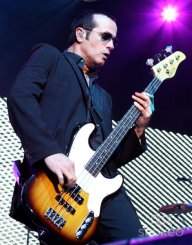
Here's an extreme example - JP gets to his solo and other than VERY scant chord coverage by Adam Rogers, everyone else drops out completely!
JP, of course, is the greatest soloist of any bass player living or dead, so he pulls it off fine and even keeps our ears tuned in to the changes with the notes he chooses. This is rarefied air right here.
Geddamn, JP and Nate Smith on drums, that's delicious.
JP, of course, is the greatest soloist of any bass player living or dead...
Really?
and not
Jimmie Blanton
Walter Page
Charles Mingus
Scott La Faro
Oscar Pettiford
Ray Brown
Ron Carter
Jimmy Garrison
Art Davis
Ahmed Abdul-Malik
Buster Williams
Jaco Pastorius
Steve Swallow
John Entwistle
Geddy Lee
Slam Stewart
Joel Quarrington
Paul Chambers
or a few others???
I mean, Pattitucci can flat-out PLAY, but I suspect he wouldn't be so arrogant as to claim he could outplay all the above.

Yeah it drives me nuts too. No idea how to fix it. I don't really gig anymore either so frankly not a big concern, hehe.

drumvsbass
Commercial User
- Aug 20, 2011
- 1,985
- 4,324
- Disclosures
- I work for Long and McQuade Musical Instruments Canada in Sales.

- Dec 21, 2007
- 15,233
- 45,114
- Disclosures
- Lark in the Morning Instructional Videos; Audix Microphones
If you gig - do you drop out when your guitar player solos? Or do you say "well, that's not a solo, 'cos the rest of us are playing"? And if so, do you keep your gig?A True Solo is just one instrument playing

To the OP... yeah, it bugs me too. A lot of the intensity drops out.

Any time someone calls a bass solo during a blues jam I'm on, it becomes a drum solo.
Ric5
Inactive
- Jan 29, 2008
- 29,772
- 30,452
- Disclosures
- I like 5, 8, 10, and 12 string basses
I like it when others drop out so I can show off ... although sometimes it is nice to have others carry the song so I can depart from traditional bass playing ...
Although Victor Wooten once said "Why would a bass player ever abandon the groove?
Although Victor Wooten once said "Why would a bass player ever abandon the groove?
Gain. You need gain so that they can keep comping and you can plane out over top.
The trick is to have them remain pretty quiet even if you get loud enough to hear clearly.
The trick is to have them remain pretty quiet even if you get loud enough to hear clearly.

Would that be musical instruments or are you including drums?A True Solo is just one instrument playing


