• TalkBass has been independent since 1998. Add your voice.
    Create a free account to reply to discussions, view embedded media, and browse with fewer display ads.
    Join freeLog in
    Want zero display ads or expanded classifieds tools? Compare plans.

The Hossenfeffer II Build

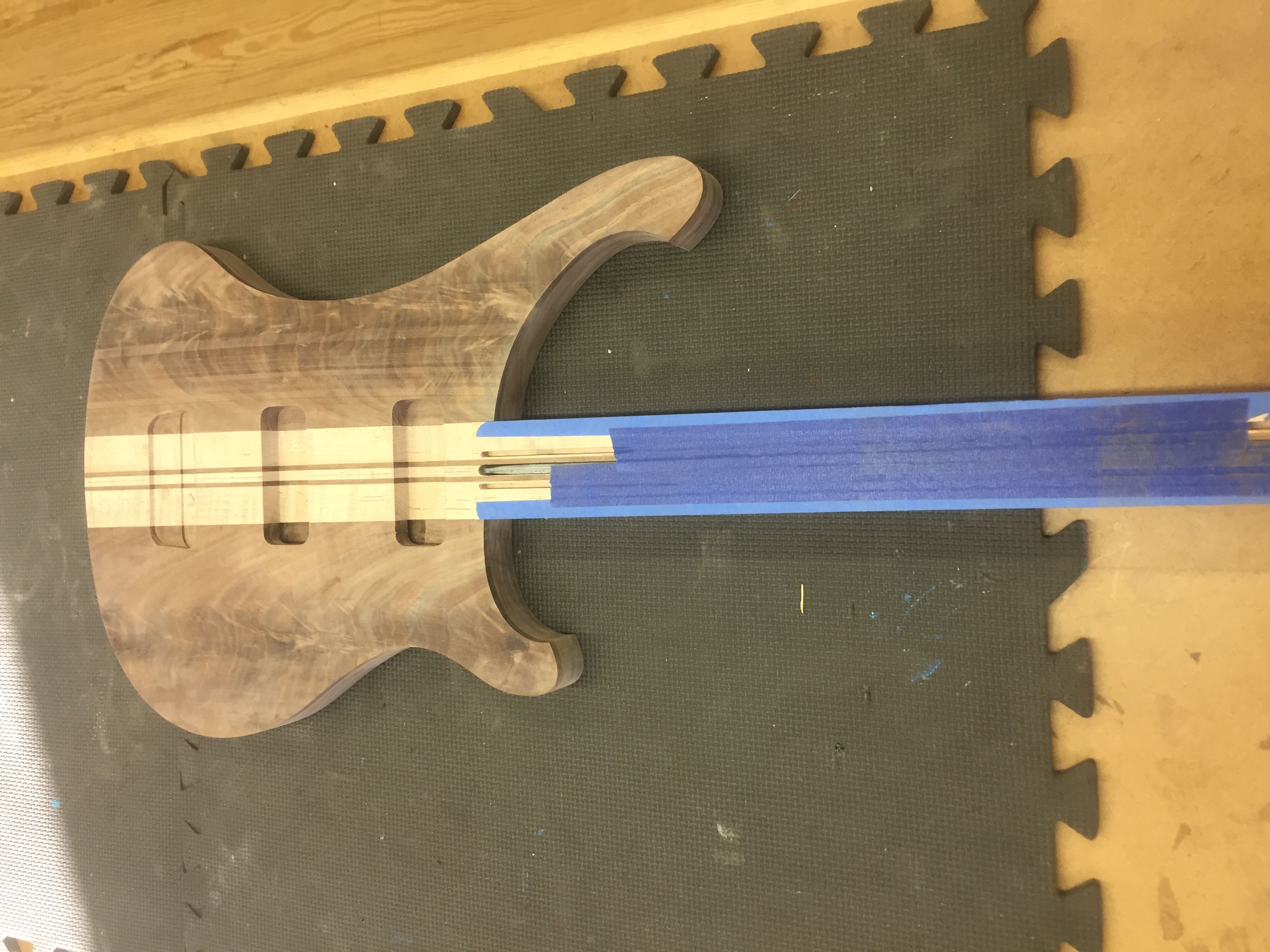
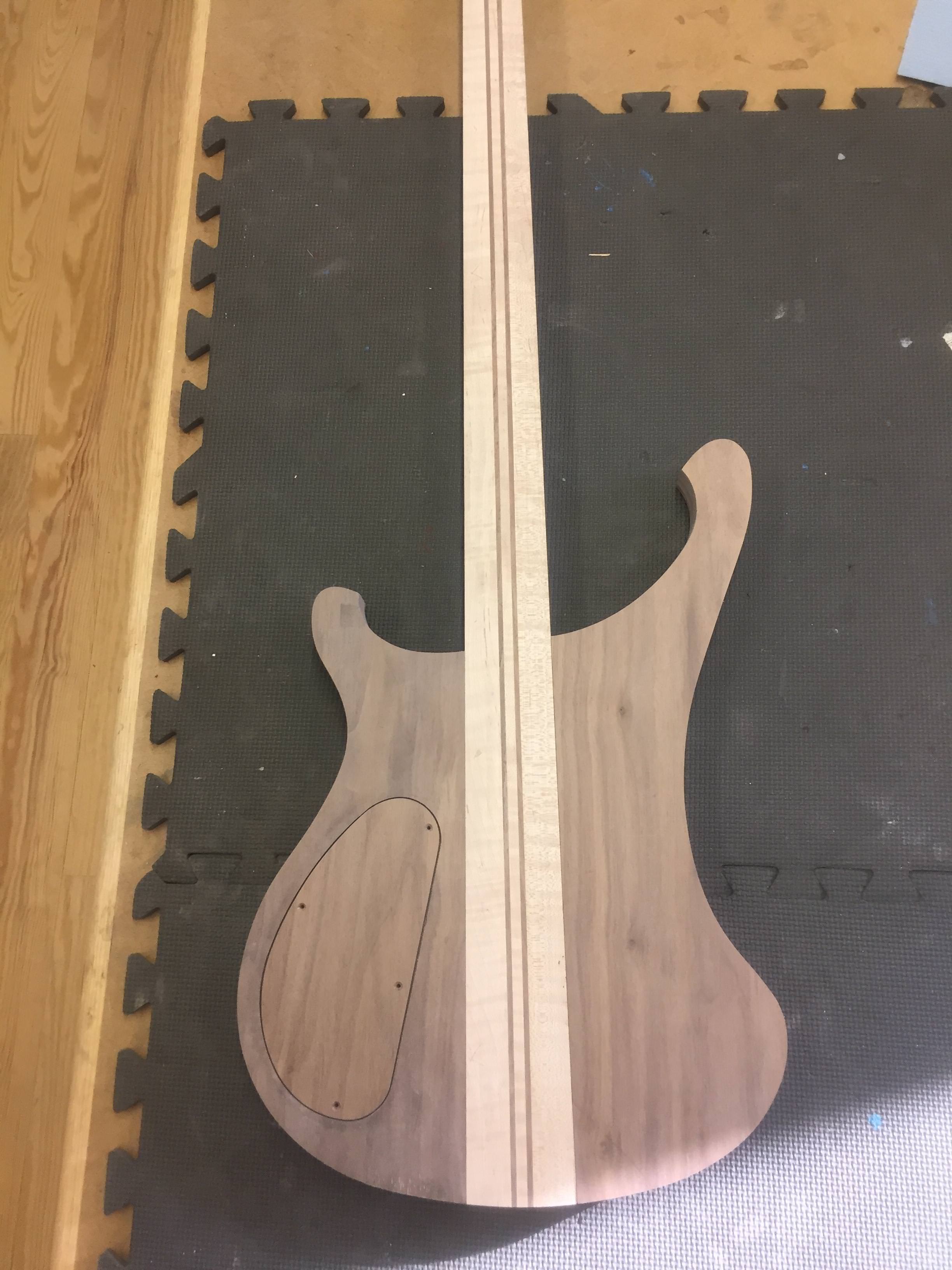
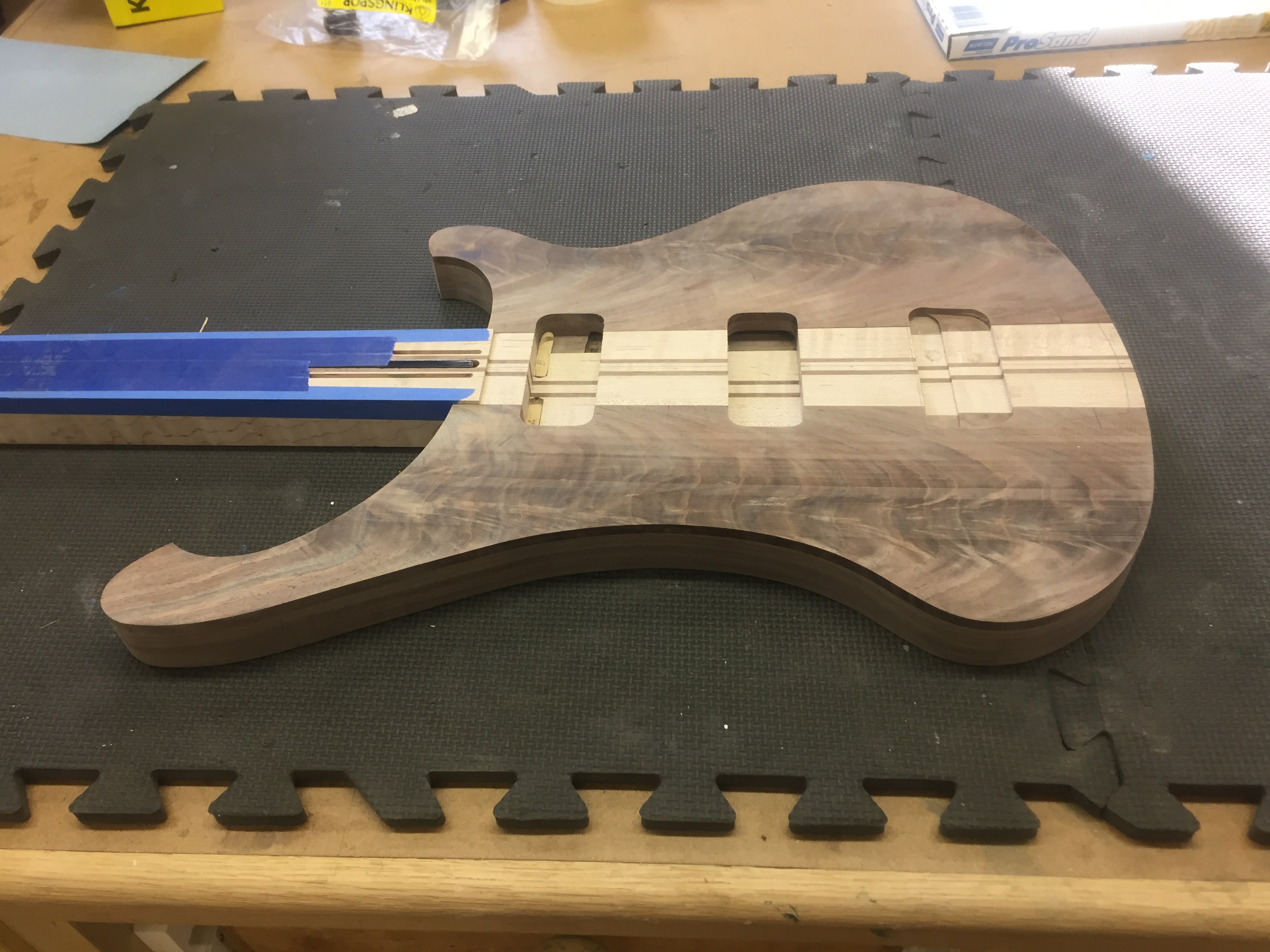
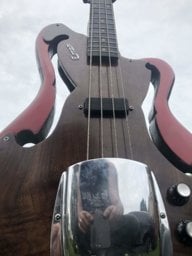
HOURS of grinding away with the Robosander later, body shape sanded to line, next up: ivory binding.
teD0WVm.jpg

8M1P4hM.jpg

mnXKfLb.jpg
 
That's gonna be really pretty when you get some finish on there... that batch of walnut had some groovy marble-cakey colors... if I remember correctly.
I gave a top to @michaelwayneharwood also from that batch...that came out nice too....
Yay walnuts ! :)

(Not to say it's not pretty already)... you're doing a fabulous job... but that's expected...
What's surprising is the relative speed of this build...
(Compared to.... well.... you know)
:D;):thumbsup::thumbsup:
 
Getting the headstock binding to miter cleanly into the neck binding will be... interesting.
It acually goes easier than you think it would. If you look at what I did, I routed the channels, installed the head stock binding, took off the excess at the fretboard end and brought that flat then installed the fretboard, binding, etc.
 
Last edited:
  • Like
Reactions: Gilmourisgod
I have the additional weirdness of the bubinga fingerboard under the fingerboard binding. I’m thinking the headstock binding will continue on its 5 degree slope until it miters into the underside of the bubinga strip left exposed, so the headstock binding will never touch the FB binding.
 
Last edited:
  • Like
Reactions: ICM
Rock, loving this walnut, like you said, cool figure and some funky colors mixed in, can’t wait to see it oiled.
Yeah, this one feels faster, I’m not agonizing over each step for weeks, screwing it up, and having to backtrack. Altogether a less stressful experience. Tru Oil will be easy compared to that paint job I did, brutal! I have no more free time than ever, but I use it more efficiently now. The HF 1 took so long I’m looking at old photos to remember how I did some steps.
 
Last edited:
I have the additional weirdness of the bubinga fingerboard under the fingerboard binding. I’m thinking the headstock binding will continue on its 5 degree slope until it miters into the underside of the bubinga strip left exposed, so the headstock binding will never touch the FB binding.

Just slightly alters the order of operation: rout HS binding channel; install HS binding; trim flat; install FB; rout FB binding channel, etc.

I still think it will be easier than you expect it to be. Result should be well worth it:thumbsup:
 
  • Like
Reactions: Gilmourisgod
After a good bit of waffling, decided on the electronics setup. I'm going with two neck style Hi-Gains for the pups. Simple setup:

Master Volume
Master Tone
Three-way Pickup Switch
Mono only Output Jack

Seems like this matches a Tele wiring diagram, but if anybody has a link to something optimized for this setup using Hi-gains, including the correct value and placement of cap, please post it!
 
Last edited:
Using a master volume will have both pickups at the same output at all times, therefore you'll always have that scooped midrange thing all the time. With a balance control, volume, tone, or pickup switch and two volumes, you'll be able to boost one pickups volume over the other, and get a noticeably fuller tone.
 
  • Like
Reactions: Gilmourisgod
My original thought in the early posts to this thread was Master volume, master tone, and blend. I’m committed to three controls, so it’s pup switch or blend. I never liked two volume controls, changing volumes changes tone, I did it on the HF I, and it was never my favorite feature. I don’t understand the electronics well enough to evaluate the trade offs, if the consensus is that it will sound better with a blend, maybe I’ll go that route. My control cavity is oversized for three controls, so room is no issue. Thanks for the advice, All.
 
  • Like
Reactions: mapleglo
My original thought in the early posts to this thread was Master volume, master tone, and blend. I’m committed to three controls, so it’s pup switch or blend. I never liked two volume controls, changing volumes changes tone, I did it on the HF I, and it was never my favorite feature. I don’t understand the electronics well enough to evaluate the trade offs, if the consensus is that it will sound better with a blend, maybe I’ll go that route. My control cavity is oversized for three controls, so room is no issue. Thanks for the advice, All.

Frankly, I don't evaluate trade-offs in knob configurations based on electronics, but rather based on function. Two volume controls do not make a "volume" control". Imagine, you're play a gig, and you're slightly too loud. You need to lower your volume. With two volume controls, you have to adjust two knobs, and you have to adjust them equally, while you're playing. The chances you'll get both knobs lowered equally, without changing your tone, which you've spent a few minutes earlier adjusting to perfection, are pretty low. So you need to move your hand from playing the strings , to moving two knobs at least three times to get it right. With one master volume and a blend, you move one knob, once.

I'm not a fan of the pickup selector switch either. It's redundant to the blend, in my opinion.

I've been playing my 5 string Ric almost exclusively lately, and I'm thinking of completely rewiring it. Switch becomes a stereo/mono switch, and the 4 knobs become volume and blend in mono mode for the upper two knobs, and volume/volume for the lower two knobs in stereo mode (which I'd use mostly for recording - I'm too old to bring two rigs with me for gigging).
 
That’s exactly my pet peeve with two volume controls, leaning heavily towards the blend knob. Another consideration is vertical depth in the cavity. The body is 1-1/4” thick, but the figured maple top is 1/4” thick, so I only have around 3/4” of free depth. Any recommendations on pot values and tone cap?
 
I get the volume of volume controls where I want them with respect to tone, then leave them alone. With two volume controls, one is usually up all the way, and the other cut just enough to remove the phase cancellation (mid scoop) from the tone. I use the volume control on my amp if I need to go up or down.
 
  • Like
Reactions: Mertle72
I think a switch, master volume, and master tone would be the ideal layout.
With a master volume, you will get a mid scoop and slight volume drop when both pickups are selected that you can not compensate for on the bass. This is why Jazz basses are wired Volume/Volume/Tone. Changing out the pickup switch for a balance control also fixes this. All you have to do is bias the knob to one pickup or the other slightly, and the mids and volume come back.