
I hardly use the 500 watts I have at my disposal, so I can't even begin to imagine how loud the 3600 watts is. Though companies have been known to exaggerate.

TalkBass has been independent since 1998. Add your voice.
Create a free account to reply to discussions, view embedded media, and browse with fewer display ads.
Join free Log in
Want zero display ads or expanded classifieds tools? Compare plans.
From the Bugera BTX36000 User Manual:
Output power
Peak power, both channels driven__2 x 1950 W / 2 Ω
Peak power, both channels driven__2 x 1380 W / 4 Ω
Peak power, both channels driven__2 x 800 W / 8 Ω
Peak power, bridged mono___________3800 W / 4 Ω
EDIT: RMS = Peak/2

I hardly use the 500 watts I have at my disposal, so I can't even begin to imagine how loud the 3600 watts is. Though companies have been known to exaggerate.
Or "My amp blew up long before it had a chance to blow up my..."I can see the thread title now:
HELLLP!!! My BAZILLION watt Behringer BLEW UP my...!


Or "My amp blew up long before it had a chance to blow up my..."
Don't know. I have had great success using Behringer recording gear. But.. I have heard enough horror stories to worry me. I am thinking maybe I just got lucky.
 You can only use that amp when you are not on the stage next to it
I have found that I could play in metal bands with a hard hitting drummer with 300w with no issue.I hardly use the 500 watts I have at my disposal, so I can't even begin to imagine how loud the 3600 watts is. Though companies have been known to exaggerate.



peak power... heh...
just FWIW---- there is NO WAY to produce 3600 watts of output from *anything* plugged into a 15 amp outlet. not even for a millisecond (peak power). unless we are talking about a step-up transformer or something (not an instrument amplifier), and even then i am not sure how that would add up.
15A * 120 VAC = 1800 watts (from the wall). and while i am neither a scientist or an electrician, i am 99.99% certain that "continuous" draw needs to be at 80% or less of the circuit's maximum rating to be safe and reliable. wonder what the bugera says right next to the power plug socket?
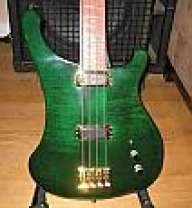


If you combine that much wattage with Behringer's "famous" engineering, I wouldn't be surprised if that piece of junk behaved more like a nuke than they advertise.
I'll never forget the review of a Behringer Ultrabass on Musician's Friend where a guy said that his amp burned his house down and ruined his life.

here's what i wanna know
how many people on here actually use 3600 watts?


