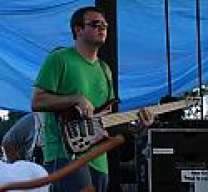
Seems like the USA Saratogas are getting plenty of love these days. Love mine. Don't even own a 535 anymore, and while those are truly amazing instruments, I don't miss it at all. I guess I'm just a J guy at heart.

TalkBass has been independent since 1998. Add your voice.
Create a free account to reply to discussions, view embedded media, and browse with fewer display ads.
Join free Log in
Want zero display ads or expanded classifieds tools? Compare plans.
The black component right in the middle. If you pull that up a little bit it says what it is on a badge on the side. Be careful not to stress any wires, there should be plenty of slack though.


I use Stainless Steel. Great strings.Do you guys use the nickel MTD strings with you Stockton Saratoga? Loving mine btw, practiced a bit with her earlier this evening.
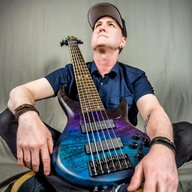

Hey guys, I did something fun recently that I'm really liking the sound of: I "tuned" my 635's stock Bartolini pickups with a couple capacitors to lower the resonant frequency a bit and make a nice little bump at the cutoff point.
I used two .001mfd capacitors in series for a total of .0005mfd capacitance, and wired one pair of these between each pickup's hot and ground before the buffer (that last part is important, because the caps need to interact with the pickup coils). I experimented with values quite a bit but landed on these to cut off just a bit of the super high frequency, way way up high string/fret articulation noise (I'm talking up at like 18 kHz), bringing it down to I'm guessing somewhere closer to 12 or 13 kHz, and probably creating a couple dB of boost at that new knee. For me, this maintains all of the presence and high end brightness (I'm a bright bass guy, I like steel strings, etc), while tailoring the sound to be focused a bit more on a more useful frequency range. And because the caps are hard wired in, without a resistor like a tone pot would have, that nice bump at the lower frequency actually sounds great to my ears - adds presence and aggressiveness.
View attachment 2857893
Any sound clips to demonstrate?


Finally back in.
535-24
Birdseye FB
Ash neck & body
Maple burl top
Tone for days
View attachment 2834299
Here's my NS Saratoga from last night's Christmas corporate gig. With my trusty Lakland 55-94.
View attachment 2851229
upload image
digging the blue norm stockton...I had one exactly like norm’s when they were simply just called a jj5...
ugh, I would kill to have my #28 535 back
Wow! My NS Saratoga is #28 too! What a coincidence!


Does anyone else use there MTD 535/635s for rock? I feel like I only see videos of gospel or slap on MTDs. I find it’s got the best tone I’ve ever heard in a rock mix. The bottom is big and full and I can cut the mix when I go up high.
The wedding/corporate band that I'm in covers some rock, and yes - my 535 slams for it. The standard MTD 535 Bartolini pickups are reverse P soapbars, and if you pan the blend knob a bit towards the front pickup the fingerstyle rock tone is outstanding.

Dumb question: MTD's pricing list is all retail; do they offer 'street price' when ordering from them directly?