
Enjoy the benefits of a premium membership!
Upgrade Account
-
TalkBass has been independent since 1998. Add your voice.
Create a free account to reply to discussions, view embedded media, and browse with fewer display ads.
Join free Log in
Want zero display ads or expanded classifieds tools? Compare plans.
You are using an out of date browser. It may not display this or other websites correctly.
You should upgrade or use an alternative browser.
You should upgrade or use an alternative browser.
Things You Don't See Anymore Part 3
- Thread starter Richland123
- Start date
More options
Who Replied?

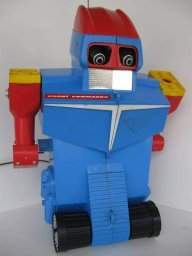
Yup from the Captain Action series of Castaway ToysHe was called Doctor Evil. Same size as the old GI Joe toys, he made a great bad guy!
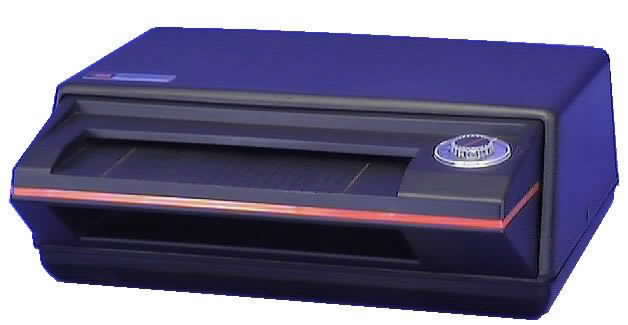
Atomic Energy
Laboratory
In 1951, A.C. Gilbert, inventor of the ERECTOR set, released the U-238 Atomic Energy Lab. Using real radioactive materials, one could witness mist trails created by particles of ionizing radiation.
The set included four Uranium-bearing ore samples, and originally sold for $49.50.

I still have my Green Ghost Game I got when I was a kid.

I see that a lot of these "Great" products cost $1.00.
Now all of these "Great" products cost $19.95.
I guess it is worth it because today you get 2 for the price of 1. And an additional something, a $75.00 value. All for just $19.95.
But Wait, there is More...
I love a good sales con.
Now all of these "Great" products cost $19.95.
I guess it is worth it because today you get 2 for the price of 1. And an additional something, a $75.00 value. All for just $19.95.
But Wait, there is More...
I love a good sales con.
I see that a lot of these "Great" products cost $1.00.
Now all of these "Great" products cost $19.95.
I guess it is worth it because today you get 2 for the price of 1. And an additional something, a $75.00 value. All for just $19.95.
But Wait, there is More...
I love a good sales con.
And, if you buy now, you will get a Cap Snaffler absolutely free! And, it really, really works!
Invalid Link Removed
Young brother got it for xmas one year we play it and mouse trap for hours!I still have my Green Ghost Game I got when I was a kid.

Our new combination white pages/yellow pages came the other day. So, I was going to mention that I can remember when we got a separate Yellow pages and White pages book and they were both HUGE.
Oh, and we actually used them...
Oh, and we actually used them...
We have an old one of those--it really does work.And, if you buy now, you will get a Cap Snaffler absolutely free! And, it really, really works!
Invalid Link Removed
...mine was Foto-Electric Football. Has that been posted yet?[Invalid or Expired Link Removed]
I lost a lot of hours to this.
...mine was Foto-Electric Football. Has that been posted yet?
Don't know if Foto-Electric Football has been posted since there have been so many things posted; but, here it is.
Invalid Link Removed
[Invalid or Expired Link Removed]
[Invalid or Expired Link Removed]
Pop Warner football has long given young quarterbacks, linebackers, and free safeties the chance to hone their gridiron skills on the field, but what of those budding head coaches and offensive/defensive coordinators? There’s no Little League for play callers, but Cadaco came up with a way to train the future men behind the clipboards and earpieces. The answer was Foto-Electric Football, the brainiac’s approach to American football.
As a clue to its focus on brains over brawn, the game’s predecessor was 1936’s Scientific Football. If you think that sounds like a bit of an oxymoron, you obviously weren’t cut out for the life of a Foto-Electric Footballer. Nevertheless, Cadaco decided to leave out the hoity-toity stuff and rename their product with titles like Touchdown, Varsity and All-American Football. The inheritor of Cadaco’s fascination with the gridiron was Foto-Electric Football, popularized in the 1940’s.
The aim of the game was good play calling and a bit of good old-fashioned luck (the recipe to any coach’s success). Opposing players called offensive and defensive plays from a set of see-through overlay cards (12 on offense, 6 on defense). When the plays were laid down on the box-like playing field, the “electric” part of the title kicked in. A small light bulb inside the playfield illuminated the results of the players’ hard work, supplemented with a set of three dice (or spinners in some later versions) and an easy-to-read “Foto-Electric Football Chart.”
Gameplay followed standard American football rules, and rather than working against a clock, the game allowed 30 plays per quarter. A set of dials in the scoreboard kept track of everything important (score, down, plays left this quarter, etc.), and a moveable mini-football tracked your progress up and down the mini-field.
Several updates of Foto-Electric Football arrived over the course of the next few decades, including several “Hall of Fame” versions. The long-running series eventually fell prey to the electronic football craze and the rise of video games in the late 1970’s, but not before one last hurrah. 1977’s Pro Foto-Football replaced the electric light with a cheaper, more compact “Play Revelator” (essentially a black sleeve for the play cards), but the rules remained the same. This fourth-quarter comeback was short-lived, however, and the future coaches of the world were left to test their play-calling skills on Mattel Electronics Football and later video pigskin classics on the Atari, Intellivision, Nintendo and so on.


