• TalkBass has been independent since 1998. Add your voice.
    Create a free account to reply to discussions, view embedded media, and browse with fewer display ads.
    Join freeLog in
    Want zero display ads or expanded classifieds tools? Compare plans.

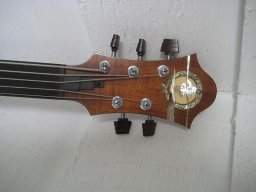
This one is for the unlined fretless players...

Started with violin as a child, still play. Bass was easy to nail notes on by comparison, still is. Both muscle memory and ear training are vital.

Contrary to what some others have stated on this thread, you most assuredly can and should intonate your violin, viola, cello, upright, whatever.
 
  • Like
Reactions: Cowboy in Latvia
Wanna get good at fretless---- play a double bass with a bow. Once you become competent, adjusting to the shorter scale becomes natural.

My friend's daughter began taking DB lessons in 4th grade. She quickly moved from 1/2 size to 3/4 size in school, but ended up buying a decent quality 5/8 size. She'd leave the 5/8 at home to practice, but could also play the 3/4 with perfect intonation. Now she's about 30 and an amazing
player (not her full time job).

Practice positions while looking at sheet music, not your hands. Can't read music, still don't look at your hands (learning to read would be a +).
 
  • Like
Reactions: tfer
Not trying to be a smart*ss, but please stop insinuating that playing a lined fretless in tune is easier than one without lines. There's no difference between both if you close your eyes when playing or stop looking at your fretboard. This discussion about lined or unlined is so redundant to me. I don't feel the difference, I don't see the difference when I'm playing (because I like to look at my fellow bandmates or at the public) and I certainly don't hear the difference.

So stop worrying about lines or no lines: don't look at your fretboard, make eyecontact with your fellow musicians and the crowd!

Ah oops, this thread was ment for unlined players... :facepalm:
 
  • Like
Reactions: jnsnj and Lo-E
Since I'm singing most of the time I play unlined basses. I refer to the side dots sometimes but they are on the note. I get confused by looking at the dot and then going to the line above it. It's an extra step for me anyway.
 
Student cellists and bassists often mark their instruments to help improve accurate intonation quicker... like training wheels.
 
  • Like
Reactions: jnsnj
I wonder if trombonists, cellists, violists, slide trumpeters, et al... ever have these discussions.

It's important to learn one's instrument and play it in tune, regardless of what instrument one plays.

The window of acceptability for "in tune" also varies depending upon the circumstances. The equal-tempered tuning system used in the West is inherently compromised so what are we accepting as "perfectly in tune"? Five cents out? Three cents out?
We could fall forever down this particular rabbit hole.
 
  • Like
Reactions: dabbler and tfer
I started with a lined fretless in 2005 or 2006; at that point I had been playing fretted basses exclusively for about 20 years. It took a couple of weeks to get used to the basics. I couldn't go back and forth between fretted and fretless for a long while. It was probably 12-18 months before I could switch back and forth without messing myself up.

I got my first unlined fretless in 2009 or 2010. I was very intimidated. But I found it really made no difference (or at least I didn't notice any difference) until about the 14-16 "fret" zone. It's just not as big of a deal as folks make it out to be.
 
What I was asking was about is the intonation adjustment. heh. I don't think I made that point that well.

What I meant was if the intonation adjustment ie string length is not properly adjusted at the bridge, how much does it have to be off before you detect it?

I'm sure the majority of us don't get the tuner and screwdriver / allen wrenches out every day and check it.

My mistake and I apologize

This is all cool though..I enjoying reading it all.
 
Last edited:
  • Like
Reactions: reddog
I got a lined fretless J a while back. I don't get to play it as much as I like because it doesn't fit with the type of music we play and it lacks a low B. It was used and I have a feeling the guy who owned it before messed with the intonation himself because with a tuner the lines don't seem spot on. So I rely on old memory and a little ear and don't look at the lines much other than a quick reference when I make a big move. Then again, I'm not exactly playing anything overly fast or complex either.
 
Not trying to be a smart*ss, but please stop insinuating that playing a lined fretless in tune is easier than one without lines. There's no difference between both if you close your eyes when playing or stop looking at your fretboard. This discussion about lined or unlined is so redundant to me. I don't feel the difference, I don't see the difference when I'm playing (because I like to look at my fellow bandmates or at the public) and I certainly don't hear the difference.

So stop worrying about lines or no lines: don't look at your fretboard, make eyecontact with your fellow musicians and the crowd!

Ah oops, this thread was ment for unlined players... :facepalm:


I have no problem with people playing a lined or unlined fretless. It's all about the unique sound of the fretless. I've had both, but at this point in time my favorite playing and sounding necks just happen to be unlined.

I'm with you on not looking at the fretboard , that comes with time and developing a very good sense of pitch.

I made an apologetic reply earlier and clarified the intended point of this thread being about having the bass's intonation adjustment properly set with regard to strength length and how much does if have to be off before you can detected it. I made the reference point with an unlined fretless because it doesn't have an real visual ques except for some spaced dots at the top of the board.

It was my fault for sure for not being more specific.

Once again I apologize for any confusion.
 
Student cellists and bassists often mark their instruments to help improve accurate intonation quicker... like training wheels.
Yep, when I took cello lessons I didn't give a second thought to using those little strips of red tape to learn the finger board. My fretless is lined but if it wasn't I'd have probably used them again. The only benefit I see to not having lines is that it forces you to listen more, but the flipside is if you can't hear yourself on stage you loose that easy visual check.
 
The day I got my unlined fretless, I played a gig that night. I have no problems with intonation. The way I look at it is this, hit the note, then adjust if it's a bit off. Nobody is going to shoot you or beat you with a big stick if you are a bit off. Some players just over think it, like it's do or die if they're not spot on every note.
 
If you put in the time and effort that a cellist does, it wouldn't matter if the intonation is set correctly or not (it would just have to be consistent). After all, cellos/violins/etc don't have bridges that can be finely adjusted for intonation. ;)

Serious cellists have fine tuners at the bridge as do violins & violas

This is always the silliest argument possible. I have played FL for 45+ yrs now. All scales all the time up to DB. There is no difference between them. The muscle memory is 'relative'. In other words your reference depends on where you are position wise. On a 35" the distance between notes at the 9th fret is probably similar to the distance on a 34" at the 8th fret. Doesn't matter. Stupid and more based on trying to impress someone, not sure who.

I have 18 high end FL EBs several EUBs & 3 DBs lined or unlined only matters if it's loud and/or dark.
 
Music isnt about perfection. If you listen to many of the great upright players, their intonation wasn't perfect.
I thought that it was only me that noticed that.
While listening to old traditional jazz and hearing the bass player solo.
I'm going"He's off.....off.....out of tune....flat...atonal.......No wonder people don't like bass!"
 
Last edited:
Cellos, violins and viola are tuned in fiths and intonation is all different business on a fiths-tuned instrument. This, increased sympathetic resonance, is the very reason why some double bassists tunes in fiths, like mighty Joel Quarrington does and Red Mitchell did.

I have my fretless unlined simply because I play the upright too and I wan`t to learn play both of them relying on my ears and muscle memory first. However, upright is very different because it has longer string lenght and some physical landmarks, like neck heel, that will help with the intonation, a fretless P has nothing between the nut and the body. This is where lines would help. But after all, no lines will help if you can`t hear yourself and / or recoqnize if you`re in tune or not.
 

Latest posts