• TalkBass has been independent since 1998. Add your voice.
    Create a free account to reply to discussions, view embedded media, and browse with fewer display ads.
    Join freeLog in
    Want zero display ads or expanded classifieds tools? Compare plans.

Thunderbird Club

I don’t think we’ve forgotten that the bulk of hits back then were played on Fenders. Most of us just don’t care! 🤣😱🙃
Well, as they say - take out the bass in a song and it falls apart. I was simply attempting to describe why a vintage Fender guitar/bass is sought after and priced as they are. I personally don't care to get tribal about the instruments I play. ;) As in, I very much enjoy all the brands of basses I own/play equally. And Mustang guitars & basses first appeared in 1964. :) :bassist: Cars & Fender guitars were always linked in some ways.
 
Last edited:
All of the above and as everyone keeps forgetting, the lions share of hit songs in that golden era of music were recorded using a Fender guitar & bass. So much so that a bass-player credited playing an electric bass on an LP was listed as "Fender bass" (= electric bass)

These #'s are based on the serial numbers which aren't necessarily production #'s. So they're an upper limit for sure, but it gives a ballpark idea of the production numbers.

(from Invalid Link Removed)

SERIAL NUMBERS PRODUCTION DATES
Up to 6,000 1950 to 1954
Up to 10,000 1954 to 1956
10,000s 1955 to 1956
10,000s to 20,000s 1957
20,000s to 30,000s 1958
30,000s to 40,000s 1959
40,000s to 50,000s 1960
50,000s to 70,000s 1961
60,000s to 90,000s 1962
80,000s to 90,000s 1963
90,000s up to L10,000s 1963
L10,000s up to L20,000s 1963
L20,000s up to L50,000s 1964
L50,000s up to L90,000s 1965
100,000s 1965
100,000s to 200,000s 1966 to 1967
200,000s 1968
200,000s to 300,000s 1969 to 1970
300,000s 1971 to 1972
300,000s to 500,000s 1973
400,000s to 500,000s 1974 to 1975
500,000s to 700,000s 1976

So, if I read this correctly there were approximately 100,000 total instruments produced by 7ender in 1965? If so, that kind of redefines the term "Rare".
at least for me :)
 
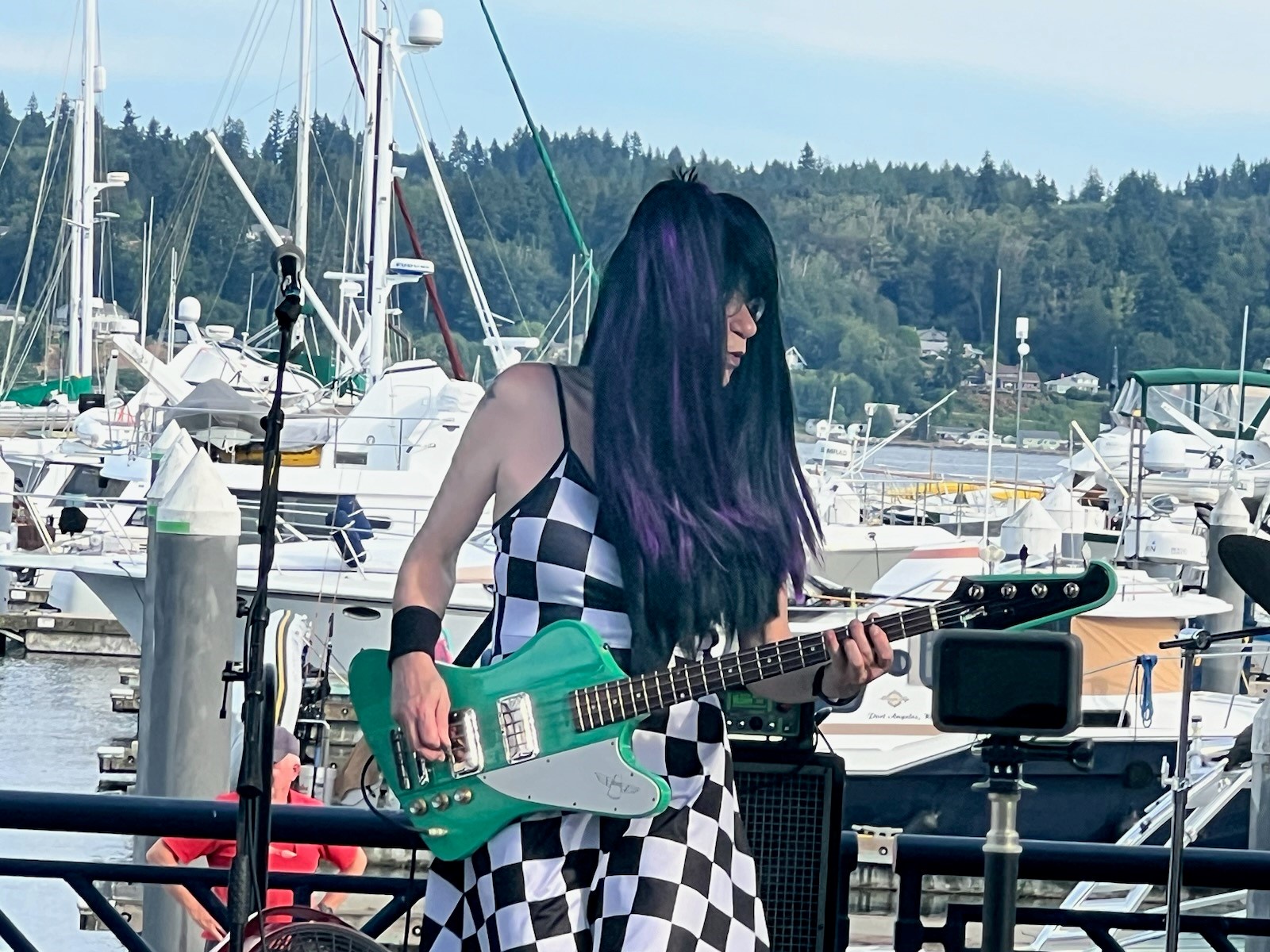
I played the Orville for the last 4-5 songs in Saturday's set, it's really become a nice bass (finally!) it plays really well and the SD Custom Shop pickups have a great tone to them. I'm going to buy another one sometime soon, these are a steal for the money.

Imi8DHw.jpg
 
So, if I read this correctly there were approximately 100,000 total instruments produced by 7ender in 1965? If so, that kind of redefines the term "Rare".
at least for me :)
"Rare" is a greatly exaggerated term used to attach "worth" similar to "vintage". All sellers use terms like that with the sole goal of creating the impression of worth. After a while everything is considered rare and vintage so it essentially becomes meaningless. When I see such labeling I basically ignore it - it's only the bass (or whatever I'm looking at) itself that determines if I have interest in it.
 
"Rare" is a greatly exaggerated term used to attach "worth" similar to "vintage". All sellers use terms like that with the sole goal of creating the impression of worth. After a while everything is considered rare and vintage so it essentially becomes meaningless. When I see such labeling I basically ignore it - it's only the bass (or whatever I'm looking at) itself that determines if I have interest in it.
My Willbird '64 is the only one in the universe. Can I get $100 grand for it? Only takes one sucker...
 
This is an interesting graph showing guitars/basses produced/sold by Japan in the '60s. Other than showing how many were made - it illustrates the "guitar boom" then from its rise, peak in 1965 and decline which coincides with many of the top brands including Fender, sold to CBS in '65 at the peak of the guitar-boom. Brands like Harley Davidson went through a similar rise & fall, actually a couple of times partly due to over-saturation of the market.

1722883931521.jpeg
 
My Willbird '64 is the only one in the universe. Can I get $100 grand for it? Only takes one sucker...
Sometimes a small edition of anything is the main driver of worth.., but not always. Fender (MIJ) made the 24 fret Performer bass for only one year - mid-year '85 to mid-year '86. (the CBS back to Fender transition year) They command a certain vintage asking $ but aren't crazy expensive. The (Fender/CBS) 1966 Jazz bass with a dot/bound neck was made from Jan-June before transitioning into a block/bound neck, so that early '66 is fairly rare being only made for 6 months. Lately they have gone through the roof but were only moderately pricy for years. Off brand basses that are the same vintage as major brands are more than they used to be now but still far more affordable. It's not rocket-science - it's simply market consumerism/capitalism.
 
"Rare" is a greatly exaggerated term used to attach "worth" similar to "vintage". All sellers use terms like that with the sole goal of creating the impression of worth. After a while everything is considered rare and vintage so it essentially becomes meaningless. When I see such labeling I basically ignore it - it's only the bass (or whatever I'm looking at) itself that determines if I have interest in it.
Me, too, but I think the point here is that the word is used to justify the inflated prices, when in reality they're not rare. There are tons of 1965 Precisions for sale. Some are at reasonable prices; many (as noted elsewhere) at stupid prices. All because they're "rare" (even though they aren't) and "vintage".
 
I played the Orville for the last 4-5 songs in Saturday's set, it's really become a nice bass (finally!) it plays really well and the SD Custom Shop pickups have a great tone to them. I'm going to buy another one sometime soon, these are a steal for the money.

Imi8DHw.jpg
You're rockin that cute dress! The Orville looks small.
 
Speaking of rare vs common vintage things. I was looking a bit closer at the Burg Mist refin 66 NR bird on Reverb…
https://reverb.com/item/82318671-gi...urgundy-mist-pro-refin-non-reverse-rare-video

A couple of things struck me as odd…
- the action on the E string side looks incredibly high (as in 1/2 inch off the frets, why?)
- the bridge is way way up on the E string side (neck issue or just a stupid pre set up photo?)
- the pics show it with a single Jazz pup route at one time, but the refin is routed for a bird pup (no mention of that?)
- the set neck pocket has a large gap between the heel and body (was it a total neck replacement, or is this normal?)
- one of the pics looks like it has a battery box - never mind, it’s the pup with a white foam pad on the bottom, my bad.
- says it has non original pots and wiring but doesn’t show them (would be nice to see the cavity shot)
- looks like the control cavity has been slightly modified (gaps showing around the cavity cover, why?)

Obviously at that price point I don’t expect it to be pristine, but it would have been nice for the seller to address some of the obvious potential issues, especially the string action on the neck and the neck heel gap. With a set or neck through bass a major unaddressed neck problem can be a non starter for a lot of potential buyers. Shame, because otherwise it’s a pretty nice looking bass for the money.
Do you mean the end of the neck pocket? I've never had the pickguard off a sixties NR, but it's not unusual for Gibson to leave an opening there if it will be covered by the pickguard or a pickup. The end of the heel is not part of the neck's glue joint.

That action is a huge red flag though. I can't imagine anyone assembling the bass and leaving it like that for photographs.
 
I played the Orville for the last 4-5 songs in Saturday's set, it's really become a nice bass (finally!) it plays really well and the SD Custom Shop pickups have a great tone to them. I'm going to buy another one sometime soon, these are a steal for the money.

Imi8DHw.jpg
I'm pretty happy with my Orville. Before I refinish it, it will get a belly cut and a little more radius on the edges.
 
Me, too, but I think the point here is that the word is used to justify the inflated prices, when in reality they're not rare. There are tons of 1965 Precisions for sale. Some are at reasonable prices; many (as noted elsewhere) at stupid prices. All because they're "rare" (even though they aren't) and "vintage".
I agree with your general premise but I feel there's something more to it. When I bought my '66 P, I didn't own a Fender P-bass and hadn't ever owned one. I was drawn to its looks and asked to play it. Once plugged in (to a Fender guitar amp, abet quietly) I immediately heard what my ears had heard as thee Fender P sound/tone. Let me be clear here - not every Fender P sounds the same. There is a relative tone that defines a P-bass, but like another brand/model we are familiar with... some will sound better than others. Just because something is 'vintage' doesn't always determine that - but as someone who owns/plays a number of great sounding vintage basses, it certainly can and for sure does. And it's not just my opinion as other discerning players have agreed with me after playing/hearing them.

I bought that '66 P for more than I'd ever spent on a bass since 1966 but have never regretted doing so for one second. And it's the only P-bass I would ever want. It plays and sounds amazing, it's vintage and it was worth every penny compared to any other P-bass of any 'vintage' I've played since. Having said that - the similar year ('67?) P at the Santa Cruz shop we invaded at last years GTG also sounded really good.

1722892275256.jpeg
 
Last edited:
All of the above and as everyone keeps forgetting, the lions share of hit songs in that golden era of music were recorded using a Fender guitar & bass. So much so that a bass-player credited playing an electric bass on an LP was listed as "Fender bass" (= electric bass)

These #'s are based on the serial numbers which aren't necessarily production #'s. So they're an upper limit for sure, but it gives a ballpark idea of the production numbers.

(from Invalid Link Removed)

SERIAL NUMBERS PRODUCTION DATES
Up to 6,000 1950 to 1954
Up to 10,000 1954 to 1956
10,000s 1955 to 1956
10,000s to 20,000s 1957
20,000s to 30,000s 1958
30,000s to 40,000s 1959
40,000s to 50,000s 1960
50,000s to 70,000s 1961
60,000s to 90,000s 1962
80,000s to 90,000s 1963
90,000s up to L10,000s 1963
L10,000s up to L20,000s 1963
L20,000s up to L50,000s 1964
L50,000s up to L90,000s 1965
100,000s 1965
100,000s to 200,000s 1966 to 1967
200,000s 1968
200,000s to 300,000s 1969 to 1970
300,000s 1971 to 1972
300,000s to 500,000s 1973
400,000s to 500,000s 1974 to 1975
500,000s to 700,000s 1976
True. I have played older charts that called for "Fender Bass". I once told a BL I couldn't play the chart 'cos I play a Gibson. He didn't get it.
 
I agree with your general premise but I feel there's something more to it. When I bought my '66 P, I didn't own a Fender P-bass and hadn't ever owned one. I was drawn to its looks and asked to play it. Once plugged in (to a Fender guitar amp, abet quietly) I immediately heard what my ears had heard as thee Fender P sound/tone. Let me be clear here - not every Fender P sounds the same. There is a relative tone that defines a P-bass, but like another brand/model we are familiar with... some will sound better than others. Just because something is 'vintage' doesn't always determine that - but as someone who owns/plays a number of great sounding vintage basses, it certainly can and for sure does. And it's not just my opinion as other discerning players have agreed with me after playing/hearing them.

I bought that '66 P for more than I'd ever spent on a bass since 1966 but have never regretted doing so for one second. And it's the only P-bass I would ever want. It plays and sounds amazing, it's vintage and it was worth every penny compared to any other P-bass of any 'vintage' I've played since. Having said that - the similar year ('67?) P at the Santa Cruz shop we invaded at last years GTG also sounded really good.

View attachment 6998943
We've been having a lotta rain here lately which shot down my plans to go to GC and actually hold a P bass. Something I've never done(and in truth, have no desire to do).