
- Jun 30, 2010
- 49,612
- 222,120
- Disclosures
- musician/artist/owner - Gildaxe
I'll say! According to the history of the band, he made Andy Partridge uneasy with his rising talent.He should be more known IMO.

TalkBass has been independent since 1998. Add your voice.
Create a free account to reply to discussions, view embedded media, and browse with fewer display ads.
Join free Log in
Want zero display ads or expanded classifieds tools? Compare plans.
I'll say! According to the history of the band, he made Andy Partridge uneasy with his rising talent.He should be more known IMO.

Not familiar w/Beerhunter... which I'm guessing is a good thing (not being familiar that is...)

My door is always open to our club members. Wish I could have been at this years GTG, but hoping to attend next year.Let me know if you plan something. I’m in is scheduling permits. We can visit Andy. Sure missed him at the last GTG.

There are three pieces to this equation that I see (and probably more). These are, of course, generalities, and everyone is different - distributed (I suspect) upon some form of bel (sic) curve.Agree. I suspect there's something about analog that aligns more closely with the way we hear and our brains work than digital. Would be a good dissertation for somebody who was so inclined.
Your trial? Hope you have a good lawy ... oh. Never mind. Carry on.If something develops, let me know. I could be open to coming up Saturday if my upcoming trial goes away.

we definitely missed you Andy.My door is always open to our club members. Wish I could have been at this years GTG, but hoping to attend next year.
you’re so right, thank you!Damn. He’s growing so fast. You’re a Lucky guy Chucky. Cherish the moments.

How do you get all that in a 911?Buddy, you’re only 5 hours and a phone call away. Dont be a stranger, I’ve got bass gear down here you’d love to get your hands on. Marshall has been here and done that as well as Geo and his friend. All club members are welcome anytime, it’s an open door policy and there’s plenty of beds for over nighters.
On a related note, I’ve solidified my Monterey plans. I’ll be arriving at my hotel in Monterey on Friday the 15th around 4:00 and my schedule is wide open for any gigs you may have in the Monterey/Carmel/Santa Cruz/Hollister/Gilroy areas. If ya have something going on let me know, would be great if Dave, Geo and Ringmaster could join in as well for a mini GTG. I can bring a couple of basses and maybe an amp and cab (or even a B-18N) if you’re open to a garage gathering at your place on the weekend. I’ll be in the area until the following Thursday.
Actually, I’d get all that (and a couple passengers) in my Porsche Cayenne. I could probably fit the Portaflex in the front trunk of my Boxster and a couple of gig bags of basses in the passenger seat or the rear trunk, but the 911 would be a challenge to get much more than one or two basses in the passenger or rear seat, no room in the trunk for anything bigger than an amp or compact 112 cab unfortunately.How do you get all that in a 911?
Andy,My door is always open to our club members. Wish I could have been at this years GTG, but hoping to attend next year.

 The T-bird/amp-wizard secret agent! (shaken, not stirred...)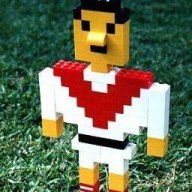

Ah, a floating Petri dish.I’m on a boat in the Pacific from 11/9-11/16
For good reason.You’re a braver man than I am. I don’t envision a cruise in the foreseeable future. Yeah. I’m paranoid.
Thanks, Miles. That was great and helps explain some/most of what is going on.There are three pieces to this equation that I see (and probably more). These are, of course, generalities, and everyone is different - distributed (I suspect) upon some form of bel (sic) curve.
Between #2 and #3, it's a conceptually similar problem to achieving high quality graphics at a high frame rate. That doesn't come cheap.
- The human ear is a very good analog audio transducer, and the brain generally does a lovely job of processing it. Within its frequency range, it's very sensitive to level and frequency changes. Training, age, abuse, heredity, many things affect how we perceive sound through the ear, but overall, the above is true.
- It's all quite nice to say something like "44.1 kilohertz sampling is more than enough because the ear only hears a 12-20kHz bandwidth, depending on the ear". But the reality is that converting to digital means we always miss some peaks, troughs, and harmonics. Converting back to analog is always an approximation which loses more fidelity. The end result is the equivalent at looking at a 60Hz monitor with 60Hz lighting - you perceive distortion that is different from the natural sound, and indeed from anything found in nature. We call this harshness, or lack of warmth, and other things. The same is true with 24 or however many bits of sampling to cover dynamic range. It gets better with higher sampling rates and more sampling bits. I have to assume that at some point most people would be hard pressed to tell the difference - but I don't think we're there yet, at least at mass market price points.
- To keep audio file size reasonable (especially as sampling rates and bits go up), we need compression. The best compression loses some information and therefore audio quality. Proper studios don't use compression on masters (or if they do, it's lossless). But to play back lossless, high compression audio in real time takes a lot of computing power.
We are closer than ever (192 kHz sample rates!). The number of people who definitely prefer analog in a blind test is undoubtedly shrinking. At some point that number may get close to zero. It'll be interesting to watch ... I mean, hear.
Kentucky is calling.... Green Spring and Summer, beautiful Fall, not too long of a Winter, low taxes. Oh, and it's apparently now topographically flat since you left! (And it's close to your daughter.)Andy,
The home relocation search is nearly wrapped up and Payson Arizona is at the top of the list. Very good chance I’ll be there in the next six months. Not far at all from Phoenix, we’ll have to connect when I get out there.


