• TalkBass has been independent since 1998. Add your voice.
    Create a free account to reply to discussions, view embedded media, and browse with fewer display ads.
    Join freeLog in
    Want zero display ads or expanded classifieds tools? Compare plans.

Thunderbird Club

Thanks for all the positive vibes, since last report, offer was accepted, loan approved, inspections and assessment completed.
Escrow should close first week of November.
Indio relocation is imminent!
:cool:

Meanwhile the universe has been sending multiple notices to get out of Diablo Grande:
Frontier down for a day, followed by 2 day outage for Verizon, a 2.5 quake on Tuesday morning: Epicenter just 3 miles from my home.
and this just yesterday
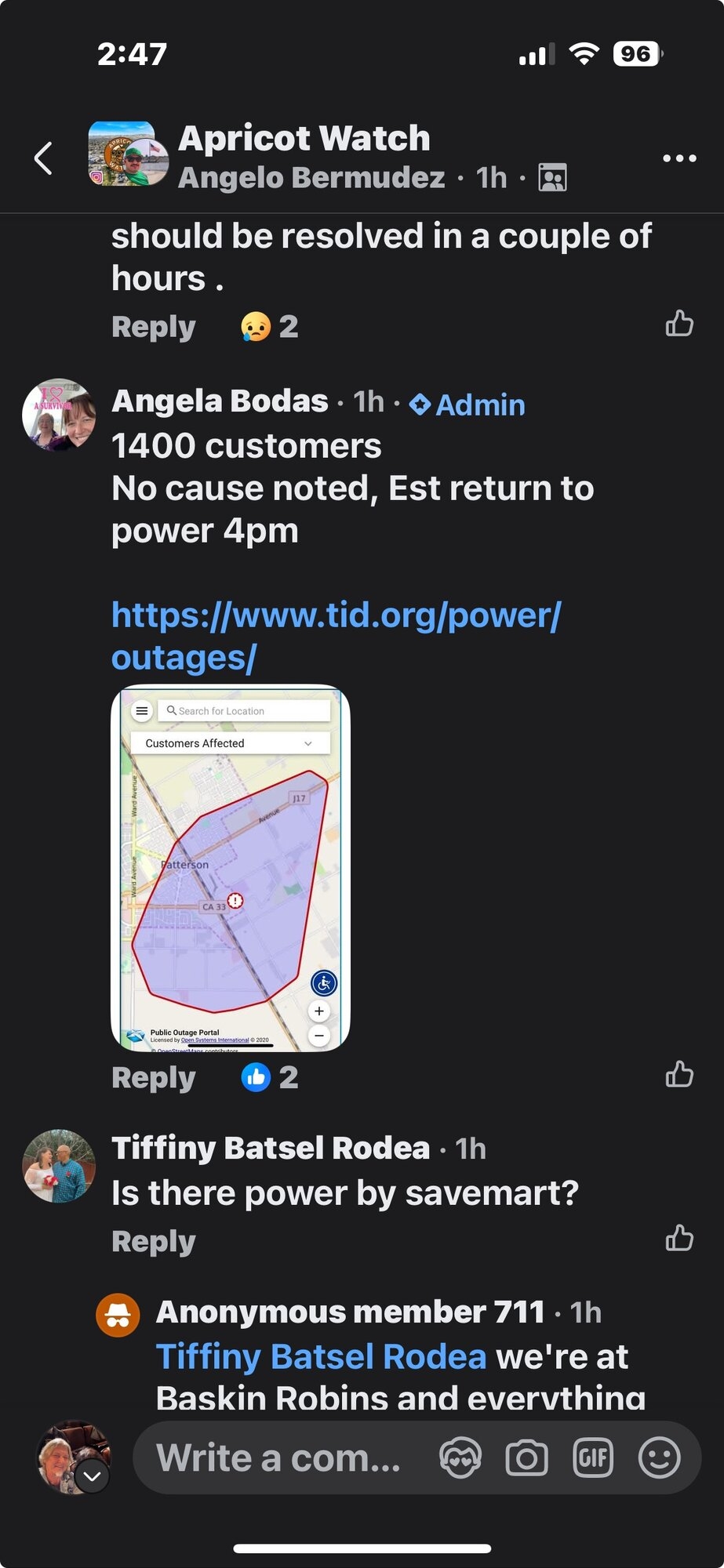
1760591985703.jpeg
 
One thing about my Jazz is that the trussrod is as tight is will go and if I happen to get too much neck relief in the future, I’ll most likely need to purchase another-

American Standard necks are difficult to find and the new Jazz basses have five mounting screws so my only options seem to be either get a Fender Mexican neck or go with someone like Warmoth.

So I wonder what would you do or recommend in the event I would need a new neck?
Warmoth for sure. I have several.
 
I really appreciate all of the feedback I’ve received regarding my Fender Jazz neck issue-

And I have learned a few things and have made some observations regarding weight, neck radius, and string gauges.

Weight- as affected by tuners- ultralights vs standard tuners with their waffle-sized mounting plates.

How it is affected by the trussrod or support rod materials.

To be honest the only instruments I have that have noticeable weight difference is because of the woods.

Fender Mary Kay Stratocaster with ash body is heavy, even compared to my Fender bssses.

And the Bubinga body Warwicks, particularly the five string models are noticeably heavier than all
my other instruments, hence the purchase of 4.5 inch wide straps.

Of my Fender basses, the American 1950’s Original with its baseball bat neck and massive tuners doesn’t feel significantly heavier than the American Standards with their thinner modern C neck profiles, graphite reinforcement rods and modern lightweight tuners.

My G2 Thunderbird is physically longer with a thick neck compared to some of my other basses but does not feel relatively heavy. It did come with Hipshot Ultralite tuners to which I added the Ultralite Xtender.

Neck Radii-

Someone on another mentioned that the Warmoth Jazz necks are slightly flatter at 10 vs the 9.5 of my current American Standard neck. I don’t see that as a problem since I like the 12 inch radius of my Thunderbird. and the 26 inch radius (What!!!) on my Fretless Warwick Thumb NT 5.

String gauges- the Jazz actually has a set of Ernie Ball Slinky’s 105- 85-65-50. I may go down to something like Super Slinky gauge of 100-80-65-45.

With regard to 4 string sets, some folks like massive strings, like those starting with 110, others prefer lighter than the generally used 105-85-65-45, which the factory put on my Thunderbird and Fender American Standard P-basses.

What observation or perspectives do you have on these topics-
 
Last edited:
With regard to 4 string sets, some folks like massive strings, like those starting with 110, others prefer lighter than the generally used 105-85-65-45, which the factory put on my Thunderbird and Fender American Standard P-basses.

What observation or perspectives do you have on these topics-
I am constantly searching for the right string, bass, tuning combination. Since I have 34”, 32”, and 30” scale basses, and I tune them E standard (and drop D), Eb standard (and drop Db), and D standard (and Drop C) it’s ongoing.

For instance I recently took a P bass that I had tuned to Eb, which had DR DDT 110-50’s and although it sounded and felt OK (how a set of strings feels under my fingers also plays a role), I wasn’t necessarily excited about it. So, I put on a set of LaBella DT54 “Drop Tune” strings, .054, .075, .090, .111 and tuned to D standard. These strings claim to have slightly larger cores. I can say, although they are super bright, I am much happier with that bass using those strings in that tuning. I think once a bit of the brightness tapers off, these will be the strings and the tuning for this bass. Once I have the right combination, I note it and, for the most part, the search is done for that bass…

Finding the right combination for my 32” scales for lower tunings is my biggest challenge right now. I WIDH ENCF’s came in medium scale. They make short sake sets and they are great. I have a short scale tuned to D standard and can drop to C using an 110-50 set of SS EBCF’s and have no fret buzz.
 
I can't think of 1 single reason to play a Jazz bass unless it has Thunderbird pickups in it (I have 2, including a '66 I've had since '83). Of course I don't slap, so there's that.
I love how they sound, depending on how you mix and EQ the pickups-

Way back in early 2009 I had purchased my first quality bass, a Warwick Corvette Bubinga Fretless and had gotten acquainted with done members of the Warwick Bass Forum.

So a friend had recommended this song by Thomas Dolby, the bass comp and tone of which really blew me away, particularly the melodic line in the outro.


And I presented the song to someone on the Forum and asked what type of bass it was-

“Sounds like an out of phase Jazz” he replied.

So I got on eBay and eventually purchased the one I have.

And later verified when I saw Mark Hayward Chaplin, Dolby’s bassist at the time, playing, along with Dolby as a guest musician with Lene Lovich on the Dolby written song “New Toy”. And as you can see and hear. It’s a Jazz-

 
I really appreciate all of the feedback I’ve received regarding my Fender Jazz neck issue-

And I have learned a few things and have made some observations regarding weight, neck radius, and string gauges.

Weight- as affected by tuners- ultralights vs standard tuners with their waffle-sized mounting plates.

How it is affected by the trussrod or support rod materials.

To be honest the only instruments I have that have noticeable weight difference is because of the woods.

Fender Mary Kay Stratocaster with ash body is heavy, even compared to my Fender bssses.

And the Bubinga body Warwicks, particularly the five string models are noticeably heavier than all
my other instruments, hence the purchase of 4.5 inch wide straps.

Of my Fender basses, the American 1950’s Original with its baseball bat neck and massive tuners doesn’t feel significantly heavier than the American Standards with their thinner modern C neck profiles, graphite reinforcement rods and modern lightweight tuners.

My G2 Thunderbird is physically longer with a thick neck compared to some of my other basses but does not feel relatively heavy. It did come with Hipshot Ultralite tuners to which I added the Ultralite Xtender.

Neck Radii-

Someone on another mentioned that the Warmoth Jazz necks are slightly flatter at 10 vs the 9.5 of my current American Standard neck. I don’t see that as a problem since I like the 12 inch radius of my Thunderbird. and the 26 inch radius (What!!!) on my Fretless Warwick Thumb NT 5.

String gauges- the Jazz actually has a set of Ernie Ball Slinky’s 105- 85-65-50. I may go down to something like Super Slinky gauge of 100-80-65-45.

With regard to 4 string sets, some folks like massive strings, like those starting with 110, others prefer lighter than the generally used 105-85-65-45, which the factory put on my Thunderbird and Fender American Standard P-basses.

What observation or perspectives do you have on these topics-
I've no Fender basses and seldom play them, but I wouldn't expect lighter tuners to affect weight noticeably; on Thunderbirds it's about headstock weight and whether they tend to dive and how much. Overall weight on most basses is definitely impacted most by body wood (ahem) and size (ahem). Obvs a high mass bridge or heavy metal (in whatever sense 8^) neck [reinforcement] can make a detectable difference as well.
 
I am constantly searching for the right string, bass, tuning combination. Since I have 34”, 32”, and 30” scale basses, and I tune them E standard (and drop D), Eb standard (and drop Db), and D standard (and Drop C) it’s ongoing.

For instance I recently took a P bass that I had tuned to Eb, which had DR DDT 110-50’s and although it sounded and felt OK (how a set of strings feels under my fingers also plays a role), I wasn’t necessarily excited about it. So, I put on a set of LaBella DT54 “Drop Tune” strings, .054, .075, .090, .111 and tuned to D standard. These strings claim to have slightly larger cores. I can say, although they are super bright, I am much happier with that bass using those strings in that tuning. I think once a bit of the brightness tapers off, these will be the strings and the tuning for this bass. Once I have the right combination, I note it and, for the most part, the search is done for that bass…

Finding the right combination for my 32” scales for lower tunings is my biggest challenge right now. I WIDH ENCF’s came in medium scale. They make short sake sets and they are great. I have a short scale tuned to D standard and can drop to C using an 110-50 set of SS EBCF’s and have no fret buzz.
For me, the 105-45 EBCFs work great on standard Thunderbirds tuned E, Eb, or D.
 
Just a little public service advisory for George @GBassNorth
Don’t park your Porsche next to an electric Mini Moke while it’s charging overnight.
This belongs to a friend at the marina.
No one was hurt but the car needs a new paint job.
Oyster season is in. I’ll send some pictures from this coming weekend.
View attachment 7345646View attachment 7345647
Send that to Pat for the paint job. He'll have it fixed up in no time!
 
I only play thru Mark Bass stuff by coincidence...... my buddy needed brakes on his car and had a MB 4x10 cab to offer as partial trade..... and my quest for a lightweight head landed me a MB Little Mark unit from the TB classifieds.

I like the yellow, matches my 79 Blazer that I've owned for 33 years.

View attachment 7345228
sweet, 350?