That's only my take on it, I have absolutely no experience of either bridge but I am a big fan of Hipshot bridges, they are well thought out and well madeI see what yer sayin'. I've been drooling over a SuperTone for a while now, but have yet to encounter one live & in person. It's good to be aware of that kinda stuff

Enjoy the benefits of a premium membership!
Upgrade Account
-
TalkBass has been independent since 1998. Add your voice.
Create a free account to reply to discussions, view embedded media, and browse with fewer display ads.
Join free Log in
Want zero display ads or expanded classifieds tools? Compare plans.
You are using an out of date browser. It may not display this or other websites correctly.
You should upgrade or use an alternative browser.
You should upgrade or use an alternative browser.
Thunderbird Club
- Thread starter TBird1958
- Start date
-
- Tags
- club thunderbird
More options
Who Replied?
OK... that reference took me so long to noodle through and figure out that I will concede the game. You win. Give me the number.
Whoah!!
 I'm sure aunty V @TBird1958 is on the case, you can't turn back now
Two initiations in a week, this is why I love this club so much
Tbird bassists, man! They've given you a number and taken away your name.Whoah!!
Two initiations in a week, this is why I love this club so much
Terrible, from now on in you shall be known as "Kriegs" and like it! That's me being firm and school marmishTbird bassists, man! They've given you a number and taken away your name.

I'll do my best toTerrible, from now on in you shall be known as "Kriegs" and like it! That's me being firm and school marmish

Don't you get annoyed at me or I'll go away and sulk!I'll do my best tolikenot likebe mildly annoyed atdeal with it?

I woulda lost my arse if I hadda bet on it cuz I never woulda thought it could happen... but the anchor for the rear stud on the D side pulled up & out of its hole on my TB IV while it was at tension, sitting on the table next to me! I won't go around telling people that they should expect it to happen to them though. I feel bad for my Thunderbird. It obviously came from an abusive home. The silver lining is that the various issues it's had, have given me the opportunity to get intimately familiar with it, without massive expense or risk.I have. That's why I moved away from my Hipshot. The difference is the three point bridge was meant to float as part of it's design. Not the case with the others.
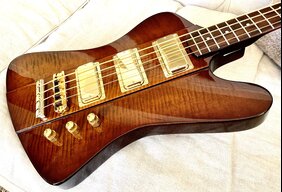
I might be wrong but I think I recall seeing the bottom of the bridge routed out around the anchor points to allow the raised Eppi ferrules to not interfere with the bridge sitting flush on the body.My thoughts are in that if the insert has been pressed in below the surface then if the bolt holding the bridge down is yanked up tight then it's likely you will pull the insert up a little which sort of defeats the Full contact hardware principle where the surface area in tight contact with the body plays a part if I remember correctly. I don't think it any more likely to actually get pulled out than a three point but I feel that say on an Epiphone which has the raised collar on the inserts then the bridge isn't actually in contact with the body at all.

Glad you mentioned since it's exactly this routing that allows the inserts to raise up out of the body when torqued. Dunno about EPIs but on a Gibson (mine at least) these inserts are down flush with the body.I might be wrong but I think I recall seeing the bottom of the bridge routed out around the anchor points to allow the raised Eppi ferrules to not interfere with the bridge sitting flush on the body.
Jeff's gotta SuperTone on his Classic. I'll hafta ask him about that when he gets back from his much needed vacationI might be wrong but I think I recall seeing the bottom of the bridge routed out around the anchor points to allow the raised Eppi ferrules to not interfere with the bridge sitting flush on the body.


It's on my list!The place it was filmed is incredible, we like going there in the winter when all the tourists have gone. It's a lovely day out, we never tire of the place
View attachment 3110312
Someone getting married by the look of it
View attachment 3110313 View attachment 3110315
And Kriegs gets the goal!Tbird bassists, man! They've given you a number and taken away your name.
I woulda lost my arse if I hadda bet on it cuz I never woulda thought it could happen... but the anchor for the rear stud on the D side pulled up & out of its hole on my TB IV while it was at tension, sitting on the table next to me! I won't go around telling people that they should expect it to happen to them though. I feel bad for my Thunderbird. It obviously came from an abusive home. The silver lining is that the various issues it's had, have given me the opportunity to get intimately familiar with it, without massive expense or risk.
 wow, pretty drastic. I wouldn't expect anything like that to happen at all. I'm just sharing what happened to me. Bottom line is; if you torque the screws on the Hipshot excessively the anchors will inevitably raise out of their intended position.
The problem is you can't see it happening because the bridge itself, sitting flush with the body prevents one from doing so. Only when you remove the bridge will you see the raised inserts.
Just a heads up

How cool that it's a real place!The place it was filmed is incredible, we like going there in the winter when all the tourists have gone. It's a lovely day out, we never tire of the place
View attachment 3110312
Someone getting married by the look of it
View attachment 3110313 View attachment 3110315

Gaolee
Official leathers tester and crash dummy
Interesting. I have not had that happen, but I can see how it might.My only problem with those after market bridges is that they yank on the inserts which are not threaded. If you torque them down generously they will pull the inserts out. You then have a bridge that's somewhat floating. The downward tension from the strings alleviates this but it's still there nonetheless. If on the other hand you don't torque the screws down enough, you run the risk of them coming loose from vibration..

Ok, they are best known for Acoustic guitars. They seem to use the same method on those as well. Which also feature a ‘Spanish Heel’ (?) - takes the neck through to the sound hole. I wonder if the Head stock connection also come through from old Spanish guitars.Looks like a modified Bridle Scarf joint of some sort. Bridle joints are common in cabinet and furniture making but I can't say I've ever seen one on a headstock. Usually a simple Scarf joint is adequate. @Christine and other wood workers in the club can chime in with better info I'm sure.
Edit: I can't tell for sure how far the tongue of the neck goes into the groove of the headstock but from the looks of it maybe only a quarter to a half inch, which makes it more of a tongue and groove joint than a bridle joint. If that's correct then the builder is relying very heavily on the attractive arrow head shaped portion of the neck volute to hold firm (with glue I assume) when the headstock is pulled forward under tension. On the surface and without knowing all the specifics of the design I'd say it's not as robust as a typical Scarf joint, which has a much larger surface contact area.
Thanks. Looks normal from the front of course. I had a cursory look on the Cole Clark website and didn’t see anything about it but pictures.The more I think about that I think it must be a scarfed vee joint of sorts

I might be wrong but I think I recall seeing the bottom of the bridge routed out around the anchor points to allow the raised Eppi ferrules to not interfere with the bridge sitting flush on the body.
As I recall from putting on my Hipshots, yes there is a route to accommodate the Epiphone ferrules. But, as part of the installation, I checked that the ferrules were firmly seated. I used the supplied bolts to try to pull out the studs. Once assured that the ferrules were firmly in the body, I went ahead. For all bolts screws etc. I tighten periodically since the vibration will inevitably loosen things.
How cool that it's a real place!
Obviously you do not read the credits...


On my Casady the back inserts stick out a little. If they are flush, I could see how you could pull out the inserts if you torqued the bolts down. A bit of lock-tite and less torque might be the answer - or washers if you can find the right size.Glad you mentioned since it's exactly this routing that allows the inserts to raise up out of the body when torqued. Dunno about EPIs but on a Gibson (mine at least) these inserts are down flush with the body.


