• TalkBass has been independent since 1998. Add your voice.
    Create a free account to reply to discussions, view embedded media, and browse with fewer display ads.
    Join freeLog in
    Want zero display ads or expanded classifieds tools? Compare plans.
To those who only run their amps 'flat': why?

With my GK 1001RB, I "start" flat, then make adjustments. Each venue is different, but I typically only need to make minor adjustments, up or down (usually no more than 10 o'clock or 2 o'clock on any dial)...none if I'm going through a house feed because the sound guy adjusts the EQ. My GK sounds great flat...in a studio room at low volumes, plus the sound guy makes the adjustments.
 
? I start flat and work with the rooms acoustics. I do have a club that I play in only sounds good when I run flat, but that is a rare situation and the setup is not affected by crowd size since we have a bar in front of us. I do not believe in the "set it and forget it works in every situation". theory unless you are playing in the same room and even then things like crowd size can change that in a second.
 
  • Like
Reactions: Bruce_M
How do you define flat anyway? An electromagnetic pickup is by its nature anything but flat for a start.
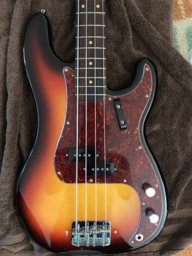

Good question!! I have wondered the same thing, i dont* know what true flat really is but to me "flat" is the sound of your bass acoustically simply turned up!!

I judge by turning off my volume or muting and placing the basses neck to my ear, then trying to match that through the amp as closely as possible...

From there I add or subtract a little tone. I know on my GK amps noon isn't flat at all(probably most others too), it also helps using a neutral cab like my fEARful or a Barefaced to get a more accurate representation..

After I get close to flat I cut some 500hz with the mid contour switch to emphasize the thump a little! I do this because it gives a nice clear foundation to my tone, and soundguys seem to like it as well...i also don't use active pickups
 
Last edited:
My amp sounds perfect flat (Tecamp Puma 900). But the response and resonance of different rooms varies greatly, so I adjust for the room and the gig. It's usually very slight tweaks, with most kudos going to the taste knob. I never have an eq knob set further than 10:30-1:30.
 
Ok, I think I get this. So you want all of your tone coming from your bass and filters. So to you your tone comes only from your playing and the bass itself? Your amp is basically just for stage monitoring?
Amen, This way my studio recorded sound is easier to replicate live. I understand all about room size and it's affect on tone but I use the filters on my bass to compensate for that. I feel my tone is more even as a result. As mentioned above this is why I love my fEarful cab, it's like a studio monitor.
PS. I also LOVE the sound of my P-Bass thru an Ampeg... and that's anything BUT flat.
 
  • Like
Reactions: Garun
In my mind, the biggest reason for keeping the amp "flat" or using very minimal EQ is because of how much power it takes to equalize. Its easy to use up all an amp's headroom by over-equalizing. This is especially true if you're doing a lot of boosting of lower frequencies.

Another good reason for using no or little EQ is that you're introducing some time-domain distortions. Depending on how resolute your speakers are, this can be really objectionable too.
 
  • Like
Reactions: HolmeBass and Nic.
I play bass and run sound. Here's how it all plays out for me.

I think it is the height of laziness and ignorance to assume that your bedroom tone works well in every setting. (I can assure you that from behind the board it rarely does.) So, starting from your favorite bedroom tone settings makes no sense to me.

I don't think many of us always run flat. Many of us start flat (or the closest to flat that we can deduce regarding our specific equipment). Then we tweek to the room, band, style, stage, or (rarely if ever) the preference of the guy trying to make you sound good out front. Probably the number of people who simply refuse to turn the knobs is very small. And if that way works for them, great.
 
Why set my amp flat? Because it's too dang heavy to have it leaning! :laugh:

I'm actually dealing with this issue now... I'm going for basically doing as little as possible by going straight from bass to pre-amp to power-amp to speakers. As little coloring as possible.
 
The best reason that I ever heard was this.... When you are completely familiar with your bass, you know exactly how it sounds when everything is set flat. When you leave home, or the practice studio, and play in a different location you change the size and shape of the room, the ceiling and floor, the wallpaper, add an audience, etc.. In other words, your bass might not sound the same as it does when you're at home. That's when you use EQ so that you can get the sound that you had at home when you're playing somewhere else.

If you're at home and don't like the sound of the bass, don't use EQ to make it sound different. Instead, get a different bass that you like the sound of when everything is set flat.
 
I play all active basses for the most part so I like to have my amp set as close to unity/flat eq/unaltered tone as possible on my SVT, which means finding the right knob positions for a flat eq (to my ears). Then I can just use my very fancy (John East) on-board preamps to adjust my eq according to the room/sound I want. I put a lot into my basses to make them sound awesome so I want them to be the main dictators of my clean tone.
 
  • Like
Reactions: petey293
Because I like the way it sounds I keep my Markbass LMIII/Markbass 104HF mostly flat. I tend to adjust the controls between 11AM and 1PM. For me it sounds best when playing my Fender MIA P5.

While your amp may be set flat your EQ is not. Markbass cabinets have a distinct low-mid hump that cannot be removed or ignored, this makes a flat EQ impossible.
 
The best reason that I ever heard was this.... When you are completely familiar with your bass, you know exactly how it sounds when everything is set flat. When you leave home, or the practice studio, and play in a different location you change the size and shape of the room, the ceiling and floor, the wallpaper, add an audience, etc.. In other words, your bass might not sound the same as it does when you're at home. That's when you use EQ so that you can get the sound that you had at home when you're playing somewhere else.

If you're at home and don't like the sound of the bass, don't use EQ to make it sound different. Instead, get a different bass that you like the sound of when everything is set flat.

Ok, this is exactly what I don't understand! I would never get rid of a bass that doesn't sound perfect flat (whatever that is) when I can easily adjust the amp to get that perfect sound. So what if I like my bass and it takes a little knob twiddling to get my tone where I want it, either at home or on stage or in the studio? I can get the tone I want with my gear no matter what, and that's what I'm interested in. I guess it is just a hi-fi sound thing, as I like your pretty standard Fender/Ampeg tones. Which is cool, I'm just trying to understand the whole 'set it flat' and change components vs adjusting what you have to taste.
 
My take is this: (for what it's worth) All amps have a voice. No amp is completely transparent. It's just not possible. Further, regardless if it's transparent or not, however it's voiced, the sound will change depending on environment. So, if I like a Stingray into a RB800 set flat with the gain at 10 in my basement, that's great, but if I move the amp to my attic, the sound is going to change. If I switch cabs, the sound is going to change. If I switch basses the sound is going to change. The amp's eq is a tool to shape your tone, but it's also a tool to allow you to sit in a mix properly (if you're not miking everything and running through a PA. In that case you just need to be able to hear yourself on stage). If I, and a lead guitarist and a rhythm guitarist all turn up our low mids, we're going to have a problem. If we all work together to achieve some sort of balance, we're much better off. I used to get my settings right, in my living room, by myself, just me and my amp. Then mark all the knobs so it would be perfect at the gig. I'd get to the gig and it would all go out the window. I've given up on that approach. I think it's a disservice to always run your amp in one setting, weather it's flat or otherwise.
 
I was recently at a band practice where I was trying to explain to 2 people: an acoustic guitar player, and a non-qualified person running a PA, that you should start with the EQs set flat, and see where you need to go from there (not with the treble and bass cranked up 100% causing the mics to feed back and the acoustic guitar to feedback and dominate the mix deeming the bass inaudible)
 
I run my amp flat because in a life setting, I'm not going to go back to my amp in order to adjust my tone. I'm going to do it from my bass.

If I make the adjustment at the amp, and I need to move to more of a fingerstyle for a solo, or add some low end, I don't want to have to go back to my amp to make adjustments.

If you watch a lot of pro-players, you'll see them make the adjustment on the bass and not on the amp itself.

If you're recording, it's a different story. Dial in what you want wherever you want to.
 
  • Like
Reactions: keyofnight

Latest posts