• TalkBass has been independent since 1998. Add your voice.
    Create a free account to reply to discussions, view embedded media, and browse with fewer display ads.
    Join freeLog in
    Want zero display ads or expanded classifieds tools? Compare plans.

"Tone" "Wood"

Well that's an easy one. Count the pole pieces on the bottom pick up. Then see that piece of metal by the bridge? That's an addition sign. Add the number of pole pieces to whichever position the switch is in and whatever number you get, that's what it sounds like.

Those things are called pickups, and it is well known that pickups have nothing to do with tone, it's all in the wood. My guess is that when the switch is forward, you are getting more maple ( from the neck ) and when it is back, you get less maple. That's the only scientific explanation I can come up with.

The effect is most pronounced when the guitar is plugged in, but my sensitive ears can hear the effect of the switch even when it is not ( plugged in. ) Everyone knows that the true tone of a guitar only comes out when it is not plugged in. Amplification of the electronic metal parts debases the pure tone of the wood.

This wood has also been strangled with grain filler and polyurethane. All the resonance of the pores has been clogged up for the sake of a smooth shiny finish. Sometimes, I like to imagine being very tiny and sitting inside the enormous unfilled, unclogged, practically unfinished pores of a Les Paul Studio, totally surrounded by tone. Gibson is uncompromising in their pursuit of tone, and refuses to ruin the wood by applying an attractive finish. Gibson is a company that is steeped in luthier tradition - pickled in it, if you will. They charge a premium for toneful extras like a sh!tty finish, but it is worth it to the true artist. Rickenbacker is also pickled in tradition.
 
Bad news for luthiery.

I went down to Guitar Center to drop test a few guitars. First I dropped a Precision and a Jazz. Then I dropped a MusicMan. I actually dropped the MusicMan on the Precision. Then I dropped a Thunderbird, and the headstock flew off and almost put my eye out. At that point, several burly Guitar Center employees threw me out of the store and told me never to come back. They even took my picture. They have no appreciation of science there. I will continue my research at Sam Ash.

So far, I can draw only one result from my abortive testing. That is that the strings make an awful racket when you test a guitar. It drowns out everything else. Therefore, to determine the true tonality of a guitar, you should take the strings off before playing it. That way you will get the pure tone of the wood alone, uncontaminated by metal vibrations.

Has anyone drop tested a Les Paul? I'm afraid to, it might break the floor.
 
Last edited:
More bad news. At Sam Ash, I only managed to drop test two Rickenbackers before the same thing happened as Guitar Center! They do not have inquiring minds. And one of the Rics landed on a glass case, invalidating the results, so I have almost nothing to show for my efforts.

But I have yet another plan - I can continue my drop testing by mail order with Musician's Friend. That is even better, as UPS will spare me all the physical labor of dropping the guitars myself. UPS will also do throw and stomp tests on the same guitars, at no extra charge. UPS is the luthier's friend, unlike Guitar Center and Sam Ash.
 
Guitar Center is right next door, which is now going to be a problem for me, what with the restraining order and all. Now I know how Galileo and Einstein felt. Science is hard. I have written to NASA to see if they will help me out by dropping a guitar from space. I have high hopes - NASA is as sciency as you get!
 
MORE bad news for luthiery.

NASA dropped a Rickenbacker 4003 from the ISS today. Unfortunately, the whole thing burned up on re-entry, except for the bridge, which landed on a Buick and completely destroyed it. Now I am being sued by the owner of the car, and I still don't have any good tone wood data. I think it is time to bring this line of investigation to a close. I am shaken and disheartened by my failure.
 
Last edited:
Evil Thoughts

I'm beginning to wonder if there really is anything to this whole tone wood business.

I mean, even NASA couldn't prove it.

What if it is all just a lie thought up by marketing to justify outrageous prices?

NO !!! That can't be !!! Tone wood is real !!!

I know in my heart of hearts that this is so !!!

I don't need proof, I have FAITH !!!
 
Hallelujah! Praise Jatoba!

montypyhton.jpg


Yes, All Praise Jatoba !!!

He watcheth over luthiers

He leveleth their frets

and adjusteth their truss rods

that they may have a sweet low action

and play like Buttah !!!


Thank you, sir

In this modern world of rockets and Buicks, it is easy to lose one's way and be suckered-in by science and technology.

The great mysteries are not meant to be known.

I feel reborn !!!
 
Last edited:
From the Book of Luthiery, Chapter 37, verse 9:

"... and Jatoba spake thusly:

So the mahogany shall have a darker tone, whilst the maple shall be bright. Thus shall all men perceiveth these things, lest they be ridiculed and hooted-down by those of true faith."
 
Last edited:
From the Grateful Dead Sea Scrolls:

"Danelectro dared to make guitars from Masonite and poplar, in defiance of Jatoba. And they sold these guitars at very reasonable prices. And they were actually surprisingly good guitars, and Danelectro had great success. So Jatoba smote down upon them with fire and smoke and M&A men, and did shutter their factory."
 
Last edited:
  • Like
Reactions: Ant Illington
An SG, an ES 335 and a Les Paul walked into a bar. The bar keep asked, "what'll you have?" The three said, "tell us why we sound distinct from each other." :)

Well of course, the bold distinctiveness of each of these instruments is in the wood. That's why St. Gibson used virtually the same pickups, electronics, bridges and hardware on all three of them. He wanted to PROVE that the tone is in the wood, imbued there by Jatoba.

Only through Jatoba can we seek true tone.

Praise Jatoba!
 
Last edited:
  • Like
Reactions: Ant Illington
View attachment 1363890
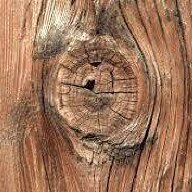
I got this pretty slab of wood for free ( underneath the Telecaster. ) I need to determine if it is a "tone" "wood", and would therefore have superb properties for luthiery, or if it is just a cutting board. I am not an expert on "tone" "wood", but I understand the "tone" properties of a "wood" can be ascertained by a "tap" "test".

I want to be as scientific as possible about this. I know that the "tone" of an electric guitar is 99% the wood and 1% everything else put together. I have already learned that the size and shape of the piece have nothing to do with the "tone" of the "tap" "test", as long as the "test" is properly administered. So, before embarking on this, I would like to pose a few questions to the high masters of "tone" "wood".

Firstly, which finger should one use for the "tap" "test"? Also, how many "tap" "tests" should one perform in order to objectively perceive the desired result? What happens if a "tap" "test" is performed on a piece of wood that is not "tone"? ( I don't want any accidental fires or explosions! ) And finally, how many "tap" "tests" can be performed on a piece of "tone" "wood" before it is "tapped" out?

There are many experts on "tone" "wood" here at TalkBass, so I hope someone can turnaround some answers for me. Also, I would appreciate if someone could perhaps recommend a fretboard wood with a nice midrange push, that also enhances the lows and the highs.

I ask all "tone" "wood" authorities to share their knowledge and expand on the subject begun here. Perhaps one day this humble thread could become a definitive resource on the subject.

LONG LIVE NOBODY!
 
  • Like
Reactions: Nev375 and Leiria

Latest posts