
Enjoy the benefits of a premium membership!
Upgrade Account
-
TalkBass has been independent since 1998. Add your voice.
Create a free account to reply to discussions, view embedded media, and browse with fewer display ads.
Join free Log in
Want zero display ads or expanded classifieds tools? Compare plans.
You are using an out of date browser. It may not display this or other websites correctly.
You should upgrade or use an alternative browser.
You should upgrade or use an alternative browser.
U.S. Peavey Club
- Thread starter Soundchaser11460
- Start date
-
- Tags
- club
More options
Who Replied?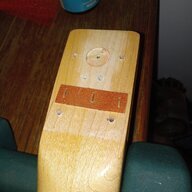
Here's one for you guys in Pa....or anywhere close.
knobs look original but not original at the same time. If I was on facebook I'd message the guy though.


I am so curious about this bass. The slant SF pickup is still a single coil, but with two big@ss bar magnets beneath it correct? Could one put a Foundation SF that is reverse wound in the bridge and have it hum-cancel? Would this sound good? I have so many questions today!Mark me down for the Slant Fury as well. I get huge props when gigging mine.
The Peavey P pup is hotter and more prominent than the Fender equivalent in my experience.
So it's a great tone no question.
But the slant pup is in a class by itself. I would love to see a comparison frequency response between the two.


Here's one for you guys in Pa....or anywhere close.
This is identical to the Foundation I gigged a bunch before getting my Dyna 5, should have kept that bass it was a killer for rock and blues.
Also, what the heck wood is this Patriot made of: Peavey Patriot Bass in Natural - Peavey Patriot Bass in Natural with original case 1985 | Reverb

Also, what the heck wood is this Patriot made of: Peavey Patriot Bass in Natural - Peavey Patriot Bass in Natural with original case 1985 | Reverb
Someone stripped the paint off that one...I think poplar but with the he mismatched grain it was probably a solid color.
knobs look original but not original at the same time. If I was on facebook I'd message the guy though.
Non original but kinda close.

I like the pearl white better, but your salmon one is THE king.
I love the look of the cutting board Foundation.Also, what the heck wood is this Patriot made of: Peavey Patriot Bass in Natural - Peavey Patriot Bass in Natural with original case 1985 | Reverb


I'm thinking it was a very bad idea to strip off the finishI think poplar but with the he mismatched grain it was probably a solid color.


My favorite body shape.I personally think the slant Fury is one of the most beautiful basses ever designed. Of course it's similar to a P, but the lines are just more elegant.
I agree completely, Precision bodies used to look right, now they look a little tubby to me.
Peavey used it for the Gen 2 Fury too...as well as the others mentioned above.
Foundation S is such a great looking PJ bass with that body.
The Gen 3 Fury and later Foundation body shape is fine but the Gen 1 & 2 basses were perfect, they make so many other P and J basses look clunky.
Strangely, it is the most noiseless single coil pickup I've ever heard...I am so curious about this bass. The slant SF pickup is still a single coil, but with two big@ss bar magnets beneath it correct? Could one put a Foundation SF that is reverse wound in the bridge and have it hum-cancel?
I don't know how they pulled it off.
Last edited:
I love the look of the cutting board Foundation.
The back does look kinda alright to me, the front not so much
...good candidate for a custom paint job though!
That's in great condition for it's age.


Working on my second 1st gen Fury neck to get rid of some seriously high action and just wanted to post the picture to confirm that this one has sandpaper too. By the way, the process of adding forebow is ridiculously easy just by pressing the neck with my hand and tightening the truss rod. These old peavey necks feel like I could play a major league baseball game with them and they'd be fine.
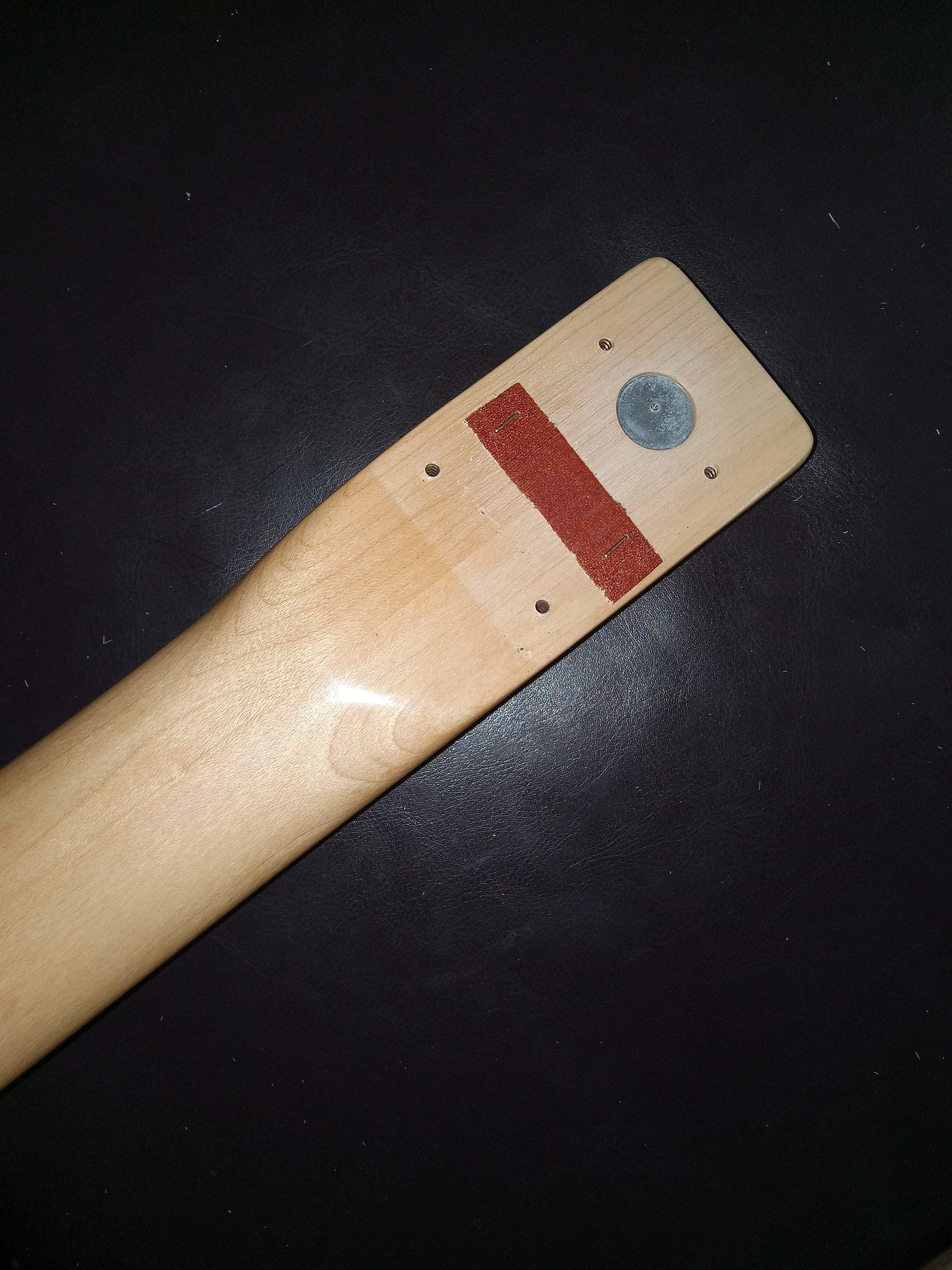
Follow up to my previous post showing the picture of the sandpaper shim.
What practical advantage is there to the location? Seems to me that a shim should be closer to the bridge side than the nut side. I gotta wonder if this is causing setup problems.
I saw an earlier post suggesting removing it, but I'd like a little more insight into the why's of all this before I remove a factory installed shim.
Thanks!
What practical advantage is there to the location? Seems to me that a shim should be closer to the bridge side than the nut side. I gotta wonder if this is causing setup problems.
I saw an earlier post suggesting removing it, but I'd like a little more insight into the why's of all this before I remove a factory installed shim.
Thanks!

- Apr 18, 2008
- 16,013
- 1
- 31,725
- Disclosures
- I'm highly opinionated and extremely self-assured
My (educated) guess:
It's not a shim. Its purpose isn't to raise the level of the neck in the pocket. It's made of sandpaper, which suggests that its primary purpose is to resist any sideways forces on the neck that might cause it to shift in the pocket laterally.
Usually shims are used to raise the level of the neck in the pocket, but that's what the micro-tilt is for.
(Why are people against using the micro-tilt??)
It's not a shim. Its purpose isn't to raise the level of the neck in the pocket. It's made of sandpaper, which suggests that its primary purpose is to resist any sideways forces on the neck that might cause it to shift in the pocket laterally.
Usually shims are used to raise the level of the neck in the pocket, but that's what the micro-tilt is for.
(Why are people against using the micro-tilt??)
Thanks. My personal issue with the microtilt is that it seems to me that if I use it to raise the neck and then I tighten down on the neck screws, it creates a situation where the neck is being held down to a very small point which decouples the neck from the body.My (educated) guess:
It's not a shim. Its purpose isn't to raise the level of the neck in the pocket. It's made of sandpaper, which suggests that its primary purpose is to resist any sideways forces on the neck that might cause it to shift in the pocket laterally.
Usually shims are used to raise the level of the neck in the pocket, but that's what the micro-tilt is for.
(Why are people against using the micro-tilt??)
It also seems that the forces of the neck screws would put a lot of stress on that one small point rather than the entire neck heel.In my mind this could lead to warpage or breakage of the neck, particularly the Peavey necks which are two piece joined at the middle, right where the microtilt hits.
But I could be imagining all this. I'm new to the neck/self setup game so I'm much more apprehensive about things than I think I'd normally be if I had more experience.
I agree with you! I have had a number of Peavey Foundations and Palaediums. Most have had the hump at the end of the neck. It makes sense to me this could be caused by neck presure against the microtilt pin. But this doesn't explain why it happens on some basses without microtilt.Thanks. My personal issue with the microtilt is that it seems to me that if I use it to raise the neck and then I tighten down on the neck screws, it creates a situation where the neck is being held down to a very small point which decouples the neck from the body.
It also seems that the forces of the neck screws would put a lot of stress on that one small point rather than the entire neck heel.In my mind this could lead to warpage or breakage of the neck, particularly the Peavey necks which are two piece joined at the middle, right where the microtilt hits.
But I could be imagining all this. I'm new to the neck/self setup game so I'm much more apprehensive about things than I think I'd normally be if I had more experience.

I’ve seen my fair share of peaveys starting to split at the heel on the glue joint. I’m not going to say that the microtilt is the culprit, but it can’t be helping the issue. A good shim spans the width of the neck pocket, and a better one spans the length as well, in my opinion. Even necks installed without a shim can have a tendency to kink at the neck-to-body joint, since that’s the point where the wood is most subject to the string tension’s folding force. Same reason acoustics will dip in around the sound hole after some time.


